Happiness
 81
81

Happiness
Bloomfield and Kory's "Happiness" attempts a synthesis that feels both earnest and somewhat dated. Its strength lies in its direct, no-nonsense approach to identifying psychological "roadblocks" to contentment, a concept it returns to frequently. The book is particularly effective in its early sections when dissecting common misconceptions about what constitutes happiness, framing it as an internal achievement rather than an external acquisition. However, the prose occasionally leans into a prescriptive tone that might not suit all readers, and some of the psychological frameworks presented, while well-intentioned, lack the nuance found in contemporary cognitive behavioral approaches. The discussion of "self-image" as a primary determinant of happiness is a central, if somewhat oversimplified, pillar. Ultimately, "Happiness" offers a foundational, albeit imperfect, exploration of internal well-being.
📝 Description
81
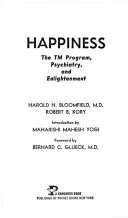
Published in 1977, Harold H. Bloomfield and Robert B. Kory's 'Happiness' examined contentment beyond fleeting emotions.
This book approaches happiness not as a simple feeling, but as a cultivable state. Bloomfield and Kory propose that contentment arises from a combination of internal psychological conditions and conscious, deliberate practices. They argue that individuals actively construct their own happiness through consistent effort and the application of specific techniques.
The work seeks to guide readers toward a more profound understanding of their inner lives and offers a structured method for increasing personal well-being. It appeals to those who question common ideas about happiness and desire approaches grounded in both psychology and broader philosophical ideas. Readers interested in personal development and the connection between mental states and spiritual outlooks will find its content relevant.
Emerging in the post-1960s era, 'Happiness' arrived as a cultural shift questioned established norms and explored alternative paths to fulfillment. This period saw a rise in literature focused on human potential and psychological well-being. The book's publication coincided with movements emphasizing individual responsibility for one's mental state, reflecting a growing interest in internal self-mastery and the practical application of psychological principles for personal transformation.
💡 Why Read This Book?
• Gain practical strategies for identifying and overcoming personal "roadblocks" to happiness, a core concept detailed by Bloomfield and Kory, allowing for a more proactive approach to well-being. • Understand the profound influence of "self-image" on your daily emotional state, as explored in the book, enabling you to reframe negative perceptions and cultivate a more positive outlook. • Learn techniques for managing detrimental thought patterns, directly applicable from the methods discussed in the 1977 publication, providing tools to foster lasting contentment.
⭐ Reader Reviews
Honest opinions from readers who have explored this book.
❓ Frequently Asked Questions
When was Harold H. Bloomfield and Robert B. Kory's "Happiness" first published?
The book "Happiness" by Harold H. Bloomfield and Robert B. Kory was first published in 1977. This places it within a significant era for the popularization of psychological self-help and personal growth literature.
What is the central premise of "Happiness" by Bloomfield and Kory?
The central premise is that happiness is not an external reward but an internal state that can be cultivated through conscious effort, by understanding and overcoming psychological "roadblocks" and improving one's "self-image."
Does the book offer practical exercises for achieving happiness?
Yes, "Happiness" provides practical guidance and techniques for managing thoughts and emotions, aiming to equip readers with tools to actively build a more contented life, as discussed in its chapters.
Who would benefit most from reading "Happiness"?
Individuals interested in personal development, psychology, and philosophy, particularly those seeking to understand and improve their own well-being and who are looking for actionable advice beyond fleeting emotional states.
How does "Happiness" relate to other self-help books from the 1970s?
It aligns with the era's focus on human potential and psychological exploration, offering a framework that emphasizes internal locus of control, a common theme in 1970s self-help literature.
Is "Happiness" considered an esoteric text?
While it delves into psychological and philosophical aspects of well-being, "Happiness" is more broadly categorized within self-help and popular psychology rather than traditional esoteric traditions, though it touches on internal states relevant to esoteric thought.
🔮 Key Themes & Symbolism
The Nature of Happiness
Bloomfield and Kory posit that happiness is not merely the absence of sadness or the presence of pleasure, but a deeper state of fulfillment achievable through internal work. The book challenges the common perception of happiness as something external to be found or attained, instead framing it as a skill to be developed. This perspective aligns with certain philosophical traditions that emphasize inner cultivation over external acquisition, suggesting that true contentment arises from one's inner landscape and one's active engagement with life's challenges.
Self-Image and Contentment
A core part of the book is the examination of "self-image" and its direct correlation with an individual's capacity for happiness. The authors suggest that deeply ingrained perceptions of oneself significantly shape one's experience of the world and one's ability to feel joy. By dissecting negative self-perceptions, the work aims to empower readers to reconstruct a healthier self-image, thereby unlocking a greater potential for sustained happiness. This concept echoes therapeutic approaches that focus on cognitive reframing and self-acceptance.
Overcoming Psychological Roadblocks
The text identifies various "roadblocks" – internal barriers such as limiting beliefs, negative thought patterns, and unhelpful emotional responses – that prevent individuals from experiencing happiness. It provides a framework for recognizing these obstacles and offers strategies for dismantling them. This proactive approach encourages readers to take ownership of their emotional well-being, moving beyond passive acceptance of their circumstances to actively shaping their internal environment for greater peace and satisfaction.
Active Cultivation of Well-being
"Happiness" emphasizes that achieving a state of contentment is an ongoing, active process rather than a passive outcome. It advocates for the consistent application of specific mental and emotional disciplines. This perspective aligns with practices that require dedication and practice, such as meditation or mindfulness, suggesting that like any skill, happiness requires regular attention and effort to maintain and deepen. The book serves as a guide for this continuous journey toward personal fulfillment.
💬 Memorable Quotes
Direct passages from the work, attributed to the author.
“Happiness is not something that happens to you, but something you make happen.”
— This statement expresses the book's core message: happiness is an active pursuit, an internal creation rather than an external event. It places agency firmly with the individual, suggesting that contentment is a skill developed through conscious effort and practice.
“Your self-image is the lens through which you view your world.”
— This highlights the critical role of one's perception of self in shaping their reality. The authors suggest that a distorted or negative self-image will inevitably lead to a negative experience of life, emphasizing the need to correct internal views.
“Recognize the 'roadblocks' that prevent you from achieving happiness.”
— This refers to the internal psychological barriers, such as fear, doubt, or limiting beliefs, that the book aims to help readers identify and overcome on their path to greater contentment.
“Contentment is a choice, not a circumstance.”
— This phrase underscores the book's emphasis on personal responsibility and the power of conscious decision-making in cultivating a positive emotional state, regardless of external conditions.
“The pursuit of happiness is the pursuit of self-understanding.”
— This interpretation suggests that true happiness is intrinsically linked to introspection and gaining clear insights into one's own motivations, beliefs, and emotional patterns.
🌙 Esoteric Significance
Tradition
While "Happiness" is primarily positioned within the self-help and popular psychology genres, its emphasis on internal states, self-awareness, and the cultivation of a positive mindset touches upon themes resonant with esoteric traditions. It shares a lineage with philosophical schools that prioritize inner transformation over external circumstances. Though not explicitly rooted in Hermeticism, Gnosticism, or Kabbalah, its focus on mastering one's internal world and achieving a state of balanced well-being can be seen as a modern, psychologically-framed echo of ancient wisdom traditions that sought enlightenment or liberation through inner work.
Symbolism
The book does not rely on overt esoteric symbolism in the manner of traditional occult texts. However, the concept of "roadblocks" can be interpreted metaphorically as the internal 'demons' or 'shadows' that various esoteric paths instruct practitioners to confront and integrate. Similarly, the "self-image" functions as a crucial inner construct, akin to the 'higher self' or 'divine spark' that esoteric traditions aim to connect with or reveal. The pursuit of happiness itself can be seen as a modern interpretation of the esoteric quest for wholeness or spiritual attainment.
Modern Relevance
Contemporary mindfulness movements, positive psychology, and cognitive behavioral therapy (CBT) draw heavily on principles that "Happiness" helped popularize. The focus on identifying and reframing negative thought patterns, managing emotional responses, and cultivating a constructive self-perception are core tenets in many modern therapeutic and self-improvement practices. Thinkers and practitioners in these fields continue to explore the psychological architecture of well-being, building upon the foundational ideas about internal agency and mental discipline that works like Bloomfield and Kory's introduced to a wider audience.
👥 Who Should Read This Book
• Individuals seeking a practical, psychologically-grounded approach to improving their emotional well-being, who appreciate actionable advice for daily life. • Readers interested in the history of self-help and popular psychology, particularly those curious about the evolution of thought regarding happiness and personal fulfillment since the 1970s. • Those who feel conventional definitions of happiness are insufficient and are looking for a framework that emphasizes internal control and personal responsibility for one's state of mind.
📜 Historical Context
Published in 1977, Harold H. Bloomfield and Robert B. Kory's "Happiness" emerged during a period of significant cultural and intellectual ferment in the United States. The post-1960s era saw a widespread questioning of traditional values and an increased interest in personal growth, human potential, and alternative philosophies. This was a time when psychological concepts, previously confined to academic and clinical settings, began permeating popular culture through books, workshops, and media. The burgeoning self-help industry offered a variety of approaches to well-being, often drawing from existentialism, humanistic psychology, and Eastern spiritual practices. "Happiness" fit into this milieu by offering a blend of psychological insight and practical advice, distinguishing itself from more purely philosophical or spiritual treatises. It arrived in a landscape where figures like Carl Rogers and Abraham Maslow had already laid groundwork in humanistic psychology, and where Eastern philosophies were gaining broader Western traction, influencing many contemporary authors seeking to explain the human condition.
📔 Journal Prompts
The "self-image" as a lens for interpreting experiences.
Identifying personal "roadblocks" to contentment.
The active choice in cultivating happiness.
Strategies for shifting negative thought patterns.
Defining personal fulfillment beyond external achievements.
🗂️ Glossary
Roadblocks
Internal psychological barriers, such as negative beliefs, fears, or unhelpful habits of thought and behavior, that prevent individuals from achieving a state of happiness or contentment.
Self-Image
An individual's perception and conception of themselves; how one sees and defines oneself, which significantly influences one's feelings, behaviors, and experience of the world.
Contentment
A state of inner peace and satisfaction, often understood as a deeper, more stable form of happiness that is less dependent on external circumstances.
Internal Locus of Control
The belief that one's own actions and decisions determine their outcomes, as opposed to external forces or fate. This concept is central to the book's emphasis on personal responsibility for happiness.
Positive Reinforcement
A psychological principle where behaviors are strengthened by the addition of rewarding stimuli, often used in self-help to encourage the adoption of beneficial habits.
Mental Discipline
The practice of consciously controlling one's thoughts, emotions, and impulses, a key component in overcoming 'roadblocks' and cultivating happiness.
Fulfillment
A sense of deep satisfaction derived from living a meaningful life, realizing one's potential, and achieving personal goals, often considered a core part of lasting happiness.
This book appears in 1 collection
🔮 Readers Also Liked
Browse all →









From the “Transcendental Meditation” Collection
View all →









More Free Spiritual Development Books
View all →