Gypsy sorcery and fortune telling
 72
72

Gypsy sorcery and fortune telling
Leland's "Gypsy Sorcery and Fortune Telling" is a remarkably detailed, if at times paternalistic, record of Romani magical traditions from the late 19th century. Its strength lies in the sheer volume of collected material – spell incantations, divination methods, and amulet descriptions are presented with scholarly diligence. The section detailing various methods of 'kris-kalingi' (fortune-telling) offers a practical glimpse into techniques that were still actively practiced. However, the work is not without its limitations; Leland's own cultural biases and the inherent challenges of documenting oral traditions mean some accounts might reflect his interpretations as much as the Romani reality. The chapter on 'The Language of the Gypsies' highlights his linguistic focus, but the accompanying analysis feels dated. Despite these issues, the book remains a vital primary source for understanding historical European folk magic.
📝 Description
72
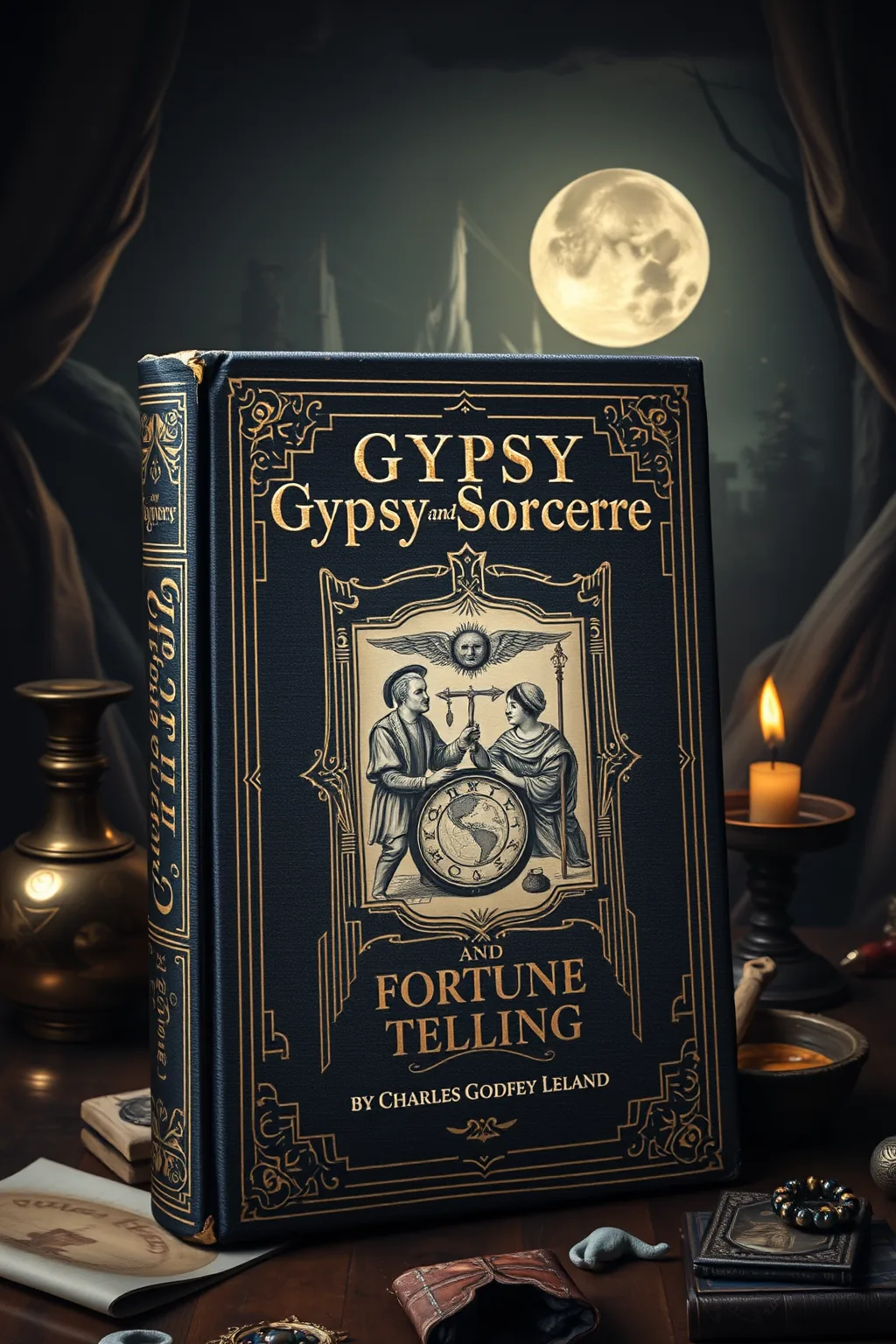
Charles Godfrey Leland published 'Gypsy Sorcery and Fortune Telling' in 1891, documenting Romani magical practices.
Charles Godfrey Leland's 1891 work meticulously records the magical beliefs and divinatory arts of Romani people, primarily in Eastern Europe and England. An American folklorist and linguist, Leland gathered this material over years of dedicated fieldwork, aiming to preserve traditions he viewed as both rich and threatened. The book serves as a detailed ethnographic account, outlining rituals, charms, and methods of fortune-telling observed among various Romani groups.
This volume is valuable for scholars of folklore, anthropology, and religious history, as well as for those interested in the practical aspects of folk magic and divination. It details Romani customs and beliefs, many of which have since transformed or disappeared. Leland's grounded approach, relying on direct observation and linguistic study, distinguishes it from more speculative occult writings of the era. The book offers insights into a complex spiritual worldview connected to nature and the unseen.
Published in the late Victorian era, 'Gypsy Sorcery and Fortune Telling' emerged during a period of intense interest in folklore and the occult. While contemporary movements like Theosophy and spiritualism gained traction, Leland's work offered a more empirical approach to understanding magical traditions. It contributed to the academic study of Romani culture by documenting practices that existed outside mainstream European religious and magical systems, reflecting a broader fascination with hidden knowledge and marginalized spiritualities.
💡 Why Read This Book?
• Gain direct exposure to 19th-century Romani divination techniques, such as specific methods of palmistry and card reading described in Chapter V, offering practical insights unavailable in generalized fortune-telling manuals. • Understand the function of amulets and talismans within a specific cultural context, learning about their creation and purpose as detailed in Chapter III, providing a concrete example of folk magic's material culture. • Explore the linguistic and ethnographic methods Charles Godfrey Leland employed, illustrated by his collection of Romani 'patteran' (sign language) in Chapter IX, revealing how early folklorists documented esoteric traditions.
⭐ Reader Reviews
Honest opinions from readers who have explored this book.
❓ Frequently Asked Questions
When was "Gypsy Sorcery and Fortune Telling" first published?
"Gypsy Sorcery and Fortune Telling" by Charles Godfrey Leland was first published in 1891, marking it as a significant work from the late Victorian era's interest in folklore and occult studies.
What specific types of fortune-telling are covered in the book?
The book covers a wide array of fortune-telling methods, including cartomancy (card reading), chiromancy (palmistry), bibliomancy (using books), and various forms of divination using natural elements and dreams, as detailed by Leland's ethnographic research.
Is "Gypsy Sorcery and Fortune Telling" still relevant today?
Yes, the book remains relevant for its historical documentation of Romani folk magic and divination practices, offering insights for scholars, folklorists, and those interested in the evolution of esoteric traditions.
What is 'patteran' as mentioned in the book?
'Patteran' refers to the Romani sign language or trail signs used for communication and marking routes, which Charles Godfrey Leland documented in his study, highlighting the practical communication methods of the Romani people.
Does the book contain actual spells or just descriptions?
The book contains numerous examples of spells, incantations, and magical formulae collected by Leland, alongside detailed descriptions of rituals and practices, offering both theoretical knowledge and practical examples of Romani sorcery.
Who was Charles Godfrey Leland and what was his background?
Charles Godfrey Leland (1824–1903) was an American folklorist, antiquarian, and writer known for his extensive work on Romani culture, Freemasonry, and witchcraft. He lived in Europe for many years, gathering material for his scholarly publications.
🔮 Key Themes & Symbolism
Romani Divination Arts
Leland meticulously catalogues the diverse methods of fortune-telling practiced by the Romani people, moving beyond simple superstition to reveal a complex system of understanding fate and the future. This includes detailed examinations of cartomancy, palmistry, and even dream interpretation, showcasing how these practices were integrated into daily life and spiritual beliefs. The work emphasizes the practical application of these arts for guidance and insight within the Romani community, offering a window into a world where the unseen significantly influences the mundane.
Amulets and Talismans
A significant portion of "Gypsy Sorcery and Fortune Telling" is dedicated to the creation and use of protective charms, amulets, and talismans. Leland documents the materials, inscriptions, and rituals involved in crafting these objects, intended for safeguarding against evil, attracting good fortune, or invoking specific powers. The emphasis is on the sympathetic magic and belief systems that imbued these physical objects with potent spiritual efficacy within the Romani tradition, highlighting their role as tangible conduits of magical energy.
Folk Magic and Language
The book intertwines the study of Romani folk magic with linguistic research, recognizing the power of spoken word and symbolic language in ritual. Leland presents incantations, charms, and the Romani vernacular, suggesting that the precise utterance and understanding of specific terms are crucial for magical efficacy. This theme underscores the belief that language itself is a magical force, capable of shaping reality when employed correctly within the context of ancient traditions and esoteric knowledge.
Ethnographic Documentation of Esotericism
Leland's primary contribution lies in his detailed ethnographic approach to documenting esoteric practices. He sought to record Romani sorcery and fortune-telling not merely as folklore, but as living traditions, capturing the nuances of their application and cultural significance in the late 19th century. This focus on direct observation and collection of primary materials, including songs and spells, provides an invaluable historical record for understanding the transmission and evolution of folk magical systems.
💬 Memorable Quotes
Direct passages from the work, attributed to the author.
“The Romani have a peculiar system of fortune-telling by cards, which differs greatly from the common Tarot.”
— This observation highlights Leland's recognition that Romani divinatory practices were distinct and possessed their own unique iconography and interpretative frameworks, differentiating them from more widely known European methods.
“Amulets were made of bone, stone, or metal, inscribed with symbols believed to ward off evil or attract luck.”
— This concisely describes the tangible nature and purpose of magical artifacts within the traditions Leland studied, emphasizing the belief in the power of inscribed symbols to influence the material and spiritual worlds.
“Fortune-telling was not merely entertainment but a serious practice relied upon for guidance in life.”
— This interpretation underscores the functional importance of divination within Romani society as depicted by Leland, presenting it as a vital tool for decision-making and navigating life's uncertainties.
“Many spells involved specific herbs and incantations recited under particular lunar phases.”
— This points to the detailed, nature-based, and time-sensitive methodology of Romani magic, illustrating the precise conditions and components believed necessary for successful spellcasting.
💡 Key Ideas
Editorial paraphrase of the work's core concepts — not direct quotes.
The language of the Gypsies contains many words relating to magic and divination, showing its deep integration into their culture.
This paraphrase points to the intrinsic link Leland perceived between the Romani language and their magical practices, suggesting that the vocabulary itself reflects a worldview steeped in esoteric knowledge and practices.
🌙 Esoteric Significance
Tradition
This work primarily fits within the broad category of European folk magic and comparative folklore, rather than a specific, formalized esoteric lineage like Hermeticism or Kabbalah. Leland documents practices that often existed outside established religious or magical orders, relying on oral transmission and deeply ingrained cultural beliefs. It represents a crucial bridge between academic folkloristics and the study of practical, grassroots magical systems, offering insights into traditions that fed into, or ran parallel to, more structured esoteric paths.
Symbolism
Key symbols explored include 'patteran,' the Romani trail signs which functioned as a form of communication and magical marking, indicating presence or intent. Amulets, often made from bone, stone, or inscribed metal, represent protective symbolism, acting as tangible conduits against malevolent forces. The use of specific herbs in spells and rituals signifies a connection to natural forces and the belief in their inherent magical properties, representing the embodiment of earth's energies within folk magical practice.
Modern Relevance
Contemporary practitioners of folk magic, witchcraft, and those interested in ethnopsychology continue to draw upon Leland's research. His detailed accounts of divination techniques and amulet lore provide source material for modern magical reconstructionism and comparative studies of magical systems. Thinkers in fields exploring cultural memory and the transmission of esoteric knowledge also find value in his meticulous, albeit dated, documentation of Romani traditions and their intersection with broader European magical currents.
👥 Who Should Read This Book
• Students of European folklore and Romani culture seeking primary source material on historical magical practices and beliefs. • Practitioners of folk magic and witchcraft interested in understanding diverse divinatory methods and the construction of protective amulets. • Anthropologists and historians of religion examining the intersection of culture, belief, and esoteric practices in the late 19th century.
📜 Historical Context
Charles Godfrey Leland's "Gypsy Sorcery and Fortune Telling" emerged in 1891, a period ripe with intellectual curiosity about diverse cultures and hidden knowledge. The late Victorian era saw the rise of anthropology and folklore studies, with scholars like Andrew Lang exploring mythology and magic. Simultaneously, movements such as Theosophy, founded by Helena Blavatsky in 1875, were popularizing esoteric concepts globally. Leland's work, however, distinguished itself through its ethnographic focus on the Romani people, a group often marginalized and misunderstood. While figures like Éliphas Lévi were revolutionizing Western occultism with Kabbalistic and Hermetic interpretations, Leland grounded his research in direct observation and linguistic collection among the Romani communities he encountered, particularly in England and Eastern Europe. The book contributed to a growing body of literature aiming to document and preserve traditions perceived as vanishing.
📔 Journal Prompts
The various Romani divination methods described, such as 'kris-kalingi', offer distinct approaches to seeking guidance.
Consider the symbolic significance of materials used in Romani amulets, as detailed in Chapter III.
Reflect on the Romani concept of 'patteran' and its function as a form of communication.
Analyze the structure and content of the Romani spells and incantations presented in the text.
The integration of language and magic in Romani traditions warrants deeper consideration.
🗂️ Glossary
Patteran
Refers to the Romani sign language or trail signs, used for communication among travelers and to mark routes or convey messages, which Leland documented.
Kris-kalingi
A Romani term for fortune-telling, encompassing various methods used to predict the future or gain insight, as extensively described by Leland.
Amulet
An object believed to possess magical properties, typically worn or carried to protect the owner from harm or attract good fortune, as documented in the book.
Talismans
Similar to amulets, these are objects often inscribed with symbols or words, believed to hold specific magical powers or influence events, detailed in Leland's study.
Incantation
A specific series of words chanted or spoken as part of a magical ritual or spell, believed to produce a desired effect.
Chiromancy
The practice of fortune-telling by examining the lines and features of the palm, a method extensively covered in Leland's research on Romani practices.
Cartomancy
Divination using a deck of cards, often distinct from standard Tarot, with specific interpretations and methods employed by the Romani as recorded by Leland.
🔮 Readers Also Liked
Browse all →




More by Charles Godfrey Leland
All books →





More Free Witchcraft & Paganism Books
View all →