Grimoires
 84
84

Grimoires
Davies’ "Grimoires" offers a commendable survey of a complex subject, sidestepping the usual sensationalism that often surrounds occult literature. Its strength lies in its comprehensive historical sweep, detailing the textual evolution of spellbooks from ancient Near Eastern fragments to their widespread circulation in the early modern period. A notable passage discusses the anxieties surrounding the printing of grimoires in the 17th century, illustrating the tension between forbidden knowledge and its dissemination. However, the work occasionally feels more like a catalog than a deep analysis; while it identifies numerous grimoires and their contents, the exploration of their *lived* experience by practitioners could be more robust. Despite this, it provides an essential, factually grounded overview of the grimoire tradition. Davies provides a solid, scholarly foundation for understanding these influential magical texts.
📝 Description
84
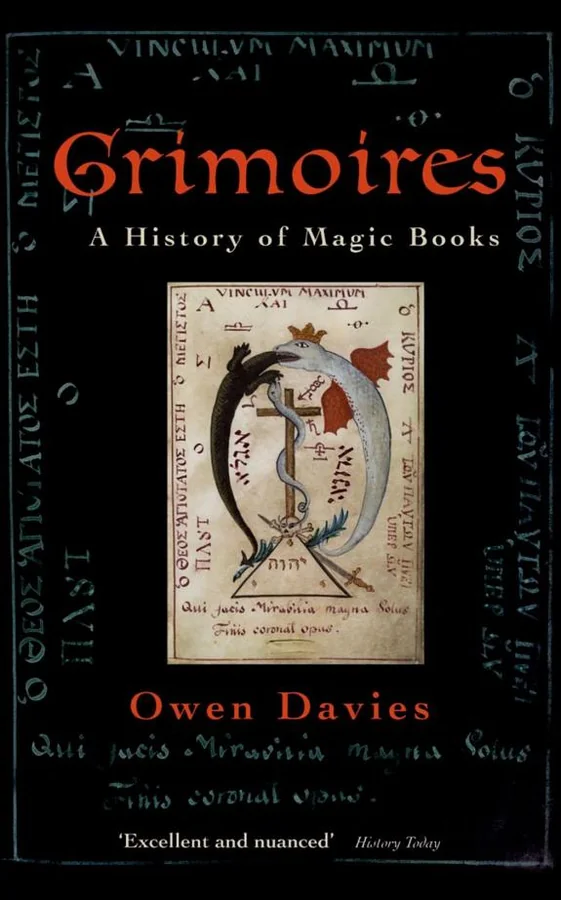
Owen Davies' "Grimoires" traces spellbooks from ancient Mesopotamia to printed volumes.
Owen Davies' "Grimoires" examines the historical development and cultural impact of spellbooks, beginning with their origins in ancient Mesopotamia. The book details how these texts, which contain magical formulas, rituals, and incantations, changed over centuries and across different cultures. Davies shows their transition from oral traditions and papyri into codified manuscripts and printed books. He situates grimoires within a broad historical sweep, noting their presence in various civilizations and their transformation through periods like the Renaissance and the Enlightenment. The work investigates the structural components of these magical texts, including their organization, common formulae, and the specific aims of the spells. It addresses the diverse origins of magical practices, from ancient Egyptian rituals to medieval European demonology, and how these influences came together into distinct grimoire traditions. The book also touches upon the ethical and theological debates surrounding their use.
This book places grimoires within the history of Western esotericism, focusing on the material culture and intellectual evolution of magical texts. It examines how these compendiums of spells and rituals were formed, transmitted, and received across different historical periods and societies. Davies' work considers the social and intellectual environments that shaped these texts, from their ancient roots to their codification in manuscript and print. It offers a historical perspective on the practices and beliefs associated with European magical traditions.
💡 Why Read This Book?
• Gain a clear understanding of the historical lineage of grimoires, specifically tracing their development from ancient Mesopotamian roots through to their early modern printed forms. • Learn about the distinct social and intellectual contexts that shaped grimoire creation and reception, such as the impact of the Renaissance on magical texts. • Discover the typical structural components and aims of spells found within grimoires, offering insight into their practical application across different historical periods.
⭐ Reader Reviews
Honest opinions from readers who have explored this book.
❓ Frequently Asked Questions
What is the earliest known origin of grimoires mentioned in Owen Davies' book?
Owen Davies' "Grimoires" traces the earliest recorded origins of spellbooks to ancient Mesopotamia, highlighting their long and varied history across millennia and cultures.
Does the book focus on practical spellcasting or historical analysis?
The book primarily offers a historical and academic analysis of grimoires, examining their development, content, and cultural impact rather than serving as a practical guide for spellcasting.
Which historical periods are most significantly covered regarding grimoire development?
The work covers a broad historical span, but significantly details developments through periods like the Renaissance and the Enlightenment, exploring how societal changes influenced these texts.
Are specific examples of grimoires discussed in the book?
Yes, the book discusses numerous examples of grimoires, examining their textual components, common formulae, and the types of spells they contain, providing concrete illustrations of the tradition.
Who is the intended audience for Owen Davies' "Grimoires"?
The book is intended for scholars of religious studies, historians of magic, occult practitioners interested in textual history, and anyone curious about the evolution and societal reception of magical literature.
What distinguishes this book from other works on magic?
Davies' "Grimoires" distinguishes itself through its rigorous historical scholarship and focus on the material and textual evolution of spellbooks, offering a grounded academic perspective.
🔮 Key Themes & Symbolism
Textual Evolution of Spellbooks
This theme examines how grimoires transitioned from oral traditions and ancient papyri to complex manuscript forms and eventually printed volumes. Davies highlights the impact of technologies like the printing press in the 15th century on the dissemination and standardization of magical knowledge. The work details how the physical form and accessibility of these texts directly influenced their societal perception and practical use by practitioners across different eras.
Cultural and Societal Reception
The book looks at how grimoires were perceived and treated by different societies throughout history. It explores periods of intense persecution and censorship, particularly in the early modern era with the rise of witch trials, contrasting with times when magical texts were more openly studied or even integrated into scholarly discourse. This theme addresses the anxieties and fascinations these books evoked.
Structure and Content of Magical Texts
A core focus is the analysis of the typical components found within grimoires. This includes cataloging common spells, rituals, incantations, conjurations of spirits, and instructions for creating magical objects. Davies categorizes the types of magic documented, from divination and healing to protection and malevolent workings, providing insight into the practical aims of these esoteric documents.
Geographical and Chronological Spread
The work traces the geographical origins and spread of grimoire traditions, starting from the Ancient Middle East and extending through Europe and beyond. It identifies regional variations and influences, showing how different cultures adapted and contributed to the grimoire corpus over the millennia, from ancient Egypt to medieval Europe.
💬 Memorable Quotes
Direct passages from the work, attributed to the author.
“Grimoires are books of spells that were first recorded in the Ancient Middle East and have developed over millennia.”
— This foundational statement expresses the book's scope, emphasizing the deep historical roots and continuous evolution of magical texts across diverse cultures and time periods.
“The transition from oral traditions to written grimoires marked a significant step in codifying magical knowledge.”
— This highlights the crucial shift in how magical practices were preserved and transmitted, moving from ephemeral spoken words to durable written records that allowed for greater study and replication.
“The printing press revolutionized the dissemination of grimoires, making them more accessible but also increasing societal fear.”
— This points to the dual impact of technology on magical texts: increased availability for practitioners, coupled with heightened concern and potential persecution from authorities or religious institutions.
“The content of grimoires often includes instructions for summoning spirits and performing complex rituals.”
— This describes a key characteristic of many grimoires, indicating their practical, operational nature and their engagement with the manipulation of supernatural forces.
“European grimoires of the medieval period synthesized various influences, including classical, Jewish, and Islamic magical traditions.”
— This illustrates the syncretic nature of magical development in Europe, showing how different streams of esoteric thought merged to form unique textual traditions.
🌙 Esoteric Significance
Tradition
While not strictly belonging to a single esoteric lineage, "Grimoires" engages deeply with the Hermetic, Kabbalistic, and ceremonial magic traditions that heavily influenced the development of Western grimoires. It serves as a historical bridge, showing how elements from Neoplatonism, Gnosticism, and later Christian Kabbalah were incorporated into these practical magical texts.
Symbolism
Key symbols explored include the Pentagram, often used for protection or invocation, and the Hexagram, frequently associated with celestial correspondences or elemental balance. The book also touches upon the symbolism of specific spirits and angels named within grimoires, whose imagery and attributes carry complex theological and cosmological meanings within these traditions.
Modern Relevance
Contemporary practitioners of ceremonial magic, chaos magic, and various forms of modern witchcraft often draw directly or indirectly from the historical grimoires discussed by Davies. Thinkers in occult studies and comparative religion continue to reference these texts for understanding the historical roots of magical practices and belief systems.
👥 Who Should Read This Book
• Students of comparative religion and history of magic seeking a comprehensive overview of spellbooks and their cultural evolution. • Occult practitioners interested in the historical context and textual origins of ritual practices and magical formulae. • Academic researchers needing a scholarly reference for the development and societal impact of esoteric literature throughout history.
📜 Historical Context
Published in 2010, Owen Davies' "Grimoires" arrived at a time when academic interest in the history of magic was robust, following key works by scholars like Owen Davies himself and Richard Kieckhefer. The book situates itself within the ongoing scholarly conversation about Western esotericism, particularly the lineage of magical texts. It emerged in an era less concerned with censorship than the periods it describes, allowing for a more open examination of materials previously relegated to the shadows. Unlike popular occult works that might focus on specific traditions like the Key of Solomon, Davies’ text offers a broader, more historically grounded survey. The reception of such works in academia typically involves peer review and citation, reflecting an established scholarly interest in the subject matter.
📔 Journal Prompts
The textual evolution from ancient Mesopotamian spells to medieval European grimoires.
The societal anxieties surrounding the printing of grimoires in the 17th century.
The specific rituals and conjurations detailed within a particular grimoire tradition.
The role of summoned spirits and their symbolic meanings in grimoire magic.
The contrast between the historical reception of grimoires and contemporary interest.
🗂️ Glossary
Grimoire
A textbook of magic, or a book of spells. Typically contains instructions for invoking spirits, performing rituals, and creating magical objects, originating from ancient times.
Ancient Middle East
Refers to the geographical region encompassing early civilizations like Mesopotamia and Egypt, where some of the earliest recorded magical texts and practices emerged.
Spellbook
A general term for a book containing spells or magical formulae, often used interchangeably with 'grimoire' but can encompass a broader range of magical texts.
Ritual
A set of actions, performed in a certain order, often for religious or magical purposes. Grimoires frequently detail specific rituals for various aims.
Incantation
A series of words said in a ritual or magical ceremony. These are often key components of spells found within grimoires.
Manuscript
A book or document written by hand. Many grimoires existed in manuscript form before the advent of widespread printing.
Esoteric
Intended for or likely to be understood by only a small number of people with a specialized knowledge or interest. Pertaining to hidden or secret knowledge.
This book appears in 1 collection
🔮 Readers Also Liked
Browse all →






From the “Grimoires” Collection
View all →





More Free Magic & Ritual Books
View all →