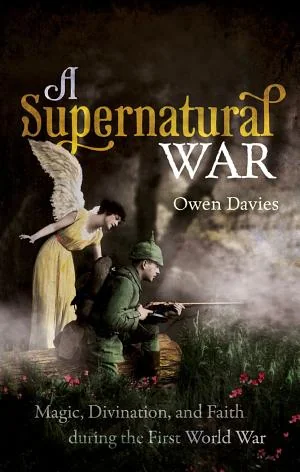
A Supernatural War
 77
77

A Supernatural War
Owen Davies' A Supernatural War offers a compellingly detailed account of how the First World War became a crucible for occult beliefs. The book excels in demonstrating the sheer breadth of this engagement, moving beyond the often-cited spiritualist mediums to include astrologers, prophets, and talismans. Davies meticulously details how authorities and the press grappled with this 'superstitious revival,' presenting a convincing argument for its widespread nature. A particular strength lies in the examination of official responses, such as the concerns raised by churches regarding amulets. However, the sheer volume of material, while impressive, occasionally leads to a slightly encyclopedic feel, where the narrative momentum could benefit from deeper thematic connections between certain anecdotes. The exploration of how spiritualists like Arthur Conan Doyle sought evidence for the afterlife is a particularly vivid example of the book's focus on personal conviction amidst global tragedy. Ultimately, Davies presents a vital corrective to historical narratives that overlook the profound impact of the supernatural on the Great War.
📝 Description
77
Owen Davies's A Supernatural War details the widespread use of occult practices during World War I.
Published in 2018, A Supernatural War examines the significant role occult beliefs and practices played during the First World War. Owen Davies investigates how individuals, both ordinary people and notable figures, turned to spiritualism, astrology, prophecy, and other esoteric arts in response to the immense destruction of the conflict. The book moves beyond simple anecdotes to provide a structured look at this historical trend.
This work is particularly relevant for historians of modern Britain and scholars who study esotericism. It will also interest anyone curious about how people coped psychologically and culturally with large-scale trauma. The book speaks to readers who are interested in the connections between warfare, belief systems, and the supernatural, offering a considered view of anxieties and coping strategies during that era.
During the First World War, a period marked by societal upheaval and unprecedented loss of life, interest in 'superstitious' practices surged. Contemporary authorities noted this trend, which the book places within a context of questioning traditional institutions. The conflict created conditions that fostered the growth of spiritualism and other occult pursuits as people sought solace, explanations, and a sense of control amidst widespread chaos and uncertainty. Davies's work challenges interpretations that dismiss these practices as mere foolishness.
💡 Why Read This Book?
• Understand the specific ways First World War anxieties fueled engagement with occultism, moving beyond generalities to concrete examples of talismans and prophetic pronouncements cited by Davies. • Gain insight into the official and public reactions to 'superstitious' beliefs during 1914-1918, appreciating the historical context of societal upheaval that made such practices prevalent. • Discover the diverse range of esoteric interests, from astrology to spiritualism, and how individuals sought solace and meaning through these channels during a period of unprecedented loss.
⭐ Reader Reviews
Honest opinions from readers who have explored this book.
❓ Frequently Asked Questions
What kind of occult powers were believed to be prevalent during World War I?
The book details beliefs in prophecy, astrology, spiritualism, and the efficacy of talismans and amulets. These were seen by some as ways to gain insight, protection, or influence events during the conflict.
Did official authorities take occult beliefs seriously during WWI?
Yes, the book shows that churches expressed concerns about 'superstitious' practices like wearing talismans, and the international press paid considerable attention to astrologers and prophets.
Who were some notable figures involved in the occult during WWI?
While not always explicitly named in the blurb, the work explores the roles of mediums, astrologers, and prophets who gained public attention, reflecting a broader societal engagement.
What societal factors contributed to the rise of occult beliefs during the war?
The unprecedented devastation, mass death, and societal upheaval of the First World War created widespread anxiety, prompting many to seek comfort, explanation, and a sense of control through esoteric means.
How does A Supernatural War differ from other historical accounts of WWI?
It specifically focuses on the often-overlooked role of the supernatural and occult practices, revealing how these beliefs were not fringe but a significant aspect of the wartime experience for many.
What specific examples of 'superstitious revival' does the book highlight?
The book discusses concerns over the wearing of talismans and amulets, and the significant interest shown by the press in the pronouncements of astrologers and prophets during the war years.
🔮 Key Themes & Symbolism
Wartime Spiritualism and Mediumship
The book extensively covers the surge in spiritualism during WWI, driven by the immense loss of life. It details how mediums claimed to communicate with the dead, offering solace to grieving families and soldiers. This phenomenon was not confined to private séances but often spilled into public discourse, with significant media attention paid to séances and alleged communications from fallen soldiers, blurring the lines between grief, belief, and the supernatural.
Astrology and Prophecy in Conflict
A Supernatural War examines the widespread reliance on astrology and prophecy during the First World War. Davies illustrates how individuals and even some military strategists turned to horoscopes and predictions for guidance, attempting to forecast battlefield outcomes or the war's conclusion. The international press's considerable interest in these pronouncements highlights their perceived influence and the public's desperate search for certainty amidst the conflict's unpredictability.
Talismans and Protective Charms
The work addresses the revival of 'superstitious' beliefs, particularly the wearing of talismans and amulets for protection. Churches voiced concerns about these practices, viewing them as un-Christian or pagan. The book explores how soldiers and civilians alike adopted these objects, seeking magical defense against the horrors of war, reflecting a deep-seated human need for agency and security when conventional means failed.
The 'Superstitious Revival'
Davies uses the term 'superstitious revival' to frame the widespread re-emergence of occult practices during the First World War. This concept captures the historical perception of these beliefs as archaic yet their actual prevalence and impact on society. The book analyzes how this revival was a direct response to the unique pressures of total war, challenging the notion of a purely rationalized modernity.
💬 Memorable Quotes
Direct passages from the work, attributed to the author.
“The First World War saw a major revival of 'superstitious' beliefs and practices.”
— This statement expresses the core thesis of the book, highlighting that the conflict significantly boosted engagement with occult and esoteric phenomena, moving them from the fringes to a more visible societal role.
“Churches expressed concerns about the wearing of talismans and amulets.”
— This indicates institutional awareness and disapproval of popular occult practices, framing the conflict not just as a military event but as a spiritual and cultural battleground over belief systems.
“The international press paid considerable interest to the pronouncements of astrologers and prophets.”
— This illustrates the mainstreaming of esoteric figures and their predictions, showing how astrological and prophetic claims captured public attention and were considered newsworthy during the war.
“Authorities in several countries periodical...”
— Though the blurb is cut short, this suggests governmental or official bodies were also monitoring and potentially reacting to the rise of occult practices, indicating a broader societal impact beyond individual belief.
“Extraordinary people in a world caught up with the promise of occult powers.”
— This suggests the book focuses on both prominent figures and ordinary individuals who were drawn to occultism, exploring the allure and perceived potential of these powers during a time of crisis.
🌙 Esoteric Significance
Tradition
The work touches upon various esoteric traditions, most prominently spiritualism, but also touches on folk magic and astrology. It fits within the broader study of modern esoteric movements that gained traction during periods of social and psychological stress. While not strictly adhering to a single lineage like Hermeticism or Kabbalah, it documents how these periods of crisis often see a syncretic blending and popularization of esoteric concepts, moving them from specialized circles into wider public consciousness.
Symbolism
While specific symbols are not detailed in the blurb, the mention of 'talismans and amulets' points to apotropaic magic – symbols or objects intended to ward off evil or harm. These items, often imbued with personal or traditional significance, represent a desire for direct, magical intervention against the overwhelming forces of war. The 'promise of occult powers' itself can be seen as a symbolic representation of humanity's search for agency and control in the face of uncontrollable destruction.
Modern Relevance
Davies' exploration of how society turns to the supernatural during crises remains highly relevant. Contemporary thinkers and practitioners in fields ranging from the sociology of religion to trauma studies can find parallels in how belief systems adapt and evolve under extreme pressure. The book’s examination of spiritualism and belief in unseen forces offers context for modern interest in phenomena like near-death experiences, psychic abilities, and alternative healing modalities, demonstrating recurring patterns in human responses to existential threats.
👥 Who Should Read This Book
• Historians of the First World War seeking to understand the social and psychological dimensions beyond military strategy, particularly those interested in popular belief systems. • Students and practitioners of esotericism interested in the historical development and societal impact of spiritualism, astrology, and folk magic during an important period. • Cultural critics and sociologists examining how societies cope with mass trauma, examining the role of non-rational belief systems in providing comfort and meaning during times of crisis.
📜 Historical Context
The First World War (1914-1918) was a period of profound societal upheaval that dramatically reshaped perceptions of the possible and the permissible. Owen Davies' work emerges within a rich historiography that has increasingly acknowledged the role of the non-rational in shaping historical events. The era saw a concurrent flourishing of spiritualism, often associated with figures like Sir Arthur Conan Doyle, and a keen public interest in astrology and prophecy, starkly contrasting with the era's technological advancements. This 'superstitious revival,' as Davies terms it, was not merely a fringe phenomenon; it deeply concerned established religious bodies like the Church of England, which issued pronouncements against practices like wearing talismans. Contemporaries like Beatrice Webb, a prominent Fabian socialist, noted the widespread belief in spiritualism, reflecting a broad societal engagement that transcended class divides. The book situates these beliefs within the context of mass death, psychological trauma, and a crisis of faith, challenging earlier narratives that presented the war solely through a lens of rationalized statecraft and military strategy.
📔 Journal Prompts
The 'superstitious revival' during World War I: What aspects of this phenomenon most surprise you?
Consider the role of talismans and amulets: How do symbolic objects offer psychological support in times of crisis?
Reflect on the international press's interest in astrologers and prophets: What does this reveal about public desire for certainty?
The promise of occult powers: In what ways do individuals today seek similar promises from esoteric practices?
Analyze the concerns of churches regarding 'superstitious' practices: What do these official reactions tell us about societal anxieties?
🗂️ Glossary
Spiritualism
A religious movement based on the belief that the spirits of the dead can be communicated with through a medium. It gained significant traction in the 19th and early 20th centuries, particularly after periods of mass death.
Talismans
Objects considered to possess magical properties, often inscribed with symbols or prayers, believed to offer protection or bring good fortune to the wearer.
Amulets
Similar to talismans, these are items worn for protection against evil, danger, or disease. They are often imbued with spiritual or magical significance.
Astrology
The study of the movements and relative positions of celestial bodies interpreted as having an influence on human affairs and the natural world.
Prophecy
The foretelling of future events, often claimed to be divinely inspired. During WWI, prophets offered predictions about the war's outcome and duration.
Occult Powers
Secret or hidden powers and knowledge, typically relating to magic, spiritualism, and supernatural phenomena, believed to be accessible through esoteric practices.
Superstitious Revival
A term used to describe the significant increase in belief and practice of 'superstitious' or esoteric phenomena, particularly during periods of societal stress like World War I.