Grimoire Blank Book
 83
83

Grimoire Blank Book
The Grimoire Blank Book by The Journal The Journal Folks presents a utilitarian approach to the creation of personal magical texts. Its most significant strength lies in its generous page size (8.5" x 11"), which allows for comprehensive notation of spell components, ritual steps, and celestial alignments—a feature often constrained in smaller formats. The inclusion of a two-page spread template, with designated fields for date, caster, spell name, participants, deities, and moon phase, offers a practical structure for beginners. However, the book's primary limitation is its very nature: it provides no inherent magical content. It is a vessel, not a source. While the blurb's poetic invocation, "Look closely child with curious eyes, for magick lives within the wild," attempts to imbue it with mystique, the interior is purely functional. The core appeal rests on the user's imagination and existing knowledge base. Ultimately, it functions precisely as intended—a blank slate for the dedicated practitioner.
📝 Description
83
Published in 2019, the Grimoire Blank Book provides a dedicated space for recording personal magical workings.
The Grimoire Blank Book, first released in 2019, is a tool for practitioners to document their magical activities. It is not a collection of existing spells but a blank journal for solitary or group use. Its large 8.5" x 11" pages allow for extensive notes on rituals, ingredients, and observations. This journal is for anyone involved in spellcraft and ritual, whether new to witchcraft or Wicca or an experienced practitioner building an archive. Its blank pages encourage personalization, fitting for those creating their own magical systems or adapting existing ones.
The central idea is that writing down magical actions constitutes a practice itself. The journal helps turn temporary intentions and actions into recorded knowledge. It highlights the practitioner's role in shaping their magical path, including naming spells, listing participants, noting moon phases, and calling on deities. This detailed recording process strengthens the magic.
While this grimoire is a recent publication from 2019, its purpose connects to a long history of magical texts. Medieval grimoires and the private notebooks of figures like Aleister Crowley served to codify and pass on magical knowledge. This 2019 edition appears during a modern surge in occult interest, made more accessible by current publishing and online resources, unlike older texts that had limited circulation.
💡 Why Read This Book?
• Gain a structured framework for personal spellcraft, utilizing the provided two-page spread template to meticulously record your workings, including deities invoked and lunar phases, fostering a disciplined magical practice. • Create a lasting, tangible archive of your unique magical journey, moving beyond ephemeral thoughts to concrete documentation that can be referenced and built upon over time, mirroring historical practices. • Engage actively with the "Book of Shadows" concept by personalizing your own grimoire, transforming blank pages into a repository of your evolving magical knowledge and personal system.
⭐ Reader Reviews
Honest opinions from readers who have explored this book.
❓ Frequently Asked Questions
What is the primary purpose of the Grimoire Blank Book?
Its primary purpose is to serve as a dedicated, blank journal for individuals to record their personal spells, rituals, and magical observations. It acts as a customizable Book of Shadows, allowing practitioners to document their own magical practices.
What are the dimensions of the Grimoire Blank Book?
The book measures 8.5 inches by 11 inches (21.59 cm x 27.94 cm), providing ample space for detailed entries, making it suitable for longer spells or extensive ritual notes.
Does this grimoire contain pre-written spells or rituals?
No, the Grimoire Blank Book is intentionally left blank. It provides templates and space for the user to write their own spells and document their personal magical workings, rather than offering pre-written content.
Who is the intended audience for this blank journal?
It is intended for witches, Wiccans, and practitioners of various esoteric traditions who wish to create their own personal grimoire or Book of Shadows to record their magical activities and knowledge.
What kind of cover does the book have?
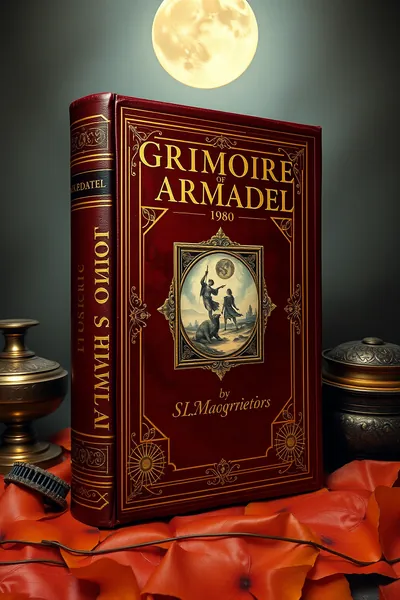
The book features a matte finish cover described as 'witchy wicca,' suggesting a thematic design relevant to modern pagan and witchcraft aesthetics.
How many pages does the interior contain?
The interior of the Grimoire Blank Book contains 130 pages, each designed to facilitate the recording of magical information.
🔮 Key Themes & Symbolism
Personalized Spellcraft
This journal emphasizes the creation of a unique magical practice. Unlike pre-published grimoires, it demands active participation from the user. The blank pages and structured template encourage the practitioner to define their own magical language, rituals, and intentions. Recording details such as deities invoked, moon phases, and specific spell names transforms personal experience into documented knowledge, fostering a sense of ownership and efficacy over one's magical path.
Documentation as Ritual
The act of writing itself becomes a ritual component. By meticulously filling the pages, the practitioner imbues their workings with greater significance. The two-page spread template, with fields for date, caster, and ingredients, provides a systematic approach that mirrors the careful preparation of a spell. This detailed record-keeping serves not only as a memory aid but also as a method for analyzing magical outcomes and refining future practices, solidifying the link between intent and manifestation.
The Modern Book of Shadows
This blank grimoire functions as a contemporary 'Book of Shadows,' a personal grimoire central to many witchcraft traditions. It acknowledges the evolution of magical practice, providing a tool that aligns with modern needs for flexibility and personalization. The large format accommodates the complexity of contemporary magical systems, allowing for the integration of diverse influences and personal innovations, moving beyond archaic or restrictive formats.
💬 Memorable Quotes
Direct passages from the work, attributed to the author.
“"Look closely child with curious eyes, for magick lives within the wild"”
— This opening line suggests that magic is not confined to structured rituals but is inherent in the natural world and observable phenomena, encouraging a curious and attentive approach to discovering its presence.
“Blank spellbooks are perfect for writing down your favorite spells all in one place.”
— This statement highlights the practical utility of the journal as a centralized repository for a practitioner's magical repertoire, ensuring that valued spells and formulas are easily accessible and organized.
“Perfect size for longer spells or rituals.”
— This emphasizes the generous dimensions of the journal, indicating its suitability for practitioners who engage in elaborate or time-consuming magical workings that require extensive written detail.
“Matte finish witchy wicca cover”
— This describes the aesthetic and tactile quality of the book's exterior, signaling its intended audience and thematic alignment with contemporary witchcraft and Wiccan practices.
“2 page spread template. Right pages include space for date, caster, name of spell, participants, deities invoked, phase of the moon, ingred”
— This details the internal structure, providing specific fields designed to guide the practitioner in recording essential elements of a magical working, ensuring comprehensive documentation.
🌙 Esoteric Significance
Tradition
This grimoire aligns with the modern Pagan and Wiccan revival, particularly traditions emphasizing personal gnosis and the creation of a 'Book of Shadows.' It departs from older, more dogmatic grimoire traditions (like those purportedly linked to King Solomon or Goetia) by providing a blank canvas. Its significance lies in empowering the individual practitioner to construct their own magical system, reflecting a shift towards experiential and personalized spirituality within contemporary esoteric discourse.
Symbolism
The primary 'symbol' is the blank page itself, representing potentiality and the practitioner's creative power. The structured template, with fields for 'deities invoked' and 'phase of the moon,' implicitly invokes ancient astrological and pantheistic systems. The 'witchy wicca' cover art, while unspecified, typically employs symbols like the pentacle, crescent moon, or triple goddess imagery, connecting the user's practice to established visual languages of modern witchcraft.
Modern Relevance
Contemporary practitioners of witchcraft, Wicca, and eclectic paganism utilize such blank grimoires extensively. Thinkers and practitioners like Judika Illes, author of *Encyclopedia of 5000 Spells*, advocate for personal grimoire keeping as essential practice. This book directly supports the trend towards self-directed magical education and the development of unique spiritual paths, resonating with online communities and modern covens focused on personalized magical expression.
👥 Who Should Read This Book
• Aspiring witches and Wiccans seeking to document their initial spellwork and ritual observations in a structured, personal format. • Experienced practitioners desiring a high-quality, large-format journal to meticulously record advanced workings, magical research, and evolving personal systems. • Students of comparative religion and occult history interested in understanding the practical application and evolution of personal grimoire traditions in contemporary practice.
📜 Historical Context
The Grimoire Blank Book, published in 2019, emerges within a modern occult revival that gained significant momentum throughout the late 20th and early 21st centuries. This period saw a democratization of esoteric knowledge, moving away from the more secretive circles often associated with earlier movements like the Hermetic Order of the Golden Dawn. Unlike medieval grimoires such as the *Grimorium Verum* (circulated from the mid-18th century), which contained purported magical instructions and conjurations, this 2019 publication offers no pre-scripted content. Its blank pages reflect a contemporary emphasis on individual practitioner autonomy, a concept that contrasts with the hierarchical structures and fixed repertoires found in earlier magical orders. The work’s accessibility also differs starkly from the limited circulation of texts like Eliphas Lévi's *Dogme et Rituel de la Haute Magie* (1854-1856), which required dedicated study within specific esoteric frameworks.
📔 Journal Prompts
Your personal spell name: What does it signify?
Deities invoked: Which pantheon appeals to your current path?
Moon phase influence: How did the current lunar cycle affect your ritual?
Magical ingredients: What unique substitutions did you make?
Future workings: What insights from this entry inform your next spell?
🗂️ Glossary
Grimoire
A textbook of magic, typically containing instructions for invoking spirits, casting spells, and performing magical rituals. Historically, grimoires contained pre-written material, unlike blank journals.
Book of Shadows
A personal grimoire, common in Wicca and modern witchcraft, containing spells, rituals, correspondences, and magical knowledge specific to the individual practitioner or coven.
Spellcraft
The art and practice of casting spells, involving intention, visualization, ritual actions, and often specific ingredients or words of power.
Ritual
A set sequence of actions, words, or gestures performed in a specific order, often for religious, magical, or symbolic purposes.
Deities Invoked
Refers to the specific gods or goddesses that a practitioner calls upon or addresses during a magical working or ritual.
Lunar Phase
The different stages of the Moon as it orbits the Earth, from new moon to full moon and back. Many magical traditions associate specific energies or influences with each phase.
Caster
The individual performing a spell or ritual; the person actively directing magical energy and intent.