Golden Dawn Magical Tarot

 83
83

Golden Dawn Magical Tarot
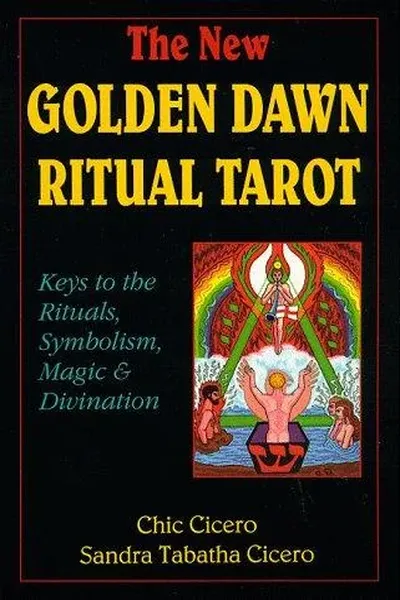
Cicero and Cicero's Golden Dawn Magical Tarot offers a rigorous, system-driven approach to the cards, a welcome antidote to more superficial interpretations. The inclusion of an extra card, a nod to certain Golden Dawn traditions, is a thoughtful touch. The integration of Kabbalistic and astrological correspondences is detailed, providing a solid framework for serious study. However, the sheer density of information, while a strength for the initiated, can feel overwhelming for newcomers to Golden Dawn cosmology. The book's size, while practical for portability, makes its dense diagrams somewhat cramped. A particularly striking aspect is the deliberate departure from Rider-Waite symbolism in favor of the Order's own visual lexicon, demanding a fresh engagement with familiar archetypes. This is a deck for the committed student, not the casual diviner.
📝 Description
83
Published in 1997, The Golden Dawn Magical Tarot offers a seventy-eight-card deck plus an extra card, designed by the Ciceros.
This tarot deck and its accompanying 192-page book present a system derived from the teachings of the Hermetic Order of the Golden Dawn. The design integrates Kabbalistic, Hermetic, and astrological principles. It is intended for serious practitioners of Western Esotericism interested in the magical and initiatory traditions of the Order. The Ciceros created this resource not for casual fortune-telling but as a tool for spiritual development, ritual, and the practical application of occult philosophy. Individuals seeking to understand tarot as a symbolic language within a structured magical system will find this deck useful. The book details how to understand and use the cards for magical work and self-exploration. The deck is sized to fit with the book in its slipcase.
The Hermetic Order of the Golden Dawn, a late 19th-century magical society, synthesized Kabbalah, Hermeticism, Rosicrucianism, and Freemasonry. Its teachings significantly shaped modern occultism. The Ciceros' tarot deck aims to make these complex principles accessible through the structured medium of tarot. This reflects the Order's focus on systematic magical training and symbolic interpretation, influenced by figures like S.L. MacGregor Mathers and Aleister Crowley.
💡 Why Read This Book?
• Gain a practical understanding of the Kabbalistic Tree of Life as it applies to tarot, learning how each of the 78 cards maps onto specific Sephiroth and Paths, as detailed in the accompanying 192-page book. • Explore the astrological attributions within the deck, understanding how planets and zodiacal signs are assigned to the Major and Minor Arcana, as originally taught within the Hermetic Order of the Golden Dawn. • Learn to use the tarot for ritualistic and magical purposes, moving beyond simple divination to engage with the symbolic language of the Four Worlds (Atziluth, Briah, Yetzirah, Assiah) as presented by Cicero and Cicero.
⭐ Reader Reviews
Honest opinions from readers who have explored this book.
❓ Frequently Asked Questions
What makes the Golden Dawn Magical Tarot deck different from other tarot decks?
This deck is unique because it is based on the specific magical system and symbolism of the Hermetic Order of the Golden Dawn, integrating Kabbalistic and astrological correspondences in a structured manner unlike many other popular tarot systems.
Is the accompanying book essential for using this tarot deck?
Yes, the 192-page book is essential. It details the specific meanings, correspondences, and intended magical applications of each card within the Golden Dawn system, which are crucial for understanding this deck.
Does this deck include an extra card, and why?
Yes, the deck includes seventy-nine cards, featuring an extra card. This inclusion is noted as being described in the Order's documents, offering a unique element for practitioners familiar with Golden Dawn lore.
Who originally developed the system behind the Golden Dawn Magical Tarot?
The system is derived from the teachings of the Hermetic Order of the Golden Dawn, a magical organization founded in the late 19th century. Sandra Tabatha Cicero and Chic Cicero are the authors who adapted and presented this system.
What is the historical significance of the Hermetic Order of the Golden Dawn?
The Hermetic Order of the Golden Dawn was highly influential in the revival of Western Esotericism, blending Kabbalah, Hermeticism, and ceremonial magic, and its teachings have profoundly shaped modern occultism.
Can beginners use the Golden Dawn Magical Tarot?
While the deck can be used by beginners, its depth and complexity, rooted in the Golden Dawn's magical system, are best appreciated by those committed to serious study of esoteric traditions. Prior knowledge of Kabbalah or astrology enhances the learning curve.
🔮 Key Themes & Symbolism
Kabbalistic Correspondences
The deck meticulously maps each of the seventy-eight tarot cards onto the Kabbalistic Tree of Life. This involves assigning cards to the ten Sephiroth (divine emanations) and the twenty-two Paths connecting them. This framework allows for a deeper, multi-layered interpretation of the cards, connecting them to concepts of creation, divine consciousness, and spiritual ascent as understood within Hermeticism.
Astrological Attributions
Integral to the Golden Dawn system, astrological correspondences are deeply embedded within this tarot deck. The Major Arcana are linked to planets and zodiacal signs, while the Minor Arcana are further associated with specific planetary and zodiacal influences, and elemental energies. This layering provides a rich symbolic language for divination and magical workings, reflecting the macrocosm and microcosm.
The Four Worlds
The structure of the tarot deck reflects the Golden Dawn's cosmology of the Four Worlds: Atziluth (the Archetypal World), Briah (the Creative World), Yetzirah (the Formative World), and Assiah (the Material World). Each suit and its associated cards are understood to manifest within these distinct planes of existence, offering a framework for magical operations and understanding the flow of energy.
Practical Magic and Ritual
Beyond divination, the Golden Dawn Magical Tarot is intended as a tool for ceremonial magic and spiritual development. The book provides guidance on how to use the cards in rituals, meditations, and magical operations, aligning them with the Order's initiatory structure and goals of spiritual attainment and self-transformation.
💬 Memorable Quotes
Direct passages from the work, attributed to the author.
“The deck is designed to reflect the magical teachings of the Hermetic Order of the Golden Dawn.”
— This statement highlights the deck's core purpose: not merely divination, but the embodiment of a specific magical tradition's principles and practices for adherents.
“Each card corresponds to a Path on the Kabbalistic Tree of Life.”
— This emphasizes the structured, intellectual framework underpinning the deck, linking tarot imagery directly to complex Qabalistic concepts for advanced study.
“The system integrates Hermetic, Kabbalistic, and astrological principles.”
— This points to the syncretic nature of the Golden Dawn tradition itself, which the tarot deck serves to illustrate and make accessible through its symbolic language.
“An additional seventy-ninth card is included, as per Order documents.”
— This detail underscores the deck's authenticity to specific Golden Dawn traditions, distinguishing it from standard decks and appealing to those seeking esoteric accuracy.
“The book is the same size as the deck for convenient carrying.”
— This practical design choice suggests the authors' intent for the deck and guide to be used as an integrated, portable tool for practitioners on the go.
🌙 Esoteric Significance
Tradition
This work is firmly rooted in the Western Esoteric Tradition, specifically the magical system developed by the Hermetic Order of the Golden Dawn. It adheres to the Order's syncretic approach, blending Kabbalistic principles, Hermetic philosophy, Rosicrucian symbolism, and astrological attributions into a coherent magical framework. It departs from purely divinatory tarot by emphasizing its use in ritual, initiation, and spiritual development aligned with the Order's initiatory grades.
Symbolism
The deck employs specific symbolism derived from the Golden Dawn curriculum. Key motifs include the Kabbalistic Tree of Life, which serves as the structural map for the deck, and the Four Worlds (Atziluth, Briah, Yetzirah, Assiah), representing different planes of existence. The suits (Wands, Cups, Swords, Pentacles) are assigned to specific elements and divine names, imbuing each card with layers of meaning tied to cosmic principles.
Modern Relevance
The Golden Dawn Magical Tarot remains relevant today for practitioners of Western Esotericism, ceremonial magic, and Kabbalistic studies. It serves as a primary resource for those seeking to understand and practice the specific magical system of the Golden Dawn. Contemporary occultists and tarot scholars often reference this deck and its accompanying text for its detailed correspondences and its influence on modern magical traditions.
👥 Who Should Read This Book
• Students of Western Esotericism seeking to understand the foundational magical system of the Hermetic Order of the Golden Dawn, moving beyond generic tarot interpretations. • Practitioners of Kabbalah interested in exploring the practical application of the Tree of Life through a structured symbolic system like tarot. • Aspiring ceremonial magicians who wish to integrate tarot symbolism into their rituals and magical workings, following a historically significant tradition.
📜 Historical Context
The Golden Dawn Magical Tarot emerges from the fertile ground of late 19th-century occult revival, a period marked by intense interest in esoteric traditions. The Hermetic Order of the Golden Dawn, founded in 1888 by William Robert Woodman, William Wynn Westcott, and Samuel Liddell MacGregor Mathers, rapidly became the most influential magical organization of its time. It synthesized Kabbalah, Hermeticism, Rosicrucianism, and Freemasonry into a structured system of magical training and initiation. The Order's teachings profoundly influenced subsequent occult figures and movements. While the Order itself experienced internal schisms and public scrutiny in the early 20th century, its core curriculum and symbolism, including its unique approach to tarot, continued to be studied and practiced. This work by Cicero and Cicero seeks to codify and present that specific lineage, making it accessible to a wider audience interested in the Order's magical philosophy, differentiating it from contemporary movements like Theosophy or the more individualistic magical practices of figures like Aleister Crowley, who himself was an early member.
📔 Journal Prompts
Reflect on the symbolism of the Sephirah Malkuth as represented in the suit of Pentacles within this deck.
Consider the astrological attribution of your birth date's zodiac sign to a Major Arcana card and its potential significance.
How does the concept of the Four Worlds inform your understanding of the Wands suit's expression across different planes?
Analyze the symbolic connection between the Hebrew letter assigned to a specific Path on the Tree of Life and its corresponding tarot card.
Explore the potential for using a Minor Arcana card, such as the Three of Swords, in a ritual for emotional release or transformation.
🗂️ Glossary
Hermetic Order of the Golden Dawn
A magical organization founded in London in 1888, influential in the revival of Western Esotericism, known for its synthesis of Kabbalah, Hermeticism, and ceremonial magic.
Sephiroth
The ten divine emanations or attributes of God in Kabbalistic cosmology, forming the structure of the Tree of Life, with which tarot cards are correlated in this system.
Tree of Life
A diagrammatic representation of Kabbalistic cosmology, depicting the Sephiroth and the Paths connecting them, serving as a fundamental map for spiritual and magical understanding.
Atziluth
The highest of the Four Worlds in Kabbalistic and Golden Dawn cosmology, known as the Archetypal World, representing pure spirit and divine essence.
Briah
The second of the Four Worlds, the Creative World, associated with archangelic beings and the formation of concepts and divine ideas.
Yetzirah
The third of the Four Worlds, the Formative World, associated with angels and the shaping of forces and energies.
Assiah
The lowest of the Four Worlds, the Material World, the area of physical manifestation and earthly existence.
This book appears in 1 collection
🔮 Readers Also Liked
Browse all →









From the “Golden Dawn” Collection
View all →




More Free Occult Philosophy Books
View all →