The Nightmare Before Christmas Tarot Deck and Guidebook
 74
74

The Nightmare Before Christmas Tarot Deck and Guidebook
Minerva Siegel’s *The Nightmare Before Christmas Tarot Deck and Guidebook* succeeds admirably in its mission to marry Burton’s gothic whimsy with the ancient art of tarot. The strength lies in the intuitive visual translation; characters like Jack Skellington and Sally are rendered with an uncanny appropriateness to their archetypal roles, making the deck feel surprisingly cohesive. The guidebook, while concise, offers clear interpretations that bridge the film's narrative with standard tarot meanings. A potential limitation, however, is that the deck's strong thematic identity might occasionally overshadow the nuances of a traditional reading for more experienced practitioners. For instance, the interpretation of the Lovers card, tied to Jack and Sally, is effective but might feel prescriptive to those seeking broader applications of the archetype. Nevertheless, this set provides an accessible and engaging entry point into tarot for fans of the film.
📝 Description
74
Minerva Siegel's 2020 tarot deck translates Tim Burton's film into divination.
Published in 2020, The Nightmare Before Christmas Tarot Deck and Guidebook adapts Tim Burton's 1993 film into a 78-card tarot system. The deck's artwork uses imagery from the stop-motion movie, connecting its gothic aesthetic and characters to traditional tarot archetypes. The accompanying booklet offers interpretations for using these cards for personal insight. This set is designed for fans of the film who are interested in tarot, particularly those who might find conventional tarot imagery less approachable. It also appeals to collectors of unique decks and esoteric practitioners open to unconventional approaches.
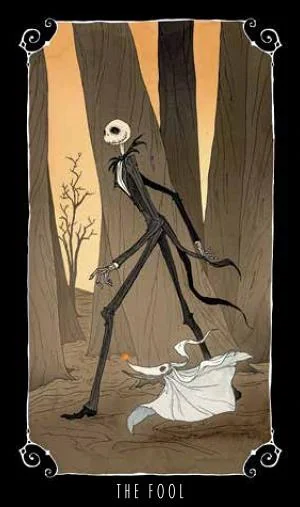
The guidebook maps the film's Halloween Town settings and characters onto the Major and Minor Arcana. For example, Jack Skellington might correspond to the Fool or Magician, while Sally could embody the High Priestess or a Queen archetype. The deck integrates the film's blend of macabre and whimsical elements into its card interpretations, aiming to facilitate readings that examine themes present in the movie.
This tarot deck is part of a 21st-century trend adapting popular culture into divination tools. The release of licensed tarot decks, especially from the late 2000s onward, indicates a growing market for relatable and familiar systems of esoteric practice. Minerva Siegel's work fits within this movement, using a well-known narrative to introduce traditional symbolic languages to a contemporary audience. It bridges the gap between mainstream entertainment and established occult traditions, offering a unique entry point for those drawn to both.
💡 Why Read This Book?
• Gain a unique perspective on tarot archetypes through the familiar characters and settings of Halloween Town, fostering intuitive connections beyond traditional imagery. • Discover how the film's themes of identity, transformation, and navigating different worlds are mirrored in the tarot's symbolic language, offering personal insights. • Explore a blend of pop culture and esoteric practice, providing an engaging and accessible entry point for those new to tarot or seeking a less conventional deck.
⭐ Reader Reviews
Honest opinions from readers who have explored this book.
❓ Frequently Asked Questions
What is the primary inspiration behind The Nightmare Before Christmas Tarot Deck?
The deck is inspired by Tim Burton's 1993 stop-motion animated film, *The Nightmare Before Christmas*. It translates the film's characters, settings, and themes into the traditional 78-card tarot structure.
Who is Minerva Siegel, the author of the guidebook?
Minerva Siegel is the author credited with writing the companion guidebook for this 2020 tarot deck, providing interpretations that link the film's narrative to tarot meanings.
How many cards are in The Nightmare Before Christmas Tarot Deck?
The deck comprises the standard 78 tarot cards, divided into the Major Arcana and the Minor Arcana, each reimagined with the film's distinctive aesthetic.
Is this deck suitable for beginners in tarot reading?
Yes, the deck is often considered suitable for beginners, particularly those who are fans of the film, as the familiar imagery can make learning tarot concepts more approachable.
When was The Nightmare Before Christmas Tarot Deck and Guidebook first published?
The deck and accompanying guidebook were first published in 2020, making it a relatively recent addition to the market of pop culture-themed tarot sets.
Does the deck follow traditional tarot meanings?
The deck generally adheres to traditional tarot meanings while integrating them with the specific symbolism and narrative of *The Nightmare Before Christmas*, offering a unique interpretive layer.
🔮 Key Themes & Symbolism
Transformation and Identity
The deck explores the themes of transformation and identity, central to both the film and tarot. Jack Skellington's desire to embody Christmas represents a profound shift in identity, mirroring the Fool's journey or the Magician's potential. The cards encourage contemplation on personal desires for change and the often-unforeseen consequences of stepping into new roles, aligning with the film's narrative arc.
The Dichotomy of Worlds
A core concept is the interplay between disparate worlds, specifically Halloween Town and the ‘Real World’. This speaks to tarot's exploration of the material versus the spiritual, the mundane versus the magical. The deck uses the film’s visual language to represent thresholds and the challenges of bridging different realities or perspectives, prompting reflection on boundaries and integration.
Embracing the Shadow
The inherent 'spookiness' and gothic aesthetic of *The Nightmare Before Christmas* directly engage with the concept of embracing the shadow self, a key esoteric principle. The deck invites readers to find beauty and wisdom in darker themes, the macabre, and the unconventional, suggesting that these aspects are integral to wholeness, much like the film finds charm in the macabre.
Finding Joy in the Unconventional
The film's central premise—Jack Skellington’s attempt to bring his unique brand of Halloween to Christmas—highlights finding joy and meaning in unconventional expressions. This theme translates to the tarot by encouraging readers to embrace their unique path and find personal truth outside of societal norms, celebrating individuality and creative expression.
💬 Memorable Quotes
Direct passages from the work, attributed to the author.
“Jack Skellington, the Pumpkin King, embodies the spirit of change and the pursuit of new experiences.”
— This highlights Jack's core role as a catalyst for transformation, aligning him with archetypes like the Fool or the Magician beginning a new, potentially chaotic, adventure.
“Sally represents intuition and the wisdom found in looking beyond the surface.”
— This positions Sally as a figure of inner knowing, akin to the High Priestess, suggesting that true understanding often comes from quiet contemplation and recognizing hidden truths.
“The Minor Arcana cards translate the everyday events and challenges of Halloween Town into relatable situations.”
— This indicates that the deck uses the film's setting to ground the Minor Arcana's lessons in tangible, albeit fantastical, scenarios, making practical divination accessible.
“The deck explores the liminal spaces between fear and wonder, the familiar and the strange.”
— This points to the deck's ability to work through the ambiguous and transitional states, encouraging readers to find meaning and insight within these often-uncomfortable in-between zones.
“Oogie Boogie’s presence suggests themes of chance, fate, and confronting darker impulses.”
— This interpretation links the villain to concepts of randomness and the shadow aspects of the psyche, inviting reflection on how we face uncertainty and our own less desirable traits.
🌙 Esoteric Significance
Tradition
This work draws loosely from the Western Esoteric tradition, specifically by adapting established tarot symbolism into a modern, culturally relevant format. It doesn't strictly adhere to Hermetic, Kabbalistic, or Theosophical lineages but rather repurposes their symbolic language through the accessible medium of popular film. Its significance lies in democratizing tarot, making archetypal concepts available to a wider audience through narrative association rather than solely through dense theoretical study.
Symbolism
Key symbols include Jack Skellington, often representing the Fool or Magician archetype, embodying transformation and potential. Sally can symbolize the High Priestess or a nurturing figure, representing intuition and deeper meaning. The contrast between Halloween Town and Christmas Town visually represents the tension between the shadow self and idealized concepts, or the known versus the unknown, a common theme in alchemical and psychological symbolism.
Modern Relevance
Contemporary practitioners of pop culture tarot, collectors seeking unique decks, and those interested in Jungian psychology's application of archetypes find relevance here. It speaks to a modern fascination with integrating personal spirituality with everyday cultural consumption. Thinkers exploring the intersection of media, identity, and spiritual practice might also reference this deck as an example of contemporary esoteric expression.
👥 Who Should Read This Book
• Fans of *The Nightmare Before Christmas* seeking a novel way to connect with the film's themes and characters through divination. • Beginner tarot enthusiasts who find traditional decks intimidating and are drawn to relatable, modern imagery for learning card meanings. • Collectors of unique or themed tarot decks interested in the growing trend of pop culture-infused esoteric tools.
📜 Historical Context
The *Nightmare Before Christmas Tarot Deck and Guidebook*, published in 2020, arrived during a period of significant mainstreaming for esoteric practices, particularly tarot. While Tim Burton's film itself premiered in 1993, the creation of this tarot set reflects a burgeoning trend in the late 2010s and early 2020s where popular culture IPs were increasingly adapted into divination tools. This phenomenon contrasts with earlier eras, such as the late 19th century when figures like Eliphas Lévi were codifying Western esotericism, or the mid-20th century New Age movement that saw original tarot systems emerge. The demand for accessible, visually engaging tarot decks, especially those appealing to younger demographics or existing fan bases, became a notable market force. This set is part of a lineage of pop culture tarot that includes decks based on *The Lord of the Rings*, *Harry Potter*, and *Avatar: The Last Airbender*, demonstrating a cultural shift in how esoteric tools are perceived and consumed.
📔 Journal Prompts
How does Jack's desire to be someone else mirror your own aspirations for change?
In what ways does Sally's intuition guide her actions differently from Jack's?
Consider a time you felt caught between two worlds or identities.
What 'shadow' aspects of yourself do you find challenging but ultimately useful?
How can embracing the 'spooky' or unconventional lead to personal growth?
🗂️ Glossary
Major Arcana
The 22 trump cards in a tarot deck, representing significant life lessons, spiritual archetypes, and major turning points in a person's journey.
Minor Arcana
The 56 cards of a tarot deck, divided into four suits (Wands, Cups, Swords, Pentacles), representing everyday events, challenges, and situations.
Archetype
A universal, symbolic pattern or image that recurs across cultures and time, representing fundamental human experiences or character types.
Divination
The practice of seeking knowledge of the future or the unknown by supernatural means, often using tools like tarot cards, runes, or astrology.
Gothic Aesthetic
A style characterized by darkness, decay, mystery, and the macabre, often featuring elements like castles, shadows, and supernatural themes.
Liminal Space
A transitional or in-between state or place, often associated with ambiguity, uncertainty, and potential for transformation.
Shadow Self
In Jungian psychology, the unconscious aspects of the personality that the conscious ego does not identify in itself; often perceived as negative or undesirable.
This book appears in 1 collection
🔮 Readers Also Liked
Browse all →
From the “Tarot” Collection
View all →
More Free Occult Philosophy Books
View all →