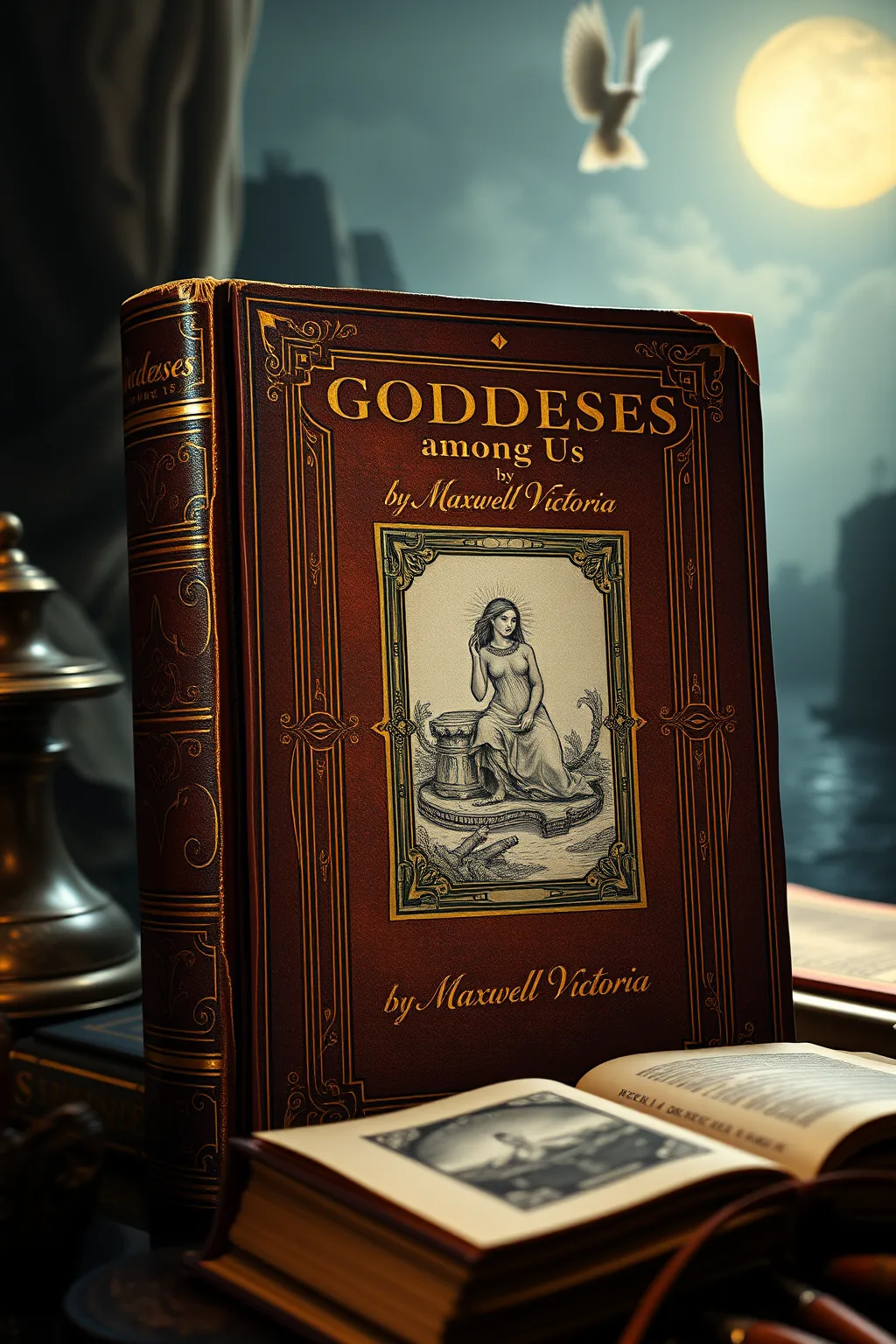
Goddesses among Us
 61
61

Goddesses among Us



Lorelei Sage, Contemplative Literature Editor — Maxwell Victoria's "Goddesses Among Us" is a luminous beacon for those navigating the labyrinth of the spirit. Victoria offers a profound meditation on feminine archetypes, moving beyond simplistic interpretations to reveal the intricate tapestry of their influence. The book's strength lies in its ability to bridge the ancient and the contemporary, making the profound wisdom of these divine entities accessible and applicable to the modern seeker. It’s a potent tool for introspection, encouraging readers to recognize and embody the inherent power of the divine feminine. Essential for anyone on a path of spiritual awakening or seeking a deeper understanding of universal energies.
📝 Description
61
Maxwell Victoria's "Goddesses Among Us" connects ancient goddess archetypes to contemporary human experience.
Maxwell Victoria's "Goddesses Among Us" examines the presence of divine feminine energies within everyday life. The book draws upon ancient myths and modern psychology, illustrating how figures such as Isis, Aphrodite, and Hecate represent forces that can guide and empower individuals. Victoria aims to show readers how to recognize these archetypal energies in themselves and in the world, fostering a greater sense of connection to the sacred.
The work encourages a personal awakening to spiritual capacities, arguing for the lasting impact of divine archetypes on human development. It is written for those who seek deeper understanding of esoteric practices and inner strength. The text invites readers to perceive the sacred not as something remote, but as an active, available power.
This book sits within traditions that explore the divine feminine, often drawing from Western esotericism and comparative mythology. It engages with concepts of archetypes, similar to Jungian psychology, but frames them within a specifically spiritual or religious context. The focus on goddesses reflects a broader interest in reclaiming or reinterpreting female divinity that has appeared in various esoteric movements throughout the 20th and 21st centuries.
💡 Why Read This Book?
Embark on a transformative journey to recognize the potent, guiding energies of the divine feminine woven into the fabric of your existence. "Goddesses Among Us" offers profound insights into archetypal wisdom, empowering you to harness inner strength and intuition. Ideal for spiritual seekers, practitioners of esoteric arts, and anyone yearning for a richer, more enchanted connection to themselves and the universe.
⭐ Reader Reviews
Honest opinions from readers who have explored this book.
❓ Frequently Asked Questions
What are the primary archetypes explored in this book?
The book delves into a rich pantheon of goddesses, including but not limited to figures representing wisdom, love, transformation, intuition, and power, illustrating their diverse manifestations and influences on human experience.
Is this book suitable for beginners in divination?
Absolutely. While it offers deep esoteric insights, Maxwell Victoria provides clear explanations and evocative narratives, making the journey accessible and enriching for those new to divination and the study of goddesses.
How does "Goddesses Among Us" differ from other books on goddesses?
This work distinguishes itself by intricately connecting archetypal feminine energies with practical application in daily life, emphasizing personal empowerment and the recognition of these divine forces within the self and the modern world.
Can this book be used for meditation or ritual?
Yes, the book's rich imagery and thematic depth lend themselves beautifully to guided meditation, personal reflection, and the creation of bespoke rituals designed to invoke the energies of specific goddesses.
What is the philosophical undercurrent of "Goddesses Among Us"?
The philosophical core lies in the inherent divinity within all beings, particularly emphasizing the reawakening and integration of the feminine principle as a vital force for balance, wisdom, and wholeness in both personal and collective consciousness.
🔮 Key Themes & Symbolism
The Immanence of the Divine Feminine
This theme explores the profound concept that the divine feminine is not merely an external deity but an intrinsic force residing within every individual and permeating the natural world. Victoria argues that by recognizing and honoring these archetypal energies—often personified as goddesses—we can tap into reservoirs of intuition, creativity, nurturing, and power that are essential for a balanced and fulfilling existence. The book illuminates how these ancient energies manifest in contemporary life, offering guidance for navigating challenges and fostering personal growth.
Archetypal Psychology and Mythic Resonance
Exploring the field of archetypes, this theme examines how universal patterns of the psyche, as described by Carl Jung, are embodied by goddesses across various mythologies. Maxwell Victoria masterfully connects the symbolic language of myths and legends to the deep-seated psychological structures that influence human behavior and experience. The book illustrates how understanding these archetypes provides a powerful lens through which to interpret personal struggles, aspirations, and the collective unconscious, fostering self-awareness and spiritual integration.
Divination as a Dialogue with the Sacred
"Goddesses Among Us" positions divination not just as prediction, but as a sacred dialogue with the wisdom of the divine feminine. Through the lens of Tarot and other esoteric practices, the book guides readers to interpret symbolic messages that reveal inner truths and offer pathways for empowerment. It emphasizes that these tools serve as conduits, facilitating a deeper connection with the archetypal energies that can illuminate our journey, offering insight, solace, and direction in reading through the complexities of life.
💬 Memorable Quotes
Direct passages from the work, attributed to the author.
“To know the goddess is to know the wild, untamed currents of your soul.”
— This highlights the connection between embracing the divine feminine and acknowledging one's authentic, primal self, suggesting that true power lies in accepting and integrating all aspects of one's being.
“Her symbols are not mere adornments, but keys to unlocking forgotten realms within.”
— This points to the profound symbolic language of goddesses and their associated imagery, asserting that these symbols act as potent tools for accessing deeper layers of consciousness and spiritual understanding.
“She resides in the cracks of the mundane, waiting to be seen by eyes that seek the sacred.”
— This implies that the divine feminine is present in everyday life, often overlooked, and that a conscious effort to perceive the sacred can reveal her presence in unexpected places.
💡 Key Ideas
Editorial paraphrase of the work's core concepts — not direct quotes.
The goddess whispers not from mountaintops, but from the quiet chambers of your own heart.
This quote emphasizes the internalized nature of divine feminine wisdom, suggesting that true spiritual guidance and power are found through introspection and inner listening, rather than external sources.
In the dance of life, the goddess teaches us the rhythm of surrender and the power of creation.
This quote expresses the dualistic nature of feminine power—its capacity for both yielding and manifestation—suggesting that true mastery involves understanding the balance between letting go and bringing forth.
🌙 Esoteric Significance
Tradition
This work is deeply rooted in modern goddess spirituality and contemporary esoteric traditions, drawing heavily from archetypal psychology and comparative mythology. It aligns with movements that seek to re-establish the prominence of the divine feminine, often drawing parallels with ancient cults and shamanic practices. The book acts as a bridge, making these ancient energies and their symbolic representations accessible to a modern audience seeking spiritual reconnection and personal empowerment within a holistic framework.
Symbolism
The book is rich with symbolism, utilizing the archetypal imagery of goddesses from diverse pantheons as keys to understanding human experience. Each goddess represents specific facets of the divine feminine: wisdom, love, transformation, destruction, healing, and intuition. These symbols are not merely decorative but serve as potent archetypal patterns that resonate within the collective unconscious, offering clear insights into personal challenges, life cycles, and the underlying forces that shape reality.
Modern Relevance
In an era often characterized by imbalance and disconnection, "Goddesses Among Us" offers a vital recalibration by emphasizing the essential role of the divine feminine. It provides tools for self-discovery, empowerment, and emotional healing, encouraging readers to integrate traditionally 'feminine' qualities like intuition and nurturing into their lives. The book's relevance lies in its ability to foster a more balanced worldview, promote holistic well-being, and guide individuals towards recognizing and embodying their inherent spiritual strength in practical, everyday ways.
👥 Who Should Read This Book
This clear text is a profound companion for the spiritual seeker yearning for deeper self-understanding and connection to ancient wisdom. It will resonate powerfully with practitioners of divination and Tarot, offering new perspectives on archetypal symbolism and its application. Scholars of mythology and comparative religion will find Victoria’s insightful connections between ancient figures and modern psychology invaluable. For anyone feeling a call to awaken their inner divine feminine, or seeking to navigate life's complexities with greater intuition and strength, "Goddesses Among Us" offers a transformative and empowering journey.
📜 Historical Context
Maxwell Victoria's "Goddesses Among Us" emerges from a body of esoteric thought that gained significant momentum in the late 20th and early 21st centuries. This period witnessed a resurgence of interest in ancient matriarchal religions, goddess worship, and feminist spirituality, challenging patriarchal structures within both religious and societal frameworks. Influenced by Jungian psychology, archetypal studies, and a renewed appreciation for pre-Christian mythologies, writers of this era sought to reclaim the divine feminine as a source of power and wisdom. Victoria's work stands within this tradition, offering a contemporary interpretation that bridges ancient archetypes with modern psychological and spiritual needs. It reflects a broader cultural shift towards valuing intuition, cyclical time, and the interconnectedness of all beings, providing a vital voice in the ongoing exploration of feminine divinity.
📔 Journal Prompts
Which goddess archetype most strongly appeals to me right now, and why?
How can I integrate the wisdom of a specific goddess into a current challenge I am facing?
What 'mundane' moments in my life could be reinterpreted as sacred manifestations of the divine feminine?
Reflect on a time you felt empowered by your intuition; what goddess energy might have been at play?
How does recognizing the divine feminine within influence my perception of the world and my role in it?
🗂️ Glossary
Archetype
In Jungian psychology, an inherited, universal pattern of thought or imagery derived from the experience of the human race, which is present in the collective unconscious. In this book, goddesses embody these primal patterns.
Divine Feminine
The spiritual concept of the feminine principle, encompassing qualities such as intuition, nurturing, creativity, wisdom, and transformative power, often personified through goddesses across cultures.
Esoteric
Intended for or likely to be understood by only a small number of people with a specialized knowledge or interest; relating to the occult or mystical.
Pantheon
All the gods of a particular mythology collectively. In this context, it refers to the array of goddesses explored within the book from various traditions.
Symbolism
The use of symbols to represent ideas and qualities, especially in art, literature, and religion. In this book, goddess imagery and myths serve as profound symbolic language.
This book appears in 1 collection
🔮 Readers Also Liked
Browse all →









From the “Divination” Collection
View all →








More Free Divination & Tarot Books
View all →