Scientific palmistry
 69
69

Scientific palmistry



Silas Hawthorne (Hermetic Studies Editor) — Noel Jaquin's "Scientific Palmistry" stands as a beacon of clarity and depth in the often-murky waters of palmistry. Moving beyond superficial predictions, Jaquin masterfully synthesizes observational science with ancient esoteric principles, presenting a compelling case for the hand as a living map of the soul. His meticulous approach reveals the intricate symbolic grammar of the palm, offering practitioners and scholars alike a robust framework for understanding character and potential. This work is a vital addition for anyone serious about the metaphysical arts, illuminating the profound connection between the physical form and the unseen forces that guide our lives. A truly essential read for the modern mystic.
📝 Description
69
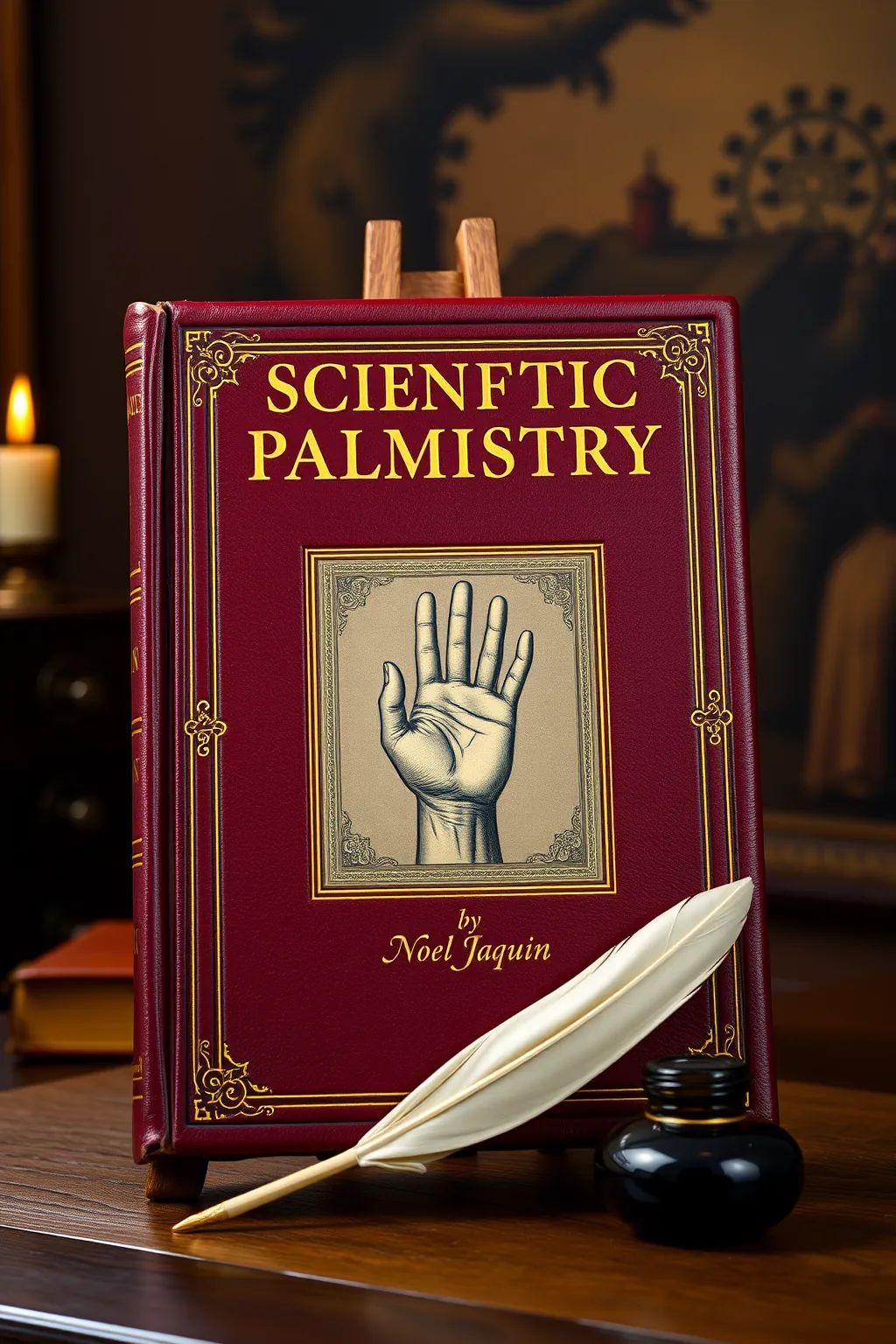
Noel Jaquin published "Scientific Palmistry" in 1935, arguing hand analysis offered empirical insight into character.
Noel Jaquin's "Scientific Palmistry," first published in 1935, presents a systematic approach to palmistry that moves beyond simple prediction. Jaquin sought to establish cheiromancy as a science, correlating hand formations and markings with psychological traits and potential life paths. He details the significance of palm lines, the shape and size of fingers, and the mounts on the palm, interpreting them as indicators of innate abilities, personality tendencies, and life's challenges. The book guides readers through this analysis, aiming to foster self-understanding by examining the hand as a reflection of the inner self. Jaquin's work invites a thoughtful engagement with the physical hand, suggesting it maps our inherent potentials and the broader currents that influence our lives. It is a study for those interested in character analysis through a less conventional, though systematically presented, method.
This volume is not concerned with simple fortune-telling. Instead, Jaquin's aim was to demonstrate a logical framework for interpreting the hand. He treats the palm as a complex map of an individual's constitution and psychological makeup. By detailing specific formations and their attributed meanings, he builds a case for palmistry as a tool for personal insight and self-awareness. The approach emphasizes observation and correlation, positioning the hand as a mirror to the soul's disposition rather than a crystal ball for future events. It encourages readers to look at their own hands and consider the connections Jaquin draws between physical form and inner life.
Noel Jaquin's "Scientific Palmistry" sits within the tradition of Western esoteric thought that sought to systematize and rationalize occult practices. Emerging in an era fascinated by psychology and scientific discovery, Jaquin attempted to bridge the gap between ancient chiromancy and modern empirical methods. This approach contrasts with purely mystical or divinatory interpretations, framing palm reading as a diagnostic tool for understanding human nature. It aligns with other esoteric disciplines that posit correspondences between the physical body and inner states, viewing the hand as a microcosm reflecting macrocosmic principles or an individual's inherent psychological architecture.
💡 Why Read This Book?
Uncover the ancient wisdom of cheiromancy, presented with scientific rigor and esoteric insight. "Scientific Palmistry" offers a unique perspective on self-discovery, revealing the symbolic language of your hands to understand your true potential and life's path. Ideal for spiritual seekers, budding astrologers, and anyone fascinated by the mystical connections between the physical and the metaphysical.
⭐ Reader Reviews
Honest opinions from readers who have explored this book.
❓ Frequently Asked Questions
Is this book just about predicting the future?
While palmistry can offer insights into potential future trends, Jaquin's approach emphasizes understanding character, innate talents, and life lessons rather than fixed destiny. It's a tool for self-awareness and personal growth.
Do I need prior knowledge of palmistry?
No prior knowledge is required. Jaquin's "Scientific Palmistry" is structured to guide both beginners and those with some experience through its comprehensive system.
How does Jaquin's approach differ from traditional palmistry?
Jaquin integrates observational science and a more structured, analytical approach, moving beyond anecdotal evidence to present a systematic and philosophical interpretation of palm markings.
Can I use this book for practical application?
Absolutely. The book provides detailed explanations and guidance, making it a practical manual for anyone wishing to learn and apply the principles of scientific palmistry.
What makes this book 'scientific'?
Jaquin's "scientific" designation refers to his systematic observation, detailed analysis of hand features, and the logical connection he draws between physical traits and psychological attributes.
🔮 Key Themes & Symbolism
The Hand as a Cosmic Map
Explore the profound concept of the palm as a living, evolving map of an individual's destiny, character, and spiritual journey. Jaquin presents the lines, mounts, and finger shapes not as random marks, but as intricate symbols woven by cosmic energies, reflecting the soul's inherent blueprint and the karmic lessons it is destined to learn. This theme looks at how the physical manifestation on the hand serves as a tangible representation of the unseen forces that shape our lives, offering a unique perspective on the interplay between fate and free will.
Symbolism and Interpretation
Dive deep into the rich symbolic language of cheiromancy. Jaquin meticulously decodes the meaning behind each line, mount, and formation, revealing how they correspond to psychological traits, talents, and life experiences. This exploration goes beyond simple predictions, offering a nuanced understanding of how specific patterns on the hand can illuminate an individual's strengths, weaknesses, emotional landscape, and potential for growth. The emphasis is on interpreting these symbols as a holistic narrative of the self.
Esoteric Science and Observation
Discover Noel Jaquin's groundbreaking synthesis of empirical observation and esoteric wisdom. This theme highlights his rigorous approach to palmistry, treating it as a "scientific" discipline grounded in meticulous study and logical deduction. Jaquin bridges the gap between the mystical and the rational, demonstrating how ancient knowledge can be understood and applied through careful examination, offering a unique perspective that appeals to both the spiritual seeker and the intellectually curious. It's an invitation to see the divine order within the tangible world.
💬 Memorable Quotes
Direct passages from the work, attributed to the author.
“In the palm, we find a microcosm of the macrocosm.”
— This highlights the esoteric principle that the individual (microcosm) reflects the greater universe (macrocosm), implying that the patterns on a person's hand can reveal universal truths and connections.
“Each line is a chapter, each mount a character in the saga of the self.”
— This metaphor vividly illustrates how different elements of the palm contribute to a comprehensive understanding of an individual's personality and life path, akin to reading a detailed epic.
“The science of the hand is the science of the soul's unfolding.”
— This emphasizes that palmistry, as presented by Jaquin, is not merely about prediction but about understanding the deeper spiritual and psychological development of an individual.
“To read the hand is to peer into the architect's design.”
— This suggests that the hand's markings reveal an underlying purpose or plan, hinting at a divine or cosmic intelligence that has shaped our lives and potentials.
💡 Key Ideas
Editorial paraphrase of the work's core concepts — not direct quotes.
The hand is a silent storyteller, its lines tracing the traces of our journey.
This quote captures the core idea of palmistry as a narrative art, suggesting that the physical markings on the hand hold profound stories about our lives, past, present, and potential future.
🌙 Esoteric Significance
Tradition
Jaquin's "Scientific Palmistry" draws heavily from the Western esoteric tradition, particularly its roots in Hermeticism and Neoplatonism, which posit a fundamental interconnectedness between the physical and spiritual realms. It aligns with the Hermetic principle of "As Above, So Below," suggesting that the macrocosm (universe) is reflected in the microcosm (human being), with the hand serving as a direct conduit for this reflection. This tradition views the human body as a sacred vessel containing divine potential, accessible through symbolic interpretation.
Symbolism
The primary symbolism in "Scientific Palmistry" revolves around the lines, mounts, and finger shapes of the hand. Each element is imbued with meaning: the Life Line representing vitality and major life events, the Head Line signifying intellect and thought processes, and the Heart Line depicting emotional life and relationships. The mounts (Venus, Jupiter, Saturn, etc.) represent inherent energies and potentials, while finger lengths and shapes correlate with personality traits. Together, these symbols form a complex lexicon for understanding individual character and destiny.
Modern Relevance
In an age increasingly focused on self-awareness, personal development, and understanding the human psyche, "Scientific Palmistry" offers enduring relevance. Its systematic approach provides a tangible framework for introspection, helping individuals connect with their innate strengths and challenges. The book's emphasis on understanding potential rather than predicting a fixed future speaks to contemporary desires for agency and growth. It serves as a valuable tool for therapists, coaches, and spiritual seekers looking for insightful methods of self-exploration and understanding human nature.
👥 Who Should Read This Book
This profound work is essential for several distinct groups. For the curious beginner, it offers a clear and accessible introduction to the principles of palmistry, explaining its symbols. Aspiring practitioners and those already engaged in divination arts will find Jaquin's "scientific" approach useful for deepening their analytical skills and understanding. Scholars of esoteric history and comparative mysticism will appreciate its historical context and unique synthesis of observation and occult lore. Ultimately, anyone on a path of self-discovery, seeking to understand their inner landscape and life's purpose, will find "Scientific Palmistry" a guiding light.
📜 Historical Context
Noel Jaquin penned "Scientific Palmistry" during a period of burgeoning interest in both scientific inquiry and esoteric exploration in the early to mid-20th century. This era saw a fascination with understanding human psychology, character analysis, and the potential for hidden knowledge to illuminate our lives. Many authors sought to legitimize occult practices by aligning them with systematic observation and logical reasoning, as Jaquin attempted with palmistry. The societal landscape was ripe for works that promised deeper self-understanding beyond conventional means, a quest fueled by the aftermath of world wars and a desire for meaning. Jaquin's work reflects this intellectual current, striving to present palmistry not as mere superstition, but as a "scientific" art capable of revealing profound truths about human nature and destiny.
📔 Journal Prompts
Analyze the dominant line on your dominant hand. What does it reveal about your core energies and life path?
Examine the shape and length of your fingers. How do these characteristics align with your perceived personality traits?
Identify the most prominent mount on your palm. What innate qualities or potentials does this suggest you possess?
Consider a significant life event you've experienced. Can you find any correlation or symbolic representation of this event in your palm's markings?
Reflect on the balance between your Head Line and Heart Line. How does this balance influence your decision-making and emotional expression?
🗂️ Glossary
Cheiromancy
The art or practice of telling fortunes from the lines and marks on the palm of a person's hand; also known as palmistry.
Mounts
The fleshy, raised areas on the palm, named after classical gods and planets, believed to represent specific energies and character traits.
Lines
The various creases and furrows on the palm, such as the Life Line, Head Line, and Heart Line, which are interpreted to signify different aspects of a person's life, health, and character.
Traces
Minor lines or markings on the palm that can indicate secondary influences, temporary conditions, or specific events related to the major lines or mounts.
Phalanx
One of the segments of a finger, divided by the creases. The length and development of each phalanx are considered significant in palmistry.
This book appears in 1 collection
🔮 Readers Also Liked
Browse all →









More by Noel Jaquin
All books →
From the “Palmistry” Collection
View all →









More Free Divination & Tarot Books
View all →