Tai Chi für Senioren
 71
71

Tai Chi für Senioren
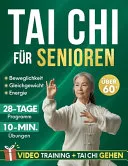
Morgan Fujita’s Tai Chi für Senioren tackles the critical challenge of maintaining physical autonomy in later life with a refreshingly practical approach. The book’s strength lies in its precise adaptation of Tai Chi principles to a senior audience, moving beyond generic health advice to offer actionable routines. Fujita effectively translates complex movements into understandable steps, focusing on the "10 minutes a day" premise which, while potentially optimistic for significant transformation, serves as an excellent entry point. A notable limitation is the inherent simplification; advanced practitioners or those with severe mobility issues might require more nuanced instruction than the book provides. The section detailing the "Eight Brocades" sequence, adapted for ease of execution, is particularly well-presented. Ultimately, this is a valuable, if introductory, resource for seniors seeking to gently re-engage with their bodies.
📝 Description
71
Morgan Fujita's 2025 guide adapts Tai Chi for seniors with gentle movements.
Tai Chi für Senioren, published in 2025, presents Tai Chi specifically for an older audience. The book focuses on gentle exercises and mindful breathing. It aims to improve physical health and mental clarity through consistent, short practice sessions. These practices are designed to boost balance, flexibility, and overall energy, addressing common issues related to aging.
The work targets individuals 60 and older looking to sustain or regain physical independence and health control. It is suitable for those with joint stiffness, balance problems, or reduced mobility. The book also appeals to seniors seeking a low-impact, meditative exercise that requires no special equipment and can be done daily without strenuous effort.
Fujita's 2025 publication builds on centuries of Tai Chi practice originating in China. While Tai Chi has evolved globally, this book tailors its principles to current concerns about aging and maintaining an active lifestyle. It moves away from earlier martial applications, focusing instead on health and well-being for a senior demographic.
Tai Chi's roots lie in ancient Chinese Taoist philosophy, emphasizing harmony between mind and body. The cultivation of 'Qi,' or vital energy, through coordinated movement and breath is central to its practice. This book engages with that tradition by simplifying concepts like 'rooting' and 'softness overcoming hardness' for a contemporary senior audience. It situates Tai Chi not merely as physical exercise but as a method for cultivating internal balance and promoting longevity, reflecting an ongoing interest in these ancient health practices within Western spiritual development.
💡 Why Read This Book?
• Gain specific, easy-to-follow Tai Chi movements designed for a 10-minute daily practice, directly addressing balance and flexibility concerns as outlined in the book's introductory sections. • Learn the core principle of "softness overcoming hardness" as applied to gentle joint articulation and muscle strengthening, a concept central to Fujita's adaptation for seniors. • Understand the importance of "rooting" and "Qi" cultivation through synchronized breath and motion, as detailed in the "Key Concepts" of Tai Chi presented for older practitioners.
⭐ Reader Reviews
Honest opinions from readers who have explored this book.
❓ Frequently Asked Questions
Can Tai Chi truly improve balance in seniors within just 10 minutes a day?
Morgan Fujita's Tai Chi für Senioren proposes that consistent, short daily practice can indeed enhance balance. The book focuses on specific movements designed to improve proprioception and stability, making the practice accessible for seniors.
What are the primary benefits of Tai Chi for older adults according to Fujita's book?
The book highlights improved joint flexibility, enhanced balance and coordination, increased muscle strength, and mental calm as primary benefits. It emphasizes maintaining independence and vitality through gentle, consistent movement.
Does Tai Chi require significant physical exertion or prior experience for seniors?
No, Tai Chi für Senioren is specifically designed for seniors, emphasizing low-impact, gentle movements. It requires minimal exertion and no prior experience, making it accessible for most individuals regardless of their current fitness level.
What is the 'Qi' concept explained in Tai Chi for Seniors?
Qi, often translated as vital energy, is explained as something cultivated through the coordinated practice of movement and breath. The book details how seniors can gently enhance their Qi flow for improved well-being.
How does Tai Chi für Senioren differ from traditional martial arts Tai Chi?
This adaptation by Morgan Fujita prioritizes health and balance over martial applications. It simplifies forms and emphasizes slow, flowing movements suitable for seniors, focusing on internal benefits rather than external combat techniques.
When was Tai Chi für Senioren first published?
Tai Chi für Senioren was first published on November 4, 2025, by author Morgan Fujita, indicating a recent addition to the literature on adapted physical practices for the elderly.
🔮 Key Themes & Symbolism
Mindful Movement and Balance
The book meticulously details how Tai Chi's slow, deliberate movements directly combat age-related balance issues. It explains the concept of 'rooting,' achieved through grounded stances and focused attention, which is crucial for stability. By practicing these forms, seniors can expect to improve their proprioception and reduce the risk of falls, fostering a greater sense of security in everyday activities like walking or reaching.
Cultivating Vital Energy (Qi)
Fujita introduces the esoteric concept of Qi, or vital energy, as something that can be nurtured through specific Tai Chi practices. The book guides readers on how to synchronize breath with movement, a core part of Qi cultivation in traditional Chinese medicine. This focus on internal energy flow aims not just for physical health but also for mental tranquility and overall well-being, suggesting a holistic approach to aging.
Independence Through Gentle Practice
A central theme is maintaining personal independence by empowering seniors to take control of their physical health. The book’s emphasis on a short, 10-minute daily routine makes the practice accessible and sustainable. It posits that regular engagement with Tai Chi can alleviate joint stiffness and improve mobility, enabling seniors to continue enjoying hobbies and daily tasks without relying on others.
Adaptation for Senior Physiology
This work stands out by specifically tailoring Tai Chi principles to the physiological needs of older adults. It simplifies complex sequences, focuses on joint health and mobility, and avoids strenuous postures. The book acknowledges common age-related challenges such as stiffness and reduced flexibility, offering targeted exercises designed to mitigate these issues safely and effectively.
💬 Memorable Quotes
Direct passages from the work, attributed to the author.
“LASSEN SIE DIE JAHRE NICHT IHRE FREIHEIT BESTIMMEN.”
— This opening statement captures the book's core philosophy: that aging does not necessitate a loss of autonomy. It serves as a powerful call to action for seniors to actively engage in practices that preserve their independence and vitality.
“BLEIBEN SIE SELBSTÄNDIG - MIT NUR 10 MINUTEN AM TAG”
— This direct promise highlights the book's practical approach, suggesting that significant health benefits, particularly in maintaining independence, can be achieved with a minimal time commitment. It makes the practice of Tai Chi seem achievable and less daunting.
“Fühlen Sie sich manchmal steif in den Gelenken oder beim Gehen verunsichert?”
— This question directly addresses common physical complaints experienced by many seniors. It serves to immediately connect with the target audience by acknowledging their challenges and positioning the book as a potential solution.
“Möchten Sie weiterhin das tun, was Sie lieben - unabhängig, selbstbestimmt und ohne auf andere angewiesen zu sein?”
— This rhetorical question taps into a deep desire for continued autonomy and personal fulfillment among the elderly. It frames Tai Chi not just as exercise, but as a tool for maintaining a quality of life defined by freedom and self-determination.
“Ob beim Gärtnern, ...”
— This incomplete sentence suggests the broad applicability of improved mobility and balance gained from Tai Chi, hinting that the benefits extend to various everyday activities and hobbies that seniors cherish, like gardening.
🌙 Esoteric Significance
Tradition
While Tai Chi originates from Taoist traditions and Chinese martial arts, Fujita's adaptation for seniors leans into its more universally recognized health and meditative aspects. It draws from the Taoist emphasis on harmony with nature and the body's natural rhythms. The concept of 'Qi' cultivation is a direct link to Taoist internal alchemy practices, though presented here in a simplified, accessible form for health rather than spiritual transcendence.
Symbolism
The practice itself is rich with symbolic meaning. The slow, flowing movements often mimic natural forms like clouds or water, symbolizing adaptability and resilience. The concept of 'Yin and Yang' is inherent in the balance of soft and hard, yielding and assertive movements. The grounded stance, or 'rooting,' symbolizes connection to the earth, representing stability and centeredness, crucial for both physical and mental well-being.
Modern Relevance
Fujita's work appeals to contemporary trends in somatic practices and mindful movement therapies. Modern practitioners of yoga, Qigong, and even certain forms of physical therapy draw upon similar principles of breathwork, body awareness, and gentle kinetic chains. The book's focus on accessible, low-impact exercise for aging populations aligns with current public health initiatives and the growing interest in preventative wellness and holistic approaches to health.
👥 Who Should Read This Book
• Seniors experiencing joint stiffness or seeking to improve their balance and reduce the risk of falls, who want a practical, low-commitment daily routine. • Individuals interested in the health benefits of Tai Chi but intimidated by traditional martial arts forms, looking for a simplified, age-appropriate introduction. • Healthcare professionals or caregivers seeking accessible resources to recommend for elderly clients or family members aiming to enhance mobility and overall well-being.
📜 Historical Context
Morgan Fujita's Tai Chi für Senioren, published in 2025, emerges in an era where the health and wellness industry increasingly focuses on demographic-specific needs. The late 20th and early 21st centuries saw a surge in the popularization of Tai Chi in the West, moving beyond its martial roots to emphasize its therapeutic benefits, particularly for conditions like arthritis and balance disorders. This trend was significantly influenced by figures like Dr. Paul Lam, who developed specific Tai Chi programs for arthritis and falls prevention. Fujita’s work builds upon this foundation, offering a modern, accessible interpretation. While earlier proponents often focused on broader applications, Fujita’s precise targeting of seniors with a concise daily routine reflects a contemporary understanding of accessible health interventions. The book’s publication date places it firmly within ongoing discussions about healthy aging and preventative healthcare, distinguishing it from earlier, more generalized explorations of Tai Chi.
📔 Journal Prompts
The '10 minutes a day' commitment to Tai Chi practice.
Exploring the feeling of being 'rooted' during Tai Chi stances.
The concept of 'softness overcoming hardness' in daily life challenges.
Synchronizing breath with movement for Qi cultivation.
Maintaining independence through consistent physical activity.
🗂️ Glossary
Tai Chi
An ancient Chinese martial art practiced for both defense training and its health benefits. Characterized by slow, flowing, deliberate movements and deep breathing.
Qi (Chi)
A fundamental concept in traditional Chinese culture, often translated as vital energy or life force. It is believed to flow through the body and influence health and well-being.
Rooting
A fundamental Tai Chi principle involving grounding oneself through stable, balanced stances. It enhances stability, power, and connection to the earth.
Softness Overcoming Hardness
A core Taoist and Tai Chi principle suggesting that yielding, flexibility, and indirect force can be more effective than brute strength or rigidity.
Joint Lubrication
The process by which movement helps to circulate synovial fluid within joints, reducing friction and stiffness, and maintaining cartilage health.
Proprioception
The body's ability to sense its position, movement, and balance in space. Tai Chi enhances proprioception, improving coordination and stability.
Yang Sheng
A traditional Chinese concept related to 'nourishing life,' encompassing practices aimed at promoting health, longevity, and well-being through lifestyle and mindful activities.