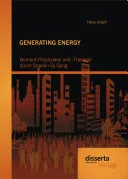
GENERATING ENERGY: Burnout-Prophylaxe und -Therapie durch Shaolin-Qi Gong
 84
84

GENERATING ENERGY: Burnout-Prophylaxe und -Therapie durch Shaolin-Qi Gong
Hans Urach’s GENERATING ENERGY attempts to bridge the gap between the prevalent Western diagnosis of burnout and the ancient Chinese practice of Shaolin Qi Gong. The initial presentation of the burnout model, while brief, effectively sets the stage for the proposed solution. Urach’s strength lies in his earnest attempt to connect a modern affliction with a time-tested system. However, the exposition of Qi Gong itself, while present, could benefit from greater detail for the uninitiated; the text sometimes assumes a familiarity with TCM concepts that may not be present in all readers. A particularly compelling aspect is the direct link drawn between specific Qi Gong movements and the restoration of depleted energy reserves, a concept articulated clearly. The book is a useful primer but leaves one wishing for deeper practical instruction. It offers a sound theoretical framework for integrating ancient energy practices into contemporary stress management.
📝 Description
84
Hans Urach's 2014 book connects Western burnout models with Shaolin Qi Gong energy cultivation.
GENERATING ENERGY examines burnout from two distinct viewpoints. It first details the contemporary medical understanding of burnout, a condition recognized in Western societies since the 1980s. This clinical perspective then gives way to an older system of managing vital energy, drawn from Shaolin Qi Gong.
The book targets individuals facing or wanting to avoid burnout. It is for those who look beyond standard Western medical treatments and are interested in alternative therapies. Readers practicing martial arts, meditation, or holistic health will find connections here, as will anyone curious about how Traditional Chinese Medicine relates to modern mental well-being. The text aims to show how ancient principles can be applied practically.
Urach frames burnout within its recent Western history, noting its rise as a recognized syndrome. He simultaneously roots the Shaolin Qi Gong methods in the long history of Traditional Chinese Medicine. The book highlights the deep historical background and lasting value of these energy balancing practices. Its 2014 publication arrived during a period of growing interest in Eastern philosophies and holistic approaches to health.
This work falls within the broader tradition of Daoist internal alchemy and health cultivation, specifically through the lens of Shaolin martial arts and their associated Qi Gong practices. These practices are rooted in the concept of Qi, the fundamental life force in Traditional Chinese Medicine, believed to animate all living things. The Shaolin lineage emphasizes disciplined physical and energetic training to achieve physical vitality, mental clarity, and spiritual development. Urach applies these traditional methods to address a modern affliction, demonstrating how ancient systems of energy management can offer solutions to contemporary health concerns.
💡 Why Read This Book?
• Learn specific Shaolin Qi Gong exercises for energy generation, as detailed in the book, to build resilience against the depletion associated with burnout, a practical application for modern stress. • Understand the Traditional Chinese Medicine concept of Qi and its direct correlation to preventing psychological exhaustion, as explored through Urach's analysis of this vital life force. • Gain insight into the historical context of burnout as a syndrome emerging in the late 20th century, juxtaposed with the millennia-old practices of Shaolin martial arts and energy cultivation.
⭐ Reader Reviews
Honest opinions from readers who have explored this book.
❓ Frequently Asked Questions
What is the primary focus of Hans Urach's GENERATING ENERGY?
The book focuses on preventing and treating burnout by presenting a model of the condition and offering solutions through Shaolin Qi Gong, a system rooted in Traditional Chinese Medicine for energy generation and cultivation.
When was GENERATING ENERGY first published?
GENERATING ENERGY was first published in August 2014.
What is the connection between Shaolin Qi Gong and burnout according to the book?
Urach posits that Shaolin Qi Gong practices can generate and balance vital life force (Qi), thereby building resilience against the energy depletion characteristic of burnout.
Does the book offer practical Qi Gong exercises?
Yes, the book introduces specific Qi Gong exercises derived from the Shaolin tradition, intended for practical application in energy generation and maintenance.
What historical perspective does the book provide?
It frames the modern concept of burnout, which gained traction from the 1980s in Western countries, against the backdrop of ancient Chinese medical practices and philosophies.
Who would benefit most from reading GENERATING ENERGY?
Individuals experiencing or seeking to prevent burnout, those interested in Traditional Chinese Medicine, Qi Gong, and alternative holistic health practices will find this book beneficial.
🔮 Key Themes & Symbolism
Qi as Vital Force
The central tenet explored is Qi, the fundamental life energy in Traditional Chinese Medicine. Urach explains how imbalances or depletion of Qi are directly linked to conditions like burnout. The book details how specific Shaolin Qi Gong exercises are designed not merely for physical fitness but for the active generation, circulation, and harmonization of this vital energy, positing it as a powerful antidote to modern-day exhaustion and stress.
Shaolin Lineage and Practice
Urach anchors the therapeutic techniques in the long history of Shaolin martial arts and its associated Qi Gong practices. This provides a lineage and credibility to the methods presented. The work highlights how these disciplined movements, often practiced for centuries, offer a structured approach to cultivating internal strength and energetic resilience, directly addressing the symptoms and underlying causes of burnout.
Burnout: A Modern Syndrome
The book confronts burnout as a distinct condition that emerged prominently in highly developed Western societies from the 1980s. By outlining a specific illness model, Urach establishes the relevance and urgency of addressing this modern psychological and physiological challenge. This contrasts with the ancient nature of the proposed solutions, creating a dialogue between contemporary problems and timeless wisdom.
Energy Generation and Therapy
The core practical outcome discussed is the concept of 'generating energy' – not just conserving it, but actively creating and replenishing one's vital reserves. The Shaolin Qi Gong methods are presented as therapeutic tools, offering a proactive strategy for both preventing the onset of burnout and recovering from its debilitating effects through systematic energetic cultivation.
💬 Memorable Quotes
Direct passages from the work, attributed to the author.
“Burnout emerges in highly developed Western countries since the 1980s.”
— This statement situates the contemporary problem of burnout within a specific socio-historical context, highlighting its association with modern lifestyles and societal pressures prevalent in industrialized nations.
“The book presents an energy-generating and -care system from Traditional Chinese Medicine.”
— This highlights the book's dual focus: diagnosing the modern issue of burnout and offering a tangible, ancient therapeutic approach rooted in the principles and practices of TCM.
“Balancing Qi is crucial for avoiding and treating burnout.”
— This interpretation emphasizes the practical application of TCM theory presented in the book, linking the concept of balanced vital energy (Qi) directly to the prevention and recovery from chronic exhaustion.
“Qi Gong exercises are presented for energy generation and healing.”
— This focuses on the actionable content of the book, indicating that it provides specific techniques within Qi Gong aimed at both proactively building energetic reserves and therapeutically restoring them.
💡 Key Ideas
Editorial paraphrase of the work's core concepts — not direct quotes.
Shaolin Qi Gong offers a promising system for preventing and healing burnout.
This paraphrased concept underscores the book's central thesis: that ancient Chinese energy cultivation practices, specifically those from the Shaolin tradition, hold effective solutions for a modern ailment.
🌙 Esoteric Significance
Tradition
The work draws heavily from the Taoist-rooted principles of Traditional Chinese Medicine, specifically focusing on the cultivation of Qi, the vital life force. While not strictly Hermetic or Kabbalistic, it aligns with broader esoteric currents that emphasize the existence and manipulation of subtle energies within the human body and the cosmos. Its lineage is explicitly tied to the Shaolin temple's martial and spiritual traditions, which incorporate deep meditative and energetic practices.
Symbolism
Key symbolic elements revolve around the concept of Qi itself, representing vitality, breath, and the animating principle of life. The practice of Qi Gong inherently involves symbolic movements that represent the flow of energy through meridians, mirroring natural processes like the circulation of blood or the changing seasons. The Shaolin tradition itself carries symbolism of discipline, resilience, and the integration of mind, body, and spirit, all contributing to the holistic approach to well-being.
Modern Relevance
Contemporary practitioners of mindfulness, bioenergetics, and somatic therapies often find resonance with the principles outlined in works like Urach's. Thinkers and institutions exploring mind-body connections, alternative healing modalities, and the physiological impacts of chronic stress increasingly look to ancient practices like Qi Gong. The book's relevance lies in providing a structured, accessible entry point into these practices for those seeking non-pharmacological, non-psychotherapeutic solutions to burnout.
👥 Who Should Read This Book
• Individuals experiencing or seeking to prevent burnout who are open to non-Western therapeutic approaches and interested in practical energy cultivation techniques. • Practitioners of martial arts, meditation, or yoga seeking to deepen their understanding of internal energy (Qi) and its role in health and well-being. • Students and enthusiasts of Traditional Chinese Medicine and esoteric philosophies interested in applying ancient systems to contemporary health challenges.
📜 Historical Context
Published in 2014, GENERATING ENERGY arrives at a time when interest in Eastern philosophies and holistic approaches to health was experiencing a significant resurgence in the West. The preceding decades had seen the popularization of concepts like 'burnout,' primarily discussed within psychological and medical frameworks, a dominant discourse exemplified by figures like Herbert Freudenberger who extensively studied workplace stress in the 1970s and 80s. Urach’s work positions itself against this backdrop, offering an alternative, or rather complementary, perspective rooted in Traditional Chinese Medicine (TCM). Unlike purely psychological or pharmacological interventions, the book draws upon the millennia-old lineage of Shaolin Qi Gong. This placed it within a broader intellectual current that sought to integrate ancient wisdom traditions with contemporary concerns, often challenging the purely materialistic worldview prevalent in Western medicine. While not directly engaging with specific contemporaries in this excerpt, its approach implicitly contrasts with purely secular, Western-based stress management techniques gaining traction at the time.
📔 Journal Prompts
The concept of Qi as presented in the book: how does it relate to your personal sense of vitality?
Reflecting on the Shaolin lineage: what aspects of discipline and resilience can be applied to managing stress?
Burnout as a modern syndrome: how does Urach's perspective challenge conventional views?
Specific Qi Gong exercises for energy generation: which might be most beneficial for your current state?
The balance of Qi: what personal practices contribute to or detract from your energetic equilibrium?
🗂️ Glossary
Qi
The fundamental concept in Traditional Chinese Medicine representing vital life force, energy, or breath that animates all living things and flows through the body.
Qi Gong (Chi Kung)
A system of coordinated body posture and movement, breathing, and meditation used for health, spirituality, and martial arts training, focused on cultivating and balancing Qi.
Shaolin
Refers to the Shaolin Temple in China, renowned for its development of martial arts and associated Qi Gong practices, often emphasizing rigorous physical and mental training.
Burnout
A state of emotional, physical, and mental exhaustion caused by excessive and prolonged stress, typically occurring in response to chronic workplace or personal pressures.
Meridians
In TCM, these are pathways through which Qi flows throughout the body, connecting acupuncture points and vital organs.
Prophylaxe
Preventive measures taken to avoid disease or illness; in this context, preventing burnout.
Therapie
Treatment intended to relieve or heal a disorder; in this context, treating burnout.