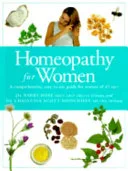
Homeopathy for Women
 80
80

Homeopathy for Women
Dr. Barry Rose and Christina Scott-Moncrieff’s *Homeopathy for Women* offers a structured approach to a practice often shrouded in mystique. The book’s strength lies in its direct application to female physiology, moving beyond generic homeopathic texts to address specific concerns from puberty to menopause. The detailed profiles of 50 common remedies are presented with a clarity that, while accessible, sometimes feels a little too prescriptive for the nuanced art of homeopathic prescribing. A notable section discusses the use of *Pulsatilla* for emotional distress associated with hormonal changes, which is demonstrably helpful for understanding remedy selection. However, the work could benefit from a deeper exploration of the energetic or vital force concepts that underpin classical homeopathy, offering a more robust theoretical framework alongside the practical advice. For those seeking a functional guide to homeopathic self-care tailored for women, this volume provides a solid, if somewhat simplified, starting point.
📝 Description
80
First published in 1999, Homeopathy for Women addresses female health concerns with homeopathic principles.
This book provides a practical guide to homeopathy tailored for women's health. It aims to equip readers with knowledge of this alternative medical practice for self-care. The authors detail how homeopathy can apply to various life stages, from adolescence through post-menopause, covering common ailments. The work's central aim is to make core homeopathic concepts understandable for home use. It is intended for women interested in natural health approaches or those already practicing alternative medicine, especially homeopathy. Readers will find detailed explanations of remedies and their applications to conditions common throughout a woman's life. The book serves as a reference for self-care, offering a structured method for understanding and using homeopathic treatments for everyday health issues.
Homeopathy, founded by Samuel Hahnemann in the late 18th century, contrasted with 19th-century medical practices. Though its scientific basis is debated, it became a distinct system of alternative medicine. This book adapts homeopathic principles for contemporary audiences, considering women's unique physiological and emotional experiences. Renewed interest in natural health modalities in the late 20th century supported specific applications like those presented here.
Homeopathy's vitalistic underpinnings, originating in the late 18th century, align with broader esoteric traditions that posit unseen forces influencing health. Its principle of 'like cures like' and reliance on highly diluted substances resonate with concepts found in earlier alchemical and vitalist philosophies. This work situates homeopathic practice within a lineage of natural healing that seeks to work with the body's inherent energies, presenting it as a method for women to engage with their health on a more subtle, energetic level.
💡 Why Read This Book?
• Understand the 'like cures like' principle (similia similibus curentur) and how it applies to specific female ailments, offering a distinct perspective on symptom management absent in conventional texts. • Learn about 50 common homeopathic medicines, including detailed indications for conditions like menstrual irregularities or menopausal symptoms, providing practical knowledge beyond generalized health advice. • Gain insight into the homeopathic approach to women's health stages, such as puberty and menopause, offering a self-help framework that focuses on individualized natural treatments.
⭐ Reader Reviews
Honest opinions from readers who have explored this book.
❓ Frequently Asked Questions
What is the core principle of homeopathy explained in this book?
The book explains the fundamental homeopathic principle of 'like cures like' (similia similibus curentur). This suggests that a substance capable of producing symptoms in a healthy person can be used in highly diluted form to treat similar symptoms in a sick person.
How does 'Homeopathy for Women' address different life stages for women?
The book specifically addresses ailments and conditions relevant to women across their lifespan, from puberty through adolescence, reproductive years, and into menopause, offering tailored homeopathic remedy suggestions for each stage.
What kind of ailments does the book cover?
It covers a range of common ailments women experience, including but not limited to menstrual irregularities, menopausal symptoms, emotional disturbances, digestive issues, and skin conditions, all from a homeopathic perspective.
How many homeopathic medicines are detailed in the book?
The book provides detailed information and usage guidelines for approximately 50 common homeopathic medicines, making it a practical reference for self-treatment.
Is this book suitable for beginners in homeopathy?
Yes, the book aims to explain basic concepts of homeopathy in an accessible manner, making it suitable for women new to the practice who are interested in self-help options.
Who are the authors of 'Homeopathy for Women'?
The book was authored by Dr. Barry Rose and Christina Scott-Moncrieff. It was first published in 1999.
🔮 Key Themes & Symbolism
Holistic Female Well-being
This work positions homeopathy as a method for achieving holistic well-being specifically tailored to the female experience. It moves beyond symptom suppression, advocating for treatments that harmonize with a woman's natural cycles and physiological shifts, from the onset of menstruation to the complexities of menopause. The approach emphasizes understanding the individual's totality of symptoms—physical, emotional, and mental—to select a remedy that appeals to their unique state, aligning with the vitalist underpinnings of homeopathy.
Explaining Homeopathic Materia Medica
A central theme is the clarification of the homeopathic Materia Medica, focusing on remedies frequently indicated for women's health issues. The book breaks down the characteristic actions and indications of approximately 50 remedies, such as *Sepia* for menopausal complaints or *Pulsatilla* for emotional dependency. This detailed exploration aims to make the vast field of homeopathic pharmacy accessible for self-application, explaining complex remedy profiles into practical, actionable knowledge for the layperson.
Self-Care and Empowerment
The book champions self-care and personal empowerment through the application of homeopathic principles. By providing clear guidance and a structured approach to remedy selection for common ailments, it encourages women to take an active role in managing their health. This empowers them to make informed choices about natural treatments, fostering a sense of agency and independence from conventional medical paradigms for everyday health concerns.
Life Cycle Transitions
A significant focus is placed on navigating critical life cycle transitions unique to women. The text addresses the hormonal and emotional shifts associated with puberty, pregnancy, childbirth, and menopause. It offers homeopathic perspectives on managing the associated symptoms, framing these phases not as ailments to be merely endured but as natural processes that can be supported and balanced with appropriate natural interventions.
💬 Memorable Quotes
Direct passages from the work, attributed to the author.
“Homeopathy offers a gentle yet effective method for addressing women's health concerns.”
— This statement expresses the book's core promise: to present homeopathy as a non-invasive and potent system of medicine specifically beneficial for women's unique physiological and emotional landscapes.
“Understanding the individual's symptom picture is key to selecting the correct remedy.”
— This highlights the individualized nature of homeopathic prescribing, emphasizing that successful treatment relies on a detailed assessment of a person's specific symptoms, rather than a generalized diagnosis.
“The principle of 'like cures like' guides the selection of highly diluted substances.”
— This refers to the foundational law of similars in homeopathy, explaining the theoretical basis for choosing remedies that mirror the symptoms they are intended to treat, albeit in a highly diluted form.
“Fifty common remedies are detailed for practical home use.”
— This highlights the book's practical utility, offering a focused selection of frequently used homeopathic medicines that readers can learn to apply for common self-care needs.
💡 Key Ideas
Editorial paraphrase of the work's core concepts — not direct quotes.
From puberty's onset to menopause's challenges, homeopathy provides supportive care.
This succinctly summarizes the book's scope, indicating its application across the spectrum of female life stages and the promise of supportive, natural intervention throughout these transitions.
🌙 Esoteric Significance
Tradition
Homeopathy, while often presented as a medical system, possesses significant esoteric underpinnings rooted in vitalism and a holistic view of the human being. It aligns with traditions that posit a subtle life force or vital energy (similar to Prana or Qi) which governs health. Its emphasis on energetic dilutions and the principle of 'like cures like' can be seen as echoing alchemical or Hermetic ideas of correspondence and sympathetic magic, albeit recontextualized within a therapeutic framework.
Symbolism
The core symbolism lies in the concept of 'similia similibus curentur' – the 'like cures like' principle. This itself can be viewed as a symbolic representation of balance and energetic resonance. The highly diluted remedies, often derived from potent natural substances, symbolize the extraction and refinement of an essential, energetic essence, capable of stimulating the body's own vital force. The 'potentization' process, involving succussion (shaking), further imbues the remedy with a symbolic energetic charge.
Modern Relevance
In contemporary esoteric circles, homeopathy continues to be relevant within holistic health movements and among practitioners of subtle energy therapies. It appeals to modern interpretations of vitalism and energetic medicine, finding common ground with practices like Reiki, acupuncture, and vibrational healing. Thinkers and practitioners interested in the intersection of consciousness, energy, and physical well-being often engage with homeopathic principles as a model for understanding how subtle influences can impact health.
👥 Who Should Read This Book
• Women seeking naturalistic, self-directed approaches to managing common health concerns, particularly those interested in understanding their bodies beyond conventional pharmaceutical interventions. • Individuals exploring the principles of vitalism and energetic medicine who wish to see a practical application in therapeutics, offering a tangible way to engage with these concepts. • Students and practitioners of alternative health modalities looking for specific case studies and remedy indications relevant to female physiology and life stages.
📜 Historical Context
Published in 1999, *Homeopathy for Women* emerged during a period of renewed interest in complementary and alternative medicine (CAM) in Western societies. The late 20th century saw a growing dissatisfaction with the perceived limitations and side effects of conventional medicine, prompting many to seek gentler, more holistic approaches. Homeopathy, itself originating with Samuel Hahnemann in the late 18th century and popular in the 19th century, experienced periodic resurgences. This book arrived as part of that trend, specifically targeting the demographic of women who were increasingly exploring natural health options. It built upon a long tradition of specific homeopathic texts, such as those aimed at children or general family health, but focused on the particularities of female physiology. While figures like James Tyler Kent had already established foundational texts on homeopathic philosophy and materia medica earlier in the century, this work aimed for a more contemporary, accessible self-help application, responding to the modern consumer's desire for accessible wellness information.
📔 Journal Prompts
Homeopathic remedy selection for emotional states.
The symbolic meaning of 'like cures like' in personal healing.
Reflecting on the body's vital force during life transitions.
Practical application of Materia Medica for women's health.
Empowerment through self-care with homeopathic principles.
🗂️ Glossary
Homeopathy
A system of alternative medicine based on the principle of 'like cures like', using highly diluted substances to stimulate the body's healing response.
Similia Similibus Curentur
Latin for 'like cures like', the fundamental law of homeopathy, suggesting that a substance causing symptoms in a healthy person can treat similar symptoms in a sick person.
Materia Medica
A comprehensive reference work detailing the properties, effects, and uses of medicinal substances, specifically within the context of homeopathy, listing remedies and their indications.
Potentization
The process of diluting a homeopathic substance and vigorously shaking it (succussion) to supposedly increase its therapeutic efficacy and energetic properties.
Remedy
In homeopathy, a highly diluted substance prepared according to specific methods, used to treat a particular set of symptoms or ailments.
Vital Force
A concept in vitalistic medicine, including homeopathy, referring to an animating, intelligent energy that sustains life and health; illness is seen as a disturbance of this force.
Succussion
The vigorous shaking or striking of a homeopathic dilution during the potentization process, believed to activate the remedy's energetic properties.