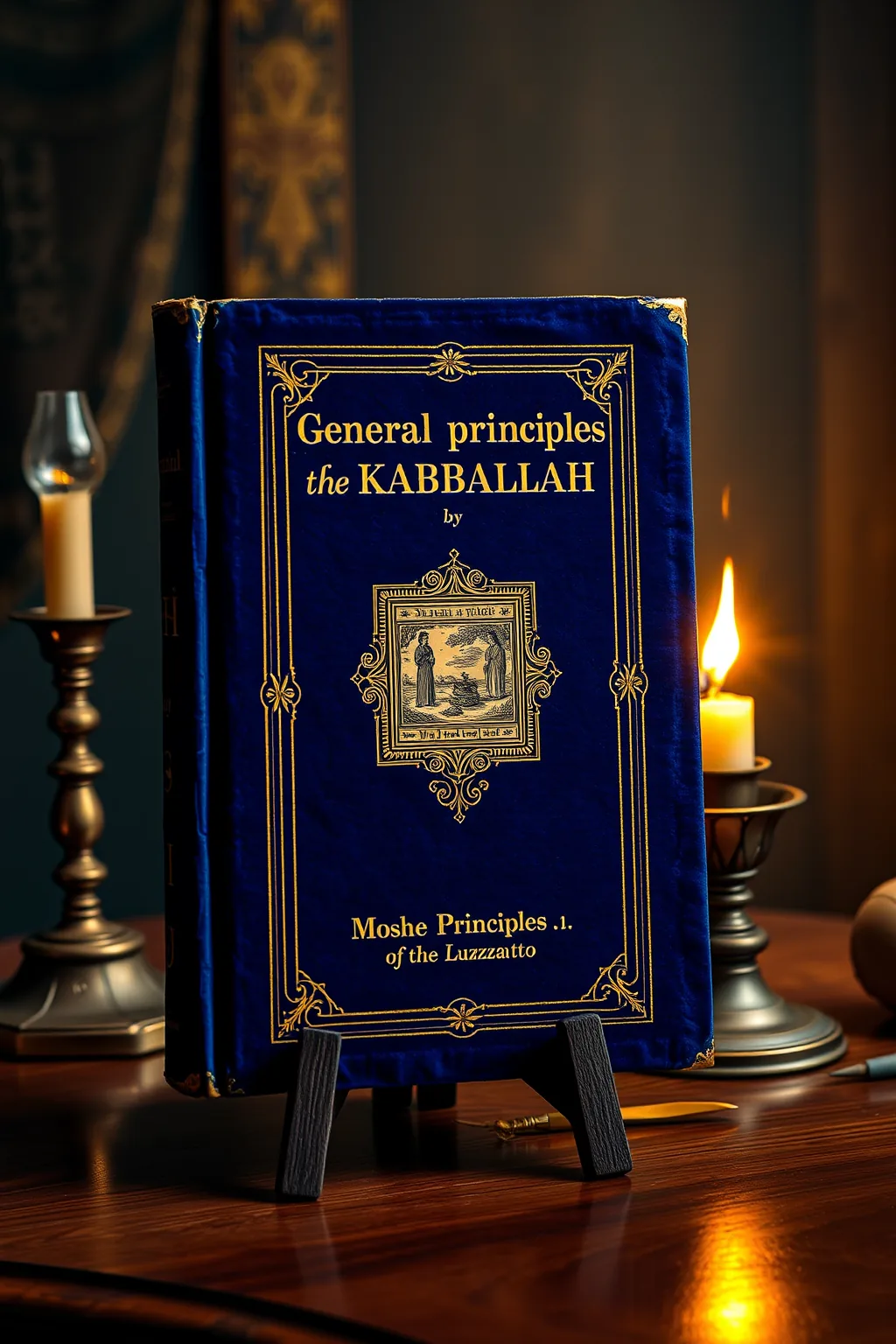
General principles of the Kabbalah
 61
61

General principles of the Kabbalah


Cassian Rothmann (Senior Critic, Ancient Wisdom) — Moshe Ḥayyim Luzzatto's 'General Principles of the Kabbalah' stands as a beacon of clarity within the often labyrinthine depths of Jewish mysticism. Luzzatto possesses a rare gift for distilling complex esoteric concepts into accessible, yet profound, teachings. This work masterfully elucidates the foundational tenets of Kabbalistic thought, from the divine emanations of the Sefirot to the mystical ascent of the soul. Its strength lies in its systematic approach, offering a coherent framework for understanding this rich tradition. Essential for students of Kabbalah, aspiring mystics, and anyone seeking a deeper comprehension of spiritual cosmology, this volume promises to illuminate the path towards inner gnosis.
📝 Description
61
Moshe Ḥayyim Luzzatto wrote 'General Principles of the Kabbalah' in the 18th century to clarify Kabbalistic thought.
Moshe Ḥayyim Luzzatto's 'General Principles of the Kabbalah' aims to systematically explain the core concepts of Jewish mysticism. Luzzatto, a significant figure in Kabbalistic thought, organizes complex ideas into a coherent framework. He details the divine emanations, the structure of the cosmos as understood in Kabbalah, and the soul's journey towards its source. The book uses symbolism and philosophical arguments to make these esoteric teachings accessible.
This work is intended for serious students of Kabbalah. Luzzatto's approach is less about historical survey and more about presenting a conceptual map of the Kabbalistic worldview. It addresses fundamental questions about existence, consciousness, and the divine. The book provides a structured understanding of the principles that Luzzatto believed underlie all reality.
This book sits within the tradition of Kabbalah, a form of Jewish mysticism that arose in the Middle Ages. Kabbalah seeks to understand the hidden nature of God and the relationship between the divine and the created world. It employs a rich symbolic language and complex metaphysical systems, often involving concepts like divine emanations (Sefirot) and the structure of spiritual realms. Luzzatto's work is characteristic of later Kabbalistic literature, which sought to systematize and clarify these teachings for a new generation of students.
💡 Why Read This Book?
Unravel the profound mysteries of Jewish mysticism and gain a foundational understanding of the Kabbalah's intricate cosmology. Luzzatto's clear exposition makes complex concepts accessible, guiding seekers and scholars alike through the divine emanations and the soul's journey. Ideal for those desiring a structured introduction to esoteric Jewish thought and a deeper connection to spiritual wisdom.
⭐ Reader Reviews
Honest opinions from readers who have explored this book.
❓ Frequently Asked Questions
Is prior knowledge of Hebrew or Jewish texts required?
While familiarity can deepen appreciation, Luzzatto's clear prose and the book's focus on general principles make it accessible to those without prior Hebrew knowledge. The spiritual concepts are universal enough to resonate widely.
What are the 'Sefirot' mentioned in Kabbalah?
The Sefirot are divine emanations or attributes through which God manifests and interacts with the universe. They form a central symbolic structure in Kabbalistic cosmology, representing aspects of the divine nature and the path of creation.
How does this book differ from other Kabbalistic texts?
Luzzatto's work is praised for its systematic and pedagogical approach, offering a coherent and structured introduction to core Kabbalistic ideas, making it an excellent starting point compared to more dense or specialized texts.
Can this book be used for practical Kabbalistic exercises?
While primarily theoretical and foundational, understanding these principles is crucial for any practitioner. It lays the essential groundwork upon which practical applications and meditations are built.
What is the primary goal of studying Kabbalah according to Luzzatto?
Luzzatto emphasizes the pursuit of spiritual understanding, the recognition of God's presence in all aspects of reality, and the cultivation of a deeper connection to the divine through the study of its hidden wisdom.
🔮 Key Themes & Symbolism
The Divine Emanations (Sefirot)
At the heart of Kabbalistic doctrine lies the concept of the Sefirot, ten divine attributes or emanations that bridge the infinite Godhead with the finite creation. Luzzatto meticulously details their hierarchical structure and interconnectedness, revealing how they form the blueprint of both the spiritual and material realms. Understanding the Sefirot is key to comprehending the flow of divine energy, the nature of existence, and the process of spiritual development. This theme explores their symbolic representation, their active roles in cosmic order, and their significance in the human quest for divine proximity.
The Structure of the Cosmos
This work examines the intricate architecture of the universe as understood through Kabbalistic lenses. Luzzatto provides insights into the various spiritual worlds and realms that exist beyond our physical perception, interconnected and influenced by the divine emanations. The text elucidates how these celestial structures mirror and inform the terrestrial plane, offering a profound understanding of the macrocosm and its relationship to the microcosm of the human soul. It unveils a universe imbued with divine purpose and intricate spiritual mechanics.
The Ascent of the Soul
A central tenet of Kabbalah is the soul's journey towards divine union. Luzzatto outlines the principles guiding this mystical ascent, detailing the challenges and transformations involved in purifying the soul and aligning oneself with the divine will. This theme explores the concepts of spiritual self-mastery, the rectification of the soul (Tikkun), and the ultimate goal of experiencing the presence of God. It offers a roadmap for spiritual growth, emphasizing introspection, ethical conduct, and the pursuit of wisdom as pathways to transcendence.
💬 Memorable Quotes
Direct passages from the work, attributed to the author.
“Know that the Creator has willed all things to exist in order.”
— This profound statement highlights the Kabbalistic understanding of divine immanence and the ordered nature of creation, suggesting a divinely ordained structure underlying all existence.
“The Sefirot are like vessels containing the divine light.”
— This metaphor illustrates the role of the Sefirot as conduits and containers for the infinite divine energy, shaping its manifestation and interaction with the created world.
“Every created being has a unique divine spark.”
— This speaks to the concept of divine presence within all things, suggesting that each entity, no matter how small, holds a fragment of the divine essence.
“Wisdom is the light that illuminates the hidden paths.”
— This emphasizes the transformative power of knowledge, particularly esoteric wisdom, as a guide to understanding the deeper, unseen realities of existence.
💡 Key Ideas
Editorial paraphrase of the work's core concepts — not direct quotes.
The soul's journey is a return to its divine source.
This quote expresses the core Kabbalistic concept of spiritual repatriation, emphasizing the soul's inherent connection to the divine and its ultimate destiny of re-union.
🌙 Esoteric Significance
Tradition
This work is a core part of the Lurianic Kabbalah tradition, which emerged in the 16th century and profoundly reshaped Jewish mystical thought. Luzzatto synthesizes and clarifies these complex ideas, offering a structured pathway into the understanding of divine emanations, cosmic processes, and the spiritual destiny of humanity as understood within this powerful esoteric lineage.
Symbolism
The text is rich with potent symbolism, most notably the Sefirot, often visualized as a Tree of Life. Luzzatto unpacks the meanings behind divine names, angelic hierarchies, and the interplay of spiritual forces, providing a symbolic language to comprehend the ineffable nature of God and the intricate workings of the cosmos. These symbols are not mere representations but active keys to spiritual insight.
Modern Relevance
In an era seeking deeper meaning and connection, Luzzatto's principles offer timeless wisdom. The exploration of consciousness, the interconnectedness of all things, and the journey of self-discovery resonate deeply with contemporary seekers. The book provides a framework for understanding spiritual architecture and the potential for personal transformation, making Kabbalistic insights relevant to modern spiritual and philosophical inquiries.
👥 Who Should Read This Book
This essential text is useful for several audiences. For the **beginner seeker**, it offers a clear and structured introduction to the fundamental concepts of Kabbalah, clarifying its core tenets. **Scholars of comparative religion and mysticism** will find it a crucial reference point for understanding the development and systematization of Jewish esoteric thought. **Aspiring practitioners** seeking a solid theoretical foundation for their spiritual journey will gain essential knowledge of the divine order and the soul's potential. Even the **philosophically inclined** will appreciate its useful insights into the nature of reality, consciousness, and the divine.
📜 Historical Context
Written in the 18th century by Moshe Ḥayyim Luzzatto, 'General Principles of the Kabbalah' emerged during a period of significant intellectual and spiritual activity within Jewish communities. Following the expulsion of the Jews from Spain and the subsequent dissemination of Kabbalistic ideas, there was a growing need for accessible and systematized explanations of these complex teachings. Luzzatto, a prodigious scholar and mystic, sought to provide a clear and ordered framework for understanding the foundational concepts of Kabbalah, moving beyond the more esoteric and often fragmented texts that preceded him. His work reflects the influence of earlier Kabbalistic masters like Isaac Luria, but presents these ideas in a pedagogical manner, aiming to make the wisdom of the Zohar and other classical texts more comprehensible to a wider audience.
📔 Journal Prompts
Reflect on the concept of divine immanence. Where do you perceive the 'divine light' in your daily life?
Consider the Sefirot as aspects of your own personality. Which Sefirah do you feel most connected to, and why?
Meditate on the idea of the soul's ascent. What are the 'obstacles' or 'purifications' you currently face on your spiritual path?
How does the Kabbalistic understanding of the cosmos influence your perception of your place within it?
Luzzatto speaks of the Creator's will in all things. How does this perspective challenge or affirm your understanding of free will and destiny?
🗂️ Glossary
Sefirot
Ten divine emanations or attributes through which God manifests and interacts with the universe. They form the central symbolic structure of Kabbalah, often depicted as the Tree of Life.
Ein Sof
The 'Infinite' or 'Without End.' Refers to the unknowable, transcendent aspect of God that exists beyond all comprehension and manifestation.
Tikkun
Meaning 'rectification' or 'restoration.' Refers to the cosmic process of repairing spiritual damage and restoring harmony to creation, often involving human action and spiritual development.
Keter
The first Sefirah, representing the 'Crown' or divine will. It is the closest emanation to Ein Sof, symbolizing pure potentiality and the divine spark.
Chochmah
The second Sefirah, representing 'Wisdom.' It is the initial spark of divine thought and intelligence that emerges from Keter, initiating the creative process.
This book appears in 1 collection
🔮 Readers Also Liked
Browse all →








From the “Kabbalah” Collection
View all →








More Free Kabbalah & Jewish Mysticism Books
View all →