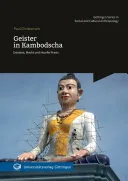
Geister in Kambodscha
 71
71

Geister in Kambodscha
Paul Christensen’s *Geister in Kambodscha* offers a rigorous, ethnographically grounded study of spirit beliefs in Cambodia, moving beyond simple categorization to explore their functional significance. The book’s strength lies in its detailed portrayal of spirit mediums and their active roles in mediating trauma and social order. Christensen’s application of actor-network theory provides a novel framework, allowing him to map the complex relationships between humans, spirits, and social structures. A notable passage discusses how ancestral spirits are invoked not merely for appeasement but as active participants in resolving contemporary disputes, highlighting the dynamic nature of belief. However, the dense theoretical apparatus, while innovative, may occasionally obscure the vivid human stories at its core for readers less familiar with contemporary social theory. Despite this, Christensen delivers a valuable contribution to the understanding of Cambodian religious life and the enduring power of the spiritual in shaping societal dynamics. It is a significant academic work for those dedicated to the field.
📝 Description
71
Paul Christensen's 2020 book, Geister in Kambodscha, examines the pervasive influence of spirits in Cambodian society.
Published in 2020, Geister in Kambodscha by Paul Christensen offers an academic analysis of how spirits shape Cambodian society. The book is based on 13 months of ethnographic fieldwork. Christensen uses actor-network theory to structure his study of spiritual beliefs and practices, showing their connections to historical trauma, religious identity, and political power in Cambodia. The research engages with the lasting effects of the Khmer Rouge era on collective memory and spiritual customs. It contrasts with older studies by focusing on current ritual practices and the lived experiences of Cambodians, rather than solely on texts or history. Christensen looks at how spiritual entities are called upon to deal with trauma, how they influence religious identity, and how leaders have used spiritual claims for legitimacy. A significant part of the book is dedicated to spirit mediums, considering their function as more than just religious figures but as active participants in social and political life.
While not strictly an esoteric text itself, Christensen's work connects with traditions that explore the intersection of the spiritual and material worlds. It examines how belief in spirits directly informs social structures and political power, a common theme in animistic and shamanistic traditions worldwide. The book's focus on living ritual and the agency of spiritual entities aligns with anthropological studies of belief systems that treat the supernatural as a real force within a given culture. This approach acknowledges the efficacy of spiritual practices in addressing societal issues like trauma and social control.
💡 Why Read This Book?
• Gain specific insights into the role of spirit mediums in Cambodian society, understanding their functions beyond mere religious observance, as detailed in Christensen's 13-month ethnographic study. • Learn how actor-network theory is applied to analyze the complex relationships between spirits, trauma, and political power in Southeast Asia, offering a unique analytical framework. • Understand the direct connection between living ritual practices and the negotiation of historical trauma in Cambodia, as evidenced by the specific case studies presented in the book.
⭐ Reader Reviews
Honest opinions from readers who have explored this book.
❓ Frequently Asked Questions
What is the primary focus of Paul Christensen's research in 'Geister in Kambodscha'?
The book primarily examines the significant roles spirits play in Cambodian society, focusing on how these beliefs help manage traumatic pasts, shape religious identity, and legitimize political elites.
What methodology did Paul Christensen use for his research?
Christensen employed an innovative methodology utilizing actor-network theory, based on 13 months of ethnographic field research conducted in Cambodia.
When was 'Geister in Kambodscha' first published?
The book was first published in 2020, presenting contemporary research on Cambodian spiritual practices.
What specific aspects of Cambodian spiritual life does the book explore?
It explores the handling of traumatic pasts, religious identification, political empowerment through spiritual legitimation, and the living ritual practices of spirit mediums.
Is 'Geister in Kambodscha' suitable for a general audience interested in spirituality?
While rich in detail, the book is an academic dissertation utilizing specific theoretical frameworks like actor-network theory, making it best suited for students and researchers in relevant fields.
What is actor-network theory, as applied in this book?
Actor-network theory, as used by Christensen, is an analytical framework that studies how human and non-human entities (like spirits) form networks and influence social phenomena.
🔮 Key Themes & Symbolism
Spirits and Social Order
Christensen investigates how the belief in and interaction with spirits are not peripheral but central to the functioning of Cambodian society. The work details how spiritual entities are invoked to address a spectrum of concerns, from personal misfortunes to collective traumas. This theme highlights the practical application of spirit beliefs in maintaining social cohesion and providing frameworks for understanding and navigating difficult life circumstances, particularly in the aftermath of historical upheaval.
Trauma and Spiritual Mediation
A significant portion of the book is dedicated to understanding how Cambodians utilize spiritual practices to process and cope with profound historical traumas, such as those stemming from the Khmer Rouge regime. The research illuminates how spirits become conduits for expressing grief, seeking justice, and re-establishing a sense of order. This mediation is shown to be a vital component of individual and collective healing, demonstrating the therapeutic dimension of ritual and spirit engagement.
Political Legitimation Through Spirits
The book critically examines how political elites in Cambodia have historically and presently leveraged spiritual beliefs and practices to consolidate and legitimize their power. This involves strategies of spiritual empowerment, where leaders may align themselves with powerful spirits or present their authority as divinely sanctioned. Christensen analyzes the mechanisms through which these spiritual legitimation strategies influence social hierarchies and political discourse.
The Role of Spirit Mediums
Central to the study is the detailed ethnographic exploration of spirit mediums. Christensen focuses on their living ritual practices, presenting them not merely as passive channels but as active social actors. Their roles extend to intercession, healing, divination, and even political commentary, making them key figures in the complex web of Cambodian social, religious, and political life. The book provides a nuanced view of their agency and societal importance.
💬 Memorable Quotes
Direct passages from the work, attributed to the author.
“The handling of traumatic pasts is deeply interwoven with invocations of ancestral and local spirits.”
— This interpretation highlights a core argument: spiritual practices are a primary means through which Cambodian society confronts and integrates its history of suffering and violence.
“Elites often employ spiritual legitimation strategies to reinforce their authority.”
— This concept points to the book's analysis of how power structures are maintained by linking political leadership to spiritual endorsement or power, a common tactic across cultures.
“Living ritual practice offers a tangible means of spiritual engagement and social negotiation.”
— This interpretation underscores the book's focus on contemporary, active spiritual practices as crucial for both individual experience and the broader social fabric of Cambodia.
💡 Key Ideas
Editorial paraphrase of the work's core concepts — not direct quotes.
Spirits in Cambodia are not distant deities but active participants in the resolution of earthly matters.
This paraphrase suggests that the book portrays spirits as immanent forces, directly involved in the daily lives and challenges of people, rather than abstract or remote religious figures.
Ethnographic research using actor-network theory reveals the dynamic networks connecting humans and spirits.
This paraphrase emphasizes Christensen's methodological approach, suggesting that the book maps the intricate relationships and influences within these human-spirit networks.
🌙 Esoteric Significance
Tradition
While not strictly an esoteric text in the Western Hermetic or Kabbalistic sense, *Geister in Kambodscha* offers a vital bridge to understanding non-Western spiritual traditions. It explores animistic and folk Buddhist belief systems prevalent in Southeast Asia, which often incorporate elements that resonate with broader concepts of spirit work, energetic influence, and the interconnectedness of visible and invisible realms. The book provides an empirical grounding for understanding phenomena often discussed in more theoretical or speculative esoteric circles.
Symbolism
The primary symbolism revolves around the spirits themselves, which act as potent forces within the Cambodian worldview. Ancestral spirits represent lineage, continuity, and karmic ties, often invoked for guidance and protection. Local guardian spirits embody the sacredness of place and territory, influencing well-being within specific locales. The ritual objects and actions employed by spirit mediums, though not detailed extensively here, symbolize the active channeling of spiritual power and the negotiation between the human and spirit domains.
Modern Relevance
In contemporary esoteric discourse, there is a growing appreciation for non-Western cosmologies and shamanic practices. Christensen's work is relevant to modern thinkers and practitioners interested in comparative spirituality, the anthropology of religion, and the practical application of altered states of consciousness for healing and insight. It informs discussions on how societies integrate trauma through spiritual means and offers case studies for those exploring the universal human impulse to connect with and understand unseen forces.
👥 Who Should Read This Book
• Anthropologists and religious studies scholars: To gain a detailed, theory-informed ethnographic account of spirit beliefs and practices in Cambodia, particularly concerning trauma and political dynamics. • Researchers of Southeast Asian culture: For specific insights into Cambodian society, history, and the intersection of religion, politics, and everyday life. • Students of comparative religion and belief systems: To understand a distinct non-Western approach to spirituality, mediation, and the role of the supernatural in social organization.
📜 Historical Context
Published in 2020, *Geister in Kambodscha* emerges within a growing academic interest in Southeast Asian animism, spirit possession, and the role of religion in post-conflict societies. The work engages with anthropological debates that gained prominence from the late 20th century onwards, moving beyond earlier Orientalist or purely historical accounts of Cambodian culture. Christensen’s focus on living ritual practices and his application of actor-network theory position him in dialogue with contemporary theorists like Bruno Latour, albeit applied to a distinct cultural and historical milieu. While not directly engaging with a specific named contemporary scholar's critique within the text itself, the work implicitly addresses broader anthropological trends that have seen scholars like Tanya Luhrmann exploring the social construction of religious experience. The book’s examination of trauma appeals to scholarship on memory studies and the aftermath of the Khmer Rouge regime, a period marked by extreme violence and societal disruption.
📔 Journal Prompts
The invocation of spirits for managing traumatic pasts.
Actor-network theory’s application to Cambodian spiritual frameworks.
The political implications of spiritual legitimation strategies.
The agency and functions of spirit mediums in contemporary Cambodia.
Ritual practices as a means of social negotiation.
🗂️ Glossary
Actor-Network Theory (ANT)
A theoretical framework used to analyze social phenomena by considering the relationships and interactions between human and non-human 'actors' (entities, technologies, ideas, etc.) within networks.
Ethnographic Field Research
The systematic study of people and cultures, involving direct observation and immersion in the community being studied over an extended period.
Spiritual Legitimation
The process by which political or social authority is justified or strengthened through appeals to spiritual power, divine right, or supernatural endorsement.
Spirit Mediums
Individuals believed to be capable of communicating with or being possessed by spirits, often acting as intermediaries between the human and spirit worlds.
Traumatic Past
Refers to historical events or periods characterized by widespread suffering, violence, or loss, the impact of which continues to affect individuals and societies.
Religious Identification
The process by which individuals and groups define themselves and others in relation to specific religious beliefs, practices, and communities.
Living Ritual Practice
Contemporary, active performance of religious or spiritual ceremonies and customs as they are currently understood and practiced by a community.