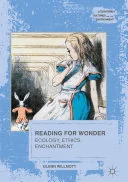
Reading for Wonder
 77
77

Reading for Wonder
Glenn Willmott’s "Reading for Wonder" confronts the pervasive desensitization that technological immersion fosters. The book’s strength lies in its intricate articulation of wonder as a vital, active faculty, not a passive emotional state. Willmott compellingly argues that this faculty is essential for ecological awareness, a point underscored when he discusses how wonder might foster "imaginative empathy" for non-human entanglements. However, the prose can, at times, become dense, requiring significant intellectual investment from the reader. The exploration of wonder's "artifice" is particularly intricate, perhaps underselling the immediate, visceral impact wonder can have before intellectualization. Nevertheless, it is a significant intervention for anyone seeking to understand our contemporary sensory landscape and our capacity for authentic engagement with it.
📝 Description
77
Glenn Willmott's 2017 book Reading for Wonder argues that our capacity for genuine wonder is culturally underserved.
Published in 2017, Reading for Wonder examines the diminished role of wonder in a world saturated with digital stimuli. Willmott proposes that wonder is more than an emotion; it is a cognitive, aesthetic, and ethical faculty essential for understanding our place in the world, particularly concerning ecological issues.
The book appeals to those seeking a deeper sense of awe and connection. It will interest scholars of literature, philosophy, and environmental studies, along with general readers aiming to cultivate imaginative empathy and a more developed ethical perspective. Individuals feeling overwhelmed by superficial sensory input will find a strong argument for reclaiming the experience of wonder.
Willmott's work enters a conversation about affect and emotion that gained traction in academic circles from the late 20th century onward. It critiques how late capitalism commodifies experience and diminishes authentic feeling. In an era of ecological crises, the book suggests new ways of perceiving and relating to the non-human world, aligning with traditions that emphasize direct experience and a re-enchantment of perception.
💡 Why Read This Book?
• Understand "wonder" as an active cognitive and ethical faculty, crucial for ecological awareness, as detailed in Willmott's 2017 analysis of our "cultural education." • Cultivate "imaginative empathy" through the book's framework, allowing for deeper connections to environmental issues beyond mere intellectual concern. • Re-evaluate your sensory experiences in an age of "awesome, sensual technological experiences," learning to read for the subtle intimacies that true wonder can reveal.
⭐ Reader Reviews
Honest opinions from readers who have explored this book.
❓ Frequently Asked Questions
When was Glenn Willmott's 'Reading for Wonder' first published?
Glenn Willmott's 'Reading for Wonder' was first published on December 13, 2017, marking its entry into contemporary discussions on culture and perception.
What is the central argument of 'Reading for Wonder'?
The book argues that wonder, a vital cognitive, aesthetic, and ethical experience, has been neglected in cultural education due to a saturation of technological stimuli, and that cultivating it is essential for ecological intimacy.
What does the book mean by 'imaginative empathy'?
Imaginative empathy, as explored in the book, refers to the capacity for understanding and feeling connected to ecological entanglements, fostered by the experience of wonder.
Who is Glenn Willmott?
Glenn Willmott is the author of 'Reading for Wonder,' a work that examines the nature and cultural importance of wonder in the contemporary world.
What kind of experiences does the book contrast with wonder?
The book contrasts genuine wonder with 'awesome, sensual technological experiences,' suggesting the latter often overshadow or replace the deeper, more nuanced experience of wonder.
What is the 'artifice of wonder' discussed in the book?
The 'artifice of wonder' refers to how the experience and understanding of wonder are shaped by cultural and intellectual frameworks, suggesting it's not purely a spontaneous, natural phenomenon.
🔮 Key Themes & Symbolism
The Neglect of Wonder
This theme addresses how contemporary culture, saturated with 'awesome, sensual technological experiences,' has dangerously neglected the faculty of wonder. Willmott argues that this neglect diminishes our capacity for deep connection and ethical engagement with the world, particularly concerning ecological issues. The book positions the cultivation of wonder as a necessary corrective to this cultural deficit, urging a re-evaluation of our educational priorities.
Wonder as a Faculty
The work reframes wonder not as a fleeting emotion but as a potent faculty encompassing cognitive, aesthetic, and ethical dimensions. It is presented as an active capacity that allows us to perceive and engage with the world in more profound ways. This perspective is crucial for understanding how wonder can awaken us to 'unexpected ecological intimacies and entanglements.'
Ecological Intimacies
A core concern is how wonder can foster a deeper, more intimate relationship with the natural world. In an era of ecological crisis, the book suggests that the imaginative empathy generated by wonder is essential for recognizing and responding to our interconnectedness with non-human environments. It moves beyond abstract environmentalism to a felt sense of entanglement.
Cultural Education and Wonder
Willmott critiques current cultural education for its failure to teach or cultivate wonder. The book advocates for a shift towards fostering 'imaginative empathy' and the caution that wonder evokes, proposing that learning to 'read for wonder' is a vital skill for navigating our complex relationship with technology and the environment.
💬 Memorable Quotes
Direct passages from the work, attributed to the author.
“wonder has diverse powers, including awakening us to unexpected ecological intimacies and entanglements.”
— This highlights wonder's active role in revealing our deep connections to the environment, suggesting it's a key to understanding ecological crises beyond data and policy.
“this deeply felt experience—at once cognitive, aesthetic, and ethical—has been dangerously neglected in our cultural education.”
— This underscores the book's central thesis: wonder is a multi-faceted human capacity that education has failed to nurture, leading to a diminished ethical and aesthetic engagement with the world.
“In order to cultivate the imaginative empathy and caution this feeling evokes, we need to teach ourselves and others to read for wonder.”
— This points to a pedagogical imperative, framing 'reading for wonder' as a deliberate practice essential for developing empathy and ethical awareness, particularly concerning our ecological situation.
“In a world awash in awesome, sensual technological experiences, wonder has diverse powers.”
— This sets the stage by contrasting the superficiality of much modern sensory input with the profound potential of wonder, identifying a core tension in contemporary experience.
“This book begins by unfolding the nature and artifice of wonder.”
— This indicates the book's analytical approach, suggesting an examination not only of what wonder is but also how its expression and perception are culturally constructed.
🌙 Esoteric Significance
Tradition
While not explicitly aligned with a single esoteric tradition, "Reading for Wonder" shares common ground with certain Hermetic and Neoplatonic philosophies that emphasize the interconnectedness of all things and the power of perception to reveal hidden realities. Its focus on cultivating a specific mode of consciousness (wonder) for ethical and cognitive ends echoes esoteric practices aimed at spiritual or intellectual transformation.
Symbolism
The book doesn't rely on overt symbolic systems but uses concepts like "ecological intimacies" and "entanglements" as metaphorical anchors. These function as modern symbols for the interconnectedness often explored through traditional esoteric motifs such as the 'web of life' or the 'divine correspondence' between macrocosm and microcosm.
Modern Relevance
Contemporary thinkers in ecopsychology, deep ecology, and certain strands of critical theory draw on similar ideas regarding cultivated perception and ethical responsibility towards the environment. Willmott's work offers a philosophical framework for practices aimed at fostering a more mindful and connected relationship with the natural world, relevant to mindfulness movements and environmental activism.
👥 Who Should Read This Book
• Academics in environmental studies, literature, and philosophy seeking to bridge affect theory with ecological concerns and explore alternative modes of perception. • Artists and writers looking for conceptual frameworks to explore themes of nature, technology, and human consciousness in their creative work. • General readers feeling disconnected from the natural world or overwhelmed by digital stimuli, who wish to cultivate a richer, more ethically grounded experience of wonder.
📜 Historical Context
Glenn Willmott's "Reading for Wonder" (2017) emerged during a period of increased academic focus on affect theory and the critique of late capitalism's impact on human experience. Intellectual currents from thinkers like Gilles Deleuze and Félix Guattari, who explored 'assemblages' and becomings, provide a backdrop for understanding Willmott's emphasis on ecological entanglements. The book implicitly engages with post-humanist and new materialist philosophies that challenge anthropocentric views and highlight the agency of non-human entities. While not directly engaging in public debate, its themes resonate with contemporary environmental humanities scholarship, which often grapples with how to foster affective and ethical responses to ecological crises. Its publication predates the widespread surge in AI-generated content, making its critique of technological saturation particularly prescient.
📔 Journal Prompts
The nature and artifice of wonder: How do technological experiences shape your perception of natural phenomena?
Ecological intimacies: Reflect on a moment you felt a profound connection to a non-human element.
Imaginative empathy: Consider how cultivating wonder might alter your ethical response to environmental issues.
Cultural education: What practices could foster wonder in educational settings?
The neglect of wonder: How does the saturation of sensory experiences impact your capacity for awe?
🗂️ Glossary
Wonder
A complex experience encompassing cognitive apprehension, aesthetic appreciation, and ethical responsiveness, seen not just as emotion but as a vital human faculty.
Ecological Intimacies
Deeply felt, personal connections and understandings that arise between humans and the natural environment, fostered by the experience of wonder.
Imaginative Empathy
The capacity to understand and feel connected to the experiences and perspectives of others, particularly extended here to ecological entanglements and non-human entities.
Artifice of Wonder
The idea that the experience and expression of wonder are shaped by cultural, social, and intellectual frameworks, rather than being purely spontaneous.
Sensory Technological Experiences
Stimuli provided by modern technology that are often designed to be immediately appealing and immersive, potentially overshadowing or replacing more nuanced experiences like wonder.
Reading for Wonder
A proposed practice or approach to engaging with the world and texts, aimed at cultivating the faculty of wonder and its associated ethical and cognitive benefits.
Cultural Education
The formal and informal processes through which individuals learn societal norms, values, and ways of understanding the world, which this book argues has neglected the cultivation of wonder.
This book appears in 1 collection
🔮 Readers Also Liked
Browse all →







From the “Enchantment” Collection
View all →








More Free Occult Philosophy Books
View all →