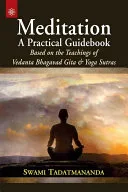
Meditation, A Practical Guidebook
 71
71

Meditation, A Practical Guidebook
Swami Tadatmananda’s "Meditation, A Practical Guidebook" avoids the common pitfall of presenting meditation as a monolithic entity. Instead, it highlights the practice’s multifaceted nature, akin to comparing it to music. A significant strength lies in its accessible cataloging of diverse techniques, from silent introspection to mantra recitation. However, the book occasionally leans towards a spiritual framing that might feel less grounded for secular practitioners seeking purely psychological benefits. The exploration of the 'witness consciousness' as a core concept is particularly well-articulated, offering a clear pathway for developing detached observation. While the 2014 publication date places it within a contemporary understanding of mindfulness, its roots delve into older traditions. It serves as a solid, if sometimes spiritually-inclined, introduction to a vast field.
📝 Description
71
Swami Tadatmananda's 2005 guidebook defines meditation beyond stress relief, presenting it as a contemplative art.
This book clarifies that meditation is not solely a method for stress reduction, though that can be a result. Instead, it describes meditation as a contemplative art and a mental discipline. The author acknowledges the wide variety of meditation practices, from the quiet observation of Vipassanā to mantra chanting and visualization techniques common in Tibetan Buddhism. Swami Tadatmananda suggests that the effectiveness of any practice depends on sincere application and the practitioner's intention.
The guide presents meditation as both a personal pursuit and a universal human activity. While techniques may come from specific cultures or religions, the core principles of focused attention, self-awareness, and cultivating inner peace are accessible to everyone. The practice offers a refuge from daily life, tools for self-discovery, and a way to connect with deeper aspects of existence. It encourages readers to examine their inner world with curiosity.
This work sits within the broader spiritual development tradition, drawing from practices rooted in Indic contemplative traditions. It addresses the universal human quest for inner peace and self-understanding, common to many esoteric paths. The emphasis on cultivating a specific quality of mind and presence, rather than just performing techniques, aligns with the focus on inner transformation found in various yogic and Buddhist lineages.
💡 Why Read This Book?
• You will learn to differentiate between various meditation styles, such as Vipassanā and mantra recitation, understanding their unique applications as presented in the book's early chapters. • Gain practical techniques for cultivating 'witness consciousness,' a key concept explained by Swami Tadatmananda, enabling detached observation of thoughts and emotions. • Discover how to approach meditation as a contemplative art and mental discipline, a perspective emphasized throughout the guidebook, fostering a deeper, more intentional practice.
⭐ Reader Reviews
Honest opinions from readers who have explored this book.
❓ Frequently Asked Questions
When was Swami Tadatmananda's Meditation, A Practical Guidebook first published?
The book was first published in 2014, offering contemporary perspectives on ancient meditative practices.
Does the book focus on a single meditation technique?
No, the book emphasizes the diverse nature of meditation, comparing it to music and exploring various approaches like Vipassanā and mantra recitation.
Is Meditation, A Practical Guidebook suitable for beginners?
Yes, its practical approach and clear explanations of different techniques make it accessible for those new to meditation.
What is the concept of 'witness consciousness' as discussed in the book?
The book explains 'witness consciousness' as a state of detached observation, allowing practitioners to observe thoughts and emotions without identification.
Can meditation practices described in the book be secular?
While rooted in spiritual traditions, the book presents many techniques and principles, like focused attention and self-awareness, that can be applied secularly.
What is the core message regarding the application of meditation techniques?
The core message is that the effectiveness of any method lies in its sincere application and the practitioner's intent, rather than the technique itself.
🔮 Key Themes & Symbolism
The Complex Nature
Swami Tadatmananda presents meditation not as a singular technique but as a broad spectrum of practices, akin to the diverse forms of music. The work explores how meditation functions as a contemplative art, a mental discipline, and a spiritual path, encompassing aesthetic, scientific, and introspective dimensions. This approach acknowledges that different methods, from silent Vipassanā to mantra chanting, serve distinct purposes and cultivate varied states of awareness, offering readers a comprehensive view beyond simplistic definitions.
Cultivating Witness Consciousness
A central theme is the development of 'witness consciousness,' the ability to observe one's thoughts, emotions, and sensations without judgment or identification. This concept, explored thoroughly in the book, is presented as a foundational element for achieving mental clarity and emotional equanimity. By fostering this detached perspective, practitioners can disengage from habitual reactive patterns and gain deeper self-understanding, transforming their relationship with their inner world.
The Journey Beyond Technique
The guidebook emphasizes that the true value of meditation lies not solely in mastering specific techniques but in the cultivation of an inner quality of presence and mindful awareness. Swami Tadatmananda guides readers to understand meditation as an ongoing exploration of the self and consciousness. This perspective encourages a commitment to consistent practice, highlighting how it can lead to profound shifts in perception, emotional regulation, and an overall enhanced sense of well-being and connection.
Accessibility and Application
Despite its roots in ancient traditions, the book stresses the universal accessibility of meditation principles. It frames the practice as both a personal journey and a common human endeavor, applicable regardless of background. The guide provides practical tools and insights designed for sincere application, enabling individuals to create a tranquil retreat from daily life and begin a path of self-discovery. The focus is on intentional practice leading to tangible benefits.
💬 Memorable Quotes
Direct passages from the work, attributed to the author.
“Meditation is a rainbow of many hues.”
— This metaphor highlights the vast diversity of meditative practices available, suggesting that no single definition can capture the full scope of techniques and experiences.
“To ask, 'What is meditation?' is like asking, 'What is music?'”
— This analogy underscores the complexity and subjective richness of meditation, implying that its essence is best understood through direct experience rather than simple definition.
“Meditation is simultaneously an aesthetic pursuit, a scientific investigation, and a spiritual path.”
— This statement articulates the complex nature of meditation, positioning it as a practice that engages creativity, analytical observation, and profound inner exploration.
“Meditation is a contemplative art, a mental discipline, and a sacred journey.”
— This phrase captures the different dimensions of meditation, framing it as a creative endeavor, a rigorous training of the mind, and a meaningful exploration of the self.
“Meditation is a reflective practice, a tranquil retreat, and a joyous excursion.”
— This offers a poetic description of the experience of meditation, emphasizing its introspective quality, its ability to provide peace, and its potential for profound inner discovery.
🌙 Esoteric Significance
Tradition
While not explicitly aligning with a single lineage like Hermeticism or Kabbalah, the work draws heavily from Indic contemplative traditions, particularly those emphasizing inner discipline and self-awareness. It shares common ground with Yoga and Vedanta philosophies, focusing on the transformation of consciousness through focused attention and introspection. The 'sacred journey' aspect aligns with broader esoteric concepts of spiritual progression and self-realization, making it a bridge text for those exploring these themes outside of a purely religious context.
Symbolism
The book uses the metaphor of a 'rainbow of many hues' to symbolize the diverse range of meditative practices. This symbolizes the spectrum of consciousness and the varied paths available for inner exploration. The concept of a 'tranquil retreat' functions symbolically as an inner sanctuary, a sacred space accessible through mental discipline, representing the practitioner's ability to find stillness amidst external chaos.
Modern Relevance
This guidebook remains relevant for contemporary practitioners interested in a comprehensive overview of meditation that balances practical technique with philosophical depth. It speaks to modern seekers who may be exploring paths beyond purely secular mindfulness, seeking a more integrated approach to well-being that encompasses mental, emotional, and spiritual dimensions. Thinkers and practitioners in fields like integral spirituality and comparative religion may find its broad yet grounded perspective valuable.
👥 Who Should Read This Book
• Beginners seeking a foundational understanding of meditation's diverse techniques and underlying principles, moving beyond simplistic definitions. • Practitioners interested in exploring the concept of 'witness consciousness' as a tool for self-awareness and emotional regulation. • Individuals looking for a practical guide that bridges ancient contemplative wisdom with contemporary application, offering both mental discipline and spiritual exploration.
📜 Historical Context
Published in 2014, Swami Tadatmananda’s "Meditation, A Practical Guidebook" emerged during a period of intense popular interest in mindfulness and meditation, largely fueled by secular applications in psychology and wellness. This era saw a surge of books on the topic, often drawing from Buddhist traditions but aiming for broader appeal. While the book acknowledges diverse techniques, its emphasis on spiritual paths places it in dialogue with earlier esoteric and yogic traditions that gained traction in the West throughout the 20th century. It stands apart from the purely clinical approaches popular at the time, such as those championed by Jon Kabat-Zinn's Mindfulness-Based Stress Reduction (MBSR), by retaining a stronger connection to contemplative and devotional aspects. The 2014 publication date means it benefited from decades of Western engagement with Eastern contemplative practices, yet it avoids the more rigid sectarianism sometimes found in earlier texts.
📔 Journal Prompts
Reflect on the 'rainbow of many hues' metaphor: which colors (techniques) most appeal to you and why?
Consider the 'witness consciousness': how might observing your thoughts without judgment alter your daily interactions?
Describe your personal definition of a 'tranquil retreat' and how meditation might help create it.
Analyze the comparison of meditation to music: what parallels do you see in their structure and impact?
Explore the idea of meditation as a 'sacred journey': what destinations do you hope to reach within yourself?
🗂️ Glossary
Vipassanā
A Buddhist meditation technique focused on developing insight into the true nature of reality by observing sensations, thoughts, and phenomena as they arise and pass away.
Mantra
A sacred utterance, sound, syllable, word, or group of words believed by practitioners to have psychological or spiritual power, often used in meditation and rituals.
Contemplative Art
A practice involving deep, extended reflection or thought, often aimed at spiritual insight, self-understanding, or achieving a state of profound awareness.
Mental Discipline
The training of the mind to focus, control thoughts and emotions, and develop specific mental faculties, such as concentration and awareness.
Witness Consciousness
A state of detached observation where one perceives mental and physical phenomena without identifying with them or reacting emotionally.
Spiritual Path
A course of practice and belief directed towards spiritual growth, enlightenment, or union with the divine or ultimate reality.
Inner Landscape
The internal world of a person's thoughts, feelings, memories, and subconscious processes, explored through introspection and practices like meditation.