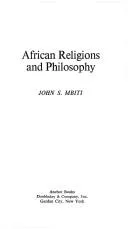
African Religions and Philosophy
 64
64

African Religions and Philosophy


Alaric Kestrel, Metaphysical Studies Reviewer: John S. Mbiti's 'African Religions and Philosophy' stands as an indispensable cornerstone for anyone venturing into the esoteric heart of African spiritual traditions. Mbiti's meticulous scholarship unveils a universe of complex cosmologies, potent mythologies, and deeply embedded philosophical systems that often elude superficial analysis. He illuminates the intricate relationship between the human, the divine, and the ancestral, revealing ritual not as mere ceremony but as a dynamic engagement with cosmic order. This work is a profound testament to the intellectual rigor and spiritual depth of African thought, offering unparalleled insights into concepts of time, community, and the sacred. It is essential reading for scholars, practitioners, and seekers alike who wish to grasp the profound metaphysical underpinnings of these vital traditions.
📝 Description
64
John S. Mbiti’s African Religions and Philosophy, first published in 1969, examines indigenous African spiritual systems.
John S. Mbiti’s 1969 book, African Religions and Philosophy, is a study of traditional African religious beliefs and their philosophical structures. Mbiti details concepts such as the African understanding of God, the role of spirits and ancestors, and the significance of human beings within the cosmos. He examines how these beliefs shape daily life, social structures, and the perception of time. The work covers a wide range of ethnic groups and traditions across the continent, highlighting commonalities and distinctions in their spiritual frameworks.
Mbiti structures his analysis by exploring various aspects of these religions, including their cosmology, anthropology, and eschatology. He pays close attention to the symbolic language and ritual practices that give expression to these belief systems. The book aims to present a coherent picture of African thought, moving beyond colonial interpretations and demonstrating the intellectual depth of these traditions. It is a resource for understanding the worldview that underpins much of African culture.
Within the study of esoteric traditions, Mbiti's work is significant for its detailed account of indigenous spiritual systems that often operate outside mainstream Western religious frameworks. It illuminates belief systems where the material and spiritual realms are perceived as deeply interconnected, and where practices aim to harmonize human existence with cosmic forces. The book provides a scholarly entry point to understanding worldviews that emphasize cyclical time, ancestral communion, and a holistic sense of existence, aspects often found in esoteric thought.
💡 Why Read This Book?
Uncover the ancient wisdom and potent symbolism embedded within African spiritual traditions. This book offers a profound exploration of indigenous cosmologies, revealing their sophisticated philosophical underpinnings and the practical application of ritual. It is essential for scholars, spiritual seekers, and practitioners aiming to understand diverse worldviews and connect with ancestral knowledge.
⭐ Reader Reviews
Honest opinions from readers who have explored this book.
❓ Frequently Asked Questions
What is the primary focus of Mbiti's 'African Religions and Philosophy'?
The book primarily focuses on the diverse indigenous religious beliefs and philosophical systems of various African peoples, exploring their cosmologies, concepts of God, spirits, and the human place within the universe.
Is this book suitable for beginners in African studies?
Yes, while comprehensive, Mbiti's clear prose and structured approach make it accessible to beginners seeking a foundational understanding of African spiritual thought and its philosophical dimensions.
Does the book discuss specific rituals or magical practices?
The book delves into the philosophical underpinnings and communal significance of rituals within African religions, often touching upon their role in maintaining cosmic balance and interacting with the spiritual realm.
What makes this book significant in the study of religion and philosophy?
Its significance lies in its comprehensive and systematic approach to a vast array of African spiritual traditions, often challenging Western biases and highlighting the intellectual depth and philosophical sophistication of these often-misunderstood belief systems.
Can this book be used for academic research?
Absolutely. It is widely regarded as a seminal text and a foundational resource for academic research in African religions, anthropology, and philosophy due to its thoroughness and scholarly rigor.
🔮 Key Themes & Symbolism
The Interconnectedness of the Cosmos
Mbiti masterfully illustrates the African worldview's inherent understanding of an interconnected cosmos, where the divine, ancestral, human, and natural realms are not separate but interwoven threads in a single, living range. This theme emphasizes the profound spiritual resonance of everyday existence, where actions in one realm ripple through others. It reveals a universe imbued with spirit, where the sacred is not confined to temples but permeates the very fabric of life, offering a powerful counterpoint to fragmented modern perceptions and highlighting the holistic nature of ancient spiritual thought.
The Profound Role of Ancestors
Central to African spiritual philosophy is the vital role of ancestors, not as distant figures, but as active participants in the lives of the living. Mbiti elucidates how ancestors serve as intermediaries, guardians, and sources of wisdom and power, maintaining the balance and continuity of the community. This theme explores the dynamic relationship between the living and the dead, where reverence, communication, and ritual ensure spiritual harmony and social cohesion. It underscores a unique understanding of lineage and legacy, where the past actively shapes and guides the present and future, offering a potent lesson in enduring connection.
Time as a Spiritual Continuum
This work challenges linear Western conceptions of time, presenting a more cyclical and event-oriented African understanding. Mbiti reveals how time is perceived not as an abstract entity but as a flow deeply connected to life, death, and rebirth, with a strong emphasis on the 'present' and the 'past' influencing the 'future' through the ongoing presence of the departed. This philosophical perspective imbues life with a sense of immediate spiritual significance and communal responsibility, where the past is not gone but ever-present, shaping the unfolding of existence and reinforcing the cyclical nature of spiritual and material reality.
💬 Memorable Quotes
Direct passages from the work, attributed to the author.
“Religion is not a thing apart from life, but life itself.”
— This profound statement captures the holistic nature of African spirituality, asserting that religious belief and practice are intrinsically woven into the very fabric of existence, influencing every aspect of daily life and community.
“The concept of God is central to African religions.”
— This emphasizes the foundational importance of a Supreme Being in most African cosmologies, serving as the ultimate source of creation and order, around which other spiritual beliefs and practices are structured.
“The African believes in a spiritual world.”
— This highlights the pervasive animistic and spiritualistic worldview characteristic of many African traditions, where the unseen realm is as real and influential as the physical world.
“The family is the smallest society.”
— This underscores the paramount importance of kinship and communal bonds in African societies, framing the family unit as the fundamental building block of social and spiritual order.
💡 Key Ideas
Editorial paraphrase of the work's core concepts — not direct quotes.
The greatest danger to African religions comes from within.
This quote suggests that internal factors, such as syncretism, adaptation, or loss of traditional knowledge, pose a greater threat to the preservation of African spiritual traditions than external pressures, highlighting the importance of authenticity and cultural stewardship.
🌙 Esoteric Significance
Tradition
This work is foundational to the esoteric study of African Traditional Religions (ATR), offering a glimpse into indigenous spiritual frameworks that often operate with principles akin to shamanism, animism, and nature-based magic. It illuminates the practical application of spiritual energies through ritual, divination, and the veneration of ancestral spirits. The book provides a gateway to understanding the 'hidden' knowledge embedded within these traditions, revealing their sophisticated understanding of cosmic law, energetic flows, and the interconnectedness of all life, which resonate deeply with broader esoteric philosophies worldwide.
Symbolism
Mbiti unveils a body of symbolism deeply embedded within African spiritual practices. From the symbolic significance of natural elements like water, trees, and animals, to the visual language of masks, carvings, and ritual objects, each symbol carries layers of meaning related to creation, fertility, community, and the divine. The book explores how these symbols act as conduits for spiritual understanding and power, serving as mnemonic devices, sacred icons, and keys to unlocking deeper metaphysical truths about existence, the human condition, and the relationship between the physical and spiritual realms, embodying an ancient form of sacred geometry and energetic mapping.
Modern Relevance
In an increasingly disconnected world, 'African Religions and Philosophy' offers useful insights into holistic living, community interconnectedness, and a deeply spiritual relationship with nature. Its exploration of ancestral veneration provides a powerful model for understanding lineage and legacy, while its concepts of time and cosmic balance offer alternative perspectives to modern anxieties. For esoteric practitioners, the book reveals potent archetypes, ritual structures, and a worldview that emphasizes the immanence of the sacred, providing a rich source of inspiration and practical wisdom for contemporary spiritual exploration and the revitalization of ancestral wisdom traditions.
👥 Who Should Read This Book
This important work is essential for a broad spectrum of readers. **Beginners** will find a clear and comprehensive introduction to the vast range of African spiritual thought, explaining complex concepts. **Scholars** of religion, anthropology, and philosophy will discover a foundational text, rich with ethnographic detail and rigorous analysis, providing critical insights into diverse belief systems. **Spiritual seekers** yearning for alternative cosmologies and a deeper connection to ancestral wisdom will be profoundly moved by the book's exploration of the sacred in everyday life. **Practitioners** of esoteric arts and ritualistic traditions will find invaluable inspiration in the detailed accounts of African spiritual practices, symbolism, and the profound relationship between humanity and the divine.
📜 Historical Context
Written in an era when Africa was undergoing significant post-colonial shifts and increased engagement with global intellectual discourse, John S. Mbiti's 'African Religions and Philosophy' emerged as a central work in the mid-20th century. It challenged prevalent colonial narratives that often dismissed indigenous African spiritual systems as primitive or lacking intellectual depth. Mbiti's meticulous research, drawing from extensive fieldwork and a deep understanding of African languages and cultures, provided a systematic and respectful exposition of these traditions. The book's publication was instrumental in establishing African religions as a legitimate field of academic study, fostering a greater appreciation for their complexity, philosophical sophistication, and enduring relevance in a rapidly changing world. It served as a crucial counter-narrative, empowering African voices and perspectives in the global conversation on spirituality and human thought.
📔 Journal Prompts
Reflect on the concept of 'time' as presented by Mbiti. How does this differ from your own cultural understanding, and what implications does this have for your perception of past, present, and future?
Consider the role of ancestors in African religions. How might integrating a deeper reverence for one's own ancestral lineage enrich your spiritual practice and sense of connection?
Mbiti discusses the interconnectedness of the cosmos. Identify three elements in your daily life that you currently perceive as separate, and explore how they might be spiritually linked.
How does the African concept of 'religion as life itself' challenge or affirm your personal understanding of spirituality and its place in your daily activities?
Explore a symbol from your own cultural or spiritual background. What deeper meanings or energies might it embody, analogous to the symbolism discussed in African traditions?
🗂️ Glossary
Cosmology
The study of the origin, evolution, and eventual fate of the universe. In African religions, it encompasses the structure of the cosmos, the relationships between divine beings, humans, and the natural world, and the fundamental principles governing existence.
Animism
The belief that natural objects, phenomena, and the universe itself possess souls or spirits. In African contexts, this often extends to plants, animals, rocks, and natural forces, all of which are seen as imbued with spiritual essence and agency.
Divination
The practice of seeking knowledge of the future or the unknown by supernatural means. African divination methods vary widely, employing tools like bones, shells, or trance states to interpret omens and receive guidance from the spiritual realm.
Ritual
A set of actions, performed consistently in a specific order, often with symbolic meaning, intended to achieve a spiritual or social outcome. In African religions, rituals are crucial for maintaining harmony, appeasing spirits, celebrating life events, and facilitating transitions.
Syncretism
The merging of different, often contradictory, religious or cultural beliefs and practices. In the context of African religions, this often refers to the blending of indigenous beliefs with those introduced by Christianity or Islam.
This book appears in 3 collections
🔮 Readers Also Liked
Browse all →







From the “Ritual Magic” Collection
View all →







More Free Magic & Ritual Books
View all →