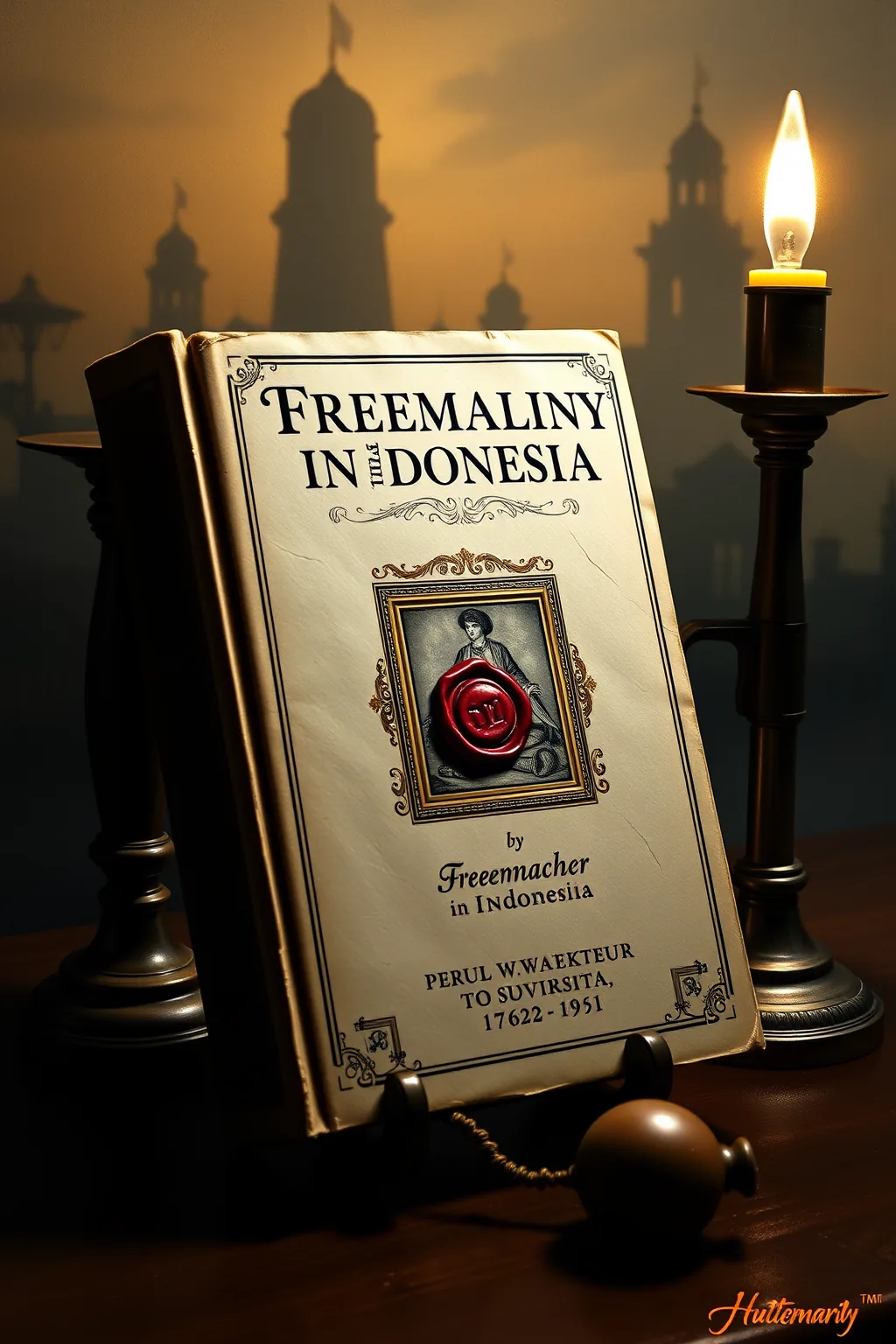
Freemasonry In Indonesia From Radermacher To Soekanto, 1762-1961
 73
73

Freemasonry In Indonesia From Radermacher To Soekanto, 1762-1961


Freemasonry in Indonesia from Radermacher to Soekanto, 1762-1961 is a seminal work for anyone fascinated by the occult and the hidden histories of secret societies. Paul W. van der Veur's meticulous research and engaging narrative make this book a standout in the field of esoteric literature. The author's ability to weave together historical facts with esoteric lore provides a rich tapestry that illuminates the role of Freemasonry in the Dutch East Indies and early Indonesia. For modern esoteric seekers, this book offers a unique perspective on how Freemasonry has influenced and been influenced by cultural and political changes. Van der Veur's work is not just a historical account but a journey into the mystical undercurrents that have shaped Indonesian society. This book is a must-read for those who seek to understand the deeper, often hidden, aspects of human history.
📝 Description
73
Paul W. van der Veur's 1979 study charts Indonesian Freemasonry from 1762 to 1961.
This book examines the history of Freemasonry in Indonesia between 1762 and 1961. It traces the presence and activities of Masonic lodges from the time of Radermacher, an early proponent, through to the era of Soekanto. The work details the symbolic language, rituals, and philosophical tenets adopted and adapted by Masons in the Dutch East Indies.
Van der Veur investigates the intellectual and spiritual climate that allowed Freemasonry to take root and develop in the region. The book discusses how Masonic teachings interacted with local culture and the broader colonial context. It aims to illuminate the role these fraternal organizations played in the social and intellectual life of the period.
Freemasonry, often perceived as a fraternal order, also contains esoteric dimensions rooted in Hermeticism, Kabbalah, and ancient mystery traditions. Its symbolism and allegorical teachings can be interpreted through an esoteric lens, focusing on personal transformation and hidden knowledge. This book connects those broader esoteric currents to their specific manifestation within the Indonesian archipelago during a significant historical period.
💡 Why Read This Book?
Reading Freemasonry in Indonesia from Radermacher to Soekanto, 1762-1961 today offers readers a profound understanding of the esoteric influences that have shaped Indonesian society. This book provides a unique lens through which to view the interplay between colonial powers and local cultures, as well as the enduring impact of secret societies on political and social structures. For esoteric seekers, it offers a rich exploration of Freemasonry's role in the region, revealing how these hidden networks have operated and evolved over time. This knowledge can enrich one's understanding of the occult and its relevance in contemporary society.
⭐ Reader Reviews
Honest opinions from readers who have explored this book.
❓ Frequently Asked Questions
What is the main focus of Freemasonry in Indonesia from Radermacher to Soekanto, 1762-1961?
The main focus of this book is the history and development of Freemasonry in Indonesia from 1762 to 1961, exploring its influence and the role of key figures in this period.
Who should read this book?
This book is ideal for historians, esoteric enthusiasts, and anyone interested in the hidden histories of secret societies and their impact on Indonesian culture and politics.
Is this book suitable for those new to the study of Freemasonry?
Yes, the book provides a comprehensive overview that is accessible to both beginners and those with some knowledge of Freemasonry.
🔮 Key Themes & Symbolism
Esoteric Symbolism
Van der Veur's work delves deep into the esoteric symbolism of Freemasonry, revealing the hidden meanings behind rituals and symbols. This theme is crucial for understanding the mystical underpinnings of the brotherhood and its influence in Indonesia.
Hidden Knowledge
The book uncovers the hidden knowledge that has been passed down through generations of Freemasons in the Dutch East Indies. This knowledge is essential for those seeking to understand the deeper spiritual and philosophical significance of Freemasonry.
Philosophical Depth
Van der Veur's exploration of Freemasonry's influence in Indonesia provides a profound philosophical depth, revealing how the brotherhood's teachings have shaped the mystical range of the region.
💡 Key Ideas
Editorial paraphrase of the work's core concepts — not direct quotes.
The rituals of Freemasonry hold the keys to ancient wisdom.
This quote underscores the esoteric significance of Freemasonry's rituals, which are seen as gateways to hidden knowledge.
Symbolism is the language of the mysteries.
This line highlights the importance of symbolism in understanding the mystical dimensions of Freemasonry.
The brotherhood's influence extends beyond the visible world.
This quote suggests that Freemasonry's impact is not limited to the physical realm but also encompasses spiritual and philosophical dimensions.
The Dutch East Indies were a crucible of esoteric traditions.
This passage emphasizes the rich mystical heritage of the region, where various esoteric traditions intermingled.
Freemasonry in Indonesia is a journey into the heart of mystery.
This quote captures the book's exploration of the esoteric and mystical aspects of Freemasonry in Indonesia.
🌙 Esoteric Significance
Tradition
This book belongs to the Hermetic tradition, which emphasizes the pursuit of hidden knowledge and the exploration of mystical symbolism. Freemasonry, with its rich esoteric heritage, fits perfectly within this tradition.
Symbolism
Key symbols in the book include the square and compass, the all-seeing eye, and various ritualistic tools used in Freemasonry. These symbols are imbued with deep mystical meanings, representing the journey towards spiritual enlightenment.
Modern Relevance
The esoteric insights provided in this book are relevant today for modern practitioners of Hermeticism and Freemasonry. It offers a unique perspective on the mystical traditions of the East, making it a valuable resource for contemporary seekers of esoteric knowledge.
👥 Who Should Read This Book
Beginners in esoteric studies will find this book enlightening but may need additional context. Scholars of the occult will appreciate the depth of research and esoteric insights. Spiritual seekers will be drawn to the mystical and philosophical dimensions of Freemasonry. Practitioners of Hermeticism and Freemasonry will find this book essential for understanding the esoteric traditions of the Dutch East Indies.
📜 Historical Context
Paul W. van der Veur's 'Freemasonry in Indonesia from Radermacher to Soekanto, 1762-1961' was published in 1976, providing a comprehensive overview of Freemasonry's influence in the Dutch East Indies during a critical period of colonial and post-colonial history. The book is important for understanding the esoteric traditions that flourished in the region during this time. Its influence lies in its ability to shed light on the mystical underpinnings of Freemasonry and its impact on the spiritual range of Indonesia. The era covered in the book is marked by a body of esoteric practices and philosophical inquiries, making it a vital resource for scholars and practitioners of the occult.
📔 Journal Prompts
Reflect on the symbolism of Freemasonry and its relevance to your spiritual journey?
How does the esoteric knowledge in this book resonate with your understanding of mystical traditions?
Consider the impact of Freemasonry on the spiritual range of Indonesia. How does this influence manifest in modern times?
Explore the philosophical depth of Freemasonry's teachings and rituals. What insights do they offer for your own spiritual practice?
Journal about the historical context of Freemasonry in the Dutch East Indies. How does this period shape your understanding of esoteric traditions?
🗂️ Glossary
Hermeticism
An esoteric tradition that focuses on the pursuit of hidden knowledge and spiritual enlightenment through mystical practices.
Freemasonry
A fraternal organization that uses rituals and symbolism to teach moral and philosophical lessons, often with esoteric undertones.
Esoteric Symbolism
Symbols that hold hidden meanings and are used in mystical and spiritual practices to convey deeper truths.
Dutch East Indies
The historical name for the region that is now Indonesia, which was under Dutch colonial rule from the 17th to the 20th century.
Mystical Landscape
The spiritual and philosophical environment shaped by esoteric traditions and practices in a particular region.
This book appears in 2 collections
🔮 Readers Also Liked
Browse all →





From the “Secret Societies” Collection
View all →



More Free Freemasonry & Secret Societies Books
View all →