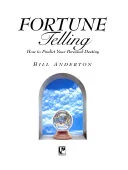
Fortune Telling
 81
81

Fortune Telling
Bill Anderton's Fortune Telling offers a broad sweep across several major divinatory arts, a commendable ambition for a single volume. The clear descriptions of Tarot, astrology, numerology, and the I Ching provide a solid foundation for newcomers. The inclusion of the author's 'futurescope' is a particular point of interest, presenting a tangible, mechanical approach that contrasts with the more abstract methods discussed. However, the book's breadth sometimes leads to a lack of depth; practitioners deeply invested in any single system might find the coverage cursory. The section on astrology, for instance, touches upon core concepts without fully exploring the nuances of chart interpretation. Despite this, the work serves as an accessible gateway, consolidating diverse predictive techniques into one accessible package. It's a useful compendium for those beginning their exploration of divination.
📝 Description
81
Bill Anderton's 1996 book, Fortune Telling, examines historical methods for predicting future events.
Published in 1996, Bill Anderton's Fortune Telling provides a structured examination of various historical methods used to predict future events. The book surveys established divinatory systems, offering practical guidance for their application and interpretation. It aims to go beyond simple description, presenting a systematic approach to understanding these complex arts. The work is suited for individuals interested in the practical use of esoteric knowledge, appealing to students of Tarot, astrology, and numerology who wish to enhance their understanding of predictive techniques. Those curious about ancient Chinese wisdom traditions, especially the I Ching, will find value, as will anyone interested in unique mechanical approaches to divination. Anderton's publication coincided with a resurgence of interest in esoteric subjects, following the New Age movement. Unlike many books focusing on single disciplines, Fortune Telling sought to unify diverse predictive methods. This era saw increased academic and popular engagement with occult traditions, moving them toward broader intellectual consideration.
Fortune Telling situates itself within the broader historical practice of divination. It connects Western traditions like Tarot and astrology with Eastern systems such as the I Ching. The book's inclusion of the 'futurescope' also points to a modern attempt to engage with and perhaps rationalize these ancient practices through mechanical means. This approach reflects a historical tendency to adapt and integrate diverse divinatory tools within evolving cultural understandings of fate and foresight.
💡 Why Read This Book?
• Gain a foundational understanding of diverse predictive systems, including Tarot, astrology, numerology, and the I Ching, as presented in Bill Anderton's 1996 survey, offering a consolidated view of historical divination practices. • Explore the unique 'futurescope,' a mechanical device conceptualized by Anderton, providing insight into alternative, tangible methods for exploring future possibilities beyond traditional symbolic interpretation. • Develop a comparative perspective on divination by examining how different systems like Tarot's archetypes and the I Ching's hexagrams approach the concept of foretelling.
⭐ Reader Reviews
Honest opinions from readers who have explored this book.
❓ Frequently Asked Questions
What specific divination methods are detailed in Bill Anderton's Fortune Telling?
The book meticulously describes Tarot card readings, astrological interpretations, numerological calculations, and the use of the I Ching. It provides an overview of the core principles and practices associated with each of these ancient methods for predicting future events.
What is the 'futurescope' mentioned in the book?
The 'futurescope' is a unique prediction machine invented by the author, Bill Anderton. It represents a mechanical and tangible approach to divination, distinct from the more symbolic or interpretive methods like Tarot or astrology.
Is Fortune Telling suitable for absolute beginners in divination?
Yes, the book is structured to provide a solid introduction to various fortune-telling techniques. Its clear explanations of Tarot, astrology, numerology, and the I Ching make it accessible for those new to these esoteric practices.
When was Bill Anderton's Fortune Telling originally published?
Bill Anderton's Fortune Telling was first published in 1996, reflecting a period of renewed interest in esoteric studies and comparative divination methods.
Does the book offer practical exercises for learning these divination techniques?
While primarily descriptive and explanatory, the book's detailed approach to each method implicitly guides the reader toward practical application. It lays the groundwork for understanding how to use tools like Tarot cards or astrological charts.
What makes this book different from other books on fortune telling?
Its distinctiveness lies in its comparative approach, covering multiple major divinatory systems within a single volume, and its inclusion of the author's novel 'futurescope' invention, offering a unique mechanical perspective on prediction.
🔮 Key Themes & Symbolism
Comparative Divination Arts
The work meticulously compares and contrasts major methods of foretelling the future, including the symbolic language of Tarot, the celestial mechanics of astrology, the mathematical patterns of numerology, and the philosophical depth of the I Ching. Anderton's approach allows readers to see common threads and unique applications across these diverse traditions, fostering a holistic understanding of how humanity has sought to understand destiny and possibility across different cultures and eras.
The 'Futurescope' Invention
A significant aspect of the book is the introduction of Bill Anderton's personal invention, the 'futurescope.' This mechanical device represents an attempt to objectify and systematize the act of divination, moving beyond purely intuitive or symbolic interpretation. It offers a tangible, engineered approach to accessing future potentials, serving as a unique point of departure from more traditional, abstract methods discussed within the text.
Symbolism and Interpretation
Central to all discussed methods is the interpretation of symbols. Whether it's the archetypal imagery of Tarot cards, the planetary glyphs in astrology, the numerical vibrations in numerology, or the binary lines of the I Ching, the book emphasizes how meaning is derived from these symbolic languages. It guides the reader to understand the framework required for decoding these symbols to gain insights into future events or current circumstances.
The Nature of Prediction
Fortune Telling engages with the fundamental human desire to know what lies ahead. It explores various philosophical underpinnings of prediction, from deterministic views to those emphasizing free will and potentiality. By presenting different systems, the book implicitly asks readers to consider the efficacy, limitations, and ethical implications of attempting to foresee the future, inviting critical reflection on destiny and choice.
💬 Memorable Quotes
Direct passages from the work, attributed to the author.
“The I Ching offers a framework for understanding change.”
— This statement highlights the philosophical core of the ancient Chinese text. It suggests that the I Ching is not merely a tool for prediction but a system for comprehending the dynamic nature of reality and how to respond to it.
“Numerology reveals hidden meanings through numerical correspondences.”
— This interpretation emphasizes the system of numerology, where numbers are assigned significance and used to decipher patterns, personality traits, and potential future outcomes based on their vibrational qualities.
“Tarot's imagery provides symbolic keys to the subconscious.”
— This concept points to the psycho-spiritual aspect of Tarot. It suggests that the visual language of the cards acts as a mirror, reflecting inner states and unlocking deeper understandings through their rich, archetypal symbolism.
“The futurescope aims to mechanize the process of divination.”
— This highlights Bill Anderton's unique contribution. It signifies an effort to create a more objective, perhaps less subjective, tool for divination, contrasting with traditional methods that rely heavily on intuition and symbolic interpretation.
💡 Key Ideas
Editorial paraphrase of the work's core concepts — not direct quotes.
Astrology maps celestial influences on earthly events.
This paraphrased concept captures the essence of astrological belief. It posits a connection between the movements of planets and stars and the unfolding of human lives and significant occurrences on Earth.
🌙 Esoteric Significance
Tradition
This work fits within the broader Western esoteric tradition, particularly its modern manifestations that seek to integrate diverse divinatory systems. While not explicitly tied to a single lineage like Hermeticism or Kabbalah, it draws upon practices that have been historically influenced by these traditions, particularly astrology and Tarot. It represents a pragmatic, encyclopedic approach to esoteric knowledge, aiming for accessibility rather than adherence to strict initiatory structures.
Symbolism
Key symbols explored include the archetypal imagery of the Tarot deck, such as The Fool or The Magician, which are presented as keys to understanding human potential and archetypal forces. Astrological symbols, like planetary glyphs and zodiacal signs, are discussed in relation to their perceived influence on personality and events. The binary trigrams and hexagrams of the I Ching represent a different order of symbolic language, focused on the dynamics of change and balance.
Modern Relevance
Anderton's work continues to be relevant for contemporary practitioners and students of divination seeking a broad overview of predictive techniques. Its comparative approach anticipates modern trends in syncretic spirituality, where individuals often draw from multiple traditions. The conceptualization of the 'futurescope' might also resonate with those exploring the intersection of technology and esoteric practices, such as in digital divination tools or AI-driven astrological interpretations.
👥 Who Should Read This Book
• Aspiring diviners seeking a comparative introduction to major predictive systems like Tarot, astrology, numerology, and the I Ching, offering a consolidated foundation before specializing. • Students of esoteric history interested in understanding how different cultures and eras have approached the concept of foretelling the future through symbolic and mathematical frameworks. • Individuals intrigued by unique approaches to divination, such as Bill Anderton's 'futurescope,' who wish to explore mechanical or alternative methods alongside traditional symbolic interpretations.
📜 Historical Context
Published in 1996, Bill Anderton's Fortune Telling emerged during a period of significant popular interest in esoteric subjects, fueled in part by the lingering influence of the New Age movement and a growing accessibility of occult literature. While figures like Dion Fortune and Aleister Crowley had already laid groundwork in the earlier 20th century, the late 90s saw a broader public engagement with divination. Anderton's work distinguished itself by attempting a synthesis, covering Tarot, astrology, numerology, and the I Ching under one cover, a comparative approach less common than single-discipline books. It arrived in a landscape where contemporary authors like Rachel Pollack were exploring Tarot's depth, and astrological discourse continued through publications like Dell Horoscope magazine. The book's ambition to consolidate these disparate fields reflects a desire to present divination as a coherent, albeit many-sided, field of study.
📔 Journal Prompts
The symbolism of The Fool in Tarot and its relation to initiating futures.
Reflecting on the numerical significance of your birth date in numerology.
Interpreting a specific hexagram from the I Ching for current life challenges.
Connecting planetary placements in astrology to personal traits discussed.
The mechanics of Bill Anderton's futurescope and its conceptual implications.
🗂️ Glossary
Tarot
A deck of cards featuring symbolic imagery, used for divination, introspection, and spiritual guidance. Typically consists of 78 cards divided into the Major and Minor Arcana.
Astrology
A system of divination that seeks to interpret the supposed influence of celestial bodies on human affairs and the natural world, based on their positions and movements.
Numerology
The study of the mystical significance of numbers and their influence on human life. It often involves calculating numbers based on names and birth dates to reveal personality traits and future potentials.
I Ching
An ancient Chinese divination text and wisdom book, also known as the 'Book of Changes.' It uses hexagrams (six-line figures) to offer guidance on situations and predict outcomes.
Hexagram
A figure composed of six horizontal lines, either broken (yin) or solid (yang), used in the I Ching to represent fundamental principles and situations.
Futurescope
A unique prediction machine devised by author Bill Anderton, presented in the book as a mechanical tool for exploring future possibilities and divination.
Divination
The practice of seeking knowledge of the future or the unknown by supernatural means. It encompasses a wide range of methods, including those detailed in this book.
This book appears in 1 collection
🔮 Readers Also Liked
Browse all →









From the “Minor Arcana” Collection
View all →





More Free Occult Philosophy Books
View all →




![The Dark Night of the Soul [microform]](/img/thumb/the-dark-night-of-the-soul-microform-saint-1542-1591-john-of-the-cross-359215.webp)