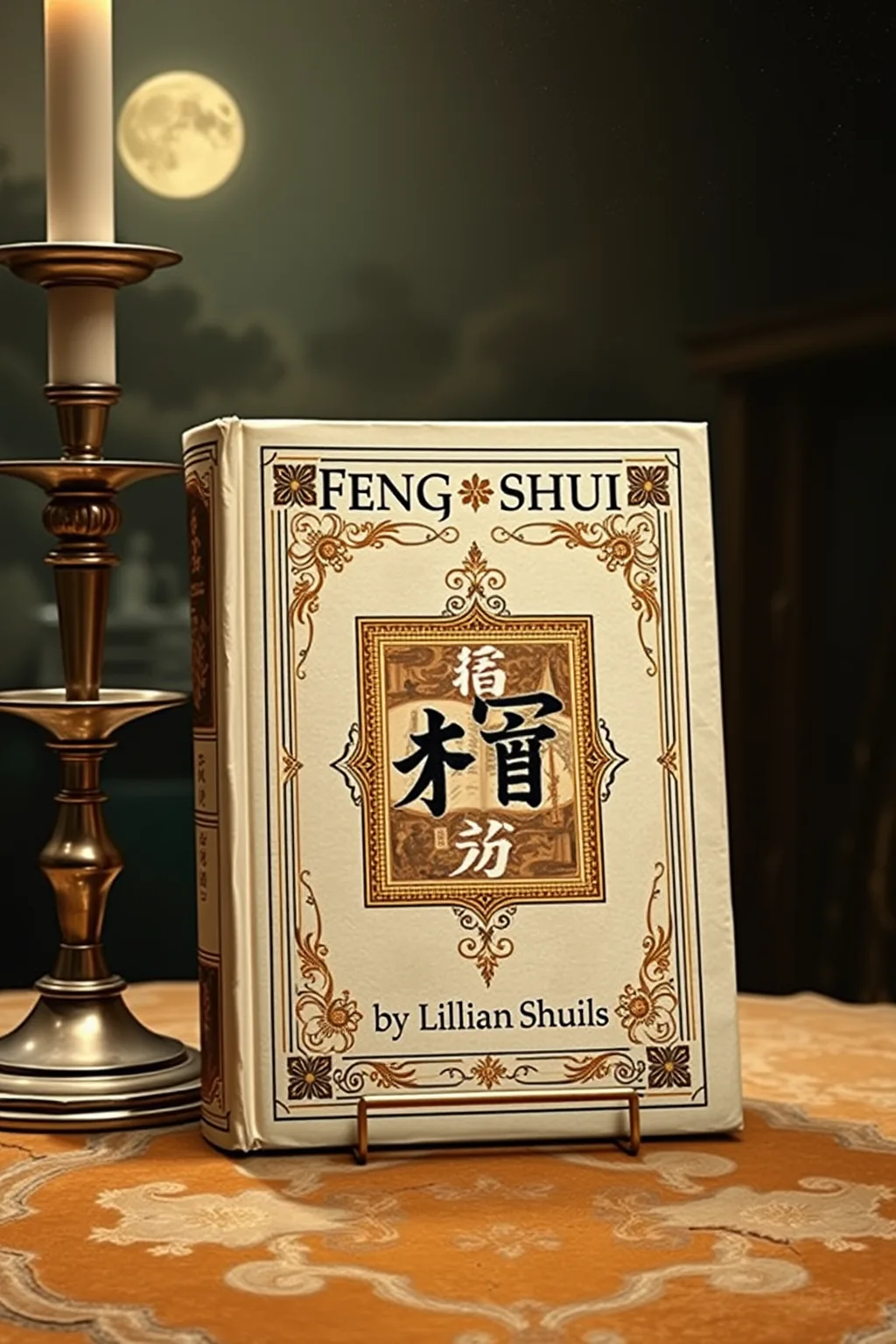
Feng shui fundamentals
 80
80

Feng shui fundamentals
Lillian Too's "Feng Shui Fundamentals" succeeds admirably in its aim to make the principles of Feng Shui accessible. The strength of this 1997 publication lies in its straightforward presentation of complex ideas, particularly the practical application of the Bagua map to different room layouts. However, a limitation becomes apparent in its sometimes overly simplistic approach to the Five Elements theory, which could benefit from deeper exploration. The section detailing the 'commanding position' for a bed offers a concrete, easily implementable piece of advice that exemplifies the book's practical utility. Ultimately, "Feng Shui Fundamentals" serves as a competent entry point for those curious about spatial harmony.
📝 Description
80
Lillian Too's Feng Shui Fundamentals, published in 1997, simplifies the art of harmonizing environments.
This 1997 book explains the principles of Qi, or vital energy, and how its flow affects living spaces. Too breaks down complex theories into practical advice for arranging furniture, choosing colors, and placing objects to promote prosperity, health, and well-being. The book is aimed at people new to Feng Shui, offering a clear, step-by-step introduction. It focuses on practical applications for homes and workplaces, seeking to improve immediate surroundings. Readers curious about traditional Chinese metaphysics and its impact on modern life will also find it useful.
The work addresses how Feng Shui transitioned into a mainstream lifestyle trend during the late 1990s. It arrived as Western audiences grew more open to Eastern philosophies and alternative wellness practices. Authors like Too were important in popularizing these ideas. The book provides guidance on key concepts like the Bagua map and the Five Elements theory. It details how to strategically place items such as mirrors, water features, and plants to enhance positive energy and reduce negative influences.
Feng Shui Fundamentals is rooted in ancient Chinese metaphysics, a tradition focused on creating balance and harmony between humans and their environment. It draws from Taoist principles, particularly the concept of Qi, the vital life force that permeates all things. The book applies these cosmological understandings to the practical design of living and working spaces. It connects the arrangement of physical elements to the cultivation of positive energies believed to influence personal well-being, wealth, and health. This approach reflects a broader esoteric interest in visible and invisible forces that shape human experience.
💡 Why Read This Book?
• Learn to apply the Bagua map to your home, a core tool for analyzing and improving energy flow, directly from its detailed explanations. • Understand the Five Elements theory as presented by Lillian Too, allowing you to balance energies using specific materials and colors mentioned. • Discover the concept of the 'commanding position' for essential furniture like beds and desks, enhancing personal energy and security as illustrated in the text.
⭐ Reader Reviews
Honest opinions from readers who have explored this book.
❓ Frequently Asked Questions
When was Lillian Too's Feng Shui Fundamentals first published?
Lillian Too's "Feng Shui Fundamentals" was first published in 1997, making it a relatively early yet comprehensive guide to the subject in the modern era.
What is the Bagua map in Feng Shui Fundamentals?
The Bagua map is a fundamental tool introduced in "Feng Shui Fundamentals," used to divide a space into nine areas, each corresponding to a specific life aspiration such as wealth, health, or relationships.
Does the book explain the Five Elements theory?
Yes, "Feng Shui Fundamentals" dedicates significant attention to explaining the Five Elements theory: Wood, Fire, Earth, Metal, and Water, and how their interactions affect the energy of a space.
Is this book suitable for beginners in Feng Shui?
Absolutely. "Feng Shui Fundamentals" is designed as an introductory text, breaking down complex Feng Shui principles into understandable and actionable steps for those new to the practice.
What kind of practical advice does the book offer?
The book offers practical advice on furniture placement, color selection, and the strategic use of objects like mirrors and plants to enhance positive energy (Qi) in homes and workplaces.
Who was Thomas Lin Yun and his connection to Feng Shui?
Thomas Lin Yun, a prominent Feng Shui master, is mentioned in the context of the book's historical positioning, representing a key figure in the popularization of Black Sect Feng Shui practices in the West.
🔮 Key Themes & Symbolism
The Bagua and Life Aspirations
The Bagua, a central concept in "Feng Shui Fundamentals," is presented as an octagonal or square grid overlay for a space. Each of its nine sections correlates to a specific aspect of life, from wealth and fame to family and knowledge. The book guides readers on how to identify these areas within their homes or offices and suggests remedies or enhancements, such as placing a water feature in the wealth corner or using specific colors to activate certain aspirations. This practical mapping allows for targeted environmental adjustments to support personal goals.
Balancing the Five Elements
Central to "Feng Shui Fundamentals" is the intricate theory of the Five Elements: Wood, Fire, Earth, Metal, and Water. The text elucidates the generative and destructive cycles governing these elements, explaining how their interplay influences the Qi of an environment. Readers learn to identify which elements are dominant or deficient in their spaces and how to introduce balancing elements through colors, shapes, materials, and objects. This understanding is crucial for creating a harmonious and supportive atmosphere.
Qi: The Vital Energy Flow
The book emphasizes that Qi, the vital life force, is the fundamental energy that permeates all things. "Feng Shui Fundamentals" teaches how Qi flows through our living and working spaces and the importance of encouraging its smooth, vibrant movement. It details how clutter, sharp angles (Sha Qi), and poor layout can impede or create stagnant energy, leading to negative outcomes. Conversely, proper Feng Shui enhances the flow of auspicious Qi, promoting well-being, prosperity, and good fortune.
Practical Application and Cures
Beyond theory, "Feng Shui Fundamentals" is rich with practical applications and specific 'cures' for common environmental issues. The author provides actionable advice on everything from the placement of a desk to the optimal position for a front door. It details how to use symbolic objects, colors, and natural elements to correct imbalances and enhance positive energy. This hands-on approach empowers readers to make immediate improvements to their surroundings, aligning their environment with their intentions.
💬 Memorable Quotes
Direct passages from the work, attributed to the author.
“The Bagua map is a vital tool for understanding the energetic blueprint of any space.”
— This highlights the central role of the Bagua in analyzing how different areas of a home or office relate to specific life aspects, acting as a diagnostic framework for Feng Shui.
“Qi should flow like a gentle stream, not rush like a torrent or stagnate like a pond.”
— This analogy vividly illustrates the desired quality of energy flow in a space, emphasizing balance and smooth movement over excessive or absent vitality.
“A commanding position provides a sense of security and control over one's environment.”
— This refers to the strategic placement of key furniture, such as a bed or desk, so that the occupant can see the entrance to the room, fostering a feeling of safety and empowerment.
“Color and form are powerful tools for influencing the elemental energies in a room.”
— This emphasizes the practical aspect of Feng Shui, showing how conscious choices in decor can be used to balance or enhance the elemental energies according to the Five Elements theory.
💡 Key Ideas
Editorial paraphrase of the work's core concepts — not direct quotes.
The Five Elements are in constant interaction, creating cycles of growth and destruction.
This paraphrased concept points to the dynamic nature of the Five Elements theory, explaining that their relationships are not static but cyclical, influencing each other continuously.
🌙 Esoteric Significance
Tradition
While not strictly adhering to a singular ancient lineage, "Feng Shui Fundamentals" draws heavily from Taoist principles and the broader cosmological framework of Chinese metaphysics. It aligns with the universal esoteric concept of harmonizing human environments with natural forces, akin to Hermetic ideals of 'as above, so below.' The work's emphasis on Qi and the Five Elements places it within a tradition focused on understanding and manipulating subtle energies for well-being, a common thread in many esoteric paths.
Symbolism
Key symbols in the book include the Bagua, representing cosmic order and life aspects, and the Five Elements (Wood, Fire, Earth, Metal, Water), which symbolize fundamental forces and their transformations. The Dragon, often associated with good fortune and powerful Qi, is another recurring motif in Feng Shui imagery discussed. These symbols are not merely decorative but are understood as active energetic forces that can be invoked or balanced within a space.
Modern Relevance
The principles articulated in "Feng Shui Fundamentals" continue to influence contemporary interior design, wellness practices, and even urban planning. Thinkers and practitioners in areas like eco-psychology and mindful living often incorporate Feng Shui concepts, albeit sometimes secularized. The book's accessible approach has inspired countless individuals to explore spatial harmony, contributing to the ongoing dialogue about how our environments impact our mental, emotional, and physical states.
👥 Who Should Read This Book
• Homeowners and renters seeking practical, step-by-step guidance to improve the energy and atmosphere of their living spaces using the Bagua and Five Elements. • Individuals curious about traditional Chinese metaphysics and how ancient principles can be applied to modern life for enhanced well-being and prosperity. • Beginners in Feng Shui looking for a clear, uncluttered introduction that explains core concepts and offers actionable techniques without overwhelming complexity.
📜 Historical Context
When "Feng Shui Fundamentals" was released in 1997, it entered a burgeoning Western market for Eastern spiritual and wellness practices. Lillian Too was already an established voice, particularly known for popularizing Black Sect Feng Shui, a more contemporary approach often contrasted with classical schools. This period saw increased interest in the practical application of metaphysical concepts, influenced by figures like Thomas Lin Yun, who also championed accessible Feng Shui. The work offered a counterpoint to more complex or esoteric texts, providing a clear, actionable framework. While academic scholarship on Chinese metaphysics existed, Too’s approach aimed for broad appeal, making Feng Shui a recognizable lifestyle choice for many, distinct from purely academic discourse or deep traditional lineages.
📔 Journal Prompts
The commanding position of your desk: how does it affect your focus?
Analyze your home's wealth sector using the Bagua map; what objects are present?
Reflect on the balance of the Five Elements in your bedroom; are colors and shapes harmonious?
Identify areas of stagnant Qi in your home; what clutter can be removed?
How does the placement of mirrors in your space influence energy flow?
🗂️ Glossary
Qi (Chi)
The fundamental vital life force or energy that flows through all things. In Feng Shui, its smooth and balanced flow is essential for well-being and prosperity.
Bagua
An octagonal or square map used in Feng Shui to divide a space into nine areas, each corresponding to a specific life aspiration such as wealth, health, or relationships.
Five Elements
The foundational elements of Wood, Fire, Earth, Metal, and Water, which interact in generative and destructive cycles, influencing the energy of environments and people.
Sha Qi
Negative or 'killing' energy, often caused by sharp angles, clutter, or unfavorable structures, which can negatively impact health and fortune.
Commanding Position
A strategic placement for key furniture (like beds or desks) where the occupant can see the door without being directly in line with it, promoting security and control.
Yin and Yang
The complementary and opposing forces present in all things, representing principles like passive/active, dark/light, and feminine/masculine, which need to be balanced.
Mak Tai Chi
A term associated with Black Sect Feng Shui, referring to the back of the space, often considered the most important area for stability and support.
🔮 Readers Also Liked
Browse all →









More by Lillian Too
All books →




More Free Occult Philosophy Books
View all →