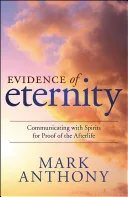
Evidence of Eternity
 82
82

Evidence of Eternity
Mark Anthony’s *Evidence of Eternity* tackles a subject many find both deeply personal and intellectually daunting: proof of life after death. He marshals an array of arguments, drawing from scientific theories, physiological observations, and theological doctrines. The strength of the book lies in its ambitious scope, attempting to bridge disparate fields. Anthony succeeds in presenting a coherent case that will undoubtedly comfort many readers. However, the work occasionally leans into speculative interpretations of scientific data, which may not satisfy those demanding rigorous empirical proof. A particularly compelling section discusses the implications of quantum entanglement for interconnected consciousness, though the leap from theoretical physics to a definitive afterlife requires a significant act of faith. Ultimately, *Evidence of Eternity* offers a thoughtful compilation of arguments for continued existence beyond the physical form. It is a valuable resource for those seeking intellectual and spiritual validation of an eternal soul.
📝 Description
82
Mark Anthony's 2015 book *Evidence of Eternity* argues for an afterlife by blending scientific findings with theological thought.
Published in 2015, *Evidence of Eternity* by Mark Anthony presents a case for life after death. Anthony combines insights from theoretical physics and physiology with theological perspectives. The book aims to connect empirical observation with the enduring human question about existence beyond physical death. It gathers accounts and arguments that challenge purely materialistic views of consciousness and being, suggesting a continuity of existence after the body ceases to function. The work examines the nature of reality, consciousness, and the possibility of a spiritual dimension.
This book targets individuals contemplating mortality, consciousness, and the fabric of reality. It will resonate with those seeking arguments for an afterlife supported by evidence, especially those interested in the intersection of science and spirituality. Skeptics willing to reconsider their views, and those experiencing grief who seek comfort or clarity about the soul's fate, may find value here. It also serves students of consciousness studies, parapsychology, and comparative theology seeking an overview of arguments for existence after death.
Published in 2015, *Evidence of Eternity* enters a discourse that has long sought to reconcile spiritual or metaphysical claims with empirical inquiry. The book follows in a tradition that includes figures like Raymond Moody, who popularized the study of near-death experiences. Anthony's work expands this by incorporating theoretical physics and physiology, reflecting a late 20th and early 21st century trend to find scientific or theoretical support for concepts of post-mortem existence and the broader nature of consciousness.
💡 Why Read This Book?
• Learn how Mark Anthony integrates theoretical physics and physiology to support the concept of an afterlife, offering a unique scientific lens beyond typical anecdotal accounts. • Discover specific case studies and interpretations of phenomena like mediumship, as presented in the book, providing concrete examples that challenge materialistic views of death. • Gain a structured argument for consciousness survival, drawing from the book's synthesis of theological, philosophical, and scientific perspectives, which may offer profound comfort and new perspectives on mortality.
⭐ Reader Reviews
Honest opinions from readers who have explored this book.
❓ Frequently Asked Questions
What scientific fields does Mark Anthony reference in *Evidence of Eternity*?
Mark Anthony draws upon theoretical physics and physiology, among other disciplines, to build his case for an afterlife. He examines how concepts within these fields might support the idea of consciousness existing beyond the physical body.
When was *Evidence of Eternity* first published?
The book *Evidence of Eternity* by Mark Anthony was first published on March 8, 2015.
Who are some prominent figures who have endorsed Mark Anthony's work?
Mark Anthony's work has received endorsements from notable figures such as Dr. Raymond Moody, author of *Life After Life*, and Dr. Joe Vitale, author of *Zero Limits* and featured in *The Secret*.
Does the book rely solely on personal testimonies for its evidence?
No, while the book includes true stories and accounts, it also combines these with scientific theories, physiological data, and theological arguments to present a multifaceted case for an afterlife.
What is the primary goal of *Evidence of Eternity*?
The primary goal of *Evidence of Eternity* is to present a compelling case for the existence of an afterlife by synthesizing evidence from science, physiology, theology, and personal accounts.
What kind of reader would benefit most from this book?
Readers grappling with questions about mortality, consciousness, and the possibility of an afterlife, particularly those interested in the intersection of science and spirituality, would find this book beneficial.
🔮 Key Themes & Symbolism
Consciousness Beyond the Brain
The book posits that consciousness is not solely a product of the physical brain. Anthony explores theoretical frameworks, including aspects of quantum physics, that suggest consciousness might be a fundamental aspect of reality, capable of existing independently. This challenges the materialistic view that consciousness ceases entirely with brain death, opening the door to the possibility of its survival and persistence in some form, supported by various anecdotal and theoretical arguments.
Scientific Validation of Spirituality
Anthony endeavors to bridge the perceived chasm between empirical science and spiritual belief. By integrating findings from theoretical physics and physiology, he seeks to provide a rational basis for concepts traditionally relegated to faith or metaphysics. The work aims to demonstrate that scientific inquiry, when broadened to include less conventional interpretations and phenomena, can offer corroborating evidence for spiritual realities like an afterlife.
The Nature of the Soul
Central to the argument for an afterlife is the concept of the soul. *Evidence of Eternity* examines the soul not merely as a religious construct but as a potential energetic or spiritual essence that can endure beyond physical dissolution. The book draws upon theological traditions and philosophical thought to define and explore the soul's nature, presenting it as the locus of personal identity that continues its journey after death.
Personal Accounts and Anecdotal Evidence
True stories of near-death experiences, mediumship, and communications from deceased loved ones form a significant part of the book's evidence. These personal accounts are presented not as definitive proof but as compelling testimonies that align with and support the more theoretical arguments. They provide an emotional and human dimension, illustrating the lasting impact the possibility of an afterlife has on individuals and families.
💬 Memorable Quotes
Direct passages from the work, attributed to the author.
“Combining science, theoretical physics, physiology, and theology, Mark Anthony does an amazing job of presenting evidence of an afterlife.”
— This statement by Dr. Raymond Moody highlights Anthony's interdisciplinary approach, suggesting the book offers a unique synthesis of scientific and spiritual reasoning to support the existence of life after death.
“A riveting book that opens your heart and mind to the reality of the afterlife.”
— Dr. Joe Vitale's endorsement emphasizes the book's power to evoke both emotional openness ('heart') and intellectual acceptance ('mind') regarding the afterlife, framing it as an impactful and potentially life-changing read.
“This book is unforgettable, and its messages are empowering.”
— This sentiment from Dr. Joe Vitale suggests that the content of *Evidence of Eternity* leaves a significant, lasting impression and provides readers with a sense of strength and hope regarding the continuity of existence.
“Read this right now!”
— A direct and urgent call to action from Dr. Joe Vitale, indicating a strong belief in the immediate relevance and value of the book's message for the reader.
“The work explores the possibility of consciousness surviving physical death through scientific and theological reasoning.”
— This interpretation captures the core thesis of the book, indicating that it investigates the persistence of consciousness after bodily demise by examining evidence from both scientific theories and religious doctrines.
🌙 Esoteric Significance
Tradition
While not strictly adhering to a single esoteric lineage, *Evidence of Eternity* draws from a broad spectrum of spiritual and philosophical traditions that explore the nature of the soul and afterlife. It echoes Gnostic ideas of a spiritual realm beyond the material and aligns with Theosophical concepts of consciousness continuity. The book's interdisciplinary approach, however, seeks to ground these ancient ideas in modern scientific discourse, creating a bridge between traditional esoteric thought and contemporary intellectual inquiry.
Symbolism
The book often employs symbolism related to light and energy, common in esoteric traditions, to represent consciousness and the spiritual realm. Light can symbolize enlightenment, the divine, or the non-physical essence of the soul. Energy concepts, particularly those borrowed from physics, are used to suggest a fundamental, persistent aspect of being that transcends physical limitations. These symbols serve to make abstract spiritual concepts more tangible and relatable to a modern audience.
Modern Relevance
Contemporary thinkers and practitioners in fields like consciousness studies, transpersonal psychology, and even some branches of quantum mysticism find resonance in Anthony's work. His effort to synthesize science and spirituality aligns with a growing interest in non-dualistic perspectives and the exploration of altered states of consciousness. The book's accessible approach makes complex ideas about the afterlife and consciousness relevant to a wider audience seeking to integrate spiritual understanding with scientific knowledge.
👥 Who Should Read This Book
• Individuals seeking comfort and understanding after loss, who are looking for intellectual frameworks and anecdotal evidence to support the belief in continued existence beyond death. • Students and researchers of consciousness studies, parapsychology, and comparative religion, interested in how scientific theories and physiological data are being used to explore spiritual questions. • Skeptics open to exploring alternative perspectives, who appreciate a rational, evidence-based approach that combines scientific concepts with theological and philosophical arguments regarding the afterlife.
📜 Historical Context
When *Evidence of Eternity* was published in 2015, the field of consciousness studies was increasingly influenced by both popular interest and academic exploration. The book follows in the tradition established by figures like Raymond Moody, whose important work *Life After Life* (1975) brought near-death experiences (NDEs) into mainstream discussion. Anthony's contribution lies in his explicit integration of theoretical physics and physiology, reflecting a broader trend in the early 21st century to find scientific underpinnings for spiritual phenomena. This period saw numerous popular science books and documentaries attempting to reconcile quantum mechanics with consciousness, a complex intellectual current that Anthony engages with. While not directly engaging in public debate with specific contemporaries, his work is part of a larger intellectual movement that sought to challenge strict scientific materialism, a dominant paradigm throughout the late 20th century. The reception of such books generally split between those seeking validation for spiritual beliefs and skeptics demanding more rigorous proof.
📔 Journal Prompts
The concept of consciousness independent of the brain: how does this idea challenge your current understanding?
Reflect on the integration of theoretical physics and theology presented in the book.
Consider the role of personal accounts in supporting arguments for the afterlife.
Explore the implications of the soul's potential persistence as discussed by Mark Anthony.
How do the scientific arguments for an afterlife compare to your existing beliefs?
🗂️ Glossary
Theoretical Physics
A branch of physics that uses mathematical models and abstract concepts to explain and predict physical phenomena, often exploring realms beyond direct empirical observation, such as quantum mechanics and cosmology.
Physiology
The scientific study of the functions and mechanisms which work within a living system. In this context, it relates to the study of the body and brain and how they function, particularly concerning consciousness.
Theology
The study of the nature of God and religious belief. It often involves interpreting sacred texts and exploring doctrines concerning divinity, humanity, and the cosmos.
Afterlife
The state or period following death, understood in various religious, spiritual, and philosophical traditions as a continuation of existence in a non-physical form or realm.
Consciousness
The state of being aware of and responsive to one's surroundings; the totality of one's thoughts, feelings, and sensations. The book explores whether it can exist independently of the brain.
Near-Death Experience (NDE)
A profound personal experience associated with events either lacking any near-death stimulus or during which the person is clinically dead or close to death. Often reported to include elements like out-of-body experiences, seeing a light, and meeting deceased relatives.
Mediumship
The practice by which individuals are believed to be able to communicate with the spirits of the dead, acting as intermediaries between the living and the deceased.