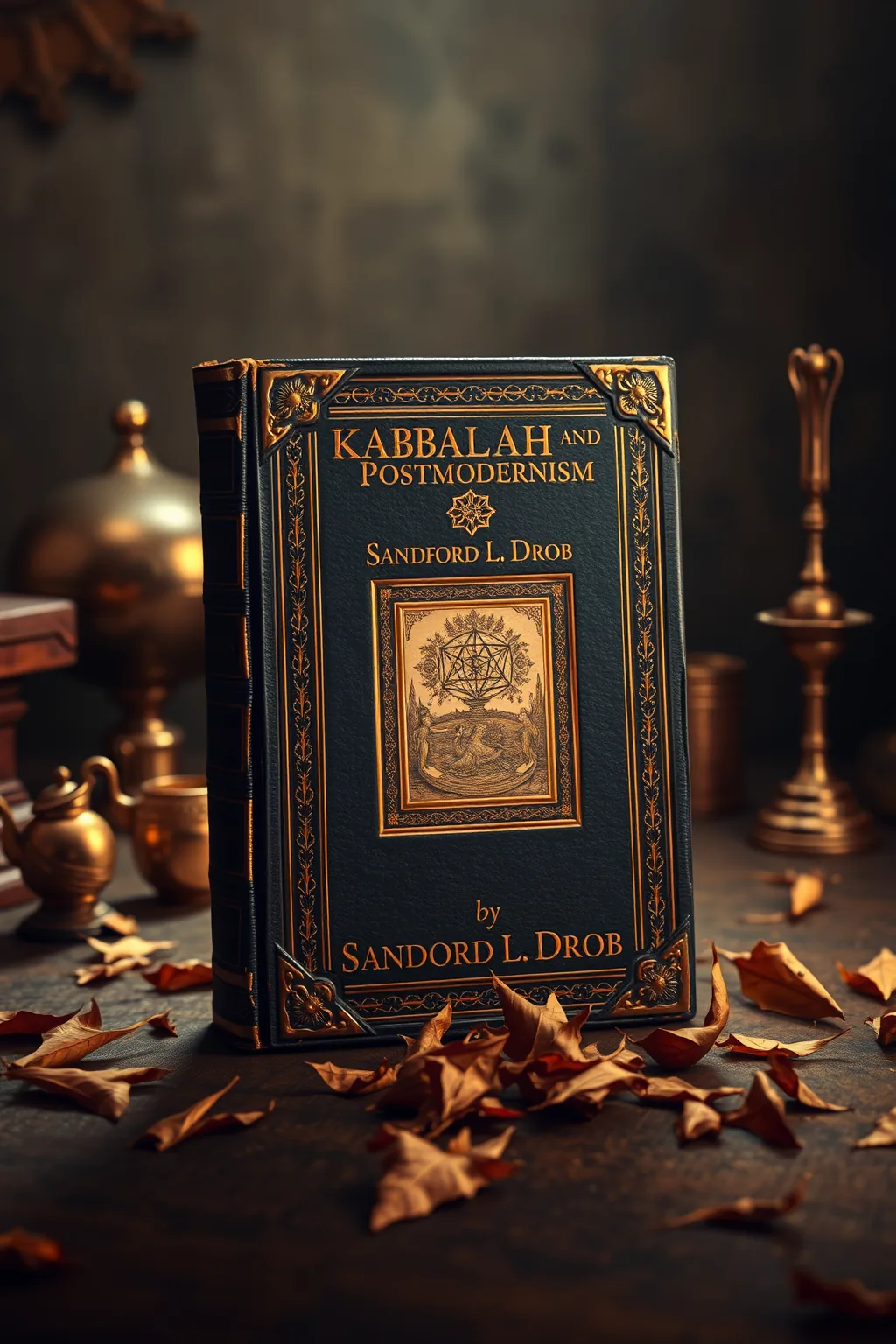
Kabbalah and Postmodernism
 61
61

Kabbalah and Postmodernism



Sandford L. Drob's 'Kabbalah and Postmodernism' is a revelation, a meticulously crafted exploration that bridges the chasm between ancient Jewish mysticism and contemporary philosophical discourse. Drob demonstrates an uncanny ability to draw out the latent postmodernist leanings within Kabbalistic thought, illuminating concepts of fragmented selves, deconstructed narratives, and the inherent subjectivity of gnosis. His erudition is palpable, offering profound insights into the symbolic language of the Kabbalah through the critical framework of postmodern thinkers. This book is an indispensable resource for advanced students and seasoned practitioners alike, offering a fresh, invigorating perspective on a tradition steeped in millennia of hidden wisdom.
📝 Description
61
Sandford L. Drob's 2005 book connects Kabbalah's mystical symbols with postmodern philosophy.
Sandford L. Drob's work examines the unexpected congruences between Jewish mysticism and postmodern thought. The book details how Kabbalistic ideas, such as divine emanations and the structure of the Tree of Life, find echoes in contemporary philosophical discussions. Drob highlights parallels between Kabbalah's concepts of an unknowable divine source and the postmodern critique of grand narratives and stable meaning.
This study bridges ancient esoteric traditions with modern intellectual currents. It suggests that Kabbalah offers a framework for understanding the fragmented nature of reality and subjective experience, themes central to postmodernism. The book invites readers to consider how symbolic language from a mystical tradition can illuminate philosophical questions about truth and existence.
This book situates itself within the study of Kabbalah, a Jewish esoteric tradition that flourished from the medieval period onward. It focuses on specific Kabbalistic doctrines, including the Sefirot (divine emanations) and the symbolic cosmology of the Tree of Life. The work engages with these concepts not merely as historical artifacts but as active philosophical resources, capable of speaking to modern concerns about knowledge, reality, and the divine. It traces a lineage of thought that seeks to understand creation and ultimate truth through symbolic interpretation and mystical experience.
💡 Why Read This Book?
Uncover the surprising resonance between the ancient mystical pathways of Kabbalah and the deconstructive spirit of postmodern philosophy. This book offers a unique lens for understanding the fragmentation of modern consciousness and the search for meaning. Ideal for scholars, spiritual seekers, and practitioners who wish to explore the esoteric dimensions of contemporary thought and discover how ancient wisdom can illuminate our current existential landscape.
⭐ Reader Reviews
Honest opinions from readers who have explored this book.
❓ Frequently Asked Questions
What is Kabbalah?
Kabbalah is an esoteric tradition within Judaism that seeks to understand the nature of God and the creation of the universe through mystical interpretation of scripture and symbolic representation, most notably the Tree of Life.
What is Postmodernism?
Postmodernism is a broad intellectual and artistic movement characterized by skepticism towards grand narratives, a focus on deconstruction, and an emphasis on the subjective and fragmented nature of reality and knowledge.
How does Kabbalah relate to Postmodernism?
The book explores how Kabbalistic concepts like divine unknowability, the fragmented nature of creation, and the subjective experience of mystical insight parallel themes found in postmodern philosophy, such as deconstruction and the critique of universal truths.
Is this book suitable for beginners?
While rigorous, the book aims to make these complex ideas accessible. However, a basic familiarity with either Kabbalah or postmodern thought would enhance the reading experience.
What are the main benefits of reading this book?
Readers gain a deeper appreciation for the enduring relevance of Kabbalistic symbolism and its ability to address modern philosophical concerns, fostering a more nuanced understanding of both traditions.
🔮 Key Themes & Symbolism
The Tree of Life as a Postmodern Map
This theme examines the Kabbalistic Sefirot and their interconnections, not as a static divine hierarchy, but as a dynamic, fluid structure mirroring postmodern ideas of fragmented identity and the deconstruction of fixed meanings. The Tree of Life becomes a symbolic representation of how reality itself can be understood as a series of interconnected, yet distinct, emanations, challenging singular interpretations and embracing multiplicity, much like postmodern thought critiques unified narratives.
Divine Unknowability and the Limits of Language
The Kabbalistic concept of Ein Sof (the Infinite, Unknowable God) is explored in dialogue with postmodern skepticism regarding absolute truth and the limitations of language. Drob highlights how both traditions acknowledge the inherent ineffability of ultimate reality, suggesting that attempts to define or represent the divine, or ultimate truth, are inherently incomplete and subject to interpretation, reflecting the postmodern emphasis on linguistic relativity and the critique of logocentrism.
Fragmentation and the Kabbalistic 'Tzimtzum'
The doctrine of Tzimtzum, God's 'contraction' to make space for creation, is reinterpreted through a postmodern lens. This cosmic act of self-limitation is seen as a primal fragmentation, creating a universe that is inherently incomplete and characterized by absence. This speaks to postmodern explorations of loss, lack, and the fragmented nature of the self and society, suggesting that the very act of existence is rooted in a form of divine self-effacement.
💬 Memorable Quotes
Direct passages from the work, attributed to the author.
“Meaning is not found, but constructed within the interplay of symbols.”
— This highlights the active role of the interpreter in creating meaning, a core tenet shared by Kabbalistic symbolic interpretation and postmodern theories of semiotics and reader-response.
“The fragmented soul mirrors the fragmented cosmos.”
— This poignant observation links the internal experience of the individual to the external structure of reality, suggesting a deep, perhaps inherent, state of division in both.
“Deconstruction reveals the hidden architecture of the sacred.”
— This provocative statement proposes that by taking apart established structures, we can uncover deeper, often overlooked, spiritual truths and symbolic frameworks.
“Silence is the most profound commentary on the Infinite.”
— This emphasizes the limits of verbal expression when confronting ultimate mysteries, pointing towards contemplative silence as a path to deeper understanding, a concept vital to many mystical traditions.
💡 Key Ideas
Editorial paraphrase of the work's core concepts — not direct quotes.
The divine is not a fixed point, but a dynamic unfolding.
This quote suggests that our understanding of the divine should move beyond static theological constructs to embrace a more fluid, process-oriented view, aligning with both mystical and postmodern perspectives on reality.
🌙 Esoteric Significance
Tradition
This work primarily engages with the Lurianic Kabbalah, a major school of Jewish mysticism originating in 16th-century Safed, known for its complex cosmogony, including concepts like Tzimtzum (Divine Contraction) and Shevirat HaKelim (Shattering of the Vessels). It also draws upon earlier Kabbalistic texts and ideas, reinterpreting them through a modern philosophical lens, thus revitalizing ancient esoteric doctrines for contemporary contemplation and practice.
Symbolism
The book examines core Kabbalistic symbols such as the Tree of Life (Etz Chayim) with its ten Sefirot, the Hebrew alphabet, and divine names. These are not merely presented as static icons but as dynamic, relational symbols whose meanings are fluid and context-dependent, mirroring postmodern theories of signification. The interplay between these symbols becomes a language for exploring the divine, creation, and the human condition, inviting readers to engage with their deeper, often deconstructed, layers of meaning.
Modern Relevance
In an age often characterized by information overload, fragmented identities, and a questioning of foundational truths, the Kabbalistic framework, as presented through a postmodern lens, offers a profound means of navigating contemporary existence. It provides a symbolic language for understanding personal fragmentation, the search for meaning in a seemingly chaotic world, and the limitations of purely rationalistic approaches, suggesting that ancient wisdom holds vital keys to contemporary spiritual and philosophical challenges.
👥 Who Should Read This Book
This book is a profound intellectual journey for seasoned scholars of Kabbalah and postmodern philosophy seeking to understand their unexpected intersections. It will deeply resonate with spiritual seekers who are drawn to the esoteric dimensions of consciousness and reality, and who are open to exploring ancient wisdom through a critical, contemporary framework. Practitioners of mysticism, particularly those interested in symbolic interpretation and the deconstruction of fixed spiritual paradigms, will find invaluable insights. While intellectually demanding, it offers a rewarding experience for anyone curious about the enduring relevance of ancient mystical traditions in the modern world.
📜 Historical Context
Published in an era deeply engaged with the intellectual seismic shifts of postmodernism, Sandford L. Drob's 'Kabbalah and Postmodernism' emerged during a period where traditional epistemologies were being rigorously challenged. The late 20th and early 21st centuries witnessed a widespread questioning of universal truths, objective reality, and singular authorial intent, largely influenced by thinkers like Derrida, Foucault, and Lyotard. Simultaneously, there was a burgeoning interest in esoteric traditions, seeking alternative frameworks for understanding consciousness and existence. This book sits at the confluence of these trends, offering a sophisticated dialogue between an ancient mystical system and the cutting-edge philosophical debates that redefined Western thought, demonstrating the enduring power of symbolic language to transcend temporal and intellectual boundaries.
📔 Journal Prompts
How does the concept of 'Tzimtzum' (divine contraction) resonate with your own experiences of self-limitation or making space for others in your life?
Consider a 'grand narrative' you once believed in. How has your understanding of it evolved or been deconstructed over time?
Reflect on a symbol that holds deep personal meaning for you. How might its meaning shift depending on context or your own state of being?
In what ways do you feel your own identity is 'fragmented' or complex, and how does this relate to your search for wholeness?
How can the Kabbalistic idea of divine unknowability offer solace or a different perspective on life's unanswered questions?
🗂️ Glossary
Ein Sof
The Kabbalistic term for the 'Infinite' or 'Limitless' aspect of God, representing the divine essence that is utterly beyond human comprehension or description.
Sefirot
The ten divine emanations or attributes described in Kabbalah, forming the structure of the Tree of Life, through which God is believed to have created and sustains the universe.
Tzimtzum
A Hebrew term meaning 'contraction' or 'condensation,' central to Lurianic Kabbalah, describing God's initial act of withdrawing His infinite light to create a void for existence.
Deconstruction
A philosophical approach, particularly associated with Jacques Derrida, that analyzes the inherent instability and multiplicity of meaning within texts and concepts, questioning binary oppositions and fixed interpretations.
Logocentrism
A philosophical concept critiqued by postmodern thinkers, referring to the belief that language and reason are the primary or ultimate source of meaning and truth, often privileging speech over writing.
This book appears in 1 collection
🔮 Readers Also Liked
Browse all →








From the “Kabbalah” Collection
View all →







More Free Kabbalah & Jewish Mysticism Books
View all →