Evolution
 80
80

Evolution
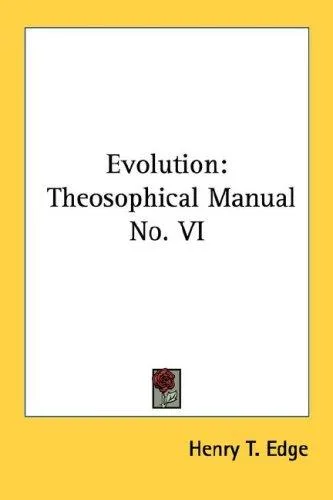
Henry T. Edge's "Evolution" presents a formidable challenge to purely materialistic understandings of existence. The book’s strength lies in its ambitious scope, attempting to map a universal evolutionary principle across science and metaphysics. Edge meticulously unpacks the biological concept of evolution and extends it to cosmic, psychic, and spiritual dimensions, a task undertaken with considerable intellectual rigor. He grapples directly with thinkers like Darwin and Teilhard de Chardin, placing his own thesis within a rich intellectual tradition. A particularly compelling section is his discussion of 'divine mechanics,' which posits inherent, intelligent laws guiding cosmic unfolding rather than blind chance. However, the book’s dense philosophical language and its sheer breadth can occasionally feel overwhelming. While Edge aims for synthesis, the intricate layering of concepts might leave readers unfamiliar with specific esoteric traditions needing further exegesis. For instance, his treatment of 'reincarnation' as a cosmic principle, while logically extended, requires significant prior conceptual groundwork. Nevertheless, "Evolution" offers a profound re-envisioning of reality for those prepared for its demanding intellectual terrain.
📝 Description
80
Henry T. Edge's 2007 book "Evolution" examines universal principles of development beyond biology.
Henry T. Edge's "Evolution," published in 2007, offers a philosophical examination of evolution not just as a biological process, but as a universal principle at work across all existence. The book attempts to blend scientific understanding with esoteric philosophy, suggesting a model of cosmic development that moves beyond purely materialistic viewpoints. Edge frames evolution as an innate drive toward greater complexity, consciousness, and spiritual awareness, challenging common assumptions.
The author draws on a variety of thinkers and traditions to support the idea of evolution as a fundamental force shaping reality. This force, according to the book, operates from the smallest subatomic particles to the grandest cosmic scales. The work is aimed at serious students of comparative philosophy and esoteric traditions, particularly those interested in the connections between science and metaphysics. Readers who enjoy detailed arguments and complex ideas will find "Evolution" worthwhile, especially those exploring perennial philosophy, theosophy, or critiques of materialistic reductionism.
Published in 2007, Edge's "Evolution" engages with a tradition of thinkers who sought to harmonize evolutionary science with non-materialist worldviews. This lineage includes figures like Teilhard de Chardin, whose ideas on evolutionary convergence and the Omega Point, as presented in "The Phenomenon of Man," share conceptual similarities with Edge's broader vision. The book addresses a philosophical climate often dominated by materialism, offering an alternative perspective on the direction and meaning of cosmic and human development from an esoteric standpoint.
💡 Why Read This Book?
• Gain a comprehensive understanding of 'cosmic evolution' as a universal principle extending beyond biology, providing a framework for integrating scientific and spiritual perspectives, as explored in Edge's 2007 work. • Grasp the concept of 'divine mechanics', learning how Edge proposes inherent, intelligent laws govern universal development, offering an alternative to purely random or materialistic explanations of existence. • Explore 'reincarnation' as a fundamental cosmic process of development and recurrence, moving beyond a solely human context to understand its role in the broader unfolding of consciousness.
⭐ Reader Reviews
Honest opinions from readers who have explored this book.
❓ Frequently Asked Questions
What is Henry T. Edge's central argument in "Evolution"?
Henry T. Edge's "Evolution" argues that evolution is not confined to biological processes but is a universal principle driving development across all planes of existence, from the material to the spiritual.
When was Henry T. Edge's "Evolution" first published?
Henry T. Edge's "Evolution" was first published in 2007, placing it within contemporary philosophical discourse on science and metaphysics.
Does "Evolution" by Henry T. Edge discuss Teilhard de Chardin?
Yes, the work explores concepts such as cosmic evolution and spiritual ascent, engaging with thinkers like Teilhard de Chardin who also posited evolutionary trajectories for consciousness.
What is the concept of 'divine mechanics' in Edge's "Evolution"?
In "Evolution", 'divine mechanics' refers to the inherent, intelligent laws that Edge proposes guide the universal evolutionary process, suggesting a purposeful and ordered unfolding of reality.
Is Henry T. Edge's "Evolution" suitable for beginners in philosophy?
While ambitious, "Evolution" is best suited for readers with a background in philosophy or esoteric studies due to its complex argumentation and integration of diverse concepts.
How does "Evolution" by Edge approach the idea of materialism?
Edge's "Evolution" critically examines materialism, presenting it as an insufficient framework for explaining the totality of existence and advocating for a more comprehensive, multi-dimensional view.
🔮 Key Themes & Symbolism
Universal Evolutionary Drive
Edge posits that evolution is not limited to biological organisms but is a fundamental cosmic force. This theme explores how increasing complexity, consciousness, and spiritual realization are inherent tendencies across all natural phenomena. The book examines this drive from the subatomic realm to the vast structures of the cosmos, suggesting a unified process of development that underlies all existence and points towards a higher state of being.
Divine Mechanics and Order
Challenging notions of random chance, Edge introduces the concept of 'divine mechanics'. This refers to the inherent, intelligent laws and principles that govern the evolutionary process. It suggests that the universe unfolds according to a purposeful, albeit complex, design. This theme studies how these underlying mechanics ensure a directed progression, guiding all forms of existence towards greater complexity and awareness, offering a teleological perspective on reality.
Ascent of Consciousness
A central tenet of Edge's work is that the ultimate goal or telos of cosmic evolution is the ascent of consciousness. This theme traces the development of awareness from rudimentary forms to highly evolved, self-aware entities capable of understanding their place in the cosmos. It suggests a continuous journey of spiritual realization and intellectual expansion, where consciousness itself is the primary evolutionary outcome, culminating in a state of universal awareness.
Critique of Materialism
Edge systematically critiques philosophical materialism, arguing that it fails to account for the full spectrum of reality, particularly consciousness and spiritual phenomena. He contends that a purely physical explanation is insufficient to explain the observed order, complexity, and the undeniable presence of subjective experience. This theme advocates for a broader, metaphysical framework that incorporates non-material dimensions to provide a complete understanding of evolution and existence.
💬 Memorable Quotes
Direct passages from the work, attributed to the author.
“Evolution is the law of the universe.”
— This concise statement expresses Edge's core thesis: that the principle of development, change, and increasing complexity is not merely a biological phenomenon but a fundamental operating principle across all dimensions of reality.
“Consciousness is the goal of cosmic unfolding.”
— This interpretation highlights the teleological aspect of Edge's evolutionary model, positing that the ultimate purpose and direction of universal development lies in the emergence and refinement of consciousness.
“Materialism cannot explain the totality of being.”
— Edge challenges reductionist viewpoints by asserting that a framework limited to matter and energy is inherently insufficient to comprehend the full scope of existence, particularly subjective experience and spiritual dimensions.
“There are inherent laws guiding cosmic progression.”
— This interpretation conveys Edge's concept of 'divine mechanics,' suggesting that the universe's development is not arbitrary but is governed by intelligent, underlying principles that ensure an ordered and purposeful unfolding.
💡 Key Ideas
Editorial paraphrase of the work's core concepts — not direct quotes.
Reincarnation operates as a cosmic principle of development.
This paraphrased concept suggests that the idea of rebirth or repeated cycles of existence is not confined to human lives but is a fundamental mechanism driving progress and learning throughout the cosmos.
🌙 Esoteric Significance
Tradition
Edge's "Evolution" sits comfortably within the broad stream of Western Esotericism, drawing heavily on Hermetic, Gnostic, and Theosophical currents. It extends the Hermetic principle of 'As Above, So Below' by demonstrating evolutionary processes operating across macrocosmic and microcosmic scales. Its vision of a purposeful, conscious universe echoes Gnostic ideas of emanation and spiritual ascent, while its comprehensive scope and emphasis on universal laws align with Theosophical concepts of cosmic cycles and monadic evolution.
Symbolism
The book implicitly utilizes the symbol of the Serpent devouring its tail (Ouroboros) to represent the cyclical and self-generating nature of cosmic evolution, where endings lead to new beginnings in an ongoing process. The Tree of Life, a foundational Hermetic symbol, can be seen as a metaphor for the branching complexity of evolutionary development, with each level representing stages of increasing consciousness and differentiation, moving from the primordial unity to manifest diversity.
Modern Relevance
Contemporary thinkers in fields like integral theory and transpersonal psychology, who seek to synthesize scientific, psychological, and spiritual perspectives, find resonance in Edge's work. His exploration of consciousness as a central evolutionary factor aligns with modern neuroscience and philosophy of mind seeking non-reductive explanations. Esoteric practitioners and students of comparative religion continue to draw upon "Evolution" for its sophisticated articulation of a unified, purposeful cosmos.
👥 Who Should Read This Book
• Students of Western Esotericism: Those studying Hermeticism, Gnosticism, or Theosophy will find "Evolution" offers a modern, comprehensive framework that synthesizes these traditions with scientific concepts. • Comparative Philosophy Researchers: Individuals interested in perennial philosophy and cross-cultural understandings of existence will benefit from Edge's integrated approach to cosmology and consciousness. • Critical Thinkers questioning Materialism: Readers seeking philosophical counterpoints to reductionist materialism will appreciate Edge's detailed arguments for a purposeful, multi-dimensional universe guided by inherent laws.
📜 Historical Context
Henry T. Edge's "Evolution", published in 2007, emerged during a period of significant engagement with the implications of evolutionary theory beyond strict biological confines. It follows in a tradition of thinkers who sought to integrate scientific discovery with spiritual or metaphysical frameworks. This lineage includes figures like the biologist and paleontologist Teilhard de Chardin, whose influential work "Phenomenon of Man" (1955) explored evolutionary convergence and the development of consciousness toward an 'Omega Point'. Edge's work can be seen as a contemporary contribution to this ongoing dialogue, offering a more detailed philosophical scaffolding. It also responds to the prevailing scientific materialism of the late 20th and early 21st centuries, providing a counter-argument that emphasizes inherent purpose and non-material factors in cosmic development. The book engaged with a broader esoteric community interested in perennial philosophy and theosophy, offering a synthesis that sought to bridge scientific understanding with ancient wisdom traditions.
📔 Journal Prompts
The concept of 'cosmic evolution' as a universal law.
Divine mechanics as inherent guiding principles.
The ascent of consciousness as the telos of existence.
Reincarnation as a principle of universal development.
Critiques of materialism in explaining reality.
🗂️ Glossary
Cosmic Evolution
The overarching evolutionary process that Edge proposes operates across all planes of existence, encompassing material, psychic, and spiritual development, not limited to biological change.
Divine Mechanics
The inherent, intelligent laws and principles that Edge suggests govern the universe's orderly and purposeful evolutionary progression.
Ascent of Consciousness
The culmination or ultimate goal of the evolutionary process, viewed as the development and refinement of awareness towards higher states of being and understanding.
Materialism
A philosophical stance that asserts only matter and energy exist; Edge critiques this as insufficient to explain the totality of reality, particularly consciousness.
Reincarnation (Cosmic Principle)
The concept of rebirth extended beyond human lives to a fundamental cosmic process of development, learning, and recurrence throughout existence.
Telos
The ultimate aim, purpose, or end goal of a process; in this context, the 'ascent of consciousness' is presented as the telos of cosmic evolution.
Perennial Philosophy
The idea that all religions and spiritual traditions share a common, underlying truth or wisdom, which Edge seeks to explore through his evolutionary framework.
🔮 Readers Also Liked
Browse all →





More by Henry T. Edge
All books →
More Free Theosophy & Anthroposophy Books
View all →