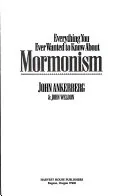
Everything You Ever Wanted to Know about Mormonism
 80
80

Everything You Ever Wanted to Know about Mormonism
Ankerberg and Weldon's "Everything You Ever Wanted to Know about Mormonism" offers a detailed, if somewhat unsparing, dissection of LDS doctrine and history. The strength of the work lies in its systematic approach; it breaks down complex theological arguments and historical claims into digestible components, making the sheer volume of information accessible. The authors' evident dedication to presenting a comprehensive overview is commendable, particularly in their examination of the Book of Mormon's textual origins and the theological divergences from Nicene Christianity. A notable limitation, however, is the consistently critical tone, which, while perhaps intended to foster scholarly rigor, occasionally reads as polemical rather than purely analytical. For instance, their treatment of the doctrine of eternal progression, while factually presented, lacks exploration of its internal logic or adherents' perspectives beyond refutation. The book is most valuable as a reference for those already familiar with LDS tenets, providing extensive detail on specific points of theological contention. It serves as a comprehensive critical resource, though readers seeking a balanced exploration of faith might look elsewhere.
📝 Description
80
Published in 1992, John Ankerberg and John Weldon's book examines the Church of Jesus Christ of Latter-day Saints.
This volume provides a detailed look at the origins and theology of the Church of Jesus Christ of Latter-day Saints. It traces the movement's history from Joseph Smith's early experiences in the 1820s, systematically explaining its core beliefs, scriptures, and organization. The authors consider Mormonism within the context of 19th-century American religious revivalism, including the Second Great Awakening and the era's interest in prophecy.
Ankerberg and Weldon critically analyze the historical and scriptural evidence presented by the church. Key concepts discussed include the nature of God and Christ, ongoing revelation, the Book of Mormon's scriptural status, and temple practices. The book offers a structured overview of LDS doctrine, distinguishing it from traditional Christianity. It is aimed at those seeking an analytical perspective on Mormonism, including scholars, theology students, and those interested in new religious movements.
While Mormonism is often examined through a lens of comparative religion or American religious history, this book approaches specific doctrines that set it apart. Its focus on concepts like ongoing revelation and distinct theological understandings of God and Christ places it in conversation with traditions that emphasize unique spiritual authority and scriptural interpretation outside established norms. The analysis of temple practices also touches on ritualistic and symbolic elements often found in esoteric traditions.
💡 Why Read This Book?
• Gain a detailed understanding of the historical origins of Mormonism, including the specific events surrounding Joseph Smith's early prophetic claims in the 1820s and 1830s. • Analyze the unique theological framework of the LDS Church, focusing on concepts such as the nature of God, eternal progression, and the role of modern prophets, as presented through the authors' critical lens. • Explore the scriptural foundations of Mormonism, with specific attention to the Book of Mormon and its claims of ancient origins, contrasted with the authors' textual and historical analysis.
⭐ Reader Reviews
Honest opinions from readers who have explored this book.
❓ Frequently Asked Questions
When was "Everything You Ever Wanted to Know about Mormonism" first published?
The book was first published in 1992, making it a comprehensive resource from that era concerning the history and doctrines of the Church of Jesus Christ of Latter-day Saints.
Who are the primary authors of this work on Mormonism?
The primary authors are John Ankerberg and John Weldon, known for their extensive research and publications on religious topics and comparative theology.
Does the book cover the early history of Mormonism?
Yes, the book extensively covers the early history, detailing the origins of the movement and the life of its founder, Joseph Smith, and the context of the early 19th century.
What specific LDS doctrines are examined in detail?
The work examines key LDS doctrines including the nature of God, Jesus Christ, the Holy Ghost, the Book of Mormon, temple practices, and the concept of continuing revelation.
Is "Everything You Ever Wanted to Know about Mormonism" suitable for academic study?
Yes, its detailed examination of history and doctrine makes it a valuable resource for students of religion, comparative theology, and American religious history seeking critical analysis.
What is the general perspective of the authors towards Mormonism?
The authors present a critical perspective, analyzing LDS beliefs and practices from a theological viewpoint that differs significantly from mainstream Christianity.
🔮 Key Themes & Symbolism
Origins and Revelations
The book traces the genesis of Mormonism to Joseph Smith's claims of divine visions and the subsequent translation of the Book of Mormon in the 1820s. It critically examines the theological implications of ongoing revelation, a central to LDS belief, contrasting it with fixed scriptural canons in other traditions. The work explores the specific accounts of angelic visitations and the societal context of early 19th-century American religious fervor that fostered such claims.
Doctrinal Divergences
A significant portion of the text is dedicated to dissecting core LDS doctrines that deviate from traditional Christian theology. This includes detailed analysis of the concept of God as a corporeal being, the pre-mortal existence of spirits, and the doctrine of eternal progression for humanity. The authors scrutinize the unique Christology and soteriology presented in LDS theology, highlighting differences in their understanding of salvation and divine nature.
Scriptural Authority and Practice
The study examines the foundational role of the Book of Mormon alongside the Bible, Doctrine and Covenants, and Pearl of Great Price within the LDS canon. It scrutinizes the historical and textual basis for the Book of Mormon's claims and explores the distinct practices associated with LDS temples, such as endowments and eternal sealings, analyzing their theological significance and origins.
Historical Reception and Development
The authors discuss the historical trajectory of the Church of Jesus Christ of Latter-day Saints from its inception through to the late 20th century. This includes an overview of its organizational structure, leadership succession, and the challenges and growth experienced by the movement. The book also touches upon the reception of Mormonism by other religious and academic communities during its formative years and beyond.
💬 Memorable Quotes
Direct passages from the work, attributed to the author.
“The Book of Mormon claims to be another testament of Jesus Christ, yet its narrative and theology present significant departures from the Bible.”
— This statement highlights a central critical argument of the book: that the foundational text of Mormonism, while professing Christian allegiance, introduces doctrines and accounts that are incompatible with biblical teachings, raising questions about its divine origin and Christological claims.
“Joseph Smith's revelations were presented within the context of a burgeoning American religious landscape eager for new spiritual insights.”
— This observation places Smith's prophetic claims within the historical milieu of the Second Great Awakening, suggesting that the cultural and religious climate contributed to the acceptance and spread of his messages, framing it as a product of its time.
“The historicity of the Book of Mormon's narrative remains a subject of intense scholarly debate and scrutiny.”
— This statement addresses the core academic and theological controversy surrounding the Book of Mormon. It acknowledges the lack of external archaeological or linguistic evidence accepted by mainstream scholarship to support its ancient origins, framing it as a key point of contention.
💡 Key Ideas
Editorial paraphrase of the work's core concepts — not direct quotes.
The LDS concept of God as an exalted man challenges the traditional monotheistic understanding of an infinite and uncreated divine being.
This quote points to a fundamental theological difference concerning the nature of God. The authors emphasize the LDS doctrine of God's corporeal existence and past human progression as a stark contrast to the classical, immutable, and incorporeal God of traditional Christian theology.
Temple ordinances involve symbolic rituals intended to facilitate eternal progression and celestial marriage.
This paraphrased concept underscores the unique and often private nature of LDS temple worship. It refers to the sacred ceremonies and their perceived function in enabling members to achieve a higher spiritual status and eternal family bonds.
🌙 Esoteric Significance
Tradition
While not strictly an esoteric text in the Hermetic or Kabbalistic sense, this work engages with a religious tradition that has developed unique metaphysical and cosmological doctrines. Mormonism's emphasis on continuing revelation, celestial marriage, and the potential for human deification (eternal progression) touches upon themes that resonate with certain esoteric currents seeking a deeper, experiential understanding of the divine and humanity's place within it.
Symbolism
The book implicitly discusses symbols and motifs central to LDS practice, such as the Tree of Life (as a representation of eternal progression and divine presence) and the concept of celestial bodies (representing exalted beings). While the authors focus on theological critique, these symbols carry layers of meaning within the LDS cosmology that hint at a perceived cosmic order and humanity's potential ascent within it.
Modern Relevance
Contemporary thinkers and practitioners exploring alternative spiritualities or comparative theology may find this book valuable for understanding a significant American religious movement often viewed through an esoteric lens. Its detailed doctrinal analysis provides a basis for comparing LDS cosmology with other systems that explore themes of spiritual evolution, divine potential, and the nature of reality beyond conventional materialist frameworks.
👥 Who Should Read This Book
• Students of comparative religion and American religious history seeking a detailed, critical examination of the doctrines and origins of the Church of Jesus Christ of Latter-day Saints. • Apologetics scholars and theologians interested in understanding specific points of theological divergence between Mormonism and traditional Christianity, as presented by Ankerberg and Weldon. • Individuals with a background in evangelical Christianity who wish to gain a comprehensive understanding of LDS beliefs and practices from a critical perspective.
📜 Historical Context
Published in 1992, "Everything You Ever Wanted to Know about Mormonism" emerged during a period of renewed academic and popular interest in new religious movements. The late 20th century saw extensive scholarly work on Mormonism, following earlier foundational texts like Fawn Brodie's "No Man Knows My History" (1945). Ankerberg and Weldon's work engaged with existing critical scholarship and theological analyses, offering a comprehensive overview from a specific evangelical Christian perspective. The era was also marked by ongoing dialogue and debate between LDS leaders and critics regarding historical accuracy, scriptural interpretation, and theological claims. Contemporary scholars like Jan Shipps were producing influential works on Mormonism's identity and development, offering different interpretive frameworks than the one employed by Ankerberg and Weldon.
📔 Journal Prompts
The concept of continuing revelation as presented by Joseph Smith and its implications for scripture.
The Book of Mormon's narrative claims and its historical context in early 19th-century America.
The doctrine of eternal progression and its theological contrast with traditional Christian views of God.
The significance of temple ordinances and their role in achieving exaltation within LDS theology.
Joseph Smith's personal testimonies of divine encounters and their foundational impact on the movement.
🗂️ Glossary
Book of Mormon
A sacred text published by Joseph Smith in 1830, claimed to be an ancient record translated from golden plates, detailing the history of ancient American civilizations and their dealings with God.
Continuing Revelation
The belief that God continues to reveal His will to humanity through living prophets and apostles, supplementing and clarifying existing scripture.
Eternal Progression
The LDS doctrine that faithful individuals can progress eternally, becoming like God, through obedience to divine laws and ordinances.
Joseph Smith
The founder of the Latter Day Saint movement, who claimed to receive divine revelations and visions that led to the establishment of the church in 1830.
Temple Ordinances
Sacred ceremonies performed in LDS temples, such as endowments and eternal sealings, believed to be essential for exaltation and eternal family relationships.
Nicene Christianity
Refers to the doctrines established by the early Christian church councils, particularly the Council of Nicaea in 325 AD, which defined core tenets like the Trinity and the dual nature of Christ.
Second Great Awakening
A period of intense religious revivalism in the United States during the early 19th century, which saw the rise of many new Protestant denominations and movements.
This book appears in 1 collection
🔮 Readers Also Liked
Browse all →









From the “Ritual Magic” Collection
View all →








More Free Magic & Ritual Books
View all →