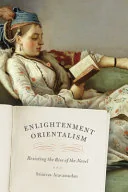
Enlightenment Orientalism
 75
75

Enlightenment Orientalism
Srinivas Aravamudan’s "Enlightenment Orientalism" offers a compelling re-evaluation of eighteenth-century European fiction, proposing that Oriental tales were integral to, rather than tangential to, the rise of the novel. The book's signal strength lies in its meticulous tracing of how these narratives, often dismissed as escapist fantasy, functioned as crucial sites for social and political critique within Europe. Aravamudan effectively demonstrates this through his analysis of works that engaged with the "Orient," revealing their complex relationship with domestic fiction. A minor limitation might be the dense academic prose, which occasionally obscures the more vibrant aspects of the tales discussed. However, the argument concerning the "interdependence of Oriental tales and domestic fiction" provides a refreshing perspective, directly challenging established scholarly narratives. The work compels readers to reconsider the foundations of the modern novel. It is an essential intervention for anyone invested in the period's literature.
📝 Description
75
Srinivas Aravamudan coined 'Enlightenment Orientalism' for 18th-century European fiction blending sex, politics, and the East.
Srinivas Aravamudan's study examines a specific literary trend in eighteenth-century Europe. During this period, a significant number of Oriental tales, pseudo-ethnographies, and satirical works emerged. These texts often combined sexual fantasies with pointed political commentary. Aravamudan uses the term "Enlightenment Orientalism" to define this body of fiction. He argues that this phenomenon goes beyond simple exoticism, suggesting it played a more active role in shaping European thought and literature.
The book is intended for scholars and advanced students of eighteenth-century literature, postcolonial studies, and the history of the novel. It will be of particular interest to those investigating the relationship between Western views of the East and the evolution of European narrative forms. Readers who question conventional literary histories will find the arguments here provocative. The eighteenth century, a time of significant intellectual exchange and expanding colonial influence, provided a complex backdrop for these literary productions. Aravamudan's work challenges linear accounts of the novel's development by situating these Oriental tales within this dynamic historical setting.
This work engages with the historical production of knowledge about non-Western cultures during a period of significant European intellectual and colonial expansion. It examines how literary forms both reflected and constructed ideas about the 'Orient,' often intertwining them with domestic social and political critique. The book questions established narratives of literary history, particularly concerning the rise of the novel, by highlighting the role of these 'Orientalist' texts in shaping European desires and critiques. It places these literary phenomena within a broader context of cross-cultural exchange and the construction of cultural difference.
💡 Why Read This Book?
• Understand the "Enlightenment Orientalism" concept, learning how eighteenth-century European fiction used Oriental settings for domestic critique, as detailed in the book's analysis of pseudo-ethnographies. • Grasp the "interdependence of Oriental tales and domestic fiction," discovering how these narratives influenced European literary forms beyond simple exoticism, a core argument from the 2012 publication. • Challenge standard scholarly narratives about the rise of the novel by examining how specific "sexual fantasies and political satires" originating from Oriental tales reshaped European literary conventions.
⭐ Reader Reviews
Honest opinions from readers who have explored this book.
❓ Frequently Asked Questions
What is "Enlightenment Orientalism" as defined by Srinivas Aravamudan?
Aravamudan defines "Enlightenment Orientalism" as a specific body of eighteenth-century European fiction that includes Oriental tales, pseudo-ethnographies, sexual fantasies, and political satires, arguing they were crucial to the development of the novel.
How did Oriental tales influence European domestic fiction?
The book reveals an interdependence, showing how Oriental tales provided frameworks for exploring European anxieties and desires, thereby shaping the content and form of domestic fiction written during the period.
What is the historical period covered by "Enlightenment Orientalism"?
The book primarily focuses on the eighteenth century, a period of significant literary and cultural exchange between Europe and the East, marked by colonial expansion and Enlightenment thought.
Does the book argue that Oriental tales were just exotic fantasies?
No, Aravamudan explicitly argues against this, demonstrating that these tales were often sophisticated forms of political satire and commentary, engaging European readers on multiple levels.
What scholarly narratives does Aravamudan challenge?
He challenges standard narratives about the rise of the novel, suggesting that the influence of Oriental tales has been underestimated and that they were integral to the novel's development.
Who is Srinivas Aravamudan?
Srinivas Aravamudan is a scholar whose work "Enlightenment Orientalism" was first published in 2012, examining the intersection of European literature and perceptions of the East.
🔮 Key Themes & Symbolism
The Novel's Eastern Roots
This work posits that the European novel's development in the eighteenth century is inextricably linked to the popularity of "Oriental tales." Far from being peripheral, these narratives, often containing pseudo-ethnographies and sexual fantasies, served as crucial testing grounds for new literary forms and social commentary. Aravamudan meticulously unpacks how elements borrowed from or inspired by the "Orient" were integrated into domestic fiction, thereby challenging the notion of the novel as a purely Western European invention.
Political Satire and Social Critique
"Enlightenment Orientalism" reveals the potent political undercurrents within seemingly exotic narratives. These tales functioned as vehicles for satire, allowing authors to critique European society, politics, and morality indirectly by projecting these issues onto an "Oriental" stage. This strategy provided a safe yet effective means to engage with controversial topics, demonstrating the complex ways in which literature can both reflect and shape public discourse during the Enlightenment era.
Constructing the 'Orient'
The book critically examines how the "Orient" was constructed within eighteenth-century European imagination. It moves beyond simplistic notions of exoticism to explore how these literary representations were deeply intertwined with European desires, anxieties, and imperial ambitions. Aravamudan highlights the "interdependence" between these imagined Eastern settings and the "domestic fiction" of Europe, showing how the former provided a lens through which Europeans understood and critiqued themselves.
Challenging Literary Histories
A central aim of "Enlightenment Orientalism" is to revise standard scholarly narratives concerning the rise of the novel. By foregrounding the influence of Oriental tales, Aravamudan argues that previous accounts have overlooked significant cross-cultural literary exchanges. This perspective necessitates a re-evaluation of the genre's origins and development, emphasizing a more global and interconnected literary history than traditionally presented.
💬 Memorable Quotes
Direct passages from the work, attributed to the author.
“Oriental tales... took Europe by storm during the eighteenth century.”
— This highlights the widespread popularity and cultural impact of narratives drawing on Eastern themes, suggesting they were a significant force in eighteenth-century European literary and popular culture.
“Naming this body of fiction Enlightenment Orientalism...”
— Aravamudan's coining of this specific term serves to categorize and analyze a distinct genre, moving it from the margins of literary study to a central point of inquiry regarding the Enlightenment.
“poses a range of urgent questions that uncovers the interdependence of Oriental tales and domestic fiction”
— This indicates the book's critical approach, focusing on the interconnectedness of seemingly disparate literary forms and challenging scholars to investigate these relationships more deeply.
“challenging standard scholarly narratives about the rise of the novel”
— This statement underscores the book's revisionist agenda, aiming to reshape existing understandings of literary history by introducing new perspectives on the novel's origins and influences.
“More than mere exoticism, Oriental tales fascinated ordinary readers as well as intellectuals.”
— This interpretation emphasizes the broad appeal and intellectual depth of Oriental tales, suggesting they offered complex engagement beyond superficial fascination for a wide range of readers.
🌙 Esoteric Significance
Tradition
While not strictly an esoteric text itself, "Enlightenment Orientalism" engages with how esoteric and quasi-esoteric themes often permeated popular European literature during the Enlightenment. The fascination with "Oriental" wisdom, mysticism, and secret knowledge provided fertile ground for both genuine spiritual inquiry and fantastical literary creations. The work indirectly touches upon Hermetic traditions and Neoplatonic ideas that often found their way into these narratives, presented through a secularized or fictionalized lens.
Symbolism
The "Orient" itself functions as a symbolic landscape within the book's analysis, representing the exotic, the unknown, and the repository of alternative wisdom or licentiousness. Specific symbols within the Oriental tales discussed might include desert oases (representing hidden knowledge or spiritual refuge), elaborate palaces (signifying corrupt power or hidden desires), and veiled figures (embodying mystery, deception, or forbidden knowledge). These symbols were often employed to explore European psychological and social landscapes.
Modern Relevance
Contemporary scholars in postcolonial studies, comparative literature, and cultural history continue to draw upon Aravamudan's framework. His analysis of how dominant cultures construct and utilize representations of the "Other" remains highly relevant for understanding modern media, political discourse, and ongoing debates about cultural appropriation and representation in a globalized world.
👥 Who Should Read This Book
• Scholars of eighteenth-century literature and cultural history seeking to revise established narratives about the novel's development. • Students of postcolonial studies interested in the historical construction of the "Orient" and its literary impact on the West. • Readers fascinated by the interplay of fantasy, politics, and social commentary in historical fiction, who wish to understand the complex roots of modern narrative forms.
📜 Historical Context
The eighteenth century witnessed a burgeoning European interest in the East, fueled by colonial expansion, trade, and the intellectual currents of the Enlightenment. This era saw the publication of numerous "Oriental tales," such as those by Montesquieu and D'Herbelot, which captivated European readers. Srinivas Aravamudan's "Enlightenment Orientalism" (2012) revisits this phenomenon, arguing that these tales were not mere diversions but integral to the development of the European novel. The work engages with contemporary scholars of postcolonialism and literary history, challenging established narratives that often sideline non-Western influences. While figures like Edward Said later critiqued Orientalism, Aravamudan focuses on the *internal* literary functions of these narratives within Europe, particularly their complex relationship with domestic fiction and their role in social and political satire. The reception of these tales varied, but their widespread popularity indicates a significant cultural impact, debated by scholars ever since.
📔 Journal Prompts
The "interdependence of Oriental tales and domestic fiction" as a concept.
Eighteenth-century "sexual fantasies and political satires" in European literature.
The function of "pseudo-ethnographies" in shaping European perceptions of the "Orient."
How "Enlightenment Orientalism" challenged standard scholarly narratives.
The concept of "mere exoticism" versus deeper engagement with Oriental tales.
🗂️ Glossary
Enlightenment Orientalism
A term coined by Aravamudan for eighteenth-century European fiction featuring Oriental tales, pseudo-ethnographies, sexual fantasies, and political satires, arguing its integral role in the rise of the novel.
Oriental Tales
Literary works popular in eighteenth-century Europe that drew inspiration from Middle Eastern, South Asian, or East Asian settings, often blending romance, adventure, and moral commentary.
Pseudo-ethnographies
Fictional accounts presented as factual descriptions of foreign cultures, often based on speculation or misinterpretation, used in "Enlightenment Orientalism" to explore European societal norms.
Domestic Fiction
Novels focusing on the lives, relationships, and moral concerns of characters within a household or family setting, often considered a distinct genre from "Oriental tales."
Interdependence
In this context, the reciprocal influence and mutual shaping between "Oriental tales" and "domestic fiction," where each genre affected the other's themes, structures, and reception.
Political Satire
The use of humor, irony, exaggeration, or ridicule to expose and criticize people's stupidity or vices, particularly in the context of contemporary politics and other topical issues.
Rise of the Novel
The historical period and process during which the novel emerged as a dominant literary form, typically associated with the 17th and 18th centuries in Europe.
This book appears in 1 collection
🔮 Readers Also Liked
Browse all →









From the “Enlightenment” Collection
View all →




More Free Occult Philosophy Books
View all →