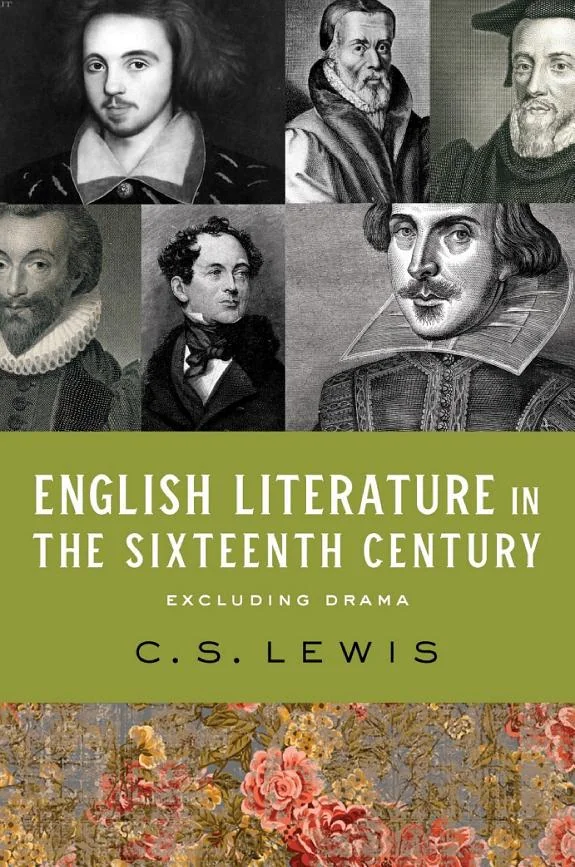
English Literature in the Sixteenth Century (Excluding Drama)
 79
79

English Literature in the Sixteenth Century (Excluding Drama)
Lewis's examination of sixteenth-century English literature, sans drama, is a formidable piece of scholarship. His treatment of figures like William Tyndale and John Knox, placing their linguistic and theological contributions in sharp relief, is particularly illuminating. The book excels in connecting the intellectual ferment of the Reformation to the burgeoning literary output. A minor quibble might be the sheer density of the material, which can occasionally feel overwhelming for the uninitiated. However, the clarity of his prose and the depth of his analysis, particularly concerning the intricate arguments in Richard Hooker's *Of the Laws of Ecclesiastical Polity*, make it a vital resource. This is not a casual perusal, but a serious engagement with the bedrock of English letters.
📝 Description
79
In 1954, C. S. Lewis surveyed English literature before the rise of drama.
C. S. Lewis's 1954 volume examines English prose and poetry from the post-Norman Conquest era up to the mid-sixteenth century, pointedly excluding dramatic works. The book offers close readings of authors and texts that shaped early literary expression, with particular attention to figures important for theological and philosophical thought. Lewis analyzes the development of English verse and prose through engagement with classical learning and the effects of the printing press on how texts spread.
The work places its literary subject within the religious and intellectual shifts of the sixteenth century. The Reformation, the use of vernacular tongues in religious argument, and the formation of English national identity all affected writing. Lewis's decision to focus on non-dramatic literature highlights the influence of sermons, translations, and polemical pieces. He shows how religious ideas and political events determined the shape and substance of the literature of that time.
This study fits within a tradition of understanding literature not just as aesthetic objects but as expressions of underlying intellectual and spiritual currents. Lewis, himself a significant Christian apologist, approaches these texts with an eye for the theological debates and philosophical frameworks that informed their creation. His focus on the non-dramatic, often didactic or polemical, forms of early English writing reveals how literature served as a vehicle for shaping belief and understanding in a period of intense religious transformation. The book connects literary production to the broader spiritual condition of the age.
💡 Why Read This Book?
• Understand the foundational role of figures like William Tyndale in shaping English prose beyond the theatrical stage, as detailed in the sections on Reformation-era translators. • Grasp the intellectual context of the period, including the influence of the Reformation on non-dramatic literary forms, by examining Lewis's analysis of 1530s religious polemics. • Appreciate the distinct evolution of English poetry and prose divorced from dramatic conventions, through Lewis's specific focus on poets like Edmund Spenser and the arguments presented around 1570.
⭐ Reader Reviews
Honest opinions from readers who have explored this book.
❓ Frequently Asked Questions
What is the primary focus of C. S. Lewis's "English Literature in the Sixteenth Century (Excluding Drama)"?
The book concentrates on the non-dramatic literature of sixteenth-century England, including poetry, prose, and theological writings, tracing their development from the Norman Conquest era up to the mid-1500s.
Which major authors are discussed in Lewis's survey?
Key figures include Edmund Spenser, William Tyndale, John Knox, Richard Hooker, Hugh Latimer, and Thomas Cranmer, among others, whose works are analyzed for their literary and intellectual significance.
How does the book address the influence of the Reformation?
Lewis connects the religious upheaval of the Reformation directly to literary output, examining how theological debates and translations into vernacular English impacted the prose and poetry of the era.
Does the book cover the entire sixteenth century?
While the title suggests the entire century, the original blurb indicates the survey extends through the mid-sixteenth century, with Lewis's analysis covering the period following the Norman Conquest.
What distinguishes this work from other literary histories of the period?
Its specific exclusion of drama allows for a concentrated examination of other literary forms and the theological-philosophical underpinnings that are often overshadowed in broader surveys.
Is this book suitable for beginners in literary studies?
While rigorous, Lewis's clear prose makes it accessible to dedicated beginners interested in the foundational texts and intellectual history of English literature, particularly from the Reformation period.
🔮 Key Themes & Symbolism
Theological Prose and Polemic
Lewis meticulously examines the theological writings of figures like William Tyndale and John Knox, demonstrating how their vernacular translations and polemical tracts not only advanced religious reform but also profoundly shaped English prose. The book highlights how these seemingly didactic works possessed significant literary merit and influence, establishing grammatical structures and vocabulary that became foundational for later literary endeavors. This focus underscores the interconnectedness of religious fervor and linguistic innovation during the Reformation.
Poetic Developments Beyond Stage
This work offers a concentrated look at the evolution of English poetry in the sixteenth century, deliberately setting aside dramatic forms. Lewis analyzes the intricate allegories and moral frameworks found in poets such as Edmund Spenser, exploring how these works engaged with classical traditions and contemporary philosophical ideas. The analysis emphasizes the internal complexities of poetic language and its capacity for expressing nuanced theological and philosophical concepts.
The Reformation's Literary Imprint
A central theme is the pervasive influence of the Protestant Reformation on the literary landscape. Lewis illustrates how the era's religious debates, the emphasis on scripture in the vernacular, and the subsequent intellectual ferment directly informed the content, style, and dissemination of literary works. He shows how figures like Thomas Cranmer, in their liturgical and theological contributions, left indelible marks on the development of English literary expression.
Foundations of English Prose Style
Lewis traces the formative stages of modern English prose, particularly through the lens of non-literary texts. By analyzing the writings of figures such as Richard Hooker and Dr. Johnson (though Johnson is primarily 18th C., Lewis likely discusses his engagement with earlier traditions), the book reveals the establishment of rhetorical sophistication and logical argumentation. This section is crucial for understanding how formal prose developed independent of dramatic dialogue.
💬 Memorable Quotes
Direct passages from the work, attributed to the author.
“The sixteenth century was a period where theological debate was inseparable from literary creation.”
— This statement captures Lewis's central argument that the religious upheavals of the era directly fueled and shaped the literary output, demonstrating that even polemical or didactic texts held significant artistic and linguistic value.
“The translation of the Bible into English was a watershed moment for the language.”
— Lewis emphasizes the lasting impact of vernacular Bible translations, like Tyndale's, on the development of English prose. This highlights how efforts to make religious texts accessible democratized and standardized the language, contributing to its literary potential.
“Edmund Spenser's poetry offered complex allegorical landscapes.”
— This points to Lewis's detailed analysis of Spenser's work, particularly *The Faerie Queene*, focusing on its intricate symbolic layers and its engagement with moral and philosophical themes through allegorical narrative.
“The structure of Richard Hooker's arguments reveals a sophisticated engagement with reason and tradition.”
— This interpretation highlights Lewis's appreciation for the intellectual rigor and rhetorical skill displayed in Hooker's *Of the Laws of Ecclesiastical Polity*, showcasing how theological works employed sophisticated literary techniques.
“The vernacular sermon became a significant literary form in the sixteenth century.”
— Lewis recognizes the sermon not just as a religious address but as a potent literary medium, demonstrating how preachers like Hugh Latimer used rhetoric and narrative to engage their audiences and shape public discourse.
🌙 Esoteric Significance
Tradition
While C. S. Lewis is primarily known as a literary critic and Christian apologist, his work on *English Literature in the Sixteenth Century* touches upon themes resonant within Hermetic and Neoplatonic traditions. The era itself was one of syncretism, where Christian thought often engaged with rediscovered classical philosophies. Lewis's analysis of allegorical poetry and the search for divine order within literary structures can be seen as an indirect engagement with the Hermetic principle of correspondence – the idea that the macrocosm (divine order) is reflected in the microcosm (human creation).
Symbolism
The allegorical modes prevalent in sixteenth-century poetry, particularly exemplified by Edmund Spenser, offer rich ground for symbolic interpretation. Lewis likely explores symbols of spiritual pilgrimage, the struggle between virtue and vice, and the quest for divine truth. These recurring motifs in works like *The Faerie Queene* echo Neoplatonic concepts of ascent and the use of earthly imagery to represent heavenly realities, aligning with esoteric traditions that utilize symbolic language to convey higher truths.
Modern Relevance
Contemporary scholars and practitioners of Western Esotericism find Lewis's work valuable for understanding the historical roots of symbolic language and philosophical inquiry that underpin many esoteric systems. His analysis of how religious and philosophical ideas were encoded in sixteenth-century literature provides a framework for deciphering similar symbolic layers in later esoteric texts and modern mystical thought. Thinkers exploring the intersection of faith, reason, and imagination often reference Lewis's foundational scholarship.
👥 Who Should Read This Book
• Students of Renaissance literature seeking a rigorous, non-dramatic survey: They will gain a comprehensive understanding of the prose and poetry that defined the era, distinct from theatrical works. • Scholars of Reformation history and theology: Readers interested in how religious upheaval shaped language and literary expression will benefit from Lewis's detailed analysis of figures like Tyndale and Knox. • Aspiring writers and literary critics: Those aiming to deepen their appreciation for the historical development of English prose and poetic forms will find Lewis's insightful commentary on stylistic evolution invaluable.
📜 Historical Context
The sixteenth century in England was a crucible of change, marked by the seismic shifts of the Protestant Reformation and the consolidation of Tudor power. This era witnessed a fervent engagement with religious doctrine, leading to widespread theological debate and the proliferation of vernacular texts. C. S. Lewis's work situates itself within this context, examining how figures like William Tyndale, through his revolutionary English translation of the Bible (completed around 1530), and John Knox, with his powerful Calvinist sermons, fundamentally altered the range of English prose. The intellectual currents were a blend of Renaissance humanism, scholastic tradition, and burgeoning Protestant theology. While drama was flourishing, Lewis’s focus on non-dramatic literature highlights the crucial role of sermons, treatises, and poetry in shaping national identity and religious thought. The reception of these works was often contentious, with religious and political authorities closely monitoring printed materials, though Lewis’s specific reception details are not within this scope.
📔 Journal Prompts
The impact of William Tyndale's translation on English prose structure.
Richard Hooker's method of argumentation in *Of the Laws of Ecclesiastical Polity*.
The allegorical significance of Edmund Spenser's poetic landscapes.
The Reformation's influence on vernacular theological writing.
Analyzing the rhetorical strategies employed by sixteenth-century preachers.
🗂️ Glossary
Vernacular
The common language spoken by the people of a particular country or region, as opposed to a scholarly or foreign language like Latin. The sixteenth century saw a significant rise in vernacular literature and religious texts.
Polemic
A strong verbal or written attack on someone or something. In the sixteenth century, polemical writing was often used in religious and political disputes to persuade or condemn.
Allegory
A story, poem, or picture that can be interpreted to reveal a hidden meaning, typically a moral or political one. Edmund Spenser's works are prime examples of sixteenth-century allegorical writing.
Reformation
The 16th-century religious, political, intellectual, and cultural upheaval that splintered Catholic Europe, setting in place the structures and beliefs that would define it in the modern era. It profoundly impacted English literature.
Humanism
An intellectual movement within the Renaissance that focused on classical learning and human potential, emphasizing reason and empirical evidence. It influenced literary styles and philosophical thought.
Theology
The study of the nature of God and religious belief. Sixteenth-century English literature was deeply intertwined with theological debates, particularly those of the Reformation.
Norman Conquest
The invasion and occupation of England in 1066 by William, the Duke of Normandy. This event significantly influenced the development of the English language and its literature leading into the sixteenth century.
This book appears in 1 collection
🔮 Readers Also Liked
Browse all →







From the “High Magic” Collection
View all →






More Free Magic & Ritual Books
View all →