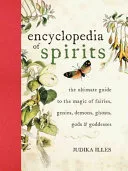
Encyclopedia of Spirits
 78
78

Encyclopedia of Spirits
Judika Illes's *Encyclopedia of Spirits* offers an ambitious, if occasionally overwhelming, survey of the spiritual entities that populate human imagination and belief systems. Its strength lies in its sheer scope, bringing together figures as disparate as Celtic goddesses and African Powers, Kabbalistic emanations and common household ghosts. The alphabetical format, while practical for quick reference, sometimes obscures the deeper connections between traditions. For instance, the entry on the Green Man sits alongside entries for Djinn and Mermaids, presenting a somewhat flattened hierarchy of spiritual forces. A notable limitation is the lack of consistent scholarly apparatus; while rich in folklore, it sometimes lacks the critical distance one might expect from academic ethnography. Nonetheless, its compilation of figures like the Black Madonnas, figures often associated with earth-based spirituality, provides a valuable resource for understanding diverse devotional practices. The book serves as a potent reminder of the vastness of the spiritual cosmos humans have conceived.
📝 Description
78
Judika Illes published the Encyclopedia of Spirits in 2010, cataloging thousands of spiritual entities.
This alphabetically arranged reference work details a vast array of spiritual beings drawn from global mythologies, folklore, and religious traditions. It covers entities ranging from benevolent deities and guardian spirits to demonic figures and spectral apparitions. The encyclopedia addresses beings associated with natural forces, human life cycles, and specific cultural or magical practices.
It is intended for practitioners of witchcraft, ceremonial magic, and comparative religion, as well as occultists, folklorists, and mythographers. Students of esotericism, mythology, and cultural studies will find it a useful resource for understanding diverse spiritual cosmologies and their inhabitants. The book's structure centers on 'spirits' as a broad classification, encompassing gods, demons, angels, nature spirits, ancestors, and elemental beings.
Published in 2010, the Encyclopedia of Spirits arrives during a period of heightened interest in occultism and comparative mythology. It follows earlier encyclopedic efforts in spirit lore while reflecting a modern approach to synthesizing disparate spiritual traditions. The work acknowledges the distinct cultural contexts for each spirit while also identifying recurring patterns in beliefs and practices across different societies.
💡 Why Read This Book?
• Gain a comprehensive understanding of over 1,000 spiritual entities, from specific figures like the Green Man to broad categories like Djinn, allowing for deeper context in your spiritual studies. • Explore the connections and divergences between global spiritual traditions, as exemplified by comparing entries on Celtic goddesses and African Powers, fostering a nuanced view of comparative mythology. • Access a practical reference for practitioners, offering insights into the roles and characteristics of various spirits that can inform ritual work and personal practice, as seen in the detailed descriptions of guardian spirits.
⭐ Reader Reviews
Honest opinions from readers who have explored this book.
❓ Frequently Asked Questions
What is the primary focus of Judika Illes's Encyclopedia of Spirits?
The primary focus is an extensive A-to-Z catalog of spiritual beings from worldwide mythologies, folklore, and religions, covering deities, demons, ghosts, nature spirits, and more.
When was the Encyclopedia of Spirits first published?
The Encyclopedia of Spirits was first published on September 14, 2010, by Weiser Books.
Does the book include spirits from a wide range of cultures?
Yes, it comprehensively covers entities from numerous cultures, including Celtic, Kabbalistic, African, and various ghost traditions, among others.
Who would benefit most from reading this encyclopedia?
Witchcraft practitioners, occultists, folklorists, comparative religion students, and anyone interested in the diverse pantheons and spirit worlds described in various traditions.
What kind of spirits can be found in the Encyclopedia of Spirits?
The book features love goddesses, disease demons, child guardians, cadaver guardians, Celtic goddesses, Kabbalistic figures, female Buddhas, African Powers, Djinn, mermaids, fairies, and numerous types of ghosts.
Is the Encyclopedia of Spirits organized by tradition or alphabetically?
The encyclopedia is organized alphabetically, making it easy to look up specific spirits or types of beings.
🔮 Key Themes & Symbolism
Global Spirit Pantheon
The work meticulously documents an astonishing array of spiritual entities, moving beyond Western-centric views to embrace a truly global perspective. It features figures from African Vodou, Kabbalistic traditions, Celtic mythos, and Buddhist cosmologies, among others. Illes presents these beings not as isolated curiosities but as integral parts of complex belief systems, demonstrating how different cultures have conceived of divine, elemental, and spectral forces. This encyclopedic approach allows readers to trace archetypal patterns and unique manifestations of spiritual power across diverse human societies.
Nature and Elemental Spirits
A significant portion of the encyclopedia is dedicated to spirits intrinsically linked to the natural world. Entries cover beings like the Green Man, a powerful archetype of nature and fertility found in European folklore, and various elemental spirits associated with earth, air, fire, and water. Illes also explores nature goddesses and spirits of place, highlighting their roles in animistic traditions and pre-Christian European religions. This theme underscores the ancient belief in the sentience of the natural environment and the entities that inhabit it.
Guardian and Protector Spirits
The concept of spiritual guardianship is a recurring motif throughout the encyclopedia. Illes details figures who protect specific individuals, places, or concepts, such as guardians of children or guardians of cadavers. This includes angelic beings, ancestral spirits, and specific deities tasked with protection. The exploration of these roles provides insight into how different cultures have sought spiritual security and assistance, and the diverse forms these protective forces can take, from benevolent deities to specialized spectral entities.
Demonic and Shadow Entities
Illes confronts the darker aspects of the spiritual world, cataloging a wide range of demons, malevolent spirits, and entities associated with misfortune or decay. These include disease demons, lesser-known infernal figures, and spectral beings that inhabit liminal spaces. The work presents these entities not merely as evil forces but as complex aspects of cosmic balance or as personifications of human fears and societal anxieties, offering a balanced view of the spiritual spectrum.
💬 Memorable Quotes
Direct passages from the work, attributed to the author.
“Within these pages meet love goddesses and disease demons, guardians of children and guardians of cadavers.”
— This highlights the extreme range of entities covered, contrasting benevolent life-affirming figures with malevolent or death-associated spirits, showcasing the book's comprehensive and sometimes jarring juxtapositions.
“Discover Celtic goddesses and goddesses of the Kabbalah, female Buddhas, African Powers, Dragon Ladies, White Ladies, Black Madonnas, the Green Man, the Green Fairy, lots and lots of ghosts, djinn, mermaids, fairies, and more.”
— This showcases the sheer diversity of spiritual beings cataloged, emphasizing the book's commitment to global representation and its inclusion of both major deities and more localized or folkloric entities.
“From the beneficent...”
— This fragment suggests the book covers the full spectrum of spiritual existence, moving from the most positive and helpful entities to others that may be neutral or even harmful, implying a complete overview.
💡 Key Ideas
Editorial paraphrase of the work's core concepts — not direct quotes.
The Encyclopedia of Spirits is a comprehensive and entertaining A to Z of spirits from around this world and the next.
This quote from the original blurb highlights the book's broad scope and accessible approach, promising an exhaustive yet engaging exploration of spiritual beings across all known and imagined realms.
The work presents a wide spectrum of spiritual beings, from benevolent deities and guardian spirits to malevolent demons and spectral apparitions.
This paraphrased concept emphasizes the book's balanced approach, acknowledging that spiritual realms encompass not only helpful entities but also those associated with darkness and fear, reflecting a holistic worldview.
🌙 Esoteric Significance
Tradition
The *Encyclopedia of Spirits* draws heavily from Western Esotericism, particularly its modern manifestations that embrace a syncretic approach to spirituality. It incorporates elements from Hermeticism, Kabbalah, various forms of Paganism (Celtic, Greek, Roman), and folk magic traditions. While not adhering strictly to a single lineage, it reflects the contemporary esoteric tendency to view spiritual traditions as interconnected, seeking common archetypes and correspondences across diverse cultures and belief systems.
Symbolism
The work engages with numerous symbols, such as the Green Man, representing primal nature, fertility, and the cycle of life and death in European folklore. Black Madonnas are presented as symbols of the divine feminine, earth-based spirituality, and hidden wisdom, often associated with pre-Christian cults. Djinn, originating from Arabian mythology, symbolize elemental forces, hidden realms, and potent, sometimes dangerous, magical power, representing beings that bridge the material and spiritual worlds.
Modern Relevance
Contemporary practitioners of modern witchcraft, Neo-Paganism, and eclectic spiritual paths frequently reference Illes's encyclopedia. Its comprehensive cataloging provides a foundational resource for understanding diverse spiritual entities that inform ritual, spellcraft, and personal devotion. Thinkers and groups exploring animism, the divine feminine, and comparative mythology also find value in its breadth, using it to contextualize their own practices within a larger set of human spiritual expression.
👥 Who Should Read This Book
• Beginning students of witchcraft and modern Paganism seeking to understand the diverse pantheons and spirit types encountered in various traditions. • Occultists and ceremonial magicians looking for a comprehensive reference to identify and research a vast array of spiritual entities for ritualistic purposes. • Folklorists and comparative religion scholars interested in a broad, accessible overview of spiritual beings documented across global cultures and mythologies.
📜 Historical Context
Judika Illes's *Encyclopedia of Spirits*, published in 2010, arrived during a period of significant popular engagement with esoteric subjects, a trend that gained momentum in the late 20th century. This era saw a proliferation of accessible texts on witchcraft, paganism, and comparative mythology, often synthesizing previously disparate traditions. Illes's work can be seen as part of this broader movement to democratize and compile occult and folkloric knowledge, making it available to a wider audience beyond academic circles. It follows in the lineage of earlier, albeit more specialized, compendia of spiritual beings and occult lore. While specific contemporaries like Doreen Valiente had already explored aspects of modern witchcraft's pantheon, Illes's encyclopedia aimed for a more exhaustive, cross-cultural survey. The work's reception was generally positive within its target communities, praised for its breadth, though some academic reviewers might have noted its folkloric emphasis over strict theological or anthropological rigor, a common point of discussion when comparing popular occult works to scholarly ones.
📔 Journal Prompts
The diverse entities cataloged, from love goddesses to disease demons, and their cross-cultural parallels.
Guardian spirits, such as those protecting children or cadavers, and their perceived roles in different belief systems.
The symbolic meaning of the Green Man and the Green Fairy within their respective folkloric contexts.
The representation of African Powers and their relationship to other spiritual forces described.
Comparison of benevolent spirits like female Buddhas with more potentially dangerous entities like Djinn.
🗂️ Glossary
Djinn
Spirits from Arabian mythology, often associated with elemental forces, magic, and the unseen world. They can be benevolent, malevolent, or neutral, possessing significant power and the ability to influence human affairs.
Green Man
An ancient archetype found in European folklore and art, typically depicted as a face made of leaves or foliage. He symbolizes nature, fertility, rebirth, and the wild, untamed aspects of the natural world.
Black Madonnas
Statues or images of the Virgin Mary depicted with dark or black skin. Often associated with ancient earth goddesses, pre-Christian cults, and earth-based spirituality, they represent hidden wisdom and feminine power.
Kabbalah
A system of Jewish mysticism that explores the divine nature and the creation of the universe through symbolic interpretation of scripture and the use of esoteric diagrams, such as the Tree of Life.
Celtic Goddesses
Deities from the mythology of the ancient Celtic peoples of Europe. These goddesses often embodied aspects of nature, war, wisdom, healing, and sovereignty, with figures like Brigid and Morrigan being prominent examples.
African Powers
A broad term referring to the diverse spiritual forces, deities, and energies recognized within the complex religious and magical systems of Africa, including Vodou, Orisha traditions, and shamanic practices.
Mermaids
Mythological aquatic creatures with the upper body of a human female and the tail of a fish. They appear in folklore worldwide, often associated with the sea, beauty, seduction, and sometimes danger or prophecy.