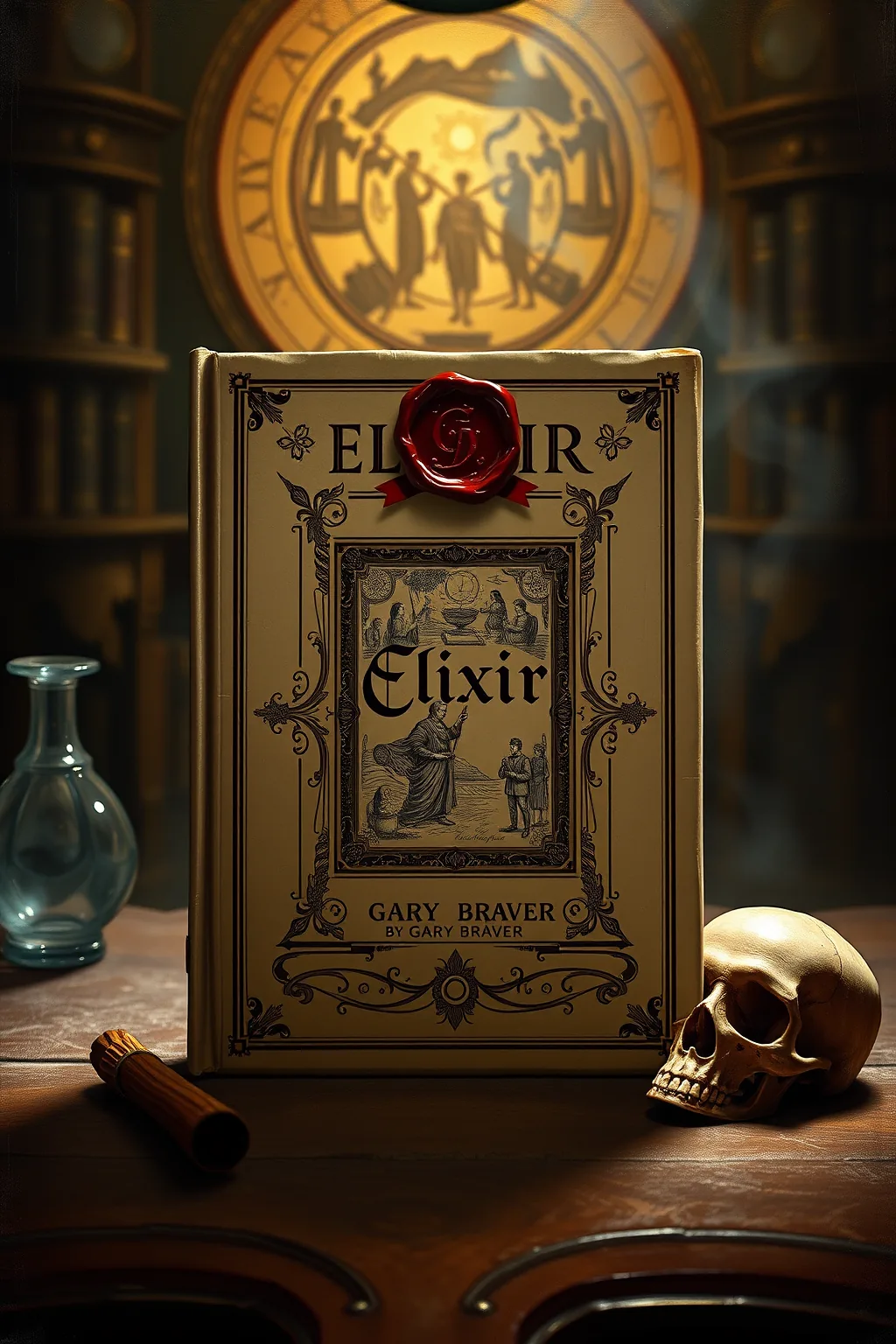
Elixir
 71
71

Elixir
Gary Braver’s *Elixir* is a narrative that, while not a direct treatise on esoteric principles, uses them as fertile ground for a compelling mystery. The strength of the novel lies in its intricate plotting, successfully weaving together historical conjecture with a present-day chase. The concept of a hidden lineage guarding an ancient secret, a common trope, is handled with enough specific detail to feel fresh. For instance, the description of fragmented codices hinting at the elixir's composition feels particularly well-researched within the fictional framework. However, the character development occasionally feels secondary to the plot's mechanics, with some figures serving more as plot devices than fully realized individuals. A notable passage involves the protagonist deciphering a cryptic map, which, while exciting, could have benefited from deeper psychological exploration of the decipherer's state of mind. Despite this, *Elixir* succeeds as an engaging fictional exploration of humanity's enduring quest for hidden knowledge. It is a well-constructed speculative mystery that uses esoteric themes to drive its narrative.
📝 Description
71
Gary Braver's 2001 novel *Elixir* centers on a protagonist who finds an ancient text hinting at a powerful alchemical substance.
First published in 2001, Gary Braver's *Elixir* weaves historical mystery with scientific curiosity and the search for hidden knowledge. The story follows a character who discovers fragments of an old manuscript, suggesting the existence of a potent, perhaps alchemical, compound. This find draws them into a secret world where groups compete for this substance, which could change everything. The book is not a practical guide but a fictional look at hidden pasts and humanity's ongoing desire for extended life or spiritual transformation.
Readers who enjoy fiction that mixes historical puzzles with speculative ideas will appreciate *Elixir*. Those interested in alchemy's philosophical roots, secret societies, and stories that stretch the limits of what science might achieve will find it engaging. It is for readers who prefer complex plots and a developing mystery over direct esoteric teachings. The novel appeals to those who question common understandings and consider possibilities related to concealed information.
Published in 2001, *Elixir* entered a period of heightened public interest in esoteric subjects, influenced by historical fiction that featured hidden histories and religious symbolism. The early 2000s also saw continued academic and popular focus on ancient philosophies and alchemical traditions, building on earlier interest from the late 20th century, partly shaped by Carl Jung's work on archetypes. Braver's novel uses a fictional narrative to examine these persistent human fascinations with hidden knowledge and transformative substances.
💡 Why Read This Book?
• Gain insight into the fictional exploration of alchemical symbolism, specifically the pursuit of a transformative substance as a narrative device, drawing from the novel's depiction of ancient texts and their interpretation. • Understand the thematic tension between guarded knowledge and public access, as presented through the narrative's focus on secret societies and their ancient doctrines, first published in 2001. • Experience a plot driven by historical enigmas and speculative science, as the protagonist unravels clues related to a legendary elixir, offering a unique fictional perspective on the quest for longevity.
⭐ Reader Reviews
Honest opinions from readers who have explored this book.
❓ Frequently Asked Questions
What is the central mystery in Gary Braver's Elixir?
The central mystery revolves around the discovery of fragmented ancient texts that hint at the existence of a powerful elixir, potentially offering longevity or profound transformation, and the race to understand and control it.
When was Elixir first published?
Elixir was first published in 2001, placing it within a period of renewed popular interest in historical mysteries and esoteric themes in fiction.
Does Elixir offer practical instructions for alchemy?
No, Elixir is a fictional work and does not provide practical instructions for alchemical practices. It uses alchemical concepts as a narrative framework for a mystery.
What kind of historical elements are present in Elixir?
The novel incorporates elements of historical conjecture, referencing ancient texts, potential secret societies, and the long-standing human desire for knowledge and extended life.
Who are the main antagonists in Elixir?
The antagonists are typically portrayed as shadowy organizations or individuals who also seek to control the elixir, representing competing interests and philosophies regarding its use.
Is Elixir part of a series?
Based on available information, Elixir is a standalone novel and not explicitly part of a series, though its themes could lend themselves to further exploration.
🔮 Key Themes & Symbolism
The Quest for Immortality
The narrative in *Elixir* centers on the age-old human fascination with extending life, presented through the lens of a mythical substance. The protagonist's search for the elixir mirrors historical and alchemical pursuits aimed at achieving longevity or even immortality. This theme is explored not as a scientific endeavor but as a driving force behind ancient myths and secret knowledge, questioning the ethical and existential implications of such a pursuit when it borders on the supernatural.
Secret Societies and Hidden Knowledge
*Elixir* examines the concept of clandestine groups hoarding profound secrets, particularly those related to the titular substance. These societies, often depicted with roots stretching back through history, act as custodians of forbidden knowledge. The novel examines the dynamics of secrecy, the power derived from controlling information, and the inherent conflict that arises when this knowledge is sought by external forces, creating a narrative of intrigue and historical conspiracy.
Alchemy as Metaphor
While referencing the alchemical tradition, *Elixir* primarily employs alchemy as a symbolic language rather than a literal practice. The 'elixir' itself can be interpreted as a metaphor for ultimate truth, enlightenment, or profound personal transformation, alongside its more literal association with longevity. The novel uses alchemical imagery and concepts to explore deeper philosophical questions about human potential, the nature of reality, and the transformative power of knowledge.
The Ethics of Power
The pursuit of the elixir in Braver's novel inevitably raises questions about the responsible use of extraordinary power. Various factions within the story represent different approaches to wielding such a potent discovery – some seek to control it for personal gain, others to protect it, and still others to understand its true nature. This conflict highlights the ethical dilemmas inherent in humanity's quest for knowledge that could fundamentally alter existence.
💬 Memorable Quotes
Direct passages from the work, attributed to the author.
“Some truths are too dangerous to be known by the uninitiated.”
— This sentiment reflects the narrative's emphasis on secret societies and guarded knowledge, suggesting a deliberate effort to conceal potent information from the general public, framing the protagonists' quest as a transgression.
“The elixir was not merely a cure for death, but a key to unlocking hidden potentials.”
— This interpretation expands the concept of the elixir beyond simple immortality, positioning it as a catalyst for unlocking deeper human capabilities or consciousness, aligning with esoteric traditions of self-transformation.
“History is written by those who control the narrative, and some narratives are buried deep.”
— This highlights the theme of hidden histories and conspiracies, suggesting that official accounts are incomplete and that true understanding lies in uncovering suppressed or deliberately obscured knowledge, a central drive for the characters.
“The true alchemy was not in the substance, but in the seeker's transformation.”
— This offers a philosophical interpretation of the elixir's purpose, suggesting that the journey of discovery and the internal changes it precipitates are more significant than the physical attainment of the legendary substance.
💡 Key Ideas
Editorial paraphrase of the work's core concepts — not direct quotes.
Fragments of forgotten wisdom whispered of a substance that could turn lead into gold, or time itself.
This passage captures the novel's core mystery, linking the alchemical pursuit of transmutation to the more profound desire to manipulate time, hinting at the legendary elixir's potential beyond mere material wealth.
🌙 Esoteric Significance
Tradition
While not strictly adhering to a single esoteric lineage, *Elixir* draws heavily from the alchemical tradition, particularly its hermetic roots concerning transformation and the pursuit of perfection. It engages with the Gnostic concept of hidden knowledge and the idea of an enlightened elite possessing secrets unavailable to the uninitiated. The novel frames the search for the elixir within a framework of ancient wisdom and clandestine guardians, echoing themes found in Rosicrucianism and other mystery schools that emphasize inner development and secret teachings.
Symbolism
The central symbol is the 'elixir' itself, representing not only physical immortality or the legendary philosopher's stone but also a metaphor for ultimate knowledge, spiritual enlightenment, or profound personal transformation. Ancient texts and fragmented codices serve as symbols of lost wisdom and the challenging path of rediscovery. Secret societies function as symbols of hidden structures within society that preserve or manipulate esoteric knowledge, often acting as gatekeepers to profound truths.
Modern Relevance
Contemporary thinkers and practitioners interested in the intersection of spirituality, history, and speculative fiction find relevance in *Elixir*'s exploration of enduring human desires for transcendence and hidden knowledge. The novel's themes resonate with modern esotericism's interest in archetypal narratives and the psychological aspects of transformation. It speaks to ongoing discussions about the nature of consciousness, the limits of scientific understanding, and the persistent allure of ancient mysteries in an increasingly secularized world, influencing contemporary speculative fiction and philosophical inquiry.
👥 Who Should Read This Book
• Readers intrigued by fictional explorations of alchemical symbolism and the historical quest for immortality, who appreciate narratives that use ancient concepts as a springboard for mystery. • Individuals interested in speculative fiction that examines secret societies, hidden histories, and the ethical implications of possessing powerful, potentially world-altering knowledge. • Fans of historical thrillers who enjoy intricate plots, deciphering clues, and narratives that blend factual conjecture with imaginative storytelling about hidden lore.
📜 Historical Context
Gary Braver's *Elixir*, published in 2001, emerged within a cultural landscape increasingly fascinated by historical conspiracies and esoteric lore, partly influenced by the success of books like *The Holy Blood and the Holy Grail* (1982) and the subsequent popularization of such themes. The early 21st century saw a surge in popular engagement with ancient mysteries, secret societies, and speculative interpretations of history, a trend amplified by online communities and a general skepticism towards established narratives. While not a direct engagement with academic occultism, the novel tapped into a broader zeitgeist influenced by figures like Carl Jung, whose work on archetypes and alchemy had filtered into popular consciousness. The contemporary literary scene included authors like Dan Brown, whose *The Da Vinci Code* (released shortly after, in 2003) would further solidify the market for historical thrillers rooted in hidden knowledge, demonstrating a significant public appetite for narratives that challenged conventional history with secret doctrines.
📔 Journal Prompts
The concept of the elixir as a catalyst for seeker transformation.
Reflect on the narrative's depiction of secret societies guarding forbidden knowledge.
Analyze the ethical questions raised by the pursuit of the titular elixir.
Consider the symbolic meaning of fragmented ancient texts within the narrative.
Explore the tension between historical record and hidden truths presented in the novel.
🗂️ Glossary
Elixir
In the context of the novel, the 'elixir' refers to a legendary substance, often associated with alchemical lore, believed to grant extended life, immortality, or profound transformative powers.
Alchemical Tradition
A set of historical and symbolic practices aimed at achieving transformation, often associated with turning base metals into gold (chrysopoeia) or creating a universal elixir for longevity.
Secret Societies
Organizations that operate with a high degree of secrecy, often claiming to possess ancient wisdom, esoteric knowledge, or historical secrets passed down through generations.
Codices
Ancient manuscripts or books, often handwritten, that contain valuable historical, religious, or esoteric information, frequently fragmented or difficult to decipher.
Transmutation
In alchemy, the process of changing one element or substance into another, famously the conversion of base metals into gold, but also metaphorically referring to spiritual or personal change.
Hermeticism
A philosophical and religious tradition based on writings attributed to Hermes Trismegistus, emphasizing esoteric knowledge, spiritual ascent, and the interconnectedness of the cosmos.
Gnosticism
A diverse set of religious ideas and systems, prominent in the early Christian era, emphasizing spiritual knowledge (gnosis) as the path to salvation and often positing a hidden, divine realm.
🔮 Readers Also Liked
Browse all →






More by Gary Braver
All books →

More Free Occult Philosophy Books
View all →