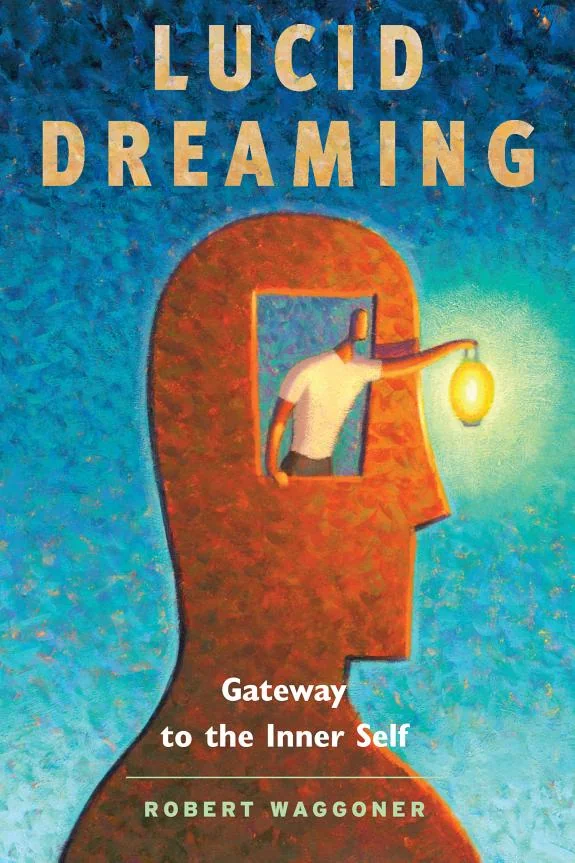
Lucid dreaming
 83
83

Lucid dreaming
Robert Waggoner's "Lucid Dreaming" presents a compelling argument for the dream state as a frontier of personal discovery, not merely a passive neurological event. His strength lies in translating complex concepts into actionable advice, particularly his emphasis on the "lucid ego" and its agency within the dreamscape. The book effectively bridges the gap between esoteric traditions and practical application, offering readers tools to actively engage with their subconscious. A limitation, however, is the occasional reliance on anecdotal evidence without deeper theoretical grounding for some claims, which might leave the rigorously scientific mind wanting more empirical data. The section on dream stabilization, detailing methods to maintain lucidity when awareness threatens to fade, is particularly well-articulated and useful. "Lucid Dreaming" is a valuable guide for those ready to explore the conscious potential of their dream lives.
📝 Description
83
Robert Waggoner's 2009 book explores becoming aware within dreams.
Published in 2009, Robert Waggoner's "Lucid Dreaming" details how to recognize you are dreaming while the dream is happening. This awareness allows you to consciously interact with and shape your dream world. The book goes beyond simple explanations, giving readers practical methods and philosophical ideas for engaging with this state of consciousness. Waggoner explains how to start having lucid dreams, keep them going, and use them for personal improvement, solving problems, and spiritual discovery.
This book is for anyone curious about or already practicing lucid dreaming. It suits beginners needing basic information and experienced dreamers wanting to advance their skills. Readers interested in consciousness, psychology, or the connection between mind and reality will find it valuable. It appeals to those ready to actively participate in their dream experiences.
Lucid dreaming has historical connections to traditions that explore altered states of consciousness. While figures like Marquis d'Hervey de Saint Denys wrote about it in the 1860s, Waggoner's 2009 book appeared during a period of growing interest in dreams, both scientifically and popularly. It coincided with neuroscientific research and personal accounts that helped validate the practice. Waggoner's work contributes to a lineage of thought that views dreams not just as passive experiences but as potential arenas for conscious exploration and self-understanding.
💡 Why Read This Book?
• You will learn specific techniques for achieving and maintaining lucidity, such as identifying "lucid triggers," a concept Waggoner details to recognize the onset of awareness within a dream. • You will gain an understanding of how to actively engage with dream characters and environments, moving beyond passive observation by exploring the "dream ego's" role. • You will discover methods for using the dream state for problem-solving and personal insight, framed by Waggoner's perspective on dreams as a potent realm for self-exploration.
⭐ Reader Reviews
Honest opinions from readers who have explored this book.
❓ Frequently Asked Questions
What is the earliest known mention of lucid dreaming?
While the practice is ancient, philosophical discussions of lucid dreaming appear in works like those of Aristotle and later, more concretely, in Marquis d'Hervey de Saint Denys' "Dreams and the Special Mesmerism" from 1860.
Can lucid dreaming be induced by anyone?
Waggoner suggests that while some individuals are naturally more prone to lucidity, the techniques presented in his book are designed to be learnable by most people with consistent practice and focused intention.
Is lucid dreaming a scientific phenomenon or purely esoteric?
The phenomenon is studied by science, with researchers like Stephen LaBerge using REM-sleep monitoring to verify lucidity. Waggoner's work bridges this scientific interest with deeper esoteric interpretations of the dream state's potential.
What are the benefits of lucid dreaming according to Robert Waggoner?
Waggoner highlights benefits such as enhanced self-awareness, creative problem-solving, overcoming nightmares, and spiritual exploration, viewing the dream state as a powerful tool for personal development.
How does Waggoner's approach differ from other lucid dreaming guides?
His emphasis is on the active "lucid ego" and the potential for conscious interaction and creation within the dream, treating it less as a passive phenomenon and more as a dynamic, responsive reality.
What is the "dream ego"?
The "dream ego" refers to the conscious self that is aware it is dreaming and can thus exert control and intention within the dream environment, a central concept in Waggoner's practical approach.
🔮 Key Themes & Symbolism
Conscious Dream Agency
Waggoner's work strongly advocates for the dream state as a space where the conscious mind, the "lucid ego," can actively participate and exert influence. This is not merely about observing dreams but about becoming a conscious architect within them. He details how recognizing the dream state allows for intentional interaction with dream elements, whether they are symbolic representations, imagined landscapes, or dream characters. The emphasis is on reclaiming agency within this often-uncharted territory of the psyche, transforming passive dreaming into an active exploration of self and reality.
Symbolic Interpretation and Interaction
The book treats dream imagery not just as random subconscious output but as a meaningful symbolic language that can be consciously engaged with. Waggoner proposes that by maintaining lucidity, one can directly question or interact with dream symbols, eliciting deeper understanding than through passive interpretation alone. This approach views the dream world as a responsive mirror to the dreamer's inner state, offering clear insights when approached with conscious intent and curiosity.
Dream Stabilization Techniques
A core practical element is the emphasis on techniques designed to maintain lucidity once achieved. Waggoner addresses the common challenge of waking up prematurely or losing awareness within the dream. The work provides methods for "dream stabilization," ensuring that the conscious experience within the dream can be prolonged and deepened, allowing for more extensive exploration and integration of the dream experience.
Personal Growth Through Dreams
Beyond mere curiosity or entertainment, Waggoner frames lucid dreaming as a powerful vehicle for personal development and spiritual insight. The book suggests that by consciously reading through the dreamscape, individuals can confront fears, resolve internal conflicts, access creative solutions, and foster a more profound connection with their own consciousness. The dream becomes a laboratory for self-discovery and transformation.
💬 Memorable Quotes
Direct passages from the work, attributed to the author.
“The dream ego is the conscious self that recognizes itself as dreaming.”
— This highlights the core of lucidity: the persistent sense of 'I' that understands its current state is a dream, enabling conscious action within it.
“Dreams offer a unique space for direct interaction with the subconscious.”
— This suggests dreams are not just passive broadcasts but interactive dialogues, where conscious engagement can yield insights not available in waking life.
“Stabilizing the dream is crucial for sustained lucid exploration.”
— This emphasizes the practical necessity of techniques to prevent losing lucidity, ensuring the dreamer can remain aware and in control for longer periods.
“The symbolism within dreams can be directly questioned and explored.”
— This points to an active method of dream interpretation, where the dreamer engages directly with symbols rather than merely analyzing them post-dream.
“Lucid dreaming can be a tool for overcoming personal limitations.”
— This frames the practice as a potent method for self-improvement, using the dream environment to confront and transcend psychological barriers.
🌙 Esoteric Significance
Tradition
Waggoner's work, while not explicitly tied to a single esoteric lineage, draws heavily from the Western esoteric tradition's interest in consciousness exploration and altered states. It echoes Gnostic ideas of awakening to a hidden reality and Hermetic principles of "as above, so below," applying them to the inner cosmos of the dream. The emphasis on the conscious 'ego' or 'self' actively engaging with its environment aligns with traditions that seek self-mastery and direct experience of deeper truths, moving beyond dogma to personal gnosis.
Symbolism
Key symbols in lucid dreaming, as explored by Waggoner, include the "dream body," representing the vehicle of consciousness within the dreamscape, and the "lucid trigger," which acts as a symbolic key or portal to awareness. Dream characters can also function symbolically, representing aspects of the dreamer's psyche or external influences. The dream environment itself, whether mundane or fantastical, serves as a symbolic stage upon which the drama of the subconscious unfolds, offering rich ground for interpretation when consciously navigated.
Modern Relevance
Waggoner's approach to lucid dreaming continues to influence contemporary practices in mindfulness, consciousness exploration, and even therapeutic modalities. His emphasis on the "lucid ego" and active engagement speaks to modern psychological frameworks that value self-efficacy and intentionality. Thinkers and practitioners in fields ranging from transpersonal psychology to lucid dreaming research groups still draw upon his practical guidance and philosophical outlook for understanding and utilizing the dream state.
👥 Who Should Read This Book
• Aspiring lucid dreamers seeking practical, step-by-step guidance on how to achieve awareness within dreams, benefiting from Waggoner's detailed techniques for induction and stabilization. • Individuals interested in consciousness studies and psychology who wish to explore the potential of the dream state for self-discovery, personal growth, and problem-solving. • Practitioners of meditation and mindfulness looking to expand their practice into altered states, using lucid dreaming as a method to deepen self-awareness and explore the mind's creative capacities.
📜 Historical Context
Robert Waggoner's "Lucid Dreaming" emerged in 2009, a period marked by burgeoning public interest in consciousness studies and a growing acceptance of altered states as valid fields of inquiry. This era saw parallel advancements in neuroscientific research, particularly studies on REM sleep and brain activity during dreaming, spearheaded by figures like Stephen LaBerge, whose work since the 1970s had provided a scientific framework for lucid dreaming. Waggoner's book contributed to a popularization of the topic, offering a more experiential and esoteric perspective that complemented the scientific approach. It appeared at a time when the internet facilitated widespread sharing of personal dream experiences, fostering communities of practice. While earlier pioneers like Marquis d'Hervey de Saint Denys in 1860 explored similar themes, Waggoner's work positioned itself within a contemporary context, addressing a modern audience eager to explore the mind's potential beyond ordinary waking consciousness.
📔 Journal Prompts
The concept of the "lucid ego" and its role in dream navigation.
Dream stabilization techniques and their impact on dream duration.
Personal interpretations of recurring dream symbols encountered while lucid.
The potential for problem-solving within the dreamscape.
Identifying personal "lucid triggers" and their significance.
🗂️ Glossary
Lucid Dreaming
The state of becoming aware that one is dreaming while the dream is still in progress, allowing for conscious interaction and control within the dream environment.
Lucid Ego
The conscious self or identity that is aware it is dreaming and can exert intention and agency within the dream state.
Dream Stabilization
Techniques employed to maintain lucidity and prevent waking up prematurely or losing awareness within a lucid dream.
Lucid Trigger
An event, object, or realization within a dream that sparks the dreamer's awareness that they are dreaming.
Dream Body
The perceived form or vehicle of consciousness that the dreamer experiences within the dream environment.
Dream Recall
The ability to remember dreams after waking, a foundational skill for lucid dreaming practice.
Pre-sleep intention
The practice of setting a clear mental goal or focus before falling asleep, specifically aimed at inducing lucidity or exploring a particular theme in dreams.
🔮 Readers Also Liked
Browse all →








More by Robert Waggoner
All books →


More Free Occult Philosophy Books
View all →