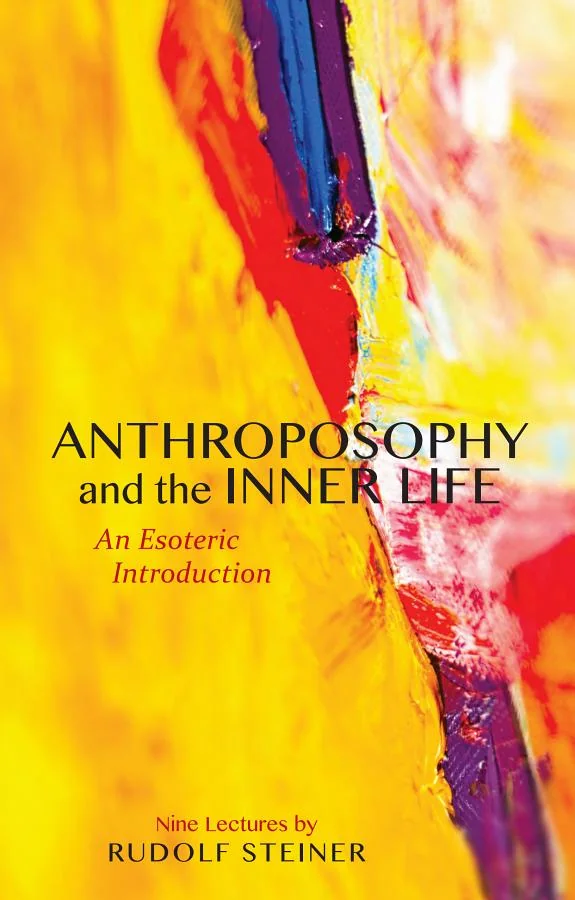
Anthroposophy and the Inner Life
 76
76

Anthroposophy and the Inner Life
Steiner’s "Anthroposophy and the Inner Life" attempts to distill the essence of spiritual science for those already immersed in its study, paradoxically labeling it an 'introductory course.' The strength lies in its attempt to ground abstract concepts in personal experience, particularly evident in the discussions around the transformation of thinking. However, the dense philosophical language, while characteristic of Steiner, can present a significant hurdle for even dedicated readers. A particularly illuminating passage discusses the 'etheric body' not as a mere concept, but as a tangible, albeit non-physical, aspect of human vitality that can be consciously perceived. The limitation is that the lectures, given their specific context post-Foundation Meeting, might feel somewhat insular to newcomers. It is a demanding but potentially rewarding exploration for the persistent student.
📝 Description
76
Rudolf Steiner delivered these nine lectures in Dornach, Switzerland, in early 1925.
Rudolf Steiner's "Anthroposophy and the Inner Life" consists of nine lectures given in Dornach, Switzerland, in the first months of 1925. Steiner presented them as an introductory course, despite their intended audience's familiarity with spiritual science. These talks followed the critical Christmas Foundation Meeting, which saw the reconstitution of the Anthroposophical Society. Steiner aimed to restate the central ideas of anthroposophy from a personal, experiential viewpoint. He condensed complex spiritual ideas into concepts people could focus on inwardly.
The book suits individuals already involved with anthroposophical studies. It also calls to those wanting a more personal connection to spiritual science, moving beyond academic or theoretical learning. Readers interested in applying spiritual insights to their own inner growth and awareness will find value here. Those working to shift from intellectual understanding to direct spiritual experience will recognize these challenges. The lectures emerged after Steiner refounded the Anthroposophical Society and sought to give its members a fresh basis for their work.
These lectures belong to the tradition of spiritual science established by Rudolf Steiner. Coming shortly after the 1924 Christmas Foundation Meeting, they sought to clarify anthroposophy's core principles for its members. The lectures address how individuals can cultivate inner perception and transform their consciousness. This work aligns with Steiner's broader project of making spiritual realities understandable and accessible through rigorous inner work, distinguishing his approach from other contemporary spiritual movements.
💡 Why Read This Book?
• You will learn to differentiate between intellectual apprehension and direct spiritual perception of concepts like the 'etheric body,' moving beyond theoretical knowledge to cultivate inner awareness as presented in the 1925 lectures. • You will gain a practical method for transforming your own thinking processes, learning how conscious, directed thought can become a tool for spiritual investigation, as Steiner outlines in this specific series of talks. • You will understand the Anthroposophical Society's renewed direction after the 1924-1925 Christmas Foundation Meeting, grasping how Steiner aimed to reorient spiritual science towards personal experience and inner development.
⭐ Reader Reviews
Honest opinions from readers who have explored this book.
❓ Frequently Asked Questions
When were the lectures in 'Anthroposophy and the Inner Life' originally delivered?
The lectures were delivered in Dornach, Switzerland, in early 1925, shortly after the significant Christmas Foundation Meeting.
Who is Rudolf Steiner?
Rudolf Steiner (1861-1925) was an Austrian philosopher, esotericist, and social reformer, the founder of anthroposophy and the Waldorf education movement.
What is Anthroposophy?
Anthroposophy, or spiritual science, is a philosophical and spiritual movement founded by Rudolf Steiner, seeking to understand the spiritual nature of reality and humanity's place within it through methods of inner development.
What was the significance of the Christmas Foundation Meeting in 1924?
The Christmas Foundation Meeting marked a renewal and refounding of the Anthroposophical Society by Rudolf Steiner, aiming to provide a new basis for its future development.
Are these lectures suitable for absolute beginners to spiritual science?
While Steiner described them as introductory, they are best suited for those with some familiarity with anthroposophical concepts, as they build upon existing knowledge of spiritual science.
Where is Dornach associated with Steiner's work?
Dornach, Switzerland, is home to the Goetheanum, the center for the Anthroposophical Society, designed by Steiner himself, and was a primary location for his lectures and activities.
🔮 Key Themes & Symbolism
Consciousness and Inner Perception
The work emphasizes cultivating a direct, conscious perception of spiritual realities, moving beyond mere intellectual belief. Steiner guides the reader to understand how the development of inner faculties—thinking, feeling, and will—can open pathways to experiencing the spiritual world. This involves transforming ordinary consciousness into a tool for spiritual investigation, rather than relying on external dogma or passive reception of information. The focus is on the active, inner work required to perceive subtle realities.
The Nature of Spiritual Science
Steiner presents anthroposophy not as a fixed doctrine but as a 'spiritual science'—a path of knowledge accessible through rigorous inner training and disciplined observation. He distinguishes this from both materialistic science and traditional religious or occult beliefs. The lectures articulate how spiritual science offers verifiable insights into the cosmos and human evolution, accessible through the development of higher cognitive capacities, particularly a transformed, spiritually-aware thinking.
Personal Transformation
A central theme is the radical transformation of the individual. Steiner illustrates how engaging with spiritual knowledge is not merely an intellectual exercise but a process that reshapes the human being. This involves purifying the soul, strengthening the will, and developing a moral and spiritual capacity to grasp and enact higher truths. The lectures are framed as a guide for this profound inner metamorphosis, essential for working through the challenges of modern existence.
The Refounding of the Anthroposophical Society
The lectures are situated in the context of the renewed Anthroposophical Society following the Christmas Foundation Meeting of 1924-1925. Steiner uses this series to communicate the essential spirit and direction of the refounded society. It underscores a shift towards a more grounded, experientially-based understanding of spiritual science, emphasizing individual responsibility and the practical application of spiritual insights in everyday life and societal endeavors.
💬 Memorable Quotes
Direct passages from the work, attributed to the author.
“The lectures reformulate the content of spiritual science from a condensed, personal, experiential point of view.”
— This highlights the book's core aim: to make complex spiritual concepts accessible through direct inner experience, rather than abstract theory, especially for those already studying anthroposophy.
“Steiner described these lectures as an ‘introductory course’.”
— This statement, despite the advanced audience, indicates Steiner's intention to present fundamental aspects of spiritual science in a foundational, yet deeply personal, manner.
“Given shortly after the Christmas Foundation Meeting.”
— This temporal marker is crucial, situating the lectures within a significant period of renewal and reorientation for the Anthroposophical Society under Steiner's leadership.
“They were given to an audience that had been studying anthroposophy... for many years.”
— This context reveals that the 'introduction' is not to the existence of anthroposophy, but to a specific, distilled experiential approach to its core principles.
“What Steiner presented in his fundamental works.”
— This implies that the lectures serve as a concentrated distillation or a new perspective on the essential ideas previously laid out in Steiner's more extensive writings.
🌙 Esoteric Significance
Tradition
This work is firmly rooted in the Western esoteric tradition, specifically as developed by Rudolf Steiner through Anthroposophy. It departs from earlier Theosophical formulations by emphasizing a scientific methodology for spiritual investigation and focusing on the evolution of human consciousness through individual effort, rather than adherence to a fixed cosmology or pantheon. It builds upon Hermetic principles of 'as above, so below' but internalizes them, making the human being the primary locus of spiritual exploration.
Symbolism
While not overtly symbolic in the manner of Kabbalah or Hermetic texts, the lectures use concepts that function symbolically for the inner life. The 'etheric body,' for instance, represents the vital forces of life and growth, a bridge between the physical and the purely spiritual. 'Spiritual science' itself acts as a symbol for a disciplined, conscious approach to understanding higher realities, distinct from faith or fantasy. The very act of 'inner work' becomes a symbol for the transformative processes undertaken by the individual.
Modern Relevance
Contemporary thinkers and practitioners in fields like Waldorf education, biodynamic agriculture, and anthroposophical medicine continue to draw directly from Steiner's teachings. The emphasis on conscious thinking and the practical cultivation of inner perception remains relevant for individuals seeking holistic approaches to personal development, education, and understanding the relationship between the material and spiritual worlds in an increasingly secularized age.
👥 Who Should Read This Book
• Students of Rudolf Steiner's work seeking to deepen their understanding of core anthroposophical concepts through a personal, experiential lens. • Individuals interested in esoteric traditions who want to explore a path of spiritual knowledge grounded in disciplined inner development rather than dogma. • Philosophers and researchers of consciousness studies looking for alternative frameworks that integrate spiritual experience with cognitive development.
📜 Historical Context
Delivered in Dornach, Switzerland, in early 1925, "Anthroposophy and the Inner Life" emerged in the immediate wake of Rudolf Steiner's refounding of the Anthroposophical Society at the Christmas Foundation Meeting (1924-1925). This event marked a significant institutional and spiritual renewal. Steiner, an immensely prolific figure, was synthesizing decades of work. The intellectual climate of the early 20th century was marked by burgeoning scientific materialism, yet also by a powerful counter-current of spiritual inquiry, exemplified by movements like Theosophy, with which Steiner had a complex relationship, having broken from it in 1913. While contemporaries like C.G. Jung explored the psyche through analytical psychology, Steiner focused on developing a verifiable 'spiritual science' accessible through inner discipline. These lectures, though aimed at experienced students, were intended to offer a re-grounded, personal perspective on anthroposophy's core tenets, emphasizing direct inner experience over abstract philosophy.
📔 Journal Prompts
The transformation of thinking as a spiritual exercise.
Perceiving the etheric body through conscious imagination.
The role of the Christmas Foundation Meeting in renewing spiritual science.
Bridging the gap between the physical and spiritual realms via inner work.
The personal significance of anthroposophy after years of study.
🗂️ Glossary
Anthroposophy
A spiritual philosophy founded by Rudolf Steiner, also referred to as 'spiritual science,' seeking knowledge of the spiritual world through disciplined inner development and conscious perception.
Spiritual Science
Steiner's term for Anthroposophy, emphasizing its methodical and verifiable approach to exploring spiritual realities, analogous to natural science but operating through inner faculties.
Etheric Body
In anthroposophical terms, the life or formative forces that organize the physical body; a subtle body responsible for growth, healing, and vitality, distinct from the physical organism.
Christmas Foundation Meeting
A central gathering in late 1924/early 1925 where Rudolf Steiner refounded and reorganized the Anthroposophical Society, setting a new direction for its future work.
Inner Life
Refers to the subjective area of human consciousness, including thoughts, feelings, will, and the development of spiritual perception and faculties.
Dornach
A town in Switzerland associated with Rudolf Steiner, notable for the Goetheanum, the center of the Anthroposophical Society, and the location where many of Steiner's lectures were given.
Spiritual Faculties
Higher cognitive and perceptive abilities that Steiner believed could be developed through specific inner training, enabling individuals to perceive spiritual realities.
This book appears in 1 collection
🔮 Readers Also Liked
Browse all →






From the “Anthroposophy” Collection
View all →




More Free Theosophy & Anthroposophy Books
View all →