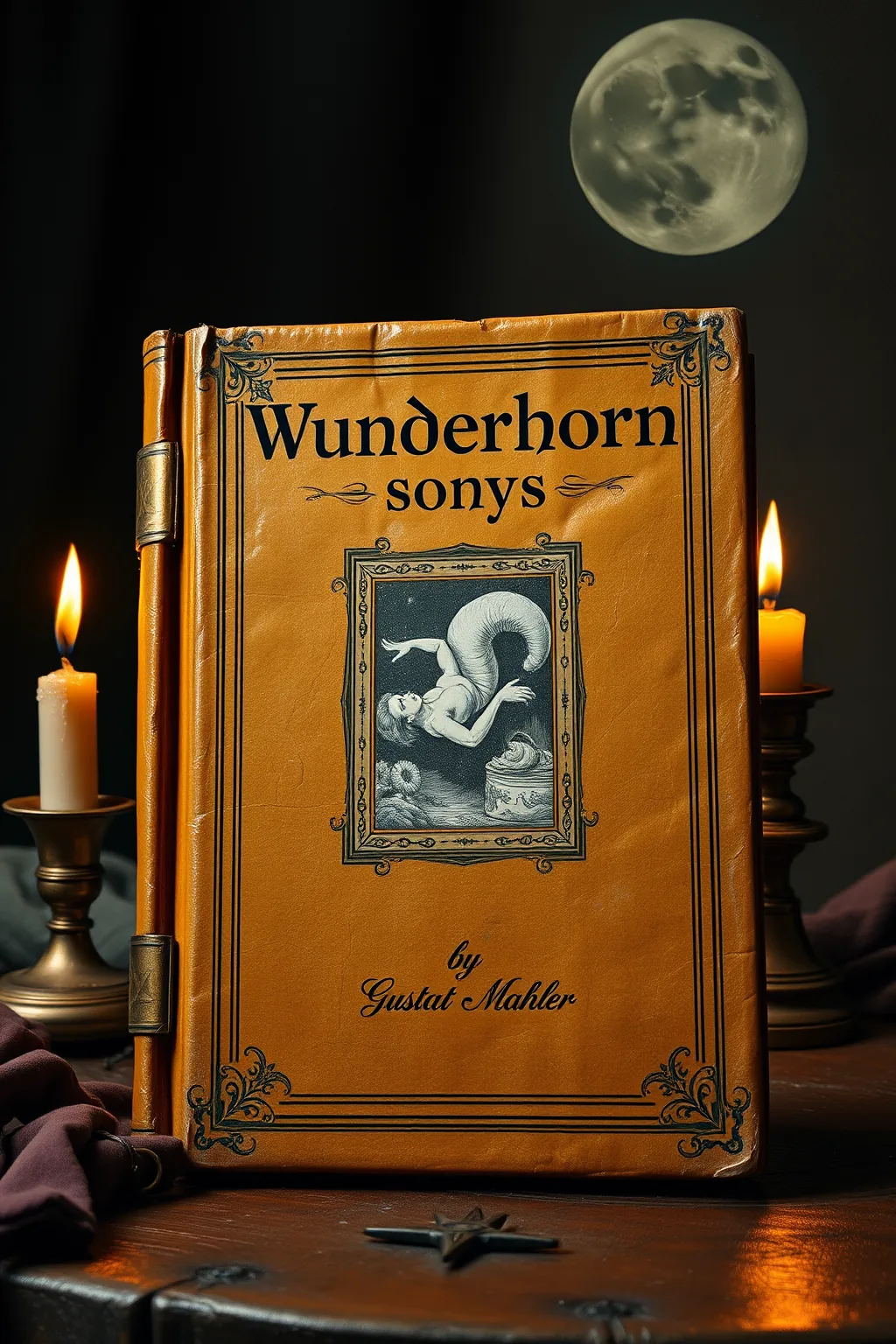
Wunderhorn songs
 61
61

Wunderhorn songs

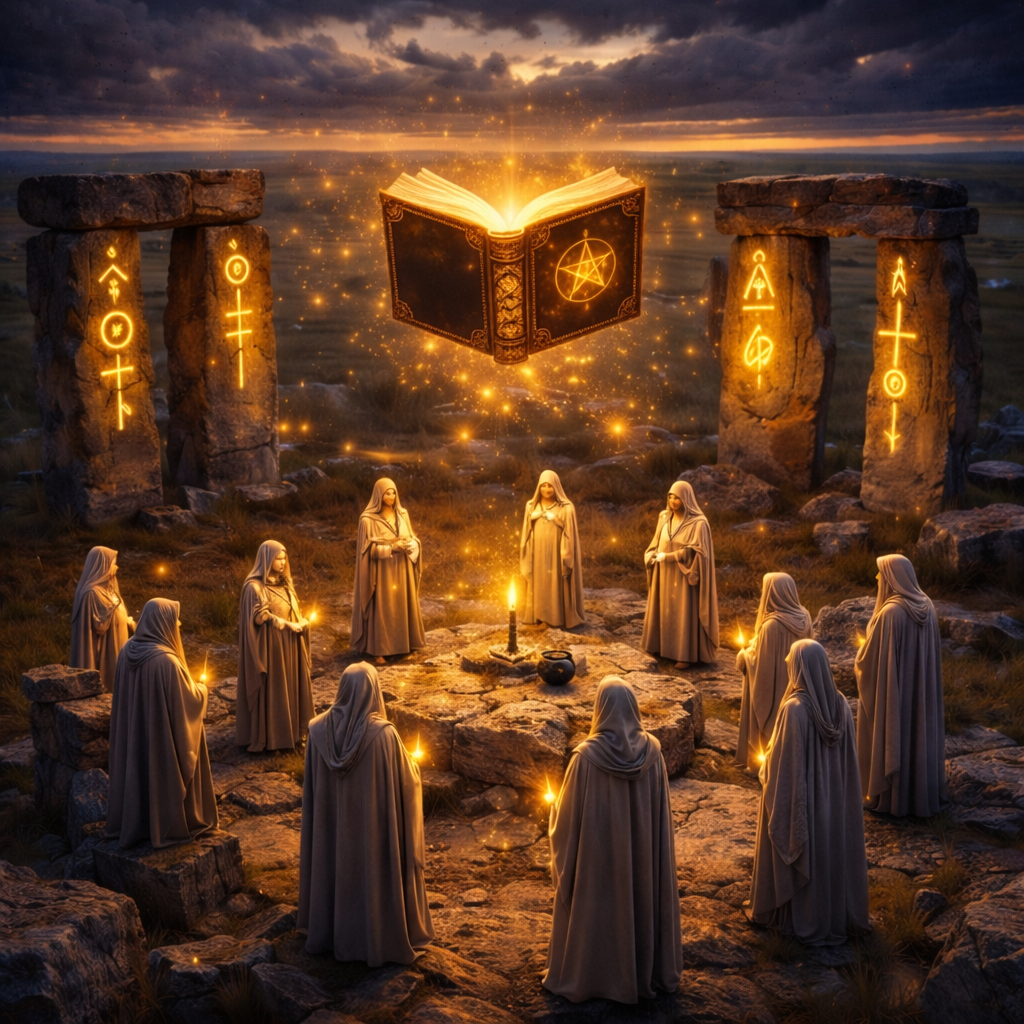

Marcus Thorne (Esoteric Sciences Reviewer) — Gustav Mahler's 'Wunderhorn' songs represent a seminal work for esoteric scholars. Far beyond their folk origins, these pieces possess a potent symbolic language, exploring themes of elemental forces, mortality, and cosmic interconnectedness with an almost shamanic intensity. Mahler’s orchestration masterfully evokes archetypal landscapes, imbuing the vocal lines with a deep spiritual resonance. This collection is indispensable for those who perceive music as a vehicle for hidden knowledge and a catalyst for inner transformation. It is a profound exploration of the human condition through a lens of mystical inquiry, offering insights that resonate with ancient wisdom traditions. Essential for practitioners and academics alike.
📝 Description
61
Gustav Mahler set poems from Des Knaben Wunderhorn to music between 1892 and 1901.
Gustav Mahler's settings of poems from Des Knaben Wunderhorn are more than simple art songs. Mahler chose texts from a collection of German folk poetry, imbuing them with his distinctive musical language. These songs address themes of nature, love, the supernatural, and the human condition.
The orchestral accompaniment is integral, often creating a rich atmosphere that supports the dramatic and emotional content of the vocal lines. Mahler's settings can be seen as miniature dramatic scenes, capturing a range of human experience from joy and innocence to sorrow and death. The collection invites close listening to appreciate the interplay between voice and orchestra and the psychological depth of the texts.
Mahler's engagement with folk poetry and his profound musical interpretations align with certain esoteric interests in the late 19th and early 20th centuries. Composers and thinkers of the period often sought to connect with elemental forces and universal truths through art, drawing on myth, folklore, and spiritual philosophy. Mahler's 'Wunderhorn' songs, with their evocation of primal themes and their sophisticated musical realization, can be viewed as a modern artistic response to an enduring human desire to understand existence through symbolic expression.
💡 Why Read This Book?
Uncover the hidden symbolism woven into Mahler's 'Wunderhorn' songs, a journey into sonic mysticism. Ideal for seekers of esoteric wisdom, musicians exploring the metaphysical dimensions of sound, and scholars of occult symbolism. These compositions offer a unique portal to understanding archetypal forces and the deeper currents of existence, transforming musical appreciation into a profound spiritual practice.
⭐ Reader Reviews
Honest opinions from readers who have explored this book.
❓ Frequently Asked Questions
What is the primary esoteric theme explored in Mahler's 'Wunderhorn' songs?
The primary esoteric theme is the cyclical nature of existence, encompassing life, death, rebirth, and the profound interconnectedness of humanity with the natural and cosmic realms, often presented through archetypal imagery.
How does Mahler's orchestration contribute to the mystical quality of these songs?
Mahler's masterful orchestration acts as a powerful symbolic language, creating atmospheric textures and dramatic contrasts that evoke elemental forces, spiritual journeys, and the vastness of the cosmos, enhancing the listener's immersive experience.
Are these songs intended for experienced practitioners of esoteric arts?
While experienced practitioners will find deep layers of meaning, the songs are accessible to anyone with an open mind and a curiosity for the mystical. They serve as an excellent introduction to the esoteric interpretations of music.
What makes the 'Wunderhorn' songs relevant to modern metaphysical studies?
Their timeless exploration of universal human experiences—love, loss, nature's power, and spiritual longing—resonates deeply with modern metaphysical inquiries into consciousness, symbolism, and the search for meaning in a complex world.
Can listening to these songs induce altered states of consciousness?
The rich, evocative musicality and profound thematic content can certainly facilitate a contemplative state, fostering introspection and potentially leading to expanded awareness or a sense of transcendental experience for receptive listeners.
🔮 Key Themes & Symbolism
The Alchemical Transformation of Folk Wisdom
Mahler's 'Wunderhorn' songs are not mere transcriptions of folk poetry; they are potent alchemical distillations. He transmutes the raw material of peasant life, folklore, and ancient legends into a sophisticated symbolic language. This process mirrors the alchemical major work, where base elements are refined into spiritual gold. The songs explore themes of elemental forces—earth, water, fire, air—and their interaction with the human psyche, suggesting a profound cosmic order underlying perceived chaos. Each melody and harmonic progression acts as a catalyst, encouraging the listener's own inner transformation and a deeper understanding of life's cyclical journey.
Elements of the Astral Plane and the Collective Unconscious
The 'Wunderhorn' songs resonate with frequencies from the astral plane and the collective unconscious, as described by Carl Jung. Mahler taps into universal archetypes—the hero, the maiden, the wise elder, the trickster—imbued with potent symbolic meaning. The music conjures visions of ethereal landscapes, spectral presences, and profound emotional states that transcend individual experience. Listeners are invited to commune with these primordial energies, recognizing their presence within their own psyche. This collection serves as a sonic map to the hidden currents of human consciousness, revealing the interconnectedness of all beings through shared myth and ancestral memory.
The Dance of Life and Death: A Cosmic Ballet
Central to the 'Wunderhorn' songs is the intricate and often paradoxical relationship between life and death. Mahler presents this duality not as an ending, but as an integral part of a continuous cosmic ballet. Songs depicting vibrant life are juxtaposed with those contemplating mortality, decay, and the supernatural, creating a profound dialogue between the ephemeral and the eternal. This exploration mirrors ancient mystery traditions that sought to understand the secrets of existence through confronting the shadow of death. The music encourages a reconciliation with our mortal nature, revealing the beauty and wisdom inherent in the full spectrum of being.
💬 Memorable Quotes
Direct passages from the work, attributed to the author.
“The world is a wondrous thing, but death is its master.”
— This poignant line captures the song's contemplation of mortality, suggesting that while life possesses beauty and marvels, the ultimate reality and guiding force is death, a common theme in esoteric thought exploring the cycle of existence.
“My heart is full of longing, but I cannot find my way.”
— This expresses a universal spiritual quest, the yearning for transcendence or understanding, yet acknowledging the confusion and obstacles encountered on the path, reflecting the challenges faced in esoteric journeys.
“The stars shine down, but darkness hides the truth.”
— This evokes the contrast between outer illumination and inner obscurity, hinting at the hidden knowledge and veiled realities that esoteric traditions seek to unveil beyond superficial appearances.
“A bird sings sweetly, but its song is of sorrow.”
— This illustrates the duality of experience, where outward beauty or joy can mask underlying pain or melancholy, a profound observation on the complexities of the human condition and the nature of perceived reality.
“We are but dreams within a greater dream.”
— This philosophical statement speaks to the illusory nature of reality and the concept of a higher consciousness or cosmic mind, a recurring motif in mystical and metaphysical philosophies about the nature of existence.
🌙 Esoteric Significance
Tradition
The 'Wunderhorn' songs resonate deeply with Hermeticism and Neoplatonism, exploring themes of cosmic unity, the divine spark within humanity, and the cyclical nature of creation and dissolution. They echo the Gnostic pursuit of hidden knowledge and the alchemical understanding of transformation. The emphasis on elemental forces and archetypal imagery aligns with traditions that view the universe as a living, breathing entity imbued with spiritual significance, accessible through intuition and symbolic interpretation.
Symbolism
Key symbols abound: the natural world (flowers, birds, rivers, stars) represents primal forces and cosmic order; celestial bodies often signify destiny and higher influences; human figures embody archetypes of love, loss, and spiritual journeying. Death is frequently depicted not as an end, but as a transition or guardian of hidden wisdom. The 'magic horn' itself can be seen as a symbol of divine inspiration or the conduit through which spiritual truths are revealed, transforming the mundane into the mystical.
Modern Relevance
In an era often characterized by disconnection and existential searching, Mahler's 'Wunderhorn' songs offer a profound connection to timeless human experiences and universal truths. Their exploration of life's inherent dualities—joy and sorrow, light and shadow—provides a framework for navigating contemporary challenges with greater depth and resilience. For modern seekers, the songs serve as a sonic meditation, fostering introspection, emotional catharsis, and an expanded awareness of the interconnectedness of all things, reminding us of the profound spiritual dimensions that lie beneath the surface of everyday reality.
👥 Who Should Read This Book
This collection is essential for the discerning seeker of esoteric wisdom, offering a profound journey into the metaphysical dimensions of music. Scholars of occultism, comparative mythology, and musicology will find rich material for analysis and interpretation, revealing layers of symbolism often overlooked. Musicians and composers will discover new avenues for understanding sound as a spiritual medium and a tool for accessing deeper states of consciousness. Beginners to esoteric studies will find a captivating and accessible entry point, experiencing profound truths through the evocative power of Mahler's artistry. Practitioners of spiritual disciplines may find inspiration for contemplation and meditation.
📜 Historical Context
Composed primarily between 1892 and 1901, Gustav Mahler's 'Wunderhorn' songs emerged during a period of profound cultural and intellectual ferment in Europe. The late 19th and early 20th centuries were marked by a burgeoning interest in the occult, spiritualism, and esoteric philosophies, as a reaction against the perceived materialism of the age. Thinkers like Nietzsche challenged traditional values, while movements like Theosophy and Anthroposophy sought deeper spiritual truths. Mahler, working within this milieu, drew inspiration from 'Des Knaben Wunderhorn' (The Boy's Magic Horn), a collection of German folk poetry that resonated with ancient myths, elemental forces, and a profound sense of the numinous. His music, with its grand scale, emotional intensity, and symbolic depth, became a powerful vehicle for expressing these complex ideas, bridging the gap between folk sensibility and sophisticated metaphysical exploration.
📔 Journal Prompts
Reflect on a moment when the beauty of nature felt overwhelmingly spiritual. How did this experience connect you to a larger cosmic order?
Consider the archetype of the 'hero' or 'maiden' in the 'Wunderhorn' songs. How do these archetypes manifest in your own life or in the collective consciousness?
Explore the concept of 'duality' as presented in the songs (e.g., life/death, joy/sorrow). How do you integrate these apparent opposites within yourself?
Imagine the 'magic horn' as a symbol of inner guidance. What message would it call forth from your deepest self at this moment?
How does the music of Mahler's 'Wunderhorn' songs evoke specific emotions or imagery for you? Journal these sensory and emotional responses as a form of sonic divination.
🗂️ Glossary
Archetype
A universal, primordial image, symbol, or pattern of thought derived from the collective unconscious, representing fundamental human experiences and motivations.
Hermeticism
An ancient philosophical and religious tradition based on writings attributed to Hermes Trismegistus, emphasizing esoteric knowledge, the interconnectedness of all things, and the pursuit of spiritual enlightenment.
Neoplatonism
A philosophical system founded by Plotinus, which interprets Plato's philosophy in a mystical and spiritual way, emphasizing the concept of 'The One' as the ultimate source of all existence.
Numinous
Describing something that evokes a sense of the divine or supernatural, inspiring awe, wonder, and sometimes dread; a powerful spiritual presence.
Collective Unconscious
A concept introduced by Carl Jung, referring to a shared reservoir of memories, instincts, and archetypes that are inherited and common to all humanity, influencing thought and behavior.
This book appears in 2 collections
🔮 Readers Also Liked
Browse all →






More by Gustav Mahler
All books →From the “Ceremonial Magic” Collection
View all →







More Free Magic & Ritual Books
View all →