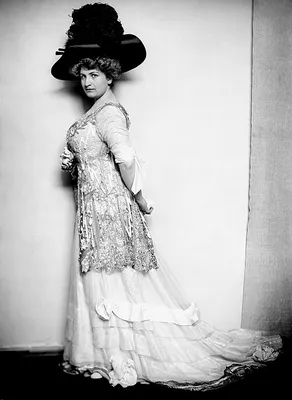
Gustav Mahler
Gustav Mahler was a Romantic composer and conductor, bridging 19th-century tradition and 20th-century modernism, whose music gained posthumous acclaim.
Gustav Mahler (1860-1911) was a prominent Romantic composer and a leading conductor of his era. His musical output served as a crucial link between the established traditions of the 19th century and the emerging modernist movements of the early 20th century. While his prowess as a conductor was widely recognized during his lifetime, his own compositions experienced periods of neglect and were even banned in parts of Europe during the Nazi regime. Following World War II, Mahler's music was rediscovered and has since achieved widespread popularity, making him one of the most frequently performed and recorded composers today.
Born in Bohemia to Jewish parents of modest background, Mahler showed early musical talent. He studied at the Vienna Conservatory and embarked on a successful conducting career, eventually becoming director of the Vienna Court Opera. His tenure there, despite facing anti-Semitic opposition, solidified his reputation as a master conductor, particularly of Wagner, Mozart, and Tchaikovsky. Mahler's compositional output was limited due to his demanding conducting career, with most works requiring large orchestral forces and vocal soloists. These compositions were often met with controversy but some, like his Second and Eighth Symphonies, achieved significant success.
Early Life and Influences
Born in Bohemia in 1860 to a German-speaking Jewish family of humble origins, Gustav Mahler displayed exceptional musical aptitude from a young age. His early exposure to street songs, folk melodies, and military music in Jihlava, where his father established a business, significantly shaped his musical vocabulary. Mahler's prodigious talent was evident early on; he was considered a local Wunderkind, giving his first public performance at age ten. Despite his musical gifts, his academic performance was inconsistent. A profound personal loss, the death of his younger brother Ernst, inspired Mahler to begin composing an opera as a memorial. His formal musical education at the Vienna Conservatory, where he studied piano and composition, exposed him to influential figures like Anton Bruckner and Richard Wagner, though he was never formally a pupil of Bruckner. His studies were marked by both dedication and a degree of rebellion, yet he persevered, receiving a diploma but not the highest honors.
Philosophical and Metaphysical Underpinnings
Mahler's intellectual development extended beyond music, with significant engagement in German philosophy. Through his friendship with Siegfried Lipiner, he delved into the works of thinkers such as Arthur Schopenhauer and Friedrich Nietzsche. These philosophical explorations profoundly influenced Mahler's worldview and, consequently, his musical compositions. His biographers note that his mind was occupied not only with musical ideas but also with complex philosophical and metaphysical questions. This intellectual depth is often seen as a key element contributing to the profound emotional and existential themes present in his music, which resonated with a later generation grappling with similar modern concerns. His music frequently grapples with profound questions of life, death, and the human condition, reflecting these philosophical inquiries.
Conducting Career and Compositional Sacrifices
Mahler's professional life was largely defined by his demanding career as a conductor, which often necessitated composing as a secondary, part-time activity. He held a series of increasingly important conducting posts across Europe, including a significant tenure as director of the Vienna Court Opera. This position required him to convert to Catholicism, a move that, along with his innovative productions and high standards, drew both admiration and anti-Semitic criticism. His conducting achievements were substantial, particularly in his interpretations of Wagner, Mozart, and Tchaikovsky. Despite the constraints, Mahler produced significant works, typically for large orchestras, choirs, and soloists. His compositions, often controversial at their premieres, included symphonies and song cycles that explored vast emotional and philosophical landscapes. His later years saw him briefly direct the Metropolitan Opera and the New York Philharmonic.
Key Ideas
- Bridging 19th-century Romanticism and 20th-century modernism in music.
- The influence of philosophy and metaphysics on musical composition.
- The tension between a public career as a conductor and private life as a composer.
- Music as an expression of profound existential and emotional themes.
Books by Gustav Mahler
2 free public domain books · Read online or download