Persuasionsof the witch's craft
 62
62

Persuasionsof the witch's craft


Silas Hawthorne (Hermetic Studies Editor) — T. M. Luhrmann's "Persuasions of the Witch's Craft" is a triumph of scholarly yet deeply empathetic ethnography. It transcends mere observation, offering an intimate window into the lived experience of modern witches. Luhrmann masterfully unpacks the cognitive and social mechanisms that imbue ritual with power, revealing the profound psychological and philosophical underpinnings of magical belief. Her analysis of the 'making' of the witch – the internalization of belief and the cultivation of new ways of perceiving – is particularly insightful. This book is indispensable for serious students of contemporary occultism, anthropology of religion, and anyone seeking to understand the enduring human drive for agency and meaning through ritualistic engagement. It is a foundational text for grasping the modern magical landscape.
📝 Description
62
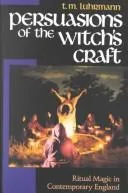
T. M. Luhrmann's 2005 book examines the lived experience of contemporary witches.
In "Persuasions of the Witch's Craft," T. M. Luhrmann presents an ethnographic account of modern witchcraft. The book focuses on the personal transformations and the logic behind the practices of individuals who identify as witches. Luhrmann details how belief systems and ritual work together, shaping how these practitioners understand and interact with their world. She observes how individuals construct personal cosmologies through their engagement with magical traditions.
The research demystifies witchcraft, showing it as a human pursuit to influence and comprehend existence. The book examines how ancient practices continue to adapt and endure. It looks at the appeal of magic and its role in personal empowerment and shifting individual perception. Luhrmann's work offers insight into how individuals create meaning and agency through esoteric practices.
This book fits within the anthropological study of modern esoteric movements. It examines how individuals engage with magical traditions outside of mainstream religion. Luhrmann's work is situated in a lineage of scholarship that looks at the social and psychological aspects of belief systems. It considers how people make sense of the world through practices that often operate on the fringes of accepted knowledge, focusing on the lived reality of practitioners rather than purely theoretical or historical aspects of magic.
💡 Why Read This Book?
Unravel the intricate tapestry of contemporary witchcraft and its psychological underpinnings. Discover how belief transforms perception and empowers individuals to shape their reality. Ideal for seekers of hidden knowledge, scholars of religion and magic, and practitioners interested in the philosophical depth of their craft. Gain a nuanced understanding of ritual's transformative power.
⭐ Reader Reviews
Honest opinions from readers who have explored this book.
❓ Frequently Asked Questions
What is the primary focus of 'Persuasions of the Witch's Craft'?
The book offers an in-depth ethnographic study of contemporary witchcraft, exploring the beliefs, practices, and transformative experiences of modern witches. It delves into how individuals come to believe in and practice magic.
Is this book suitable for beginners in witchcraft?
Yes, while scholarly, the book provides a comprehensive and accessible introduction to the anthropological and psychological dimensions of modern witchcraft, making it valuable for beginners seeking understanding.
What makes this book unique compared to other books on witchcraft?
Luhrmann's approach is unique in its rigorous ethnographic methodology combined with a profound exploration of the cognitive and subjective experiences of practitioners, moving beyond mere description to analysis of belief formation.
Does the book discuss specific spells or rituals?
While it examines the *process* and *impact* of rituals, its primary focus is on the anthropological and psychological aspects of witchcraft belief and practice, rather than a how-to guide for specific spells.
What academic fields does this book appeal to?
It is highly relevant to anthropology, sociology of religion, psychology of belief, religious studies, and the academic study of occultism and witchcraft.
🔮 Key Themes & Symbolism
The Making of a Witch: Belief and Transformation
This theme explores the profound process by which individuals become witches, focusing on the internalization of belief systems and the cultivation of new perceptual frameworks. Luhrmann illustrates how 'becoming' is an active, ongoing construction, shaped by community, experience, and a conscious engagement with the esoteric. It highlights the psychological and cognitive shifts that underpin magical practice, revealing witchcraft not as an inherent identity but as a cultivated way of being in the world.
The Power of Ritual and Symbolism
Central to the book is an examination of how ritual and symbolism function within modern witchcraft. Luhrmann unveils the intricate ways in which symbolic actions and objects are imbued with meaning and power, serving as conduits for transformation and agency. The book details how practitioners engage with archetypal energies and cosmological frameworks through carefully constructed rituals, demonstrating the potent link between embodied practice and subjective experience.
Ethnography of the Esoteric
Luhrmann's groundbreaking ethnographic approach provides an intimate and respectful portrayal of contemporary witches. By immersing herself in their communities and practices, she clarifies the esoteric, presenting it as a living, evolving phenomenon. This theme emphasizes the importance of understanding magical traditions from the inside out, highlighting the human element and the search for meaning, connection, and power that drives these practices.
💬 Memorable Quotes
Direct passages from the work, attributed to the author.
“The world is made more real by the practices we bring to it.”
— This highlights the power of ritual and focused intention to shape one's reality. It posits that through magical practice, individuals can actively construct and deepen their experience of the world, making the intangible tangible.
“To be a witch is to learn to inhabit a different kind of reality.”
— This speaks to the profound cognitive and perceptual shift experienced by practitioners. It implies that witchcraft involves not just external actions, but an internal realignment with a cosmologically distinct worldview.
“The body remembers what the mind learns.”
— This emphasizes the embodied nature of esoteric knowledge and practice. It suggests that deep learning in magic occurs not only intellectually but also through physical engagement and somatic experience.
“We persuade ourselves into existence.”
— A powerful statement on self-creation and agency. It suggests that through conviction, ritual, and focused intent, individuals can actively shape their identity and reality, essentially 'persuading' themselves into being who they aspire to be.
💡 Key Ideas
Editorial paraphrase of the work's core concepts — not direct quotes.
Magic is not just about belief, but about what belief makes you do.
This quote underscores the active, performative nature of magic. It suggests that true engagement with witchcraft lies not just in intellectual assent, but in the tangible actions and altered perceptions that belief engenders, leading to real-world effects.
🌙 Esoteric Significance
Tradition
While focusing on contemporary Western witchcraft, Luhrmann's work touches upon perennial esoteric themes found across various magical traditions. It explores the universal human drive for agency, the construction of personal cosmologies, and the transformative power of ritual. The book implicitly connects with hermetic principles of 'as above, so below,' and the idea of magical influence through sympathetic resonance, albeit within a modern, often eclectic, framework.
Symbolism
The book explores the strong symbolism inherent in witchcraft, examining how symbols function not merely as representations but as active conduits of power and meaning. It explores archetypal imagery, the symbolic language of nature, and the personal mythologies that practitioners construct. Luhrmann illustrates how the manipulation and understanding of these symbols are central to the witch's craft, enabling them to access and direct energies both internal and external.
Modern Relevance
In an era increasingly characterized by existential questioning and a search for personal meaning, "Persuasions of the Witch's Craft" offers useful insights into how individuals can actively shape their realities. It provides a framework for understanding the enduring appeal of magic as a means of empowerment, self-discovery, and connection to something larger than oneself. The book remains highly relevant for its exploration of belief formation, ritual efficacy, and the human desire for agency in a complex world.
👥 Who Should Read This Book
This book is an invaluable resource for a diverse audience. For **beginners** in witchcraft, it offers a foundational understanding of the 'why' and 'how' behind magical practice, explaining common perceptions. **Scholars** of anthropology, sociology, and religious studies will find its rigorous ethnographic methodology and theoretical insights compelling. **Seekers** of esoteric knowledge will appreciate its exploration of belief systems and alternative spiritualities. **Practitioners** of witchcraft and related traditions will find validation and deeper comprehension of their own experiences, uncovering the psychological and philosophical dimensions of their craft.
📜 Historical Context
Published in 1989, T. M. Luhrmann's "Persuasions of the Witch's Craft" emerged during a period of resurgent interest in Neopaganism and contemporary witchcraft in the Western world. The late 20th century saw a diversification of spiritual paths, with many individuals seeking alternatives to mainstream religions. Witchcraft, in its various forms, gained visibility as a legitimate spiritual and personal practice, moving from the shadows of folklore into academic and public discourse. Luhrmann's work coincided with a growing academic interest in the anthropology of religion and the study of new religious movements. Her anthropological approach provided a crucial lens through which to understand these evolving spiritual landscapes, offering a nuanced perspective on the lived realities of practitioners and the social and psychological forces at play.
📔 Journal Prompts
Reflect on a time when your belief in something significantly altered your perception or actions.
How does ritual, in any form, influence your sense of reality or power?
Consider the symbols that hold personal power for you. What meanings do they carry?
In what ways do you actively 'persuade' yourself into becoming the person you wish to be?
Explore the concept of 'inhabiting a different kind of reality.' What might this mean for your daily life?
🗂️ Glossary
Ethnography
The scientific description of the customs of individual peoples and cultures. In this context, it involves immersive, firsthand study of witchcraft communities and practices.
Cosmology
The study of the origin, evolution, and eventual fate of the universe. In witchcraft, it refers to the practitioner's understanding of the fundamental nature of reality, its forces, and their place within it.
Ritual
A set of actions, often symbolic and conventionalized, performed in a prescribed order. In witchcraft, rituals are used to achieve specific intentions, connect with spiritual forces, or effect personal transformation.
Agency
The capacity of individuals to act independently and to make their own free choices. In magic, agency is often sought and cultivated through practice.
Esoteric
Intended for or likely to be understood by only a small number of people with a specialized knowledge or interest. Pertaining to hidden or secret knowledge.
This book appears in 2 collections
🔮 Readers Also Liked
Browse all →




More by T. M. Luhrmann
All books →
From the “Ritual Magic” Collection
View all →







More Free Magic & Ritual Books
View all →