Egypt under the Pharaohs
 81
81

Egypt under the Pharaohs
Brugsch's monumental 1891 account offers an unparalleled window into the state of Egyptological understanding at the close of the 19th century. His deep engagement with hieroglyphic texts, particularly evident in his discussions of dynastic lineage and religious cosmology, provides a scholarly rigor that still impresses. A strength lies in his systematic cataloging of pharaonic reigns and the cultural practices associated with them. However, the work's reliance on inscriptions and artifacts accessible over a century ago means it lacks the benefit of later, more nuanced archaeological interpretations and discoveries, such as those at Amarna. The detailed exploration of the god Horus's lineage, for instance, is presented with the confidence of then-current scholarship but could be supplemented with more modern contextualization. Brugsch's work is a vital historical document for understanding Egyptology's development.
📝 Description
81
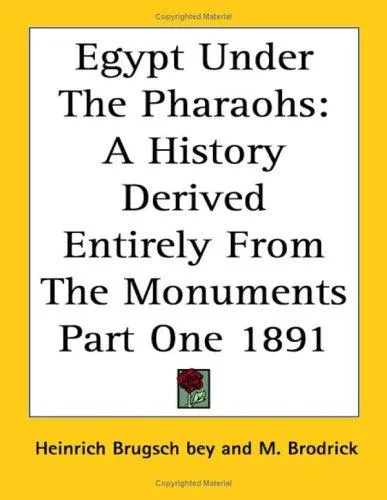
Heinrich Karl Brugsch's 1891 work reconstructs ancient Egyptian life from hieroglyphs.
Heinrich Karl Brugsch published "Egypt under the Pharaohs" in 1891, a comprehensive historical and cultural survey of ancient Egypt. Brugsch, a significant figure in 19th-century Egyptology, aimed to recreate the lives, beliefs, and social structures of Egyptians from early dynasties to the Roman era. He based his work on hieroglyphic inscriptions and archaeological evidence available at the time. The book provides a detailed account of Egyptian civilization, focusing on religious practices, administrative systems, and dynastic histories.
This text emerged during a period of intense discovery in Egyptology, spurred by increased access to antiquities and advances in decipherment. Brugsch's work synthesized existing knowledge, though later findings would modify some of its interpretations. It speaks to readers interested in the factual basis of Egyptian society and the academic currents of late 19th-century Egyptology.
While Brugsch's work is primarily a scholarly historical account, its deep dive into the religious beliefs, pantheon, and funerary rites of ancient Egypt touches upon themes that resonate within esoteric traditions. The detailed examination of deities like Ra, Osiris, and Isis, their associated myths, and the significance of the afterlife in Egyptian thought, offers a window into a worldview where the spiritual and material were closely intertwined. For those interested in the historical roots of Western esoteric thought, the Egyptian religious system forms a crucial, often cited, component.
💡 Why Read This Book?
• Gain a comprehensive understanding of ancient Egyptian religious beliefs and practices, including the roles of key deities like Osiris and Isis, as detailed in Brugsch's extensive analysis of inscriptions. • Learn about the structure of ancient Egyptian society and governance, from the divine pharaoh down to the administrative classes, as explored through the lens of available 19th-century scholarship. • Appreciate the historical development of Egyptology by engaging with a seminal work from 1891, understanding the methodologies and discoveries that shaped the field before major later excavations.
⭐ Reader Reviews
Honest opinions from readers who have explored this book.
❓ Frequently Asked Questions
When was Egypt under the Pharaohs first published?
Egypt under the Pharaohs by Heinrich Karl Brugsch was first published in 1891, reflecting the state of Egyptological knowledge at the end of the 19th century.
What are the main subjects covered in Brugsch's Egypt under the Pharaohs?
The book covers ancient Egyptian history, religion, mythology, social structures, administrative systems, and funerary practices, based on hieroglyphic inscriptions and archaeological evidence from that era.
Who was Heinrich Karl Brugsch?
Heinrich Karl Brugsch (1827-1894) was a renowned German Egyptologist and philologist, celebrated for his contributions to deciphering hieroglyphs and his extensive fieldwork in Egypt.
Does this book include information on Egyptian gods and goddesses?
Yes, the work provides detailed explorations of the Egyptian pantheon, discussing major deities like Ra, Osiris, and Isis, and their associated myths and cults.
Is Egypt under the Pharaohs still considered a primary source for modern Egyptology?
While invaluable for understanding the history of Egyptology and 19th-century scholarship, it is considered a historical source. Modern Egyptology incorporates later archaeological findings and revised interpretations.
What is the significance of the 'Pharaohs' in the book's title?
The title emphasizes the central role of the pharaohs as divine rulers and the focus of the historical narrative, covering the dynasties that governed ancient Egypt.
🔮 Key Themes & Symbolism
Dynastic History and Rulers
Brugsch reconstructs the lineage and reigns of Egyptian pharaohs, meticulously detailing the succession of dynasties from early periods to the Greco-Roman era. This historical framework is built upon his deep knowledge of inscriptions found on monuments and papyri. The work emphasizes the pharaoh's role not just as a political leader but as a divine intermediary, central to cosmic order and societal stability. It highlights key rulers and their contributions to Egyptian civilization as understood in the late 19th century.
Egyptian Pantheon and Mythology
The book offers an extensive examination of the Egyptian pantheon, detailing the attributes, myths, and cultic practices associated with numerous gods and goddesses. Brugsch explores the relationships between deities like Ra, Osiris, Isis, and Horus, explaining their significance in daily life and the afterlife. This section is crucial for understanding the religious underpinnings of Egyptian society and the rituals performed to maintain favor with the divine.
Religious and Funerary Practices
A significant portion of the work is dedicated to the intricate religious beliefs and funerary customs of ancient Egypt. Brugsch describes the process of mummification, the construction of tombs, and the purpose of funerary texts such as the Book of the Dead. These practices underscore the Egyptian preoccupation with the afterlife and the elaborate preparations undertaken to ensure a successful transition and eternal existence.
Social and Administrative Structures
Beyond religious and royal matters, Brugsch analyzes the societal organization of ancient Egypt. He describes the hierarchical structure, from the pharaoh and priesthood down to scribes, artisans, and agricultural laborers. The administrative apparatus, including taxation, law, and the management of resources, is explored through inscriptions that shed light on the functioning of the Egyptian state and economy.
💬 Memorable Quotes
Direct passages from the work, attributed to the author.
“The pharaoh was the representative of the gods on earth.”
— This interpretation highlights the divine mandate and intermediary role attributed to the Egyptian king, positioning him as the crucial link between the celestial realm and the mortal world in Brugsch's view.
“Hieroglyphic inscriptions provide the primary key to understanding Egyptian history.”
— This reflects Brugsch's scholarly approach, underscoring his reliance on epigraphic evidence as the most authoritative source for reconstructing the ancient Egyptian past.
“The Egyptian pantheon was complex and ever-evolving.”
— This captures the nuanced understanding of Egyptian religion presented in the work, acknowledging the multitude of deities and the dynamic nature of their worship and mythology.
“Ancient Egyptian society was highly stratified.”
— This interpretation points to Brugsch's detailed depiction of the Egyptian social hierarchy, from the ruling elite to the common populace, as revealed by administrative records and tomb inscriptions.
💡 Key Ideas
Editorial paraphrase of the work's core concepts — not direct quotes.
The afterlife was a central concern for all Egyptians.
This paraphrased concept emphasizes the pervasive influence of eschatological beliefs on Egyptian culture, art, and daily life, as Brugsch observed through their funerary monuments and texts.
🌙 Esoteric Significance
Tradition
While Brugsch's work is primarily a historical and archaeological text, its detailed examination of Egyptian religion and mythology has been a significant source for Western esoteric traditions, particularly Theosophy and later New Age spiritualities. These traditions often draw upon ancient Egyptian cosmology, symbolism, and the concept of divine rulers as models for spiritual hierarchies and universal laws. Brugsch's meticulous cataloging of deities, rituals, and afterlife beliefs provided foundational material for esotericists seeking to understand ancient wisdom.
Symbolism
Key symbols explored include the Ankh, representing life and immortality, and the Eye of Horus (Udjat), a potent symbol of protection, royal power, and good health. Brugsch's work details their prevalence in religious art, amulets, and funerary contexts, providing the basis for esoteric interpretations that imbue these symbols with profound metaphysical meaning related to spiritual rebirth and cosmic balance.
Modern Relevance
Contemporary practitioners of Hermeticism, Wicca, and various forms of modern paganism continue to reference Brugsch's foundational research when exploring Egyptian deities, rituals, and magical practices. His detailed descriptions of the Egyptian pantheon and the structure of their religious observances offer a historical grounding for modern reconstructions and personal spiritual work with Egyptian archetypes.
👥 Who Should Read This Book
• Students of comparative religion and ancient history seeking foundational texts on Egyptian beliefs and societal structures before major 20th-century archaeological revisions. • Researchers interested in the history of Egyptology and the intellectual climate of the late 19th century, understanding how scholars like Brugsch interpreted ancient evidence. • Individuals exploring Western esoteric traditions who wish to connect with the historical scholarly sources that informed later mystical interpretations of ancient Egypt.
📜 Historical Context
Heinrich Karl Brugsch's Egypt under the Pharaohs, first published in 1891, emerged from a period of intense European fascination with and scholarly pursuit of ancient Egypt. The late 19th century saw significant archaeological expeditions, most notably by Flinders Petrie, who introduced more systematic excavation methods. Brugsch, however, was a product of an earlier generation of philologists and epigraphers, deeply invested in deciphering hieroglyphic texts. His work represented a major synthesis of the knowledge accumulated up to that point, aiming for a comprehensive historical narrative. The intellectual climate was influenced by burgeoning nationalistic interests and a desire to connect European heritage with ancient civilizations. While Brugsch’s work was widely respected, it existed alongside evolving archaeological methodologies and competing interpretations of Egyptian history and religion, particularly from figures like Auguste Mariette, who focused more on museum curation and early excavations.
📔 Journal Prompts
The role of Ra as the sun deity, its cosmic significance.
Osiris's myth and its connection to Egyptian notions of resurrection.
The function of the Book of the Dead in funerary rites.
Reflect on the concept of Ma'at and its societal implications.
The pharaoh's dual role as earthly ruler and divine representative.
🗂️ Glossary
Pharaoh
The title given to the rulers of ancient Egypt, considered divine kings who held absolute political and religious authority.
Hieroglyphs
The formal writing system used in ancient Egypt, combining logographic, syllabic, and alphabetic elements.
Pantheon
The collective gods and goddesses of a particular religion or mythology, in this case, ancient Egypt.
Osiris
An ancient Egyptian deity associated with the afterlife, the underworld, and resurrection, often depicted as a mummified man.
Isis
A major Egyptian goddess, wife of Osiris and mother of Horus, known for her magic, healing, and maternal qualities.
Book of the Dead
An ancient Egyptian funerary text, containing spells intended to assist a dead person's journey through the underworld.
Ma'at
The ancient Egyptian concept of truth, balance, order, law, morality, and justice, often personified as a goddess.
🔮 Readers Also Liked
Browse all →








More by Heinrich Karl Brugsch
All books →
More Free Occult Philosophy Books
View all →