Book Of Alchemy

 74
74

Book Of Alchemy

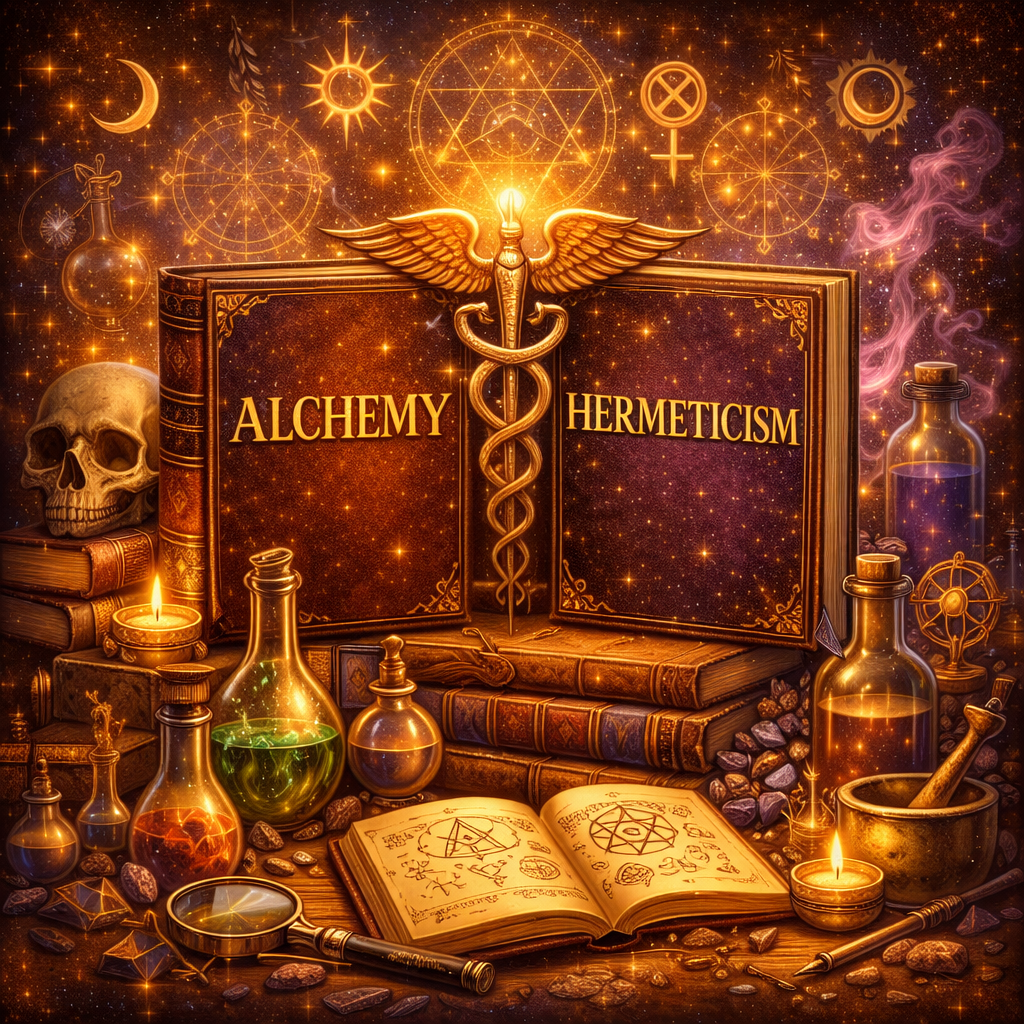

The 'Book of Alchemy' is a treasure trove of esoteric knowledge, meticulously researched and beautifully presented. For modern seekers of the occult, this book serves as both an introduction and a deep dive into the mystical practices of alchemy and Hermeticism. The author's ability to weave historical context with practical applications makes this text invaluable. The detailed explanations of alchemical symbols, rituals, and philosophical underpinnings provide a comprehensive guide for those looking to explore the spiritual and transformative potential of alchemy. This book is a must-read for anyone interested in the esoteric arts and the hidden wisdom of the ages.
📝 Description
74
The 'Book of Alchemy' details the Great Work, a process of spiritual transformation alongside material change.
This text, often linked to Geber and admired by Fulcanelli, discusses the alchemical process. It examines the philosophical ideas behind transforming base metals into gold, but also the purification of the human spirit. The book presents alchemical symbolism and practices within a context of hidden knowledge. Its content suggests that the physical operations of alchemy mirror an inner, spiritual development.
The 'Book of Alchemy' aims to guide those interested in esoteric philosophy and occult practices. It treats the alchemical quest as a path to understanding deeper realities. The work is structured to reveal alchemical secrets, encouraging a thorough study of its allegorical language. Readers will find discussions on the stages of the Great Work and the symbolism associated with them.
The 'Book of Alchemy' belongs to the Western esoteric tradition, specifically the Hermetic and alchemical streams that flourished from antiquity through the Renaissance and beyond. This tradition seeks hidden knowledge about the cosmos and humanity's place within it, often through symbolic interpretation of natural processes and ancient texts. Alchemy, in this context, was not merely proto chemistry but a spiritual discipline aimed at achieving perfection, both material and spiritual. The text reflects this dual nature, focusing on the 'philosophy of metals' and the 'spiritualization of the soul'.
💡 Why Read This Book?
Reading 'The Book of Alchemy' today offers a unique opportunity to connect with ancient wisdom and apply it to modern life. This book provides readers with practical techniques for spiritual growth, personal transformation, and a deeper understanding of the universe. Whether you are seeking to unlock the secrets of the Philosopher's Stone or simply curious about the mystical practices of alchemy, this text offers valuable insights and guidance. It is a timeless resource for anyone on a spiritual journey or interested in the occult.
⭐ Reader Reviews
Honest opinions from readers who have explored this book.
❓ Frequently Asked Questions
What is the primary focus of 'The Book of Alchemy'?
The primary focus of 'The Book of Alchemy' is the ancient art of alchemy and Hermeticism, exploring both the historical context and practical applications of these mystical practices.
Who should read this book?
This book is ideal for anyone interested in the occult, esoteric knowledge, and spiritual transformation. It is suitable for both beginners and experienced practitioners.
What can readers expect to gain from this book?
Readers can expect to gain a deep understanding of alchemical principles, historical context, and practical techniques for spiritual growth and personal transformation.
🔮 Key Themes & Symbolism
Transmutation of Matter and Spirit
The 'Book of Alchemy' explores the alchemical process of transmutation, not just as a physical transformation of base metals into gold, but as a spiritual journey. This theme looks at the symbolic significance of alchemy, where the alchemist seeks to purify and transform their inner self, achieving spiritual enlightenment.
Symbolism and Hidden Knowledge
Alchemy is rich in symbolism, and the 'Book of Alchemy' is no exception. It looks at the hidden meanings behind alchemical symbols, revealing a world of esoteric knowledge that has been passed down through the ages. This theme is crucial for understanding the deeper layers of alchemical practices and their philosophical underpinnings.
Philosophical Significance of Alchemy
Beyond its practical applications, alchemy holds profound philosophical significance. The 'Book of Alchemy' examines the philosophical questions and spiritual insights that arise from the alchemical process. This theme is essential for those seeking to understand the broader implications of alchemy in the area of spirituality and metaphysics.
💬 Memorable Quotes
Direct passages from the work, attributed to the author.
“As above, so below.”
— This principle underscores the interconnectedness of the macrocosm and microcosm, a fundamental concept in alchemy.
“The alchemist's laboratory is a temple of transformation.”
— This statement reflects the sacred and mystical nature of alchemical practices, where the laboratory becomes a place of spiritual alchemy.
💡 Key Ideas
Editorial paraphrase of the work's core concepts — not direct quotes.
The alchemist seeks not gold, but the philosopher's stone.
This quote highlights the true goal of alchemy, which is spiritual transformation rather than material gain.
The journey of alchemy is one of purification and enlightenment.
This quote emphasizes the spiritual journey that alchemists undertake, seeking to purify their souls and achieve higher states of consciousness.
The true alchemist works in silence and secrecy.
This quote underscores the esoteric nature of alchemy, which is often shrouded in mystery and hidden from the uninitiated.
🌙 Esoteric Significance
Tradition
The 'Book of Alchemy' belongs to the Hermetic tradition, which emphasizes the unity of all things and the transformative power of knowledge. This tradition, rooted in the teachings of Hermes Trismegistus, views alchemy as a path to spiritual enlightenment and the attainment of divine wisdom.
Symbolism
Key symbols in the 'Book of Alchemy' include the philosopher's stone, the ouroboros, and the alchemical laboratory. The philosopher's stone represents the ultimate goal of alchemy, while the ouroboros symbolizes the eternal cycle of life, death, and rebirth. The laboratory is a sacred space where the alchemist performs their transformative work.
Modern Relevance
Today, the 'Book of Alchemy' remains relevant to practitioners of the occult and seekers of spiritual transformation. Modern alchemists draw upon its insights to explore the symbolic and philosophical dimensions of alchemy, using its principles to guide their own spiritual journeys.
👥 Who Should Read This Book
Beginners in alchemy may find the 'Book of Alchemy' challenging due to its esoteric nature, but it is an invaluable resource for those with some background in the subject. Scholars of hermetic philosophy will appreciate its useful insights into alchemical symbolism and its philosophical significance. Spiritual seekers and practitioners of the occult will find it a rich source of hidden knowledge and transformative wisdom. In summary, this book is best suited for those who are serious about exploring the mysteries of alchemy and its spiritual implications.
📜 Historical Context
The 'Book of Alchemy' was written during a time when alchemy was at the forefront of both scientific and spiritual inquiry. In the medieval and Renaissance periods, alchemists were revered for their pursuit of the philosopher's stone, a substance believed to transform base metals into gold and grant immortality. The book's influence can be seen in the works of later alchemists and hermetic philosophers, who drew upon its insights to further their own studies. It played a central role in shaping the esoteric traditions that continue to inspire seekers of hidden knowledge today.
📔 Journal Prompts
How does the concept of transmutation in alchemy relate to personal spiritual growth?
What are the key symbols in the 'Book of Alchemy' and what do they represent?
In what ways can the principles of alchemy be applied to modern spiritual practices?
How does the 'Book of Alchemy' challenge or reinforce your understanding of spiritual transformation?
What insights from the 'Book of Alchemy' can you incorporate into your own spiritual journey?
🗂️ Glossary
Philosopher's Stone
The ultimate goal of alchemy, believed to transform base metals into gold and grant immortality.
Ouroboros
A symbol of the eternal cycle of life, death, and rebirth, often depicted as a serpent swallowing its own tail.
Hermetic Tradition
A philosophical and spiritual tradition based on the teachings of Hermes Trismegistus, emphasizing the unity of all things.
Alchemical Laboratory
A sacred space where the alchemist performs their transformative work, both physical and spiritual.
Spiritual Alchemy
The process of spiritual transformation and enlightenment through alchemical practices and symbolism.
This book appears in 3 collections
🔮 Readers Also Liked
Browse all →








From the “Hermeticism” Collection
View all →








More Free Alchemy & Hermeticism Books
View all →