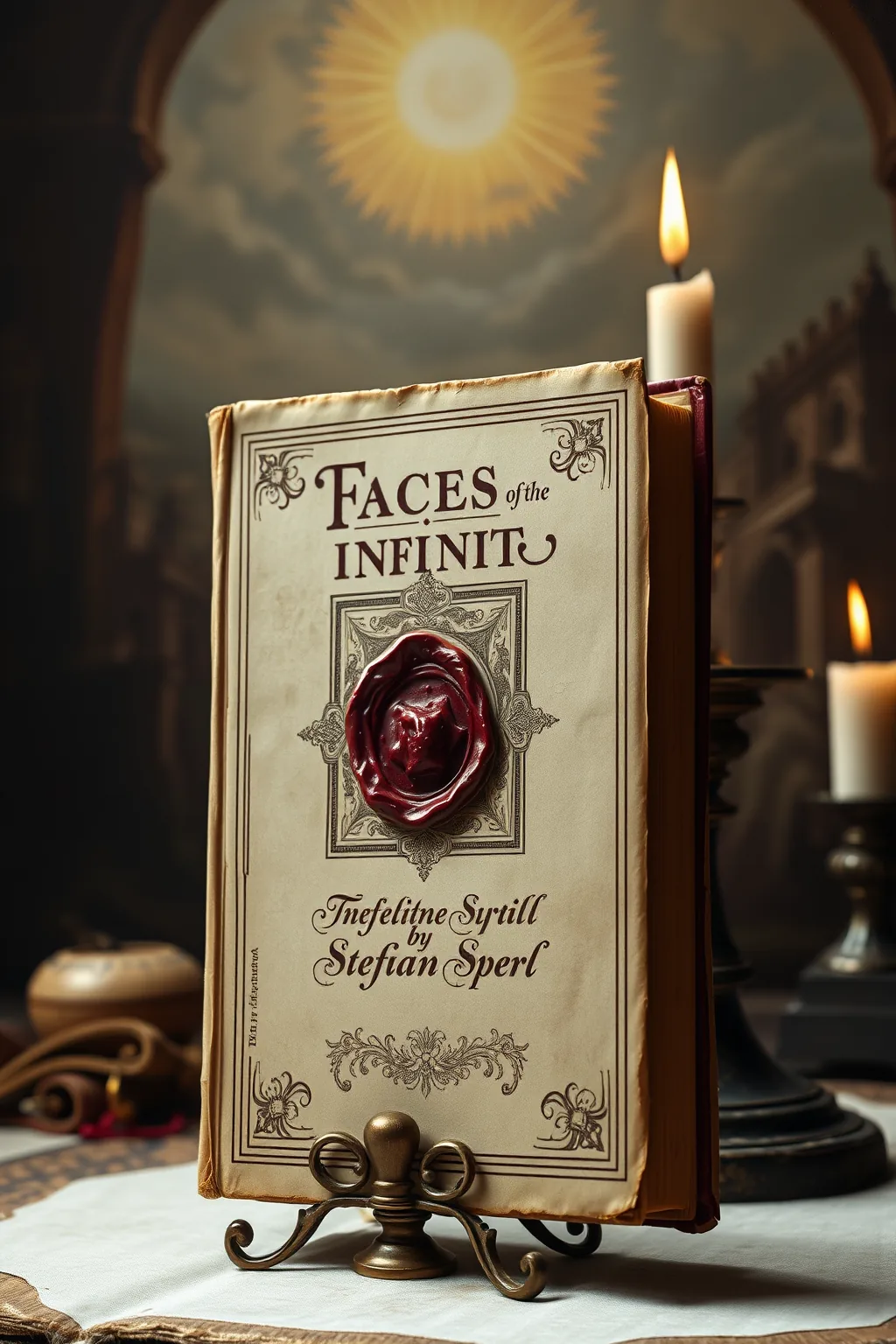
Faces of the Infinite
 79
79

Faces of the Infinite
Stefan Sperl and Yorgos Dedes' "Faces of the Infinite" offers a compelling argument for the persistent presence of Neoplatonic thought across a wide swathe of Mediterranean cultures. The authors meticulously document how concepts originating with figures like Plotinus, and later refined by thinkers such as Porphyry, permeated not just theological discourse but also the lyrical expressions of poets writing in Greek, Arabic, Hebrew, and other regional languages. A particular strength lies in the detailed linguistic analysis, demonstrating how philosophical terms were adapted and reinterpreted. While the book excels in tracing this intellectual lineage, a limitation could be its density for readers unfamiliar with Neoplatonic terminology; some sections require focused attention. The discussion of how the concept of *henosis* (union with the One) found varied poetic expression, from Christian mystics to Sufi poets, is a standout example of the book's analytical power. This work serves as a vital scholarly resource for understanding the deep, often unseen, connections within the esoteric and religious heritage of the Mediterranean.
📝 Description
79
First published in 2011, Faces of the Infinite connects Neoplatonism to Mediterranean religious and literary works.
Stefan Sperl and Yorgos Dedes trace the influence of Neoplatonic philosophy throughout the Mediterranean world. The book begins with the philosophy's roots in Late Antiquity, showing how it later affected Christian, Jewish, and Muslim thinkers and poets. It details how Plotinus's 3rd century CE metaphysical system influenced late antique and medieval thought.
The authors demonstrate how abstract concepts like the One, emanation, the intelligible realm, and the soul's ascent were adapted. These ideas moved from philosophical discourse into poetic imagery and theological doctrines across various cultures and languages. The book highlights Neoplatonism's adaptability and lasting appeal in shaping intellectual and artistic expression.
This work examines Neoplatonism, a philosophical system that profoundly shaped esoteric traditions. Originating with Plotinus, its ideas about the divine One, spiritual hierarchies, and the soul's journey toward the ultimate reality resonated deeply within mystical and philosophical circles. Many later esoteric movements, particularly those focused on gnosis or spiritual liberation, drew upon Neoplatonic concepts for their cosmology and anthropology. The book's focus on its transmission through religious and literary channels reveals how these esoteric underpinnings permeated diverse cultural expressions.
💡 Why Read This Book?
• Gain a nuanced understanding of Neoplatonism's impact on poetry and theology, moving beyond its purely philosophical origins, as exemplified by its reception in works like Plotinus' "Enneads" (circa 3rd century CE). • Discover concrete examples of cross-cultural intellectual exchange, tracing how ideas from Late Antiquity were reinterpreted in seven distinct languages representative of the Mediterranean region. • Appreciate the specific ways abstract Neoplatonic concepts, such as the soul's ascent, were translated into evocative imagery by poets across different religious traditions.
⭐ Reader Reviews
Honest opinions from readers who have explored this book.
❓ Frequently Asked Questions
What is Neoplatonism and why is it relevant to "Faces of the Infinite"?
Neoplatonism is a philosophical system originating with Plotinus in the 3rd century CE, which posits a hierarchical reality emanating from an ultimate, transcendent 'One'. Its relevance to the book lies in its pervasive influence on Christian, Jewish, and Muslim thought and poetry across the Mediterranean.
Which languages are covered in the book's analysis?
The book analyzes the influence of Neoplatonic thought in seven representative languages of the Mediterranean region, demonstrating its broad cultural reach from Late Antiquity onwards.
Who were some key figures associated with Neoplatonism?
Key figures include Plotinus, the founder of Neoplatonism; Porphyry, his student and editor; and later thinkers like Iamblichus and Proclus, who further developed the system in Late Antiquity.
How did Neoplatonism influence religious traditions?
Neoplatonism provided a metaphysical framework that helped Christian theologians articulate doctrines of God's transcendence, Jewish mystics conceptualize divine emanations, and Muslim philosophers explore the nature of creation and the soul's return to its source.
What is the time period discussed in "Faces of the Infinite"?
The book spans from Late Antiquity, the period when Neoplatonism flourished, through to the modern period, examining the enduring legacy of these ideas in poetry and religious thought.
Does the book focus only on philosophy, or does it include literary analysis?
The book uniquely integrates philosophical analysis with literary study, examining how Neoplatonic concepts were expressed and transformed in the poetry written in various Mediterranean languages.
🔮 Key Themes & Symbolism
The One and Emanation
This theme centers on the Neoplatonic cosmological model, beginning with the ultimate, ineffable source, 'The One,' from which all reality emanates in a descending hierarchy. The work explores how this concept of divine outpouring and return shaped theological doctrines and mystical aspirations across different cultures, influencing ideas about creation and the ultimate goal of the spiritual life.
The Soul's Ascent
Central to Neoplatonic thought is the journey of the soul from the material world back to its divine origin. "Faces of the Infinite" investigates how this concept of spiritual purification and ascent was articulated in poetic language, examining metaphors of homecoming, illumination, and union with the divine found in diverse Mediterranean literatures.
Cross-Cultural Transmission
A core focus is the remarkable cross-cultural relevance and transmission of Neoplatonic ideas. The book demonstrates how a philosophical system developed in late antique Greece became a shared intellectual heritage, adapted and reinterpreted by Christian, Jewish, and Muslim thinkers and poets writing in distinct linguistic and cultural contexts.
Poetic Metaphysics
This theme examines the intersection of abstract philosophical concepts and poetic expression. Sperl and Dedes show how poets used imagery, metaphor, and lyrical form to convey complex Neoplatonic ideas about the nature of reality, the divine, and human consciousness, highlighting the evocative power of this philosophical tradition.
💬 Memorable Quotes
Direct passages from the work, attributed to the author.
“The verses composed from Late Antiquity to the modern period, in the seven languages which were representative of the region, confirm the cross-cultural relevance of Neoplatonic thought.”
— This statement expresses the book's central thesis: Neoplatonism was not confined to academic philosophy but actively shaped the creative output of poets across a wide geographical and temporal span.
“Neoplatonism forms part of the common heritage of the Christian, Jewish, and Muslim cultures of the greater Mediterranean.”
— This highlights the foundational role of Neoplatonic ideas in bridging and unifying diverse religious and intellectual traditions within a specific cultural sphere, suggesting a shared philosophical underpinning.
“Interpretation: The book argues that Neoplatonic concepts were not merely adopted but were creatively re-expressed through the specific idioms and stylistic conventions of different linguistic traditions.”
— This interpretation emphasizes the dynamic nature of intellectual history, showing how philosophical ideas are transformed and given new life when they enter different cultural and artistic contexts.
“Interpretation: The study traces the lineage of Neoplatonic thought from its classical origins through its sustained presence in medieval and even modern literary works.”
— This suggests the book's chronological scope, detailing the enduring legacy and evolution of Neoplatonic philosophy over centuries, moving beyond its initial formulation.
💡 Key Ideas
Editorial paraphrase of the work's core concepts — not direct quotes.
Interpretation: The pervasive influence of Neoplatonism is evident in the way poets grappled with themes of transcendence, the nature of the divine, and the soul's journey.
This paraphrase points to the specific thematic areas where Neoplatonic influence is most readily observed in the poetry analyzed, focusing on core metaphysical and spiritual concerns.
🌙 Esoteric Significance
Tradition
The work engages directly with the Neoplatonic tradition, a foundational lineage within Western esotericism. It positions Neoplatonism not merely as a historical philosophical school but as a living current that informed mystical and contemplative practices. By tracing its influence through Christian, Jewish, and Muslim poets, it highlights its role in shaping diverse esoteric paths that sought union with the divine.
Symbolism
Key symbols explored include 'The One,' representing ultimate unity and transcendence, often described apophatically. The concept of 'emanation' symbolizes the divine outflow creating the cosmos, akin to light radiating from a source. The 'soul's ascent' is a potent motif, symbolizing the spiritual journey of returning to the divine source through purification and contemplation.
Modern Relevance
Contemporary thinkers and practitioners in fields ranging from comparative mysticism to depth psychology continue to draw upon Neoplatonic concepts. Its ideas about consciousness, the nature of reality, and the pursuit of spiritual union remain relevant for modern esoteric groups and individuals exploring the perennial philosophy, influencing practices that emphasize inner transformation and connection to a higher order.
👥 Who Should Read This Book
• Scholars of comparative religion and intellectual history seeking to understand the shared philosophical underpinnings of Mediterranean monotheistic traditions. • Students of philosophy and literature interested in the transmission and transformation of ideas across cultures and languages from Late Antiquity onwards. • Mystics and spiritual seekers interested in the Neoplatonic roots of contemplative practices and the poetic expression of spiritual experience.
📜 Historical Context
"Faces of the Infinite" looks at the intellectual currents of Late Antiquity, a period (roughly 3rd to 6th centuries CE) marked by the synthesis of Greek philosophy with emerging religious movements. Neoplatonism, initiated by Plotinus and further developed by figures like Porphyry and Iamblichus, offered a sophisticated metaphysical framework that profoundly influenced subsequent philosophical and theological developments. The book situates this tradition within the broader Mediterranean context, where it became a crucial element in the intellectual heritage shared by Christianity, Judaism, and Islam. This era also saw the flourishing of Gnosticism and the consolidation of Christian doctrine, creating a complex intellectual landscape where Neoplatonic ideas were both adopted and contested. The work's focus on poetic expression demonstrates how these abstract philosophical concepts permeated cultural life, reaching beyond scholarly circles to inspire artists and mystics across different linguistic communities.
📔 Journal Prompts
The concept of 'The One' in Neoplatonism: How does this idea of ultimate, ineffable unity compare to other ultimate principles you have encountered?
The soul's ascent: Reflect on a personal experience that mirrors the Neoplatonic idea of returning to a divine source.
Poetic interpretations of emanation: Analyze a poem or verse that you feel vividly expresses the concept of creation flowing from a divine origin.
Cross-cultural transmission: Identify another philosophical or religious idea that has traveled and been transformed across distinct cultural boundaries.
Late Antiquity's intellectual landscape: Consider the challenges and opportunities for thinkers like Plotinus in synthesizing existing philosophical traditions with new spiritual impulses.
🗂️ Glossary
Neoplatonism
A philosophical system originating with Plotinus (3rd century CE), characterized by a hierarchical cosmology emanating from an ultimate, ineffable 'One,' and emphasizing the soul's journey back to this divine source.
The One
The ultimate principle in Neoplatonism; an absolute, transcendent, and ineffable source of all existence from which reality emanates.
Emanation
The Neoplatonic concept describing the process by which reality flows or 'emanates' from The One in a descending series of hypostases (e.g., Intellect, Soul), without diminishing The One itself.
Soul's Ascent
The Neoplatonic spiritual path, involving purification and contemplation, aimed at guiding the individual soul back to its divine origin in The One.
Late Antiquity
The historical period roughly spanning the 3rd to 6th centuries CE, characterized by significant philosophical, religious, and cultural transformations in the Mediterranean world.
Hypostasis
In Neoplatonism, a distinct level or principle in the hierarchy of reality that emanates from The One, such as Nous (Intellect) and Psyche (Soul).
Henosis
The Neoplatonic goal of mystical union or unification with The One.