Prophecy
 73
73

Prophecy
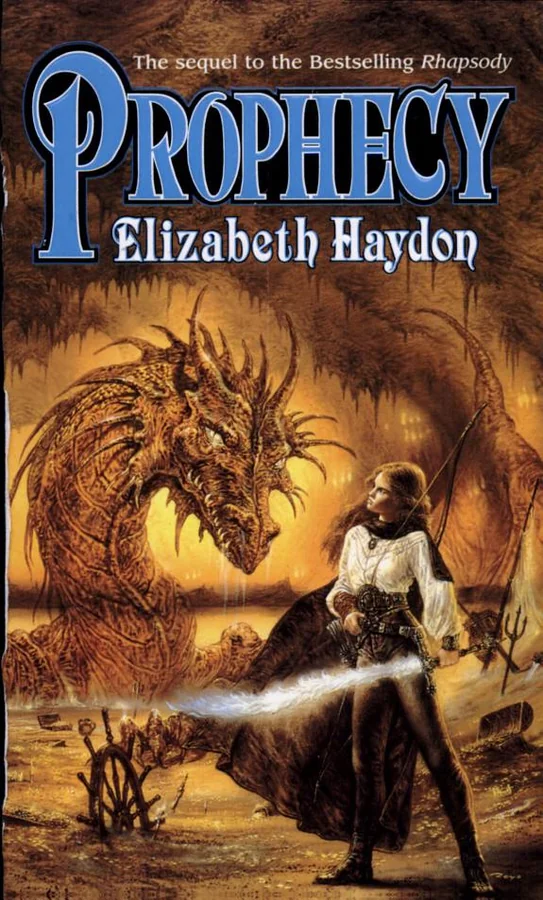
Elizabeth Haydon’s *Prophecy* attempts to blend intricate world-building with the weighty concept of foreknowledge. The narrative, set in a secondary world, follows characters grappling with visions of the future. While Haydon demonstrates a facility for crafting detailed settings, the pacing occasionally falters under the weight of exposition, particularly in the early chapters. A notable strength is the exploration of how characters react when their destinies are seemingly laid bare; their internal struggles are often more compelling than the external conflicts. However, the reliance on familiar fantasy archetypes, while comforting to some, offers little surprise to seasoned readers of the genre. The novel's ambition to explore the philosophical implications of prophecy is present, though not always fully realized. It stands as a competent, if not revolutionary, entry in the genre.
📝 Description
73
Elizabeth Haydon's 2001 novel *Prophecy* asks if destiny can be escaped.
Published in 2001, Elizabeth Haydon's *Prophecy* is a fantasy novel that examines the weight of foreknowledge. The story follows characters grappling with prophecies that foretell their actions and fates. It questions whether predetermined events truly bind individuals or if free will can alter a fated outcome. The narrative builds within a complex world where the very concept of prophecy shapes societies and personal choices.
Readers will find a detailed world and characters who wrestle with the implications of knowing the future. The book situates itself within the broader tradition of speculative fiction that interrogates the relationship between destiny and individual agency. It is a story for those who appreciate intricate plotting and the philosophical questions embedded in tales of fate.
In the tradition of speculative fiction that questions predestination, *Prophecy* places itself alongside works exploring the philosophical implications of fate. Like many narratives that engage with divination oracles, it examines how the knowledge of future events influences present actions. The novel considers whether a prophecy is a fixed destination or a warning that can be heeded or defied, a theme common in mythology and religious texts.
💡 Why Read This Book?
• Gain insight into how characters navigate predetermined futures by examining the specific challenges faced by the protagonist following the revelation of a crucial prophecy. • Experience a world where the impact of foreknowledge is a central thematic element, as detailed in the novel's intricate plot development. • Understand the genre conventions of early 2000s epic fantasy through its structured narrative and character archetypes, exemplified by the novel's publication year of 2001.
⭐ Reader Reviews
Honest opinions from readers who have explored this book.
❓ Frequently Asked Questions
What is the primary genre of Elizabeth Haydon's Prophecy?
Elizabeth Haydon's *Prophecy* is classified as a fantasy novel. It was first published in August 2001 and engages with typical elements of the genre, including world-building and character-driven narratives.
When was Elizabeth Haydon's Prophecy originally published?
The novel *Prophecy* by Elizabeth Haydon was first published on August 13, 2001. This places it within the early 2000s landscape of fantasy literature.
What are the main themes explored in Prophecy?
The central themes in *Prophecy* revolve around the concept of destiny and the impact of foreknowledge. It examines how characters react when their future appears to be predetermined.
Does Prophecy have connections to other books by Elizabeth Haydon?
While *Prophecy* is a standalone work, Elizabeth Haydon is known for her *Symphony of the Night* series. Readers familiar with her other works will find a similar style of intricate world-building.
Is Prophecy considered a complex fantasy novel?
Yes, *Prophecy* is generally considered a complex fantasy novel, featuring detailed world-building and a plot that explores philosophical concepts like fate and free will.
What kind of reader would enjoy Prophecy?
Readers who enjoy epic fantasy with detailed worlds, character studies, and narratives that grapple with themes of destiny and prophecy are likely to enjoy *Prophecy*.
🔮 Key Themes & Symbolism
The Burden of Foreknowledge
The novel deeply explores the psychological and practical implications of knowing the future. Characters burdened by prophetic visions often struggle with their agency, questioning whether their actions are their own or merely fulfilling a predetermined script. This theme invites contemplation on the nature of free will versus determinism, a core concern in many esoteric traditions. The narrative presents prophecy not as a simple guide, but as a complex burden that shapes decisions and relationships, often leading to unintended consequences that echo the very futures characters sought to avert.
Destiny and Agency
Central to *Prophecy* is the interplay between a seemingly fixed destiny and the human capacity for choice. The work examines how individuals react when confronted with visions of what is to come. Do they passively accept their fate, or do they actively fight against it? This conflict forms the narrative engine, pushing characters to make difficult choices and testing the boundaries of their free will. It questions whether destiny is an unalterable path or a fluid landscape shaped by the choices made along the way, particularly in the face of significant events.
The Nature of Prophecy
Haydon's novel dissects the concept of prophecy itself, presenting it as more than mere prediction. It functions as a narrative catalyst, influencing character motivations, societal structures, and plot progression. The work probes the reliability of prophetic utterances, the potential for misinterpretation, and the societal impact of belief in such pronouncements. By focusing on how characters engage with and are shaped by these foretellings, the book offers a nuanced perspective on the power and peril of knowing what lies ahead.
World-Building and Setting
The novel is characterized by its detailed and immersive world-building, a hallmark of epic fantasy. The setting is not merely a backdrop but an integral part of the narrative, influencing the characters' lives and the unfolding of prophecies. The creation of a unique world with its own history, cultures, and perhaps magical systems, provides a rich canvas for exploring the core themes. This detailed construction allows for a deeper engagement with the story's central conflicts and character arcs.
💬 Memorable Quotes
Direct passages from the work, attributed to the author.
“The future is not written in stone, but in water.”
— This interpretation suggests that while destiny may exist, it is fluid and mutable, not fixed. Like water, it can be shaped and redirected by the currents of individual action and choice.
“To know the path is not to walk it with certainty.”
— This highlights the difference between foresight and execution. Even with knowledge of what is to come, the act of living through it and making decisions remains fraught with uncertainty and personal struggle.
“The threads of fate are spun, but we hold the shears.”
— This concept implies that while certain elements of destiny might be preordained, individuals possess the power to cut short or alter the course of those fated events through their actions.
“Prophecy is a mirror, reflecting what we fear and what we desire.”
— This suggests that prophecies are not objective truths but subjective interpretations shaped by the inner state of the seer and the one to whom it is revealed, revealing hidden hopes and anxieties.
“A foretold end is merely a beginning viewed from its conclusion.”
— This perspective reframes prophecy, suggesting that what appears as a definitive end is, in fact, a starting point for a new phase or understanding, viewed retrospectively.
🌙 Esoteric Significance
Tradition
While *Prophecy* is primarily a fantasy novel, its exploration of fate, destiny, and the nature of foreknowledge touches upon themes common in various esoteric traditions, particularly those interested in divination and determinism. It doesn't adhere strictly to a single lineage like Hermeticism or Gnosticism but engages with universal questions about the structure of reality and the human place within it, resonating with the speculative inquiries found across mystical philosophies.
Symbolism
The concept of 'threads of fate' is a recurring motif, symbolizing the interconnectedness of events and the predetermined pathways characters might follow. Another potent symbol is the 'mirror' used to interpret prophecy, suggesting that foreknowledge is not always a direct revelation but often a reflection of the seer's or recipient's own biases, fears, and desires, pointing to subjective interpretation.
Modern Relevance
Contemporary speculative fiction writers continue to explore the tension between free will and determinism, themes central to *Prophecy*. Modern readers, increasingly interested in philosophical explorations within narrative, find resonance in its examination of how knowledge of the future impacts choices and identity. The novel's approach to prophecy as a complex, often burdening force, remains relevant in discussions about agency and the future in both fiction and real-world thought.
👥 Who Should Read This Book
• Readers fascinated by the philosophical implications of destiny and free will within a fantasy setting. • Enthusiasts of intricate world-building and character-driven narratives who appreciate detailed settings. • Fans of epic fantasy who enjoy stories exploring the weight and impact of foreknowledge on individuals and societies.
📜 Historical Context
Published in August 2001, Elizabeth Haydon's *Prophecy* arrived during a vibrant period for epic fantasy. The genre was enjoying widespread popularity, fueled by ongoing interest in series like Robert Jordan's *The Wheel of Time* and the burgeoning phenomenon of J.K. Rowling's *Harry Potter*. Haydon’s work emerged within this landscape, contributing to the trend of intricate world-building and character-focused narratives. While not directly engaging with philosophical movements, the novel's themes of fate and free will echo perennial discussions found in Western philosophy and esoteric thought. Its reception was within the context of a market eager for new voices in high fantasy, a market also being shaped by authors like George R.R. Martin, who presented a grittier, more politically complex approach to the genre.
📔 Journal Prompts
The burden of knowing the future, as presented in *Prophecy*, prompts reflection on personal certainty and doubt.
Consider the concept of 'threads of fate' and how they might be interpreted in your own life.
How does the novel's depiction of prophecy as a 'mirror' influence your understanding of self-knowledge?
Reflect on the balance between predetermined events and personal choice, as explored through the characters' struggles.
Examine the role of detailed world-building in shaping the narrative's thematic concerns about destiny.
🗂️ Glossary
Prophecy
A prediction of future events, often presented as divinely inspired or inherently known. In the novel, prophecy serves as a narrative device exploring themes of fate and free will.
Destiny
The predetermined course of events; fate. The novel explores the tension between characters' perceived destiny and their capacity to make independent choices.
Foreknowledge
Knowledge of events before they happen. The book examines the psychological and practical effects of possessing such knowledge on individuals and societies.
Agency
The capacity of individuals to act independently and make their own free choices. This is a key theme, contrasted with the concept of a predetermined fate.
World-building
The process of constructing an imaginary world, including its geography, history, cultures, and rules. Haydon is noted for her detailed world-building in this novel.
Fantasy Genre
A genre of speculative fiction set in imaginary universes, often involving magic, supernatural elements, and mythical creatures. *Prophecy* fits within this genre.
Narrative Catalyst
An event, character, or concept that triggers or drives the plot forward. Prophecy functions as a primary narrative catalyst in the book.
This book appears in 1 collection
🔮 Readers Also Liked
Browse all →









From the “Visions” Collection
View all →

More Free Occult Philosophy Books
View all →