Dowsing the Crop Circles
 78
78

Dowsing the Crop Circles
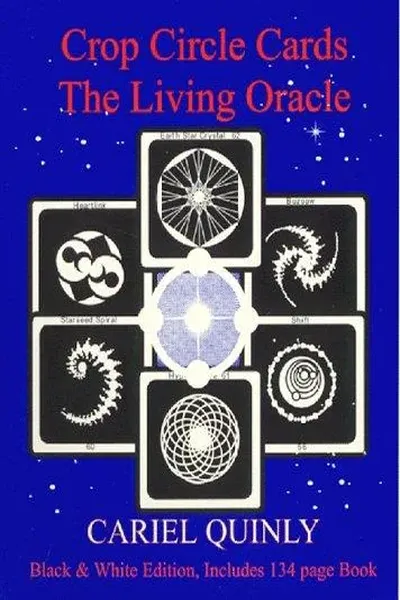
John Michell's 'Dowsing the Crop Circles' offers a compelling, if sometimes speculative, framework for understanding the enigmatic formations that proliferated in English fields. Rather than dismissing them, Michell posits them as significant geophysical or even psychical events. A notable strength is his interdisciplinary approach, linking crop circles to ancient earth-grid theories and dowsing practices. The work’s limitation lies in its reliance on conjecture where definitive proof is absent; the connection between dowsing and the circles' origins remains an assertion rather than a demonstrated fact. Michell's discussion of the 'spiral vortex' phenomena within certain formations, however, provides a concrete point of analysis, suggesting an energetic component to their creation. It’s a book that encourages a re-evaluation of the unexplained, even if its conclusions are not universally accepted.
📝 Description
78
John Michell's 1991 book investigates crop circle geometry as a manifestation of earth energies.
Published in 1991, 'Dowsing the Crop Circles' examines the geometric patterns that appeared in British fields during the late 20th century. John Michell does not dismiss these formations as mere hoaxes or random events. Instead, he treats them as significant phenomena requiring careful study. To understand their potential origins and meanings, Michell draws upon archaeology, folklore, and geomancy.
The book is for readers interested in the intersection of ancient mysteries and modern anomalies. It will appeal to those curious about earth energies, ley lines, and whether non-human intelligence or terrestrial forces shape our world. People who consider the deeper connections between landscape, consciousness, and unexplained phenomena will find this study particularly relevant.
This work appeared during a time of intense public interest in crop circles, which became prominent in the late 1980s. As these formations grew more complex and widespread, they provoked debate between skeptics attributing them to human artifice and those seeking deeper explanations. Michell's book was part of a larger cultural exploration of alternative theories of consciousness and earth mysteries.
Michell's work connects to traditions that view natural phenomena as expressions of subtle terrestrial forces. The concept of 'geodetic' or earth-grid energies suggests that crop circles are visual signals from these forces. Dowsing, an ancient practice for finding water and minerals, is presented as a method to sense the energetic signatures of the patterns. The book analyzes the geometric precision and symbolic potential of these designs, placing them within a framework of earth mysteries and consciousness studies.
💡 Why Read This Book?
• Learn about the potential connection between ancient earth-grid theories and modern crop circle phenomena, as explored through Michell's analysis of their geometric forms. • Understand dowsing not just as a tool for finding water, but as a method for investigating subtle energies, as detailed in the book's exploration of the circles' energetic signatures. • Gain insight into the late 20th-century context of crop circle fascination, where Michell's work positioned these events within a larger framework of terrestrial mysteries.
⭐ Reader Reviews
Honest opinions from readers who have explored this book.
❓ Frequently Asked Questions
When was John Michell's 'Dowsing the Crop Circles' first published?
John Michell's 'Dowsing the Crop Circles' was first published in 1991, a period when crop circle phenomena were gaining significant public attention.
What is dowsing according to John Michell in this book?
In 'Dowsing the Crop Circles', dowsing is presented as a method for sensing and investigating subtle earth energies, potentially revealing the forces behind the formation of crop circles.
What does the book suggest about the origins of crop circles?
The book suggests that crop circles may be linked to terrestrial or geophysical energies, possibly manifesting as visual expressions of earth grids or subtle forces rather than solely human creations.
Does the book offer scientific proof for its theories on crop circles?
The book explores theories and interpretations rather than presenting empirical scientific proof. It draws connections between folklore, dowsing, and the geometry of the formations to propose potential explanations.
What historical period does 'Dowsing the Crop Circles' primarily address?
The book primarily addresses the phenomenon of crop circles as they appeared and were debated in the late 20th century, particularly in the years leading up to its 1991 publication.
What other subjects does Michell connect crop circles to in his work?
Michell connects crop circles to subjects such as archaeology, folklore, geomancy, earth energies, and the symbolic language of sacred geometry.
🔮 Key Themes & Symbolism
Geodetic Energy Grids
Michell posits that crop circles are not random but are perhaps manifestations of underlying geodetic energy lines or grids that crisscross the Earth. This concept draws parallels with ancient ley line theories, suggesting that certain locations are energetically significant. The book explores how the precise geometry and placement of crop circles might correlate with these invisible terrestrial currents, implying a natural or energetic source for their creation. This perspective reframes the landscape as a living, dynamic entity influenced by subtle forces.
The Art of Dowsing
Dowsing, the practice of using tools like a divining rod or pendulum to detect water, minerals, or energies, is central to Michell's investigation. He suggests that dowsers might be able to sense the energies associated with crop circle sites, providing a means to understand their origins and nature. The book examines how dowsing can serve as a sensitive instrument for perceiving phenomena beyond conventional scientific measurement, offering a complementary approach to understanding earth mysteries.
Sacred Geometry and Symbolism
The intricate patterns formed in the fields are analyzed for their geometric precision and potential symbolic meaning. Michell suggests that these formations might employ principles of sacred geometry, echoing ancient designs found in megalithic structures and religious art. The book explores how specific shapes, ratios, and arrangements within crop circles could convey information or represent cosmic principles, aligning them with a universal visual language that speaks to both the mind and the spirit.
Ancient Wisdom and Modern Anomalies
This theme connects contemporary unexplained phenomena, like crop circles, to enduring traditions of earth wisdom and esoteric knowledge. Michell bridges the gap between historical practices, such as geomancy and earth worship, and the modern appearance of complex designs in agricultural fields. The work implies that these anomalies are not entirely new but might be recurrences or expressions of ancient forces interacting with the modern world, urging a reconsideration of forgotten knowledge.
💬 Memorable Quotes
Direct passages from the work, attributed to the author.
“Dowsing reveals what the eye cannot see, an ancient sensitivity to terrestrial currents.”
— This highlights dowsing as a perceptual tool for detecting subtle forces. It positions the practice as a traditional method of interacting with the Earth's energetic field, relevant to understanding phenomena like crop circles.
“The patterns in the fields are not arbitrary; they speak a language of geometry and proportion.”
— This interpretation emphasizes Michell's belief that crop circles possess inherent structure and meaning, likely derived from principles of sacred geometry, suggesting an intelligent or natural source behind their design.
💡 Key Ideas
Editorial paraphrase of the work's core concepts — not direct quotes.
The landscape itself is a living entity, crisscrossed by unseen energies.
This paraphrase captures Michell's view that the Earth is not inert but possesses a dynamic energetic system. It suggests that these energies can influence or manifest physically, as proposed with the crop circles.
These formations could be a modern echo of ancient earth-based sacred sites.
This paraphrase suggests a historical continuity, linking contemporary crop circles to the energetic significance of ancient monuments and sacred landscapes, implying a recurring pattern of terrestrial symbolism.
The circles often appear in places that resonate with historical or energetic significance.
This paraphrase points to a potential correlation between the location of crop circles and pre-existing points of interest, whether archaeological, folkloric, or related to perceived earth energies.
🌙 Esoteric Significance
Tradition
Michell's work fits within the broader tradition of Western Esotericism, particularly its branches concerned with earth energies, geomancy, and sacred geography. It reflects the principles found in Hermeticism and ancient earth-worship cults, which viewed the landscape as imbued with spiritual significance and subtle forces. By linking crop circles to dowsing and earth grids, he connects modern anomalies to ancient practices of sensing and harmonizing with terrestrial energies, suggesting a continuity of esoteric perception.
Symbolism
The primary symbols explored are the geometric patterns themselves, representing principles of sacred geometry and cosmic order. Concentric circles, spirals, and precise angular formations are examined for their potential to convey information or embody energetic principles. The act of dowsing itself symbolizes a receptive, intuitive engagement with the Earth's subtle forces, a method of 'reading' the landscape that bypasses purely rational analysis.
Modern Relevance
Contemporary interest in earth energies, consciousness studies, and the symbolic language of sacred geometry continues to draw on Michell's foundational work. Practitioners of dowsing and geomancy often reference his theories when investigating anomalous sites. His approach also informs discussions on non-human intelligence and planetary consciousness, suggesting that unexplained phenomena like crop circles might be communication or expressions of forces beyond our current scientific paradigm.
👥 Who Should Read This Book
• Students of earth mysteries and geomancy seeking to understand the potential energetic and symbolic significance of modern anomalies like crop circles. • Readers interested in the history and practice of dowsing, exploring its application beyond finding water to investigating subtle terrestrial forces. • Skeptics and believers alike who wish to engage with a thoughtful, interdisciplinary investigation that bridges folklore, archaeology, and unexplained phenomena.
📜 Historical Context
Published in 1991, John Michell's 'Dowsing the Crop Circles' arrived during a surge of global interest in these enigmatic formations, which had dramatically increased in complexity and frequency throughout the 1980s. This period saw a cultural fascination with earth mysteries, ancient sites, and alternative explanations for phenomena defying conventional science. Michell's work engaged with a growing body of literature on ley lines, geomancy, and dowsing, positioning crop circles within a lineage of earth-based esoteric traditions. While many dismissed the circles as elaborate hoaxes, Michell joined authors like Colin Andrews and others who sought deeper meanings. His approach, blending folklore, archaeology, and dowsing, offered a counter-narrative to skepticism, framing the circles as potential indicators of terrestrial energies or consciousness, resonating with a readership eager to explore the unexplained.
📔 Journal Prompts
The geometric precision of crop circles: a conscious language or natural process?
Dowsing for earth energies: how might this practice illuminate phenomena like crop circles?
The landscape as a sensitive entity: what evidence supports this view?
Ancient earth grids: how do they manifest in modern anomalies?
Interpreting the patterns: what symbolic messages might crop circles convey?
🗂️ Glossary
Dowsing
A practice using a divining rod, pendulum, or L-shaped rods to detect underground water, minerals, or subtle energies in the earth.
Geodetic Energy
Refers to hypothesized lines or grids of subtle energy that crisscross the Earth's surface, often associated with ancient sites and anomalies.
Ley Lines
Alleged straight alignments of ancient sites or natural features, often interpreted as pathways of terrestrial energy.
Geomancy
A form of divination derived from observing the patterns of soil disturbances or earth formations, often related to sensing earth energies.
Sacred Geometry
The study of geometric shapes and proportions considered fundamental to the structure of the universe and often found in religious and mystical traditions.
Earth Mysteries
A broad term encompassing the study of unexplained phenomena related to the Earth, including ancient sites, earth energies, and anomalous formations.
Terrestrial Currents
Subtle flows of energy within or upon the Earth's surface, often undetectable by conventional scientific instruments.