Power Yoga
 71
71

Power Yoga
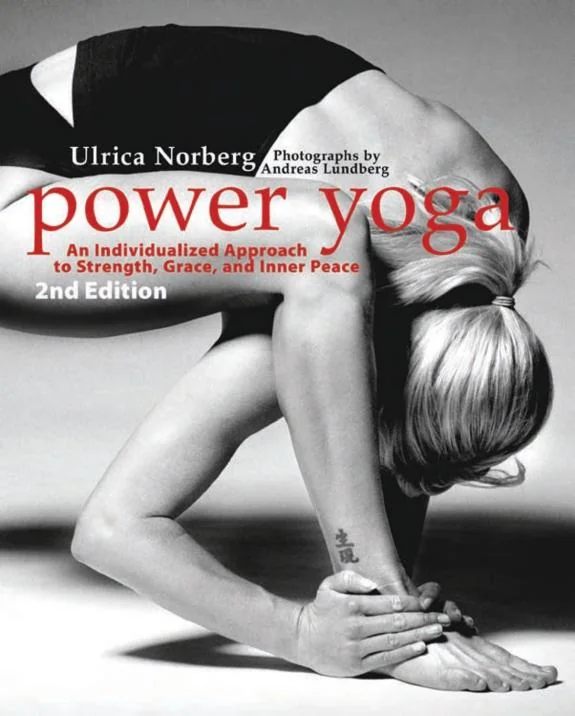
Ulrica Norberg's "Power Yoga" presents a compelling visual and instructional guide, distinguishing itself with its beautiful photographic plates that clearly illustrate complex poses. The emphasis on anatomical precision, particularly in the section discussing the mechanics of the Sun Salutations, is a significant strength. However, while the book aims for depth, the spiritual underpinnings sometimes feel secondary to the physical instruction. For instance, the explanation of bandhas, while technically correct, could benefit from more exploration of their subtle energetic implications beyond mere muscular engagement. Despite this, Norberg's clear prose and accessible approach make advanced postures feel attainable. The book ultimately offers a solid, visually rich resource for the dedicated practitioner seeking to refine their physical practice and understanding.
📝 Description
71
Published in 2011, Ulrica Norberg's "Power Yoga" presents yoga as a unified system for self-discovery.
Ulrica Norberg's "Power Yoga," released in 2011, offers a contemporary perspective on the ancient practice of yoga. The book frames yoga not as a separation of spirit or body, but as a cohesive approach to personal growth and well-being. Norberg uses clear instructions and descriptive language to guide practitioners in building physical strength, increasing flexibility, and sharpening mental focus. It functions as a thorough guide for anyone wanting to grasp the mechanics and deeper meanings of yoga postures, known as asanas, and breath control, or pranayama.
This text is written for practitioners who have moved beyond beginner classes and wish to advance their personal yoga practice. It will appeal to those interested in the energetic and psychological aspects of yoga, beyond just the physical results. Readers who value detailed anatomical explanations combined with philosophical ideas will find "Power Yoga" especially useful. It is for the student aiming to understand the reasons behind yoga techniques, seeking a more meaningful connection with their body and mind.
Emerging in the early 2010s, a period marked by yoga's increased visibility and varied forms in the West, "Power Yoga" reflects a growing interest in physically demanding yet spiritually integrated practices. Unlike classical Hatha Yoga which often adheres to specific lineages, Norberg's work represents a modern adaptation. It incorporates global influences and current interpretations of yogic philosophy, making ancient wisdom accessible for contemporary life.
💡 Why Read This Book?
• Gain precise anatomical understanding for advanced asanas, moving beyond general descriptions to detailed alignment crucial for safe practice, as exemplified in the "Sun Salutations" chapter. • Learn to integrate breathwork (pranayama) with movement, understanding how specific breathing techniques can enhance focus and energy flow during challenging sequences. • Explore the energetic principles behind yogic postures, grasping concepts like bandhas and their role in cultivating inner power and presence, as detailed in the book's explanations.
⭐ Reader Reviews
Honest opinions from readers who have explored this book.
❓ Frequently Asked Questions
When was Ulrica Norberg's "Power Yoga" first published?
Ulrica Norberg's "Power Yoga" was first published on February 14, 2011, making it a relatively contemporary guide to the practice.
What is the primary focus of "Power Yoga"?
The book focuses on a dynamic and strength-building approach to yoga, integrating precise physical alignment with breath control and mental focus.
Are there specific anatomical explanations in "Power Yoga"?
Yes, the book offers detailed anatomical guidance for various postures, aiming to ensure practitioners perform them safely and effectively.
Does "Power Yoga" cover breathwork (pranayama)?
Yes, Norberg explains the integral role of pranayama, detailing how specific breathing techniques can enhance both physical exertion and mental concentration.
Who is the intended audience for "Power Yoga"?
The book is best suited for intermediate to advanced yoga practitioners seeking to deepen their understanding and refine their physical technique.
What makes "Power Yoga" different from other yoga books?
Its strength lies in the combination of high-quality photography, detailed anatomical cues, and an emphasis on the energetic and mental aspects of a powerful practice.
🔮 Key Themes & Symbolism
Asana and Energetic Flow
Norberg's "Power Yoga" emphasizes that postures (asanas) are more than just physical shapes; they are conduits for vital energy. The work meticulously details how precise alignment in poses like inversions and backbends facilitates the unimpeded flow of prana throughout the body. This energetic perspective connects the physical practice to the subtle body, suggesting that mastering asana leads to a more balanced and vibrant energetic system, a core tenet in many esoteric yoga traditions.
Pranayama for Focus and Power
The book highlights pranayama, or yogic breathing techniques, as a crucial element for developing both mental fortitude and physical stamina. Norberg explains how specific breathing patterns, such as Ujjayi breath, not only support strenuous movements but also cultivate a focused state of mind, essential for the 'power' aspect of the practice. This integration of breath control underscores the esoteric understanding of prana as life force, directly influenced and directed by conscious breathing.
The Mind-Body Connection
"Power Yoga" explores the profound interconnectedness of the mind and body within the yogic framework. It presents asana and pranayama not as separate disciplines but as tools that work in concert to harmonize mental and physical states. By cultivating present-moment awareness during challenging sequences, practitioners can observe mental patterns and develop equanimity. This emphasis on internal awareness aligns with esoteric goals of self-mastery and the realization of a unified consciousness.
Anatomy and Subtle Energy
Norberg bridges the gap between Western anatomical understanding and Eastern energetic concepts. The book provides detailed anatomical cues for safety and efficacy in postures, while also hinting at the subtle energetic channels (nadis) and energy centers (chakras) that are influenced by the practice. This approach allows practitioners to appreciate the physical mechanics while also engaging with the more subtle, esoteric dimensions of yogic science.
💬 Memorable Quotes
Direct passages from the work, attributed to the author.
“Correct alignment is the foundation of a safe and potent practice.”
— This statement underscores the book's focus on the technical precision of yoga postures. It suggests that proper form is not merely about aesthetics or injury prevention but is essential for unlocking the deeper energetic and transformative potential of the practice.
“Breath is the bridge between the body and the mind.”
— This highlights the central role of pranayama in integrating the physical and mental aspects of yoga. It implies that by consciously controlling the breath, one can influence their mental state and deepen their self-awareness.
“Asanas develop strength and flexibility, creating a stable vessel for energy.”
— This interpretation emphasizes the dual benefit of physical postures: building resilience in the body while simultaneously preparing it to hold and channel vital life force (prana).
“Focus your awareness inward during each movement.”
— This directive encourages a meditative approach to the physical practice, suggesting that true yoga lies not just in the execution of poses but in the quality of attention brought to them.
“The practice cultivates a resilient and centered presence.”
— This points to the psychological outcomes of consistent yoga practice, framing it as a method for developing inner stability and the capacity to remain grounded amidst life's challenges.
🌙 Esoteric Significance
Tradition
While not strictly adhering to a single ancient lineage, "Power Yoga" draws heavily from the energetic and philosophical currents found within Hatha Yoga traditions that emphasize prana manipulation and mind-body integration. It can be seen as a modern interpretation within the broader spectrum of esoteric yoga, focusing on the practical application of yogic principles for self-transformation and enhanced vitality in contemporary life, rather than solely on ritual or devotional aspects.
Symbolism
The book implicitly engages with the symbolism of strength and balance inherent in advanced asanas, representing the practitioner's journey towards inner equilibrium and mastery over physical and mental limitations. The emphasis on breath (prana) as the vital life force connects to the esoteric concept of cosmic energy that animates all existence. Furthermore, the sustained focus required for complex poses symbolizes the yogic path of concentration and the eventual union of individual consciousness with the universal.
Modern Relevance
Norberg's approach to "Power Yoga" continues to influence contemporary practitioners and instructors who seek a grounded, anatomically informed, and energetically aware method. It speaks to modern wellness movements that prioritize holistic health, linking physical conditioning with mental clarity and stress reduction. The book's detailed visual instruction remains a valuable resource for studios and individuals exploring dynamic yoga practices that aim to cultivate both physical prowess and inner resilience.
👥 Who Should Read This Book
• Intermediate to advanced yoga practitioners seeking to refine their physical technique and deepen their understanding of pose mechanics. • Individuals interested in the energetic aspects of yoga, looking to connect breathwork and movement for enhanced vitality and focus. • Those who appreciate detailed anatomical instruction and high-quality visual guides to master challenging asanas safely and effectively.
📜 Historical Context
Published in 2011, Ulrica Norberg's "Power Yoga" arrived during a period of significant global expansion and diversification of yoga practices. The early 21st century saw yoga move from niche spiritual circles into mainstream fitness and wellness industries. While classical Hatha Yoga traditions had been established for centuries, and figures like B.K.S. Iyengar had already revolutionized anatomical precision in asana instruction decades prior, Norberg's work represents a contemporary evolution. It emerged alongside a growing interest in more physically demanding styles like Ashtanga Vinyasa Yoga, pioneered by K. Pattabhi Jois, and the "Vinyasa" flow popularized by teachers like Shiva Rea. "Power Yoga" contributed to this trend by offering a visually rich, instructionally detailed guide that appealed to a Western audience increasingly seeking integrated physical and mental discipline, reflecting a broader cultural embrace of Eastern contemplative practices.
📔 Journal Prompts
The precise alignment in poses like Warrior II, as detailed in the book.
Integrating Ujjayi breath with the flow of Sun Salutations.
Observing mental patterns during challenging asana sequences.
The body's energetic capacity as described in the pranayama sections.
Balancing strength and flexibility in inversions.
🗂️ Glossary
Asana
A physical posture or pose in yoga, practiced to improve physical health, flexibility, and mental focus.
Pranayama
The practice of controlling breath, considered a vital life force (prana) and a key element in yogic discipline for energy cultivation and mental clarity.
Ujjayi Breath
A specific yogic breathing technique characterized by a gentle constriction in the throat, creating an oceanic sound; used to regulate breath and build internal heat.
Bandha
Internal energy locks within the body, involving the contraction of specific muscle groups to control and direct the flow of prana.
Nadis
Subtle energy channels within the body through which prana is believed to flow; often discussed in esoteric yoga traditions.
Chakras
Energy centers located along the spine, believed in esoteric traditions to govern different aspects of physical, mental, and spiritual well-being.
Sun Salutations (Surya Namaskar)
A foundational sequence of yoga postures performed in a flowing manner, often used as a warm-up and to build heat and stamina.
This book appears in 1 collection
🔮 Readers Also Liked
Browse all →









From the “Hatha Yoga” Collection
View all →






More Free Occult Philosophy Books
View all →