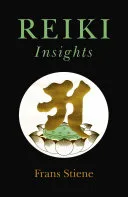
Reiki Insights
 76
76

Reiki Insights
Frans Stiene's Reiki Insights offers a welcome departure from the typical how-to guides saturating the Reiki literature. By framing each chapter as a seed for meditation, Stiene encourages a more contemplative path for practitioners. The strength lies in this deliberate pacing, urging the reader to absorb rather than just acquire information. A passage discussing the energetic quality of intention, for instance, illustrates the book's focus on the subtle nuances often overlooked. However, the very brevity and meditative nature that make it unique might leave those seeking concrete, actionable techniques feeling somewhat unmoored. It demands a certain level of patience and self-direction from the reader. Ultimately, Reiki Insights serves as a valuable companion for deepening one's personal connection to Reiki, provided the reader is prepared to engage with its introspective methodology.
📝 Description
76
Frans Stiene published Reiki Insights in 2018, focusing on internal experience over technique.
Reiki Insights, published in 2018, is not a guide to energy healing techniques. Instead, Frans Stiene structured the book as a series of short, meditative chapters meant for quiet reflection. Each part acts as its own lesson, encouraging readers to connect with the material in a deeper, felt way. Stiene aims for readers to absorb the teachings, allowing them to influence the reader's awareness and energy field. This approach builds a basis for personal growth that goes beyond simple intellectual comprehension.
The book suits those who want a more thoughtful, inward approach to Reiki's core ideas. It will appeal to practitioners who have moved past beginner stages and wish to deepen their personal practice and grasp of Reiki's spiritual aspects. Readers interested in meditative study and those who appreciate a less direct, more reflective path to esoteric philosophy will find value here. Stiene emphasizes the internal experience of Reiki, looking past its physical effects. The focus is on the 'inner change' that comes from meditating on the central teachings. The aim is to sense what exists 'between the sentences'— the intuitive and energetic understanding that arises from deep thought.
Published in 2018, Reiki Insights enters a time when Reiki, originating with Mikao Usui in early 20th century Japan, is widely known. While many books cover practical hand placements, Stiene's work reflects a growing interest in Reiki's philosophical and spiritual foundations. This shifts focus from purely therapeutic uses to a more introspective examination of established practices. It parallels a wider trend in spiritual studies to revisit traditions with a less rigid, more personal perspective, differing from earlier, highly structured methods.
💡 Why Read This Book?
• You will learn to internalize Reiki principles through meditative contemplation, moving beyond mere technique, as exemplified by the chapter structure designed for reflection on "what is in between the sentences." • You will gain a deeper appreciation for the spiritual and energetic dimensions of Reiki, fostering inner change rooted in personal experience rather than solely in external practice, as discussed in the book's focus on developing a foundation for inner change. • You will discover a unique approach to spiritual study that prioritizes feeling and energetic absorption over intellectual acquisition, inspired by Frans Stiene's 2018 publication and its meditative journey format.
⭐ Reader Reviews
Honest opinions from readers who have explored this book.
❓ Frequently Asked Questions
What is the primary focus of Frans Stiene's Reiki Insights?
Reiki Insights focuses on a meditative and introspective journey into the system of Reiki, presenting short chapters as teachings for contemplation rather than a step-by-step guide to healing techniques.
How does Reiki Insights encourage personal transformation?
The book encourages personal transformation by guiding readers to meditate upon the teachings, allowing them to sink deep into the mind, body, and energy, fostering inner change beyond superficial understanding.
When was Reiki Insights first published?
Reiki Insights was first published on June 29, 2018, by Frans Stiene.
Is Reiki Insights suitable for beginners in Reiki?
While it can be read by beginners, it is best suited for those who have some foundational knowledge and are looking to deepen their personal understanding and practice through meditation and introspection.
What is the recommended way to read Reiki Insights?
The author recommends reading a chapter, then sitting down to meditate upon its words, allowing them to integrate into one's being to feel the essence between the sentences.
What distinguishes Reiki Insights from other Reiki books?
Its distinction lies in its meditative, chapter-by-chapter approach, emphasizing internal experience and contemplation of Reiki's deeper aspects, rather than focusing on practical application or healing techniques.
🔮 Key Themes & Symbolism
Meditative Engagement
The core of Reiki Insights lies in its invitation to a meditative practice. Unlike instructional manuals, Stiene presents Reiki as a subject for deep contemplation. Each short chapter is a prompt, designed to be absorbed slowly. The emphasis is on the internal experience—what one feels and understands beyond the literal words. This approach encourages a personal, experiential relationship with Reiki, fostering a sense of presence and awareness that transcends mere technique acquisition.
Inner Change and Transformation
The book posits that genuine transformation arises from within, catalyzed by consistent, reflective engagement with Reiki principles. Frans Stiene suggests that by allowing the teachings to permeate one's being, a subtle yet profound inner shift occurs. This is not about learning new methods but about cultivating a different state of consciousness. The work aims to lay a foundation for this ongoing personal evolution, moving practitioners toward a deeper embodiment of Reiki's essence.
The Essence Between Sentences
A key concept explored is the understanding that arises from the unstated, the energetic resonance felt when truly present with the teachings. Stiene encourages readers to perceive what exists 'in between the sentences,' implying a level of intuitive comprehension that bypasses direct explanation. This focus on subtle perception highlights the energetic and spiritual dimensions of Reiki, inviting a practice that is both deeply personal and profoundly insightful.
Reiki as Philosophy
Reiki Insights frames the system not merely as a healing modality but as a profound philosophy for life. By distilling its essence into contemplative modules, Stiene elevates Reiki to a subject of spiritual inquiry. The book encourages readers to explore the underlying principles and their implications for personal growth and understanding, positioning Reiki as a path of self-discovery and spiritual development.
💬 Memorable Quotes
Direct passages from the work, attributed to the author.
“Each chapter is a teaching, pick one up and read it.”
— This highlights the book's structure as a series of self-contained lessons, intended for focused, individual study rather than sequential reading, emphasizing accessibility and personal choice in engagement.
“Sit down and meditate upon the words.”
— This is a direct instruction for applying the book's content, urging the reader to move beyond passive reading into active, contemplative practice to integrate the teachings.
“Let them sink deep into your mind, body, and energy.”
— This describes the desired effect of the meditative process, indicating a holistic absorption of Reiki principles that impacts the reader on multiple levels of being.
“Feel what is in between the sentences.”
— This points to the subtle, intuitive understanding that arises from deep contemplation, suggesting that the true meaning and energetic essence of the teachings lie beyond the literal text.
“It will lay a foundation for inner change.”
— This articulates the ultimate goal of engaging with the book's method, emphasizing that the practice is designed to foster lasting personal evolution from within.
🌙 Esoteric Significance
Tradition
Reiki, as presented by Stiene, draws from a lineage that, while originating in Japan with Mikao Usui's system, is often interpreted within broader esoteric and spiritual frameworks in the West. It can be seen as a contemporary manifestation of practices focused on cultivating vital energy (qi/prana) for self-improvement and healing, echoing traditions like Qigong. While not strictly Hermetic or Kabbalistic, it shares with these traditions an emphasis on subtle energies, intention, and the interconnectedness of mind, body, and spirit, offering a modern path to personal cultivation.
Symbolism
While Reiki Insights focuses more on conceptual and energetic principles than overt symbolism, the act of 'meditating upon the words' and 'feeling what is in between the sentences' can be interpreted as symbolic of the practitioner's journey inward. The short chapters themselves act as symbolic gateways, each offering a point of entry into deeper awareness. The concept of 'inner change' serves as a central symbolic representation of the transformative potential inherent in the practice.
Modern Relevance
Stiene's approach in Reiki Insights is highly relevant to contemporary mindfulness, meditation, and self-care movements. Thinkers and practitioners exploring embodied cognition, somatic experiencing, and the integration of spiritual practices into daily life find resonance with this method. Schools and communities focused on holistic well-being and personal development that seek to move beyond superficial wellness trends often draw upon works that emphasize depth and introspection, making this book a valuable resource for modern seekers.
👥 Who Should Read This Book
• Long-term Reiki practitioners seeking to deepen their understanding beyond technique, looking for a more philosophical and introspective engagement with the system's core principles. • Students of comparative spirituality interested in how modern practices like Reiki are interpreted through contemplative and experiential lenses, offering a bridge between Eastern energy work and Western meditative traditions. • Individuals drawn to self-discovery and personal growth through reflective practices, who appreciate a non-linear, meditative approach to spiritual texts and seek inner change.
📜 Historical Context
Published in 2018, Frans Stiene's Reiki Insights arrives in an era where Reiki, founded by Mikao Usui in Japan in the early 20th century, has long since transcended its origins to become a global wellness practice. While Usui himself emphasized spiritual development alongside healing, much of the Western reception of Reiki, particularly in the late 20th century, focused on its therapeutic applications. Stiene's work reflects a contemporary trend within esoteric studies and spiritual movements to re-examine foundational practices through a lens of deeper philosophical inquiry and personal introspection, moving away from purely technique-driven approaches. This contrasts with the more structured, often Westernized, interpretations of Eastern spiritual disciplines that gained prominence in the 1970s and 80s. The book's approach aligns with a growing desire among practitioners for a more profound, less secularized understanding of energetic modalities, seeking the spiritual core rather than just the perceived benefits.
📔 Journal Prompts
The concept of 'inner change': how has your understanding of this evolved through contemplating Reiki Insights?
Reflect on the feeling 'in between the sentences' of Chapter [Specific Chapter Number/Title].
What does it mean to allow the teachings to sink deep into your mind, body, and energy?
Consider the teaching presented in the chapter titled '[Specific Chapter Title]' and its potential for personal integration.
How does the meditative approach described in Reiki Insights contrast with your previous methods of spiritual study?
🗂️ Glossary
Reiki
A Japanese form of alternative medicine called energy healing, developed by Mikao Usui in the early 20th century, often used for stress reduction and relaxation.
Inner Change
A fundamental shift in one's internal state, perspective, or being, cultivated through deep reflection and experiential engagement with spiritual teachings, as opposed to superficial adjustments.
Meditation
A practice where an individual uses a technique – such as mindfulness, or focusing the mind on a particular object, thought, or activity – to train attention and awareness, and achieve a mentally clear and emotionally calm and stable state.
Energy
In the context of Reiki, refers to the subtle life force or vital energy that permeates all living things, which can be accessed and directed for healing and personal development.
Teaching
A specific lesson or principle presented within the book, intended for contemplation and integration into one's practice and understanding of Reiki.
Contemplation
The act of looking thoughtfully for a long time at something; deep reflective thought.
Embodiment
The process of integrating spiritual or energetic principles into one's physical being and lived experience, moving beyond intellectual understanding to a felt sense.