The fifth gospel
 75
75

The fifth gospel
Stephen J. Patterson's "The Fifth Gospel" is a challenging but rewarding examination of the New Testament Gospels. Patterson moves beyond the standard Synoptic problem by positing a foundational "fifth gospel" that he believes accounts for the text's internal tensions and variations. His meticulous analysis of textual differences, particularly in the post-resurrection appearances, is compelling. For instance, his breakdown of the seemingly contradictory accounts of the women at the tomb in Matthew 28, Mark 16, and Luke 24 offers a fresh perspective, suggesting these variations are not errors but clues to earlier traditions. However, the very nature of a hypothetical source makes the central thesis difficult to definitively prove, resting heavily on inference and interpretation. While the book is a significant contribution to Gospel studies, readers unfamiliar with advanced textual criticism may find its dense argumentation demanding. Patterson’s work ultimately provides a powerful lens through which to reconsider the formation of the Gospels.
📝 Description
75
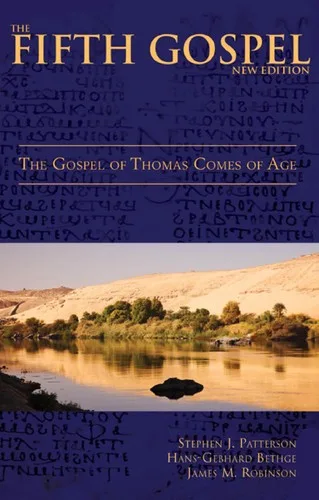
Stephen J. Patterson's 2011 book, 'The Fifth Gospel,' proposes the canonical Gospels are layered interpretations, not independent accounts.
In 'The Fifth Gospel,' published in 2011, Stephen J. Patterson challenges the independence of the four canonical Gospels. He argues they are not separate records of Jesus' life and teachings but represent successive interpretations and compilations. Patterson suggests that the divergences and thematic similarities within these texts imply an earlier, more direct source, a hypothetical "fifth gospel."
By analyzing these layers, Patterson contends we gain a clearer view of the historical Jesus. His work engages directly with the historical critical method, particularly source and form criticism, traditions dating back to the Enlightenment and prominent since the 19th century. Patterson builds on scholarship concerning the Synoptic problem and the hypothetical Q source, offering his own contributions to the ongoing discussion about the Gospels' formation.
Patterson's work engages with a long tradition of biblical scholarship that questions traditional textual authority. While rooted in historical criticism, his concept of a "fifth gospel" resonates with esoteric approaches that seek underlying, more direct spiritual or historical truths obscured by later traditions. This pursuit of an original, potent source hidden within or beneath established scriptures aligns with Gnostic quests for lost wisdom and early Christian mysticism's focus on original, often suppressed, teachings.
💡 Why Read This Book?
• Understand the limitations of the current four Gospels, learning how Patterson's "fifth gospel" hypothesis offers an alternative framework for interpreting Jesus' teachings and actions based on textual divergences documented in the 2011 publication. • Explore the historical-critical method as applied to early Christian texts, gaining insight into Patterson's unique approach to source criticism that questions the independence of the canonical accounts. • Re-evaluate the narratives of Jesus' post-resurrection appearances, as Patterson uses specific discrepancies in these accounts to support his theory of underlying, divergent traditions.
⭐ Reader Reviews
Honest opinions from readers who have explored this book.
❓ Frequently Asked Questions
What is the main argument of Stephen J. Patterson's "The Fifth Gospel"?
The book argues that the four canonical Gospels are not independent accounts but rather layered interpretations of an earlier, hypothetical "fifth gospel." Patterson suggests this original source is discernible through the discrepancies and thematic echoes found within Matthew, Mark, Luke, and John.
When was "The Fifth Gospel" by Stephen J. Patterson first published?
The book was first published in 2011, making it a relatively recent contribution to the field of New Testament textual criticism and historical Jesus studies.
What kind of evidence does Patterson use to support the "fifth gospel" theory?
Patterson relies on comparative analysis of the Gospel texts, identifying inconsistencies in narratives, theological emphases, and chronological sequences. He interprets these variations not as errors but as evidence of different editorial hands working with a common, earlier tradition.
Is "The Fifth Gospel" accessible to readers without a scholarly background?
While Patterson's analysis is detailed and draws on scholarly methods, the book aims to be accessible to a broader audience interested in the historical Jesus. However, some familiarity with biblical studies can enhance comprehension.
How does Patterson's work relate to the traditional Synoptic problem?
Patterson's "fifth gospel" hypothesis is a novel approach that engages with, but also extends beyond, the traditional Synoptic problem. He seeks a common source that potentially predates or underlies the proposed Q document and the Marcan hypothesis.
What is the significance of the year 2011 for this book?
2011 marks the original publication year of "The Fifth Gospel." This date places Patterson's work within contemporary discussions on historical Jesus research and New Testament textual criticism.
🔮 Key Themes & Symbolism
The Hypothetical Fifth Gospel
The central tenet of Patterson's work is the existence of a foundational "fifth gospel." This is not a literal fifth book, but a theoretical original source or tradition that he argues informed the creation of Matthew, Mark, Luke, and John. Patterson suggests that the divergences, contradictions, and unique elements within the canonical texts are best explained as the result of various scribes and editors working with, and adapting, this earlier, more unified, or at least differently structured, source material. The exploration of this hypothetical source aims to unlock a more direct understanding of Jesus’ teachings and life.
Gospel Discrepancies as Evidence
Instead of viewing inconsistencies between the four Gospels as errors or literary flaws, Patterson reinterprets them as crucial evidence for his thesis. He meticulously analyzes passages where the accounts differ significantly—such as the resurrection narratives or specific parables—arguing that these variations are not random but reflect distinct editorial choices and the transmission of diverse oral or written traditions stemming from the "fifth gospel." This approach reframes textual criticism by prioritizing the explanatory power of a lost source over simple harmonization.
Reconstructing Early Christian Traditions
Patterson's work is an ambitious attempt to reconstruct the earliest layers of Christian tradition. By positing the "fifth gospel," he aims to bypass what he sees as later theological accretions and interpretive layers that have obscured the historical Jesus. The book examines how these traditions were likely transmitted, modified, and eventually compiled into the texts that form the New Testament canon, offering a pathway to a potentially more authentic portrayal of early Christianity.
The Nature of Oral and Written Transmission
A significant aspect of "The Fifth Gospel" involves examining the dynamics of oral and written transmission in the ancient world. Patterson explores how stories and teachings about Jesus might have circulated orally before being committed to writing, and how different communities preserved and adapted these narratives. His theory implies that the written Gospels represent a complex interplay between enduring oral streams and specific written compositions, all ultimately traceable to a core "fifth gospel" tradition.
💬 Memorable Quotes
Direct passages from the work, attributed to the author.
“The differences in the resurrection narratives are not accidental.”
— This interpretation highlights Patterson's core argument: that textual variations in the Gospels are not merely errors but significant clues. He suggests these discrepancies point to the existence of multiple, distinct traditions about Jesus' post-resurrection appearances, all potentially derived from a common, underlying source.
“The Synoptic problem is only part of the puzzle.”
— This statement suggests that while the relationships between Matthew, Mark, and Luke are well-studied, Patterson's "fifth gospel" theory offers a broader explanatory model that encompasses John and addresses deeper underlying issues in Gospel formation.
“We must look for what is implied by the silences and contradictions.”
— This interpretive quote emphasizes Patterson's methodology. He argues that the gaps, inconsistencies, and unspoken assumptions within the canonical texts are as informative as the explicit statements, revealing the contours of the hypothetical original source.
💡 Key Ideas
Editorial paraphrase of the work's core concepts — not direct quotes.
What if the Gospels are layered reflections of an earlier, single source?
This paraphrased concept captures the essence of Patterson's hypothesis. Instead of viewing the canonical Gospels as independent witness accounts, he proposes they are successive interpretations or compilations derived from a foundational "fifth gospel" tradition.
The earliest traditions of Jesus' ministry are more accessible than we assume.
This paraphrased concept posits that by deconstructing the canonical Gospels, Patterson believes readers can access a purer or more direct understanding of Jesus' teachings and life, unmediated by later theological developments.
🌙 Esoteric Significance
Tradition
While not explicitly tied to a single esoteric lineage like Hermeticism or Kabbalah, "The Fifth Gospel" speaks to Gnostic and esoteric approaches that question the orthodoxy of canonical texts and seek hidden or lost teachings. It aligns with traditions that view scripture as layered with meaning, where the exoteric (outward) meaning conceals an esoteric (inner) truth. Patterson's work, by seeking an "original" source, reflects the esoteric quest for primordial wisdom or a purer form of spiritual knowledge that has been corrupted or obscured by institutional religion.
Symbolism
The primary "symbol" Patterson engages with is the Gospel text itself, viewed not as a monolithic entity but as a palimpsest. The concept of the "fifth gospel" functions symbolically as the lost, pure source—akin to the hidden Sophia in Gnosticism or the primordial Adam Kadmon in Kabbalah—that holds a more direct connection to divine truth. The divergences and contradictions within the canonical Gospels can be seen as symbolic representations of fragmentation and the challenges of accessing spiritual knowledge in a fallen or material world.
Modern Relevance
Patterson's work finds resonance with contemporary movements that emphasize personal spiritual experience and skepticism towards established religious dogma. Thinkers and groups interested in the historical Jesus outside of traditional church doctrine, as well as those exploring comparative religion and the philosophical underpinnings of religious texts, find value in his critical approach. His hypothesis encourages a re-examination of religious narratives, aligning with modern esoteric interests in uncovering alternative interpretations and undiscovered layers of meaning within ancient scriptures.
👥 Who Should Read This Book
• Students of historical Jesus research seeking to understand alternative hypotheses beyond the Q source, who will gain a new perspective on Gospel composition. • Comparative religion scholars interested in how different traditions interpret foundational texts, benefiting from Patterson's critical analysis of canonical discrepancies. • Esoterically-minded readers who question orthodox interpretations of scripture and are drawn to theories of lost or hidden original teachings, finding a framework for understanding textual layers.
📜 Historical Context
Published in 2011, Stephen J. Patterson's "The Fifth Gospel" arrived amidst ongoing scholarly debates about the historical Jesus and Gospel origins. The work engages with the legacy of 19th-century source criticism, exemplified by scholars like Julius Wellhausen, who pioneered documentary hypotheses for biblical texts. Patterson's approach builds upon, yet diverges from, the established Synoptic problem, which primarily concerns the relationship between Matthew, Mark, and Luke. While scholars like Bart D. Ehrman were actively discussing textual variants and the historical reliability of the Gospels, Patterson offered a unique hypothesis about a singular underlying source that shaped all four canonical accounts. His work implicitly responds to a tradition that often sought to harmonize the Gospels or privilege one over another, proposing instead a model where divergence is key. The reception of such theories typically involves rigorous debate within academic circles, with scholars scrutinizing the evidential basis for hypothetical sources.
📔 Journal Prompts
The implications of a "fifth gospel" for understanding Jesus' teachings.
Analyzing narrative discrepancies between two canonical Gospels regarding a specific event.
The role of scribes and editors in shaping early Christian texts.
How does the idea of a "lost source" influence your perception of religious authority?
Reflecting on the transmission of oral traditions versus written records in ancient contexts.
🗂️ Glossary
Canonical Gospels
The four books of the New Testament accepted by Christian churches as authentically representing the life and teachings of Jesus: Matthew, Mark, Luke, and John.
Synoptic Problem
The academic question concerning the literary relationship among the Gospels of Matthew, Mark, and Luke, exploring how they were composed and how they relate to one another, particularly regarding similarities and differences in their narratives.
Source Criticism
A method of biblical analysis that seeks to identify the sources or traditions that lie behind a text, aiming to understand its composition and historical development.
Hypothetical Source
A theoretical text or tradition that scholars propose existed and influenced the creation of existing texts, but for which no direct physical evidence has been found. Patterson's "fifth gospel" is an example.
Textual Variants
Differences in the wording of biblical manuscripts. In "The Fifth Gospel," Patterson interprets significant textual variants not as copyist errors but as evidence of underlying source material.
Historical Jesus
The figure of Jesus of Nazareth as he can be understood through historical and critical methods, distinct from theological or Christological interpretations.
Q Source
A hypothetical document, distinct from Mark, believed by many scholars to be a source of sayings of Jesus used by the authors of Matthew and Luke. Patterson's theory offers an alternative or complementary explanation for Gospel similarities.
🔮 Readers Also Liked
Browse all →









More by Stephen J. Patterson
All books →





More Free Occult Philosophy Books
View all →