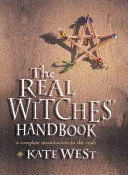
The Real Witches' Handbook
 82
82

The Real Witches' Handbook
Kate West’s *The Real Witches' Handbook* attempts to demystify Wicca for a new generation, a task it largely accomplishes with its straightforward prose. The book excels in its practical, step-by-step approach to understanding core Wiccan concepts, particularly the explanation of the Sabbats and the Wheel of the Year, which is presented with commendable clarity. However, while aiming for accessibility, the text occasionally feels too generalized, lacking the deeper philosophical engagement that some readers might seek beyond introductory material. For instance, the section on "Myth and Reality" touches upon media portrayals but could benefit from a more critical analysis of how these myths have shaped public perception and influenced the development of Wiccan identity itself. Ultimately, West provides a solid, if unadventurous, primer for those standing at the threshold of Wiccan practice.
📝 Description
82
Kate West's 2001 book clarifies modern Witchcraft beyond media portrayals.
The Real Witches' Handbook aims to demystify modern Witchcraft for a general audience. Published in 2001, it seeks to offer a clear and accessible introduction to Wiccan beliefs and practices. The author addresses fundamental questions about contemporary witchcraft, moving past sensationalized images to present a grounded spiritual path.
This guide is structured for individuals interested in solitary practice or those considering group involvement. It provides practical advice that applies to various Witchcraft traditions. Readers will find useful direction whether they are beginners seeking fundamental knowledge or are interested in the Wiccan lifestyle, its rituals, and its core philosophy.
Kate West's work, published in 2001, engages with the resurgence of Paganism and Witchcraft. It connects contemporary Wicca to a lineage of nature-based spirituality, acknowledging its roots in earlier esoteric movements. The book positions modern Wicca within this evolving spiritual framework, recognizing its diverse expressions today.
💡 Why Read This Book?
• Learn about the core beliefs and practices of modern Witchcraft, distinguishing them from popular myths, as detailed in the "What Witchcraft is" chapter. • Understand the significance of natural cycles, including lunar phases and the eight Sabbats, presented as fundamental to the Wiccan calendar and spiritual life. • Gain practical advice for solitary or group practice, making it an actionable guide for those exploring the "wiccan lifestyle" as outlined in the original blurb.
⭐ Reader Reviews
Honest opinions from readers who have explored this book.
❓ Frequently Asked Questions
What is the primary goal of The Real Witches' Handbook?
The book's primary goal is to offer a down-to-earth introduction to Witchcraft, providing practical advice for becoming a Wiccan and demystifying the lifestyle for both solitary practitioners and group members.
When was The Real Witches' Handbook first published?
The Real Witches' Handbook was first published in 2001, positioning it within the early 21st-century wave of accessible guides to Pagan and Wiccan spirituality.
Does the book explain Wiccan deities?
Yes, the handbook explores the concepts of Gods and Goddesses as central figures within Wiccan belief systems, explaining their roles in the cycles of life and rebirth.
Is this book suitable for experienced Witches?
While primarily an introductory guide, experienced practitioners might find it a useful reference for basic concepts or a way to introduce others to Wicca. It focuses on foundational elements rather than advanced magical theory.
What kind of practical advice does the book offer?
The book offers practical advice on various aspects of the Wiccan lifestyle, including how to approach group or solitary practice and understanding key rituals and beliefs.
How does the book address media portrayals of witches?
The "Myth and Reality" section directly contrasts the Hollywood image of witches with the actual beliefs and practices of modern Witchcraft, aiming to correct common misconceptions.
🔮 Key Themes & Symbolism
Wiccan Beliefs and Practices
This theme addresses the fundamental tenets of Witchcraft, moving beyond stereotypes to articulate what it means to practice Wicca. It covers core beliefs regarding the divine, often presented as a God and Goddess duality, and explores the cyclical nature of life, death, and rebirth. The text clarifies that Wicca is a spiritual path focused on nature, personal growth, and reverence for the earth, offering a grounded perspective for newcomers.
The Wheel of the Year
Central to Wiccan cosmology, the Wheel of the Year represents the eight seasonal festivals (Sabbats) that mark the sun's journey through the year. This theme explains the significance of each Sabbat, such as Samhain, Yule, and Beltane, linking them to agricultural cycles, mythology, and spiritual reflection. Understanding the Wheel provides a framework for ritual and a deeper connection to the earth's rhythms.
Solitary vs. Group Practice
The handbook acknowledges that Witchcraft can be practiced in various ways, offering guidance for both solitary practitioners and those who work within a coven or group. It discusses the benefits and challenges of each approach, providing practical advice on developing personal practice or integrating into a community. This theme underscores the adaptability of the Wiccan path to individual needs and circumstances.
Myth vs. Reality
A significant aspect of the book involves confronting and dismantling popular myths and media-driven stereotypes surrounding witchcraft. By contrasting fictional portrayals with authentic Wiccan beliefs and practices, the text aims to educate readers and foster a more accurate understanding. This theme is crucial for anyone approaching Wicca without prior knowledge, helping to separate sensationalism from genuine spiritual exploration.
💬 Memorable Quotes
Direct passages from the work, attributed to the author.
“Myth and Reality - what being a witch is all about, how it compares with the Hollywood image”
— This thematic focus highlights the book's commitment to dispelling common misconceptions about Witchcraft, contrasting sensationalized fictional portrayals with the actual lived experiences and beliefs of modern practitioners.
“Moon worship, the elements, Gods and Goddesses, the cycles of death and rebirth”
— These elements represent core components of Wiccan theology and practice, emphasizing a connection to natural forces, divine archetypes, and the profound understanding of life's continuous cycles.
“The Sabbats and the Wheel of the Year”
— This section indicates the book's exploration of the eight major seasonal festivals, which are fundamental to the Wiccan calendar and provide a framework for ritual and spiritual observance throughout the year.
“Whether you want to join a group or work as a Solitary”
— This phrase signifies the book's inclusive approach, offering guidance relevant to different modes of practice within Witchcraft, catering to both communal and individual spiritual journeys.
“plenty of practical advice on becoming a wiccan”
— This suggests the handbook is not merely theoretical but provides actionable steps and guidance for individuals aspiring to adopt the Wiccan path and lifestyle.
🌙 Esoteric Significance
Tradition
This work primarily aligns with modern eclectic Wicca, a tradition that draws heavily from Gerald Gardner's foundational ideas but allows for significant personal interpretation and the incorporation of diverse esoteric influences. It doesn't strictly adhere to a single lineage like Traditional Wicca but rather serves as a gateway, emphasizing nature-based spirituality, the divine feminine and masculine, and cyclical time, which are common threads across many Wiccan paths.
Symbolism
The book likely engages with core Wiccan symbols such as the pentacle, representing the five elements and protection, and the Triple Goddess (Maiden, Mother, Crone), symbolizing life's cycles and feminine divine power. The concept of the Wheel of the Year itself acts as a powerful symbolic representation of cosmic order, seasonal change, and the interconnectedness of life, death, and rebirth.
Modern Relevance
Contemporary practitioners, particularly those exploring eclectic Paganism or seeking accessible introductions to Wiccan principles, continue to find value in West's straightforward approach. Its emphasis on practical application and dispelling myths speaks to modern seekers navigating a landscape saturated with varied spiritual information, making it a touchstone for understanding basic Wiccan tenets.
👥 Who Should Read This Book
• Aspiring solitary practitioners seeking a clear, foundational understanding of Wiccan beliefs, rituals, and ethics without immediate coven involvement. • Individuals curious about the 'wiccan lifestyle' who want to differentiate authentic practices from popular media stereotypes. • Beginners exploring nature-based spiritualities and seeking practical guidance on integrating concepts like the Sabbats and elemental work into their lives.
📜 Historical Context
Published in 2001, *The Real Witches' Handbook* by Kate West emerged during a period of burgeoning interest in Neo-Paganism and Witchcraft, following the cultural visibility gained through authors like Doreen Valiente and the establishment of Gardnerian Wicca. This era saw a proliferation of introductory texts aiming to explain practices that had previously been shrouded in secrecy or sensationalism. West's work positioned itself within this trend, offering a contemporary perspective that acknowledged the evolution of Wicca beyond its mid-20th-century origins. It appeared alongside a growing academic interest in New Religious Movements, though direct engagement with scholars was less common in popular guides. Compared to the more overtly theological or historical works by figures like Ronald Hutton, West's approach was distinctly practical and aimed at the beginner, reflecting a broader societal shift towards more accessible spiritual exploration outside traditional religious structures.
📔 Journal Prompts
The concept of the Wheel of the Year and its connection to personal experience.
Myth vs. reality in popular perceptions of Witchcraft and its impact.
Reflecting on the balance of Gods and Goddesses in personal spiritual understanding.
Practical application of elemental principles in daily life.
Defining the personal significance of moon cycles in spiritual practice.
🗂️ Glossary
Wiccan
A follower of Wicca, a modern Pagan religion characterized by reverence for nature, belief in a divine God and Goddess, and the practice of magic and ritual.
Solitary Practitioner
An individual who practices Wicca or other Pagan paths alone, without being part of a formal coven or group.
Sabbats
The eight major festivals celebrated in Wicca and other Pagan traditions, marking significant points in the solar and agricultural year, such as Samhain, Yule, and Beltane.
Wheel of the Year
A Wiccan and Neo-Pagan model representing the cycle of the seasons, marked by the eight Sabbats, symbolizing the continuous flow of life, death, and rebirth.
Elements
In many esoteric traditions, including Wicca, the four classical elements (Earth, Air, Fire, Water) are fundamental forces representing aspects of nature and spirit, often used in ritual and meditation.
Gods and Goddesses
The divine deities worshipped in Wicca, often conceptualized as a dualistic pantheon embodying masculine and feminine energies, representing various aspects of nature and existence.
Witchcraft
A broad term referring to the practices and beliefs associated with modern Pagan religions like Wicca, often involving magic, ritual, and a connection to the natural world.
This book appears in 1 collection
🔮 Readers Also Liked
Browse all →








From the “Spellcraft” Collection
View all →





More Free Occult Philosophy Books
View all →