Brauchen wir einen Messias?

 84
84

Brauchen wir einen Messias?
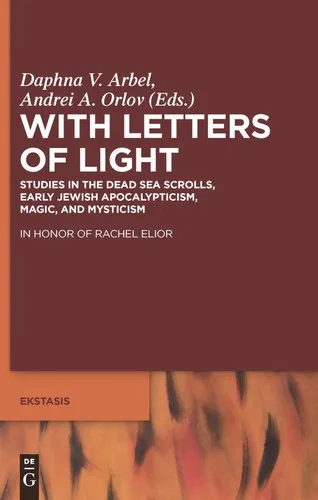
Sylva Harst's Brauchen wir einen Messias? approaches the perennial question of salvation not through dogma, but through a sharp, analytical lens. Published in 2009, the book offers a compelling deconstruction of the messianic impulse, dissecting its roots in both individual psychology and broader cultural narratives. Harst avoids easy answers, instead meticulously unpacking the societal needs and anxieties that foster the yearning for a savior. A particular strength lies in the work's exploration of how this archetype shifts and adapts across different historical epochs, moving from ancient myth to contemporary political figures. However, the book's dense academic prose can, at times, obscure its otherwise potent observations, demanding significant reader engagement. The chapter dissecting the "Christus Patiens" versus "Christus Triumphans" dichotomy, while illuminating, requires careful attention to grasp its full implications. Ultimately, Harst provides a valuable, if demanding, framework for understanding a persistent human fascination.
📝 Description
84
Sylva Harst's 2009 book, "Brauchen wir einen Messias?", questions the enduring human need for saviors.
Published in 2009, Sylva Harst's "Brauchen wir einen Messias?" offers a critical look at the messianic archetype. The book examines why people seek saviors, both as individuals and in groups. Harst analyzes the psychological and social reasons behind this search, showing how it appears in different cultures and throughout history. It is not a religious text, but rather an analysis of a common human behavior.
This book suits readers interested in belief psychology, religion's social aspects, and how archetypal figures affect contemporary life. It appeals to those who question common ideas and want to understand what drives collective hopes, including the admiration of leaders or saviors. The work is good for anyone thinking about cultural patterns, occult studies, or the connection between myth and reality. Those familiar with Jungian psychology or archetypal criticism will find much to consider.
Harst's work engages with the occult tradition's long interest in archetypes and symbolic figures. While not strictly an occult text, it shares ground with thinkers like Carl Jung, who investigated the power of universal symbols and the collective unconscious. The book's focus on the messianic figure, a potent archetype in many spiritual traditions, situates it within a broader discussion of humanity's search for meaning and redemption, often explored in esoteric philosophy.
💡 Why Read This Book?
• Understand the psychological underpinnings of the "savior complex" as detailed in Sylva Harst's analysis, moving beyond superficial interpretations to grasp its societal functions. • Gain insight into the evolution of the messiah archetype from ancient myths to modern political figures, as explored in the work's historical contextualization. • Critically examine the role of collective anxieties and the "collective unconscious" in perpetuating the search for saviors, a central theme presented in Harst's 2009 publication.
⭐ Reader Reviews
Honest opinions from readers who have explored this book.
❓ Frequently Asked Questions
What is the primary focus of Sylva Harst's book 'Brauchen wir einen Messias?'
The book critically examines the messianic archetype and the human tendency to seek saviors, exploring its psychological, sociological, and historical dimensions without engaging in theological debate.
When was 'Brauchen wir einen Messias?' first published?
Sylva Harst's work was first published in 2009, placing its analysis within the context of early 21st-century societal and existential concerns.
Does the book offer a religious perspective on messiahs?
No, it approaches the subject from an analytical and critical standpoint, focusing on the archetype and its function in culture and psychology rather than on religious doctrine.
What kind of reader would benefit most from this book?
Readers interested in psychology, sociology, cultural analysis, archetypal studies, and critical examinations of belief systems, particularly those questioning societal narratives.
Are there specific psychological concepts discussed in the book?
Yes, the book touches upon concepts such as the 'savior complex' and the influence of the 'collective unconscious' in shaping our perceptions and desires for salvation.
What distinguishes this book from theological works on the subject?
Unlike theological works, Harst's book treats the messiah as a cultural and psychological phenomenon to be analyzed, rather than a figure of divine faith.
🔮 Key Themes & Symbolism
The Savior Archetype
This theme dissects the enduring power of the savior figure across cultures and history. Harst explores how this archetype manifests, from ancient myths to modern political and spiritual leaders, analyzing the underlying human needs for guidance, redemption, and ultimate solutions that fuel its persistence. The work examines the psychological allure and societal functions of such figures, often linked to the concept of the 'collective unconscious'.
Psychology of Belief
The book looks at the psychological mechanisms that drive belief in saviors and messianic narratives. It investigates the 'savior complex' not just as an individual trait but as a collective phenomenon, exploring how societal anxieties, a desire for order, and the search for meaning contribute to the widespread tendency to project ultimate hope onto external figures or ideologies.
Cultural and Historical Manifestations
Harst traces the evolution and adaptation of the messianic concept through various historical periods and cultural contexts. The work highlights how the archetype is reinterpreted and re-embodied to address the specific challenges and aspirations of different eras, moving beyond a singular religious interpretation to encompass broader socio-political and existential movements.
Critique of Societal Yearning
A central aspect is the critical examination of why societies repeatedly seek messiahs. The book questions the efficacy and potential dangers of this yearning, suggesting that the reliance on external saviors can impede individual agency and critical thought, while also serving as a coping mechanism for societal instability or existential dread.
💬 Memorable Quotes
Direct passages from the work, attributed to the author.
“The desire for a messiah is often a projection of unmet collective needs.”
— This interpretation suggests that the widespread human impulse to seek a savior figure stems not from an innate spiritual calling, but from a deficiency or unfulfilled requirement within society itself.
“Archetypes of salvation adapt to the anxieties of their time.”
— This highlights how the form and narrative of messianic figures change to reflect the specific fears and hopes prevalent in different historical eras, demonstrating the archetype's flexibility.
“We look for external redemption when internal integration falters.”
— This points to a potential psychological cause for seeking a savior: a failure in individual or collective self-healing and wholeness, leading to a search for salvation from an outside source.
“The messianic narrative provides order in the face of chaos.”
— This interprets the function of messianic stories as a tool for imposing structure and meaning onto perceived disorder or randomness, offering a sense of control and predictability.
“Identification with a savior can be a substitute for personal responsibility.”
— This suggests that adopting a messianic figure as a guide or ideal can sometimes serve as an avoidance of the difficult task of taking personal accountability for one's actions and destiny.
🌙 Esoteric Significance
Tradition
The work draws implicitly from Jungian psychology, particularly its exploration of archetypes and the collective unconscious, which are foundational to many modern esoteric traditions. While not strictly adhering to a single lineage like Hermeticism or Gnosticism, it applies an analytical framework that speaks to esoteric thought by examining universal patterns of human consciousness and myth-making.
Symbolism
The primary symbol is the 'Messiah' itself, representing not just a religious figure but the archetype of the ultimate redeemer, healer, or liberator. Another motif is the 'shadow,' representing the repressed or unacknowledged aspects of the psyche and society that often contribute to the projection of the savior onto external figures. The concept of 'transference,' borrowed from psychology, is also symbolically crucial, illustrating how psychic energy is displaced onto leaders or ideologies.
Modern Relevance
Harst's analysis remains relevant for contemporary discussions surrounding political leadership, cult dynamics, influencer culture, and the pervasive search for simple solutions to complex global issues. Thinkers and practitioners interested in archetypal psychology, critical sociology, and the underlying mechanisms of belief formation continue to find value in its nuanced examination of the messianic impulse.
👥 Who Should Read This Book
• Students of Jungian psychology and archetypal studies seeking to understand the practical application of archetypes beyond theoretical constructs. • Critical thinkers and cultural analysts interested in deconstructing societal narratives and the psychology of mass movements and belief systems. • Esoteric practitioners and researchers interested in the symbolic and psychological underpinnings of savior figures across various spiritual and philosophical traditions.
📜 Historical Context
Published in 2009, Brauchen wir einen Messias? entered a cultural milieu still grappling with the aftermath of the early 2000s, marked by geopolitical shifts, rapid technological acceleration, and a pervasive sense of uncertainty. Sylva Harst's work can be situated within a broader intellectual discourse that included figures like Carl Jung, whose theories on archetypes and the collective unconscious provided a framework for understanding persistent symbolic patterns in human psychology. The book implicitly engages with post-modern critiques of grand narratives and the search for meaning in an increasingly fragmented world. While not directly engaging with contemporary philosophers like Slavoj Žižek, whose work also interrogated ideological structures and the figure of the 'Real,' Harst's analysis of the messianic impulse offers a complementary perspective on societal illusions and desires. The book's reception was likely within academic circles and among readers of esoteric and critical theory, addressing a growing societal introspection regarding leadership and collective destiny.
📔 Journal Prompts
The projection of the 'savior archetype' onto contemporary figures.
Reflecting on personal encounters with the desire for external salvation.
The societal function of messianic narratives in times of crisis.
Identifying personal 'shadow' aspects that might fuel a need for a savior.
The evolution of the 'hero' into the 'messiah' across mythologies.
🗂️ Glossary
Messianic Archetype
A universal, inherited pattern of thought or image derived from the collective unconscious, representing the ideal figure of a savior, liberator, or redeemer.
Savior Complex
A psychological pattern where an individual or group exhibits an obsessive need to 'save' others, often stemming from underlying personal issues or societal anxieties.
Collective Unconscious
A concept developed by Carl Jung, referring to the part of the unconscious mind derived from ancestral memory and experience, common to all members of the species.
Transference
In a psychological context, the redirection of feelings from one person or entity to another, often seen when individuals project expectations onto leaders or ideologies.
Archetype
A recurring symbol, character type, or motif in literature, art, or mythology that represents universal patterns of human nature and experience.
Mythopoetic
Relating to the creation or interpretation of myths; having qualities of myth-making.
Ideology
A system of ideas and ideals, especially one which forms the basis of economic or political theory and policy.
This book appears in 1 collection
🔮 Readers Also Liked
Browse all →









From the “Messianism” Collection
View all →







More Free Occult Philosophy Books
View all →