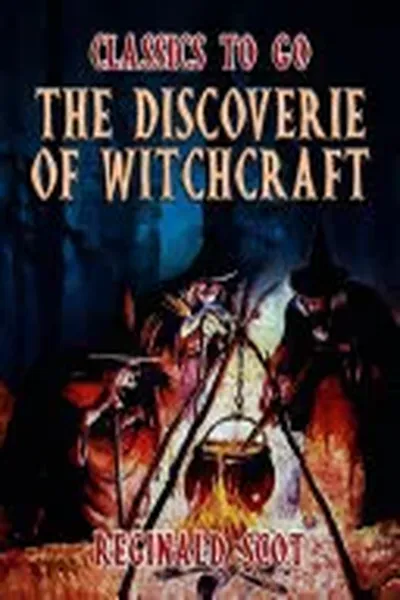
Discouerie of witchcraft

 78
78

Discouerie of witchcraft
Reginald Scot's "Discouerie of witchcraft" is a fascinating and frustrating document. Its strength lies undeniably in its meticulous cataloging of the very beliefs it sought to dismantle. Scot's detailed descriptions of charms, spells, and conjurations, presented in the context of exposing them as trickery, offer an unparalleled glimpse into the popular occult practices of late 16th-century England. His rational approach, attempting to explain phenomena through natural causes or human artifice rather than supernatural intervention, was remarkably forward-thinking for its time. However, the book's primary limitation is its sheer density and Scot's somewhat repetitive method of deconstruction. While his intention was noble – to curb persecution – the sheer volume of lore he records can, paradoxically, feel overwhelming to the modern reader seeking clarity rather than exhaustive documentation of error. The passage where he describes the alleged powers of the 'Gomory' (a demon) and then proceeds to explain it as the delusion of a susceptible mind exemplifies this dual nature. Ultimately, "Discouerie of witchcraft" is an indispensable primary source for understanding early modern skepticism, even if its polemical style occasionally obscures its progressive intent.
📝 Description
78
Reginald Scot published "Discouerie of witchcraft" in 1584, challenging contemporary beliefs about magic.
Reginald Scot's "Discouerie of witchcraft," published in 1584, is an early English text that systematically debunks popular notions of witchcraft and demonology. Scot meticulously examines alleged supernatural events, attributing them to natural causes, trickery, or delusion. He catalogs supposed magical practices, charms, and conjurations, not as genuine power, but as evidence of superstition and fraud. Scot's stated aim was to counter the widespread fear and persecution of accused witches, advocating for reason and empirical observation over blind faith.
This work is of interest to scholars of early modern English literature, historians of science, and those examining Elizabethan societal anxieties. It appeals to readers interested in the intellectual history of skepticism and the development of critical thinking. Students of demonology, religious persecution, or the cultural roots of early modern skepticism will find Scot's detailed examinations useful. Modern practitioners of ceremonial magic or occult studies may also find value in understanding the historical counterarguments and the intellectual climate that shaped early magical traditions.
Published during a period of intense witch-hunting across Europe, Scot's "Discouerie of witchcraft" confronted a climate shaped by religious upheaval and a widespread belief in supernatural influence. While not an esoteric text in itself, it engaged directly with popular understandings of magic, demons, and the occult that were prevalent in both religious and folk traditions. The book serves as a critical examination of these beliefs, highlighting the rationalist countercurrent that sought to explain phenomena through natural means rather than supernatural agency. It stands as a significant historical document for understanding the intellectual tensions surrounding magic and belief in the late 16th century.
💡 Why Read This Book?
• Understand the intellectual origins of modern skepticism by examining Scot's methodical refutation of demonological claims, a process crucial for comprehending the shift towards empirical reasoning in the 16th century. • Gain direct insight into popular magic and folk remedies of the Elizabethan era, as Scot details numerous charms and conjurations before debunking them, offering a unique historical record. • Appreciate the historical context of early witch trials by studying Scot's critique of judicial practices and his arguments against coerced confessions, directly challenging the prevailing legal and social attitudes of his time.
⭐ Reader Reviews
Honest opinions from readers who have explored this book.
❓ Frequently Asked Questions
What was Reginald Scot's primary motivation for writing 'Discouerie of witchcraft'?
Reginald Scot aimed to expose the fraudulent nature of many claims of witchcraft and sorcery, thereby reducing the persecution of individuals accused. He sought to replace superstition with reason and natural explanations for phenomena attributed to the supernatural.
How did 'Discouerie of witchcraft' differ from other contemporary works on magic?
Unlike many contemporary texts that accepted or promoted belief in witchcraft, Scot's work was fundamentally skeptical. He systematically analyzed and debunked alleged magical acts, attributing them to natural causes, deception, or psychological delusion, rather than demonic influence.
What historical period does 'Discouerie of witchcraft' illuminate?
Published in 1584, the book provides a detailed look into the popular beliefs, superstitions, and anxieties surrounding witchcraft in late Elizabethan England. It reflects the intellectual currents of the era, including early stirrings of rationalism.
Does Reginald Scot believe in any form of magic?
Scot distinguishes between 'natural magic,' which he sometimes allows as the study of natural philosophy, and 'superstitious magic,' which he vehemently denounces as fraudulent or demonic. His focus is on debunking the latter.
Is 'Discouerie of witchcraft' a practical guide to performing magic?
No, absolutely not. The book is a critical examination and refutation of magical practices. Scot details alleged spells and conjurations only to explain how they were performed through trickery or natural means, not to teach their execution.
Can 'Discouerie of witchcraft' be considered a precursor to modern science?
In a way, yes. Scot's emphasis on empirical observation, rational explanation, and skepticism towards unsubstantiated claims aligns with the developing scientific method. He argued for reason over superstition, a key principle in the scientific revolution.
🔮 Key Themes & Symbolism
Rationalism vs. Superstition
Scot's central project is the demarcation between rational inquiry and widespread superstition. He meticulously dissects supposed supernatural events, from demonic possession to love potions, attributing them to natural causes, optical illusions, or the deceptions of charlatans. His work champions empirical observation and logical deduction as superior methods for understanding the world, directly challenging the prevailing belief in pervasive diabolical influence and witchcraft prevalent in the late 16th century.
Critique of Witchcraft Accusations
A significant portion of the "Discouerie" is dedicated to dismantling the framework used to accuse and condemn individuals of witchcraft. Scot argues against the validity of confessions obtained under duress, the unreliability of eyewitness accounts, and the flawed logic underpinning many trials. He highlights the psychological factors, such as fear and delusion, that contributed to the witch hunts, advocating for a more rational and humane approach to justice.
Natural Magic and Illusion
Scot acknowledges a form of 'natural magic,' which he associates with the study of natural philosophy and the hidden properties of the world. However, he sharply contrasts this with 'superstitious magic,' which he identifies with fraud and demonic pacts. He often explains alleged magical feats as clever tricks of stagecraft, chemistry, or psychology, demonstrating how natural phenomena could be mistaken for the supernatural by the credulous.
Historical Record of Folk Practices
Despite his intent to debunk, Scot's work inadvertently serves as an encyclopedic record of the folk beliefs, charms, and magical practices prevalent in Elizabethan England. He describes numerous spells for healing, love, protection, and divination, alongside accounts of alleged demonic encounters. This detailed cataloging makes the book an invaluable, albeit unintentional, resource for historians studying the popular culture and occult traditions of the period.
💬 Memorable Quotes
Direct passages from the work, attributed to the author.
“I have heard of divers witches which, being asked how they could tell their secrets, have answered, that they were told them by the devil.”
— This highlights Scot's skepticism towards confessions in witch trials. He points out that accused individuals often cited the devil as their source of knowledge, a claim Scot viewed as a product of fear, delusion, or manipulation rather than genuine supernatural communication.
“There are many things that seem strange, which are not so.”
— This aphorism reflects Scot's epistemological stance. He suggests that perception and belief are fallible, and that appearances can be deceiving. Many alleged supernatural occurrences are simply misunderstood natural events or clever illusions.
“It is better to proceed by way of demonstration than by way of affirmation.”
— This statement underscores Scot's commitment to empirical evidence and logical proof over mere assertion. He advocated for demonstrating the natural causes behind alleged magic, rather than simply affirming its supernatural reality.
“For they that be witches, do not use to curse any man, but such as have offended them.”
— This is an interpretation of Scot's observation that accusations of witchcraft often stemmed from personal grudges rather than genuine supernatural malevolence. He sought to clarify the motivations behind accusations and trials.
💡 Key Ideas
Editorial paraphrase of the work's core concepts — not direct quotes.
The force of nature is not the devil.
This paraphrased concept captures Scot's core argument: many phenomena attributed to demonic intervention are, in fact, explainable by the natural laws and forces of the world, which were poorly understood at the time.
🌙 Esoteric Significance
Tradition
While "Discouerie of witchcraft" is primarily a work of skepticism, it engages with traditions that informed its context. Scot examines practices often associated with folk magic, ceremonial invocations, and alchemy, though he consistently refutes their supernatural efficacy. His distinction between 'natural magic' (understood as applied natural philosophy) and 'superstitious magic' (demonic or fraudulent) echoes earlier Neoplatonic and Renaissance debates about the nature of magic, placing his critique within a lineage of intellectual discourse on the occult.
Symbolism
Scot doesn't focus on symbolic interpretation in a traditional esoteric sense. Instead, his work is filled with the 'symbols' of superstition: specific charms, incantations, and alleged demonic sigils. For him, these are not symbols of hidden spiritual truths but rather markers of ignorance, deception, or the psychological projection of fear. For example, the detailed descriptions of supposed witch familiars function not as symbolic representations of inner states, but as cataloged 'evidence' of fraudulent claims.
Modern Relevance
Contemporary thinkers and practitioners interested in the history of skepticism, the sociology of belief, and the critical analysis of occult phenomena find Scot indispensable. His methodical debunking speaks to modern critical thinking and the scientific method. Furthermore, scholars of Western Esotericism often study Scot to understand the intellectual counter-currents against which magical traditions developed, providing crucial context for the evolution of Hermeticism, ceremonial magic, and modern occultism.
👥 Who Should Read This Book
• Historians of early modern Europe and the development of skepticism, seeking primary source material on popular beliefs and intellectual debates surrounding witchcraft. • Students of comparative religion and folklore, interested in cataloged folk practices, charms, and alleged supernatural phenomena from the Elizabethan era. • Critical thinkers and amateur philosophers who appreciate historical arguments for rationalism and the debunking of superstition, offering insight into the roots of modern empirical thought.
📜 Historical Context
Reginald Scot's "Discouerie of witchcraft," published in 1584, appeared during a period of heightened anxiety surrounding witchcraft in Europe. The intellectual landscape was shaped by the aftermath of the Reformation, with religious authorities on both sides increasingly viewing supernatural threats as real and imminent. Scot's work directly challenged the prevailing demonological theories, most notably those later codified by King James VI of Scotland in his "Daemonologie" (1597). While Scot's rationalist approach was ahead of its time, it found few immediate adherents among those actively prosecuting alleged witches. The book's detailed cataloging of magical practices, intended as refutation, ironically preserved much lore that might otherwise have vanished. It represented a significant, though initially marginalized, voice of skepticism in an era deeply invested in the reality of the occult.
📔 Journal Prompts
Reginald Scot's distinction between 'natural magic' and 'superstitious magic'.
The specific legal procedures Scot critiqued in witch trials.
Examining the 'Gomory' and other named demons mentioned by Scot.
Scot's explanation for why people confess to witchcraft.
The role of natural causes in Scot's debunking of alleged supernatural events.
🗂️ Glossary
Natural Magic
In Scot's context, this refers to the study and application of the hidden properties of natural things and philosophical principles, often involving complex devices or remedies, distinct from supernatural or demonic influence.
Superstitious Magic
Scot uses this term to denote magic based on false beliefs, demonic pacts, or fraudulent trickery. It encompasses sorcery, witchcraft, and conjurations he sought to expose as harmful delusions.
Demonology
The study of demons or beliefs about demons. Scot's work critically examines and often refutes the prevailing demonological theories of his time, which attributed many misfortunes and unusual events to the direct action of devils.
Conjuration
The act of invoking or calling up a spirit or devil by a formulaic or ritualistic utterance. Scot details many alleged conjurations to expose them as either meaningless or trickery.
Charms
Spells or incantations believed to have magical power. Scot meticulously lists various charms for love, healing, or protection, subsequently explaining them as simple remedies, superstitions, or elaborate hoaxes.
Apparitions
The appearance of something or someone, especially a ghost, that is usually seen at night. Scot attempts to provide natural explanations for sightings of supposed spirits or supernatural beings.
Philtres
A potion or charm believed to cause love or attraction. Scot analyzes the efficacy and composition of various love potions described in popular belief, often revealing them to be ineffective or based on common herbs.
🔮 Readers Also Liked
Browse all →








More by Reginald Scot
All books →


More Free Occult Philosophy Books
View all →