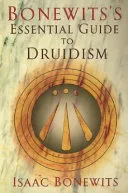
Bonewits's Essential Guide to Druidism
 83
83

Bonewits's Essential Guide to Druidism
Isaac Bonewits’s *Essential Guide to Druidism* delivers a clear, no-nonsense introduction to a spiritual path often obscured by romanticized notions. Bonewits, a respected voice in North American Druidry for decades, grounds the reader in both the scant archaeological realities of ancient Celtic priests and the varied landscape of modern revivalist groups. He adeptly separates historical speculation from contemporary practice, a crucial distinction often blurred in popular discourse. The chapter on the Druidic worldview, particularly its emphasis on nature and ecological responsibility, stands out as particularly well-articulated. However, the book occasionally feels overly didactic, particularly when addressing other esoteric traditions, which might alienate readers seeking purely comparative study. Despite this, its scholarly approach and accessible language make it a valuable primer. This guide is a solid, if occasionally dry, exposition of Druidic principles.
📝 Description
83
Published in 2002, Isaac Bonewits's guide aims to clarify Druidry for newcomers and seasoned practitioners alike.
Isaac Bonewits's 2002 book provides a structured introduction to the Druidic path. It covers the historical background of ancient Celtic priests and distinguishes them from later revivalist movements. The author addresses common misunderstandings about Druidism, offering a clear framework for its core beliefs and practices.
Central ideas within Druidism are explained, including its worldview, ethical principles, connection to nature, and the use of magic and ritual. Bonewits simplifies these concepts, making the spiritual and philosophical aspects understandable for a wide readership. This guide is suitable for those new to Druidism, students of comparative religion, mythology enthusiasts, and individuals interested in neopaganism.
This work situates modern Druidry within the broader landscape of Western esotericism and neopaganism. It draws connections between historical Celtic traditions and contemporary spiritual paths that emphasize nature, ancestry, and the cyclical understanding of life and death. The book addresses the reconstruction and adaptation of ancient practices for modern practitioners, a common endeavor within esoteric movements seeking to revive or reinterpret older spiritual systems.
💡 Why Read This Book?
• Gain a clear understanding of the historical evidence and mythological narratives surrounding ancient Celtic Druids, differentiating them from later revivals. • Learn about key Druidic concepts such as the sacredness of nature, the cycle of life and death, and the practice of magic as presented in the book's exploration of the Druidic worldview. • Discover the distinctions between various modern Druid orders and Bonewits's own approach, as detailed in his discussions on contemporary Druidism.
⭐ Reader Reviews
Honest opinions from readers who have explored this book.
❓ Frequently Asked Questions
What is the difference between ancient Druids and modern Druidism according to Bonewits?
Bonewits distinguishes between the historical Druids of ancient Celtic societies and the modern Druid revivals that began in the 18th century. He emphasizes the limited archaeological evidence for ancient practices and contrasts it with the diverse beliefs and rituals of contemporary Druidic organizations.
Does Bonewits's guide cover Druidic rituals?
Yes, the book provides an overview of Druidic rituals and prayers. It aims to demystify these practices, explaining their purpose and structure within the context of modern Druidry, making them understandable for newcomers.
What archaeological evidence does the book discuss for ancient Druids?
The work explores the archaeological findings related to Celtic cultures, which provide indirect clues about the Druids. This includes discussions on burial sites, artifacts, and settlements that offer context for the society in which Druids operated.
Is this book suitable for absolute beginners to spirituality?
Absolutely. Bonewits's Essential Guide to Druidism is structured to be accessible to those with no prior knowledge of Druidry or esoteric traditions. It lays a foundational understanding before exploring more complex topics.
When was Isaac Bonewits's Essential Guide to Druidism first published?
The first edition of Bonewits's Essential Guide to Druidism was published in 2006, making it a relatively modern exploration of Druidic history and practice.
What does the book say about Druidic mythology?
The guide examines the rich tapestry of Celtic mythology, which is a primary source for understanding the worldview and stories associated with Druidic traditions. It analyzes key myths and their significance.
🔮 Key Themes & Symbolism
Historical Druidism
This theme focuses on the scant but significant archaeological and historical records pertaining to the Druids of ancient Celtic societies. Bonewits meticulously examines evidence from Roman accounts and other ancient texts, differentiating them from the romanticized portrayals. He discusses the Druids' roles as priests, judges, and scholars within their communities, placing them within the context of Iron Age Europe and the broader Indo-European priestly traditions.
Modern Druid Revival
The book traces the re-emergence of Druidry from the 18th century onwards, exploring the various movements and orders that have shaped contemporary practice. Bonewits addresses the contributions of figures like John Toland and the evolution of Neo-Druidism, highlighting the diversity of beliefs and practices found in modern Druidic paths and how they interpret ancient traditions.
Druidic Worldview and Ethics
Central to Bonewits's exploration is the Druidic perspective on life, nature, and the cosmos. This theme studies concepts such as the interconnectedness of all things, reverence for the natural world, ethical responsibilities, and the cyclical nature of existence. It provides insight into how these principles inform Druidic practice and spiritual development.
Ritual and Magic
Bonewits clarifies Druidic rituals and magical practices, presenting them not as arcane secrets but as structured methods for spiritual connection and personal growth. The book explains the symbolism behind common rituals, the use of prayer, and the philosophical underpinnings of Druidic magic, making these elements accessible to students of the tradition.
💬 Memorable Quotes
Direct passages from the work, attributed to the author.
“The historical Druids are not the same as the modern ones.”
— This core assertion highlights Bonewits's commitment to scholarly rigor, distinguishing between documented ancient practices and the diverse interpretations and revivals of Druidry in later centuries.
“Archaeological evidence offers clues, but much about ancient Druids remains unknown.”
— This reflects Bonewits's cautious approach to historical claims, acknowledging the limitations of current knowledge while still exploring the available physical and textual evidence related to ancient Celtic priests.
“Modern Druidry encompasses a wide spectrum of beliefs and practices.”
— This interpretation points to the book's acknowledgment of the diversity within contemporary Druid revival movements, recognizing that there is no single monolithic form of modern Druidism.
“Rituals serve to connect individuals with the divine and the natural world.”
— This captures the functional and spiritual purpose of ritual as described by Bonewits, framing it as a tool for deepening one's relationship with both the sacred and the environment.
💡 Key Ideas
Editorial paraphrase of the work's core concepts — not direct quotes.
Druidry emphasizes reverence for nature and the cycles of life.
This paraphrase captures a fundamental tenet of the Druidic worldview as presented in the book, underscoring the spiritual significance attributed to the natural world and its inherent rhythms.
🌙 Esoteric Significance
Tradition
This work fits within the broader Western Esoteric Tradition, specifically focusing on Neo-Druidism. While ancient Druidism predates many formal esoteric systems like Hermeticism or Kabbalah, modern Druidry often incorporates elements of nature mysticism, animism, and a form of magic. Bonewits’s approach seeks to ground these practices in both historical scholarship and a practical, personal spiritual path, departing from purely ceremonial or occultist interpretations.
Symbolism
Key symbols explored include the Ogham, the ancient Celtic alphabet whose characters are associated with trees and natural forces, representing a deep connection to the earth. The Tree of Life, a recurring motif in Celtic art and mythology, symbolizes the interconnectedness of the cosmos, the underworld, and the terrestrial realm. Sacred groves and natural landscapes are also presented as potent symbolic spaces for ritual and contemplation.
Modern Relevance
Bonewits's text continues to be influential for contemporary practitioners and scholars of Neo-Druidism. It provides a foundational text for individuals exploring nature-based spirituality and ecological activism. Thinkers and groups focused on reconstructing pre-Christian European religions, as well as those interested in comparative mythology and animistic philosophies, often reference Bonewits's work for its blend of historical inquiry and practical guidance.
👥 Who Should Read This Book
• Aspiring Druids seeking a structured and historically informed introduction to the path, who want to understand the differences between ancient and modern practices. • Students of comparative religion and mythology interested in Celtic traditions and the evolution of spiritual movements in the West. • Individuals drawn to nature-based spirituality and ecological philosophies, looking for a comprehensive overview of Druidic principles and ethics.
📜 Historical Context
Published in 2006, *Bonewits's Essential Guide to Druidism* emerged during a period of increasing interest in neopaganism and alternative spiritualities. The early 21st century saw a proliferation of books attempting to codify and explain various esoteric traditions. Bonewits's work positioned itself within the lineage of modern Druid revivals that began in earnest in the 18th century, a movement often influenced by Romanticism and a desire to connect with pre-Christian European heritage. This revival stood in contrast to the dominant monotheistic religions of the West and also differed from other nature-based spiritualities gaining traction, such as Wicca. While the book benefited from the growing accessibility of academic research on Celtic history and mythology, it also navigated the challenges of presenting a coherent picture from fragmented historical data and diverse modern interpretations, facing potential criticism from both strict academic circles and other Druidic factions.
📔 Journal Prompts
The Druidic emphasis on nature's cycles and your personal connection to them.
Distinguishing between historical Druidic practices and modern interpretations.
Reflecting on the concept of the sacred grove in your own environment.
The role of ritual in connecting with the natural world.
How the Ogham symbols might relate to contemporary personal growth.
🗂️ Glossary
Druid
In historical context, a member of the priestly class in ancient Celtic societies, serving roles as judges, teachers, and spiritual leaders. In modern context, a practitioner of Neo-Druidism, a spiritual path inspired by ancient Druids but adapted for contemporary times.
Neo-Druidism
A modern spiritual movement inspired by the religious, spiritual, and cultural practices of the ancient Druids. It encompasses a wide range of beliefs, rituals, and organizations that seek to revive or reinterpret Druidic traditions.
Ogham
An ancient Celtic alphabet, consisting of twenty letters represented by lines and notches. Each letter is associated with a tree or plant, and the Ogham is often used in divination, magic, and as a symbolic system within Neo-Druidry.
Bard
In ancient Celtic society, a poet and storyteller, often holding a respected position alongside Druids and Ovates. In modern Neo-Druidry, Bardic roles often focus on creativity, poetry, music, and preserving cultural heritage.
Ovate
Historically, a student or initiate in the Druidic hierarchy, often associated with divination and healing. In modern Neo-Druidry, it represents a specific grade or role focused on healing, divination, and connection with the earth sciences.
Sacred Grove
A natural area, typically a forest or collection of trees, considered holy or imbued with spiritual significance in ancient Celtic and modern Druidic traditions. Groves were often sites for rituals and ceremonies.
Animism
The belief that natural objects, phenomena, and the universe itself possess souls or consciousness. Animism is a common worldview within many forms of Neo-Druidry, emphasizing the spiritual essence in all things.