American Dreamer
 83
83

American Dreamer
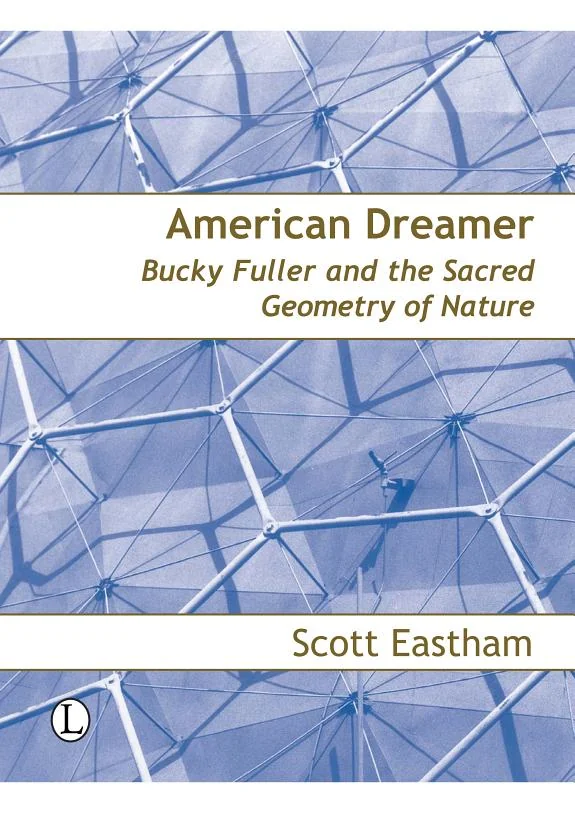
Scott Eastham’s American Dreamer offers a compelling examination of R. Buckminster Fuller’s multifaceted career, particularly through the lens of artistic application. The book succeeds by moving beyond a simple recounting of Fuller's inventions, instead exploring the philosophical underpinnings and aesthetic consequences of his work. Eastham’s analysis of Fuller's synergetics, for instance, provides a clear window into how the mathematician’s approach to systemic thinking could inform visual and structural art. A particular strength lies in the detailed exploration of how Fuller’s geodesic principles, often seen as purely structural, possessed an inherent aesthetic logic that resonated with artists. However, the work occasionally feels constrained by its singular focus, at times leaving the reader wishing for a broader engagement with Fuller’s social and political critiques beyond their artistic manifestation. Eastham’s discussion of Fuller’s concept of ephemeralization is particularly effective, illustrating how the drive for efficiency in design mirrors an artistic impulse to achieve maximum impact with minimal means. The verdict: a focused, insightful study for those interested in the intersection of technological idealism and artistic practice.
📝 Description
83
Scott Eastham's 2007 book examines R. Buckminster Fuller's ideas beyond invention to their artistic and social applications.
Published in 2007, American Dreamer by Scott Eastham looks at the wide-ranging work of R. Buckminster Fuller. Fuller was active in design, engineering, mathematics, and predicting social trends. This book goes beyond a simple biography. It shows how Fuller's concepts about structures, systems, and sustainability connected with creative fields. Eastham investigates the core principles behind Fuller's inventions, like the geodesic dome and the Dymaxion car. He traces their impact on aesthetic and conceptual art.
Eastham presents Fuller as more than an inventor. He was also a philosopher. Fuller's work offered a way to understand and engage with the physical and social world. The book is for readers interested in the connections between science, design, and philosophy. It will appeal to those who study architecture, engineering, and art history. It is also for people curious about technological utopianism and how abstract ideas can appear in tangible forms and art.
This book fits into a tradition that looks for deeper, often symbolic meanings in scientific and design principles. It considers R. Buckminster Fuller's work not just as practical engineering but as a form of applied philosophy. The focus on how abstract concepts manifest in tangible forms and artistic endeavors aligns with esoteric thought. This perspective suggests that great inventors and thinkers tap into universal patterns or archetypes. The book's interest in Fuller's 'visionary concepts' and their 'social prognostication' hints at a search for underlying order and a belief in the potential for design to reshape society, a common thread in esoteric interpretations of progress.
💡 Why Read This Book?
• Understand Fuller's concept of **synergetics** and how its principles of whole-system behavior can be applied to analyzing artistic compositions and design choices, offering a unique framework beyond traditional aesthetic theory. • Explore **ephemeralization** as a design philosophy, learning how Fuller’s drive to achieve more with less influenced not just engineering but also minimalist art and conceptual practices from the mid-20th century onwards. • Gain insight into **comprehensive anticipation** by examining Fuller's forward-thinking approach to problem-solving, and see how this analytical method can inform creative ideation and the development of complex artistic projects.
⭐ Reader Reviews
Honest opinions from readers who have explored this book.
❓ Frequently Asked Questions
What is the main focus of Scott Eastham's American Dreamer?
The book primarily examines the artistic applications and broader philosophical implications of R. Buckminster Fuller's innovative work in design, engineering, and social vision, moving beyond a purely technical appraisal.
When was American Dreamer first published?
American Dreamer by Scott Eastham was first published in 2007, reflecting on the legacy of R. Buckminster Fuller.
Which of R. Buckminster Fuller's concepts are explored in the book?
The book delves into Fuller's key ideas such as synergetics, ephemeralization, and comprehensive anticipation, exploring their influence on artistic and design principles.
Is American Dreamer a biography of R. Buckminster Fuller?
While it discusses Fuller's work extensively, the book's main focus is on the artistic and conceptual dimensions of his innovations, rather than a comprehensive personal biography.
Who would benefit most from reading American Dreamer?
Readers interested in the intersection of technology, design, philosophy, and art, particularly those fascinated by the work of R. Buckminster Fuller and his holistic approach to problem-solving.
What is the connection between Fuller's engineering and art as presented in the book?
Eastham illustrates how Fuller's systematic thinking, efficiency-driven designs (like the geodesic dome), and future-oriented philosophies provided a fertile ground for artistic interpretation and application.
🔮 Key Themes & Symbolism
Synergetics in Design
The book explores R. Buckminster Fuller's concept of synergetics, emphasizing that the whole is greater than the sum of its parts. Eastham illustrates how this principle, rooted in mathematical and systemic thinking, extends beyond engineering to inform artistic composition and design aesthetics. Fuller believed that understanding the interrelationships within a system was crucial, a perspective that can be applied to analyzing the balance, form, and function within a piece of art or architecture, revealing deeper layers of meaning and intentionality in creative works.
Ephemeralization and Efficiency
A central theme is Fuller's principle of ephemeralization, the drive to achieve 'more and more with less and less.' Eastham connects this engineering and design ideal to artistic practices that prioritize minimalism, conceptual clarity, and resourcefulness. The book suggests that the pursuit of elegant solutions, doing more with fewer elements, is a shared goal between innovative engineering and certain artistic movements, highlighting how efficiency can itself be an aesthetic quality and a philosophical stance against material excess.
Comprehensive Anticipation
Eastham examines Fuller's method of comprehensive anticipation, a holistic approach to problem-solving that considers all relevant factors for long-term impact. This concept is presented as a framework for understanding not just technological innovation but also the foresight required in artistic creation. The book implies that artists, like Fuller, can benefit from anticipating the broader implications and effects of their work, fostering a more responsible and integrated approach to creativity that considers its place within larger societal and environmental systems.
The Architect as Social Visionary
American Dreamer positions R. Buckminster Fuller as more than an inventor; he is depicted as a social visionary whose designs and ideas aimed to improve the human condition. The book explores how his architectural and engineering projects carried implicit social agendas, advocating for global cooperation, sustainability, and equitable resource distribution. Eastham analyzes how this visionary aspect of Fuller's work has inspired artists and thinkers to consider the social responsibility inherent in creative and technical endeavors, linking innovation directly to human progress.
💬 Memorable Quotes
Direct passages from the work, attributed to the author.
“Fuller's work demonstrates how understanding complex systems can inform artistic composition.”
— This interpretation highlights Eastham's central argument: R. Buckminster Fuller's mathematical and engineering concepts, particularly his ideas on synergetics and interconnectedness, provide a valuable framework for analyzing and creating art.
“Fuller's designs were seen as embodying a future-oriented, problem-solving ethos.”
— This highlights the book's portrayal of Fuller not just as an inventor but as a visionary whose work was intrinsically linked to addressing societal challenges and anticipating future needs, a perspective Eastham applies to his artistic legacy.
“The book examines how Fuller’s ideas on global thinking influenced creative fields.”
— This interpretation points to Eastham's exploration of Fuller's holistic and global perspective, showing how it provided a conceptual basis for artists and designers seeking to address interconnected global issues through their work.
💡 Key Ideas
Editorial paraphrase of the work's core concepts — not direct quotes.
The drive for 'more with less' in engineering mirrors artistic economy of means.
This paraphrase captures the essence of Fuller's ephemeralization principle as discussed in the book, drawing a parallel between his efficiency-focused design philosophy and artistic movements that value minimalism and impact through restraint.
Artistic applications of Fuller's concepts are explored beyond their technical function.
This paraphrase emphasizes that American Dreamer goes beyond the practical engineering of Fuller's inventions to investigate their symbolic, aesthetic, and philosophical dimensions as interpreted and utilized within the art world.
🌙 Esoteric Significance
Tradition
While R. Buckminster Fuller's work is primarily rooted in engineering, mathematics, and futurism, American Dreamer implicitly connects his ideas to broader esoteric traditions by exploring the universal principles underlying his designs. Fuller's emphasis on interconnectedness, systemic harmony, and efficient energy utilization can be seen as echoing Hermetic principles of "As Above, So Below" and the understanding of underlying cosmic order. His holistic approach to problem-solving and his vision for a sustainable global future align with esoteric goals of creating harmony between humanity and the cosmos, albeit through technological and design means rather than purely spiritual ones.
Symbolism
The geodesic dome, a prominent symbol of Fuller’s work, carries significant esoteric weight. Its inherent efficiency, structural integrity derived from minimal components, and spherical form can be interpreted as representing universal geometric perfection and the interconnectedness of all parts within a unified whole. The Dymaxion map, another key concept, symbolizes a desire to see the world with a more unified, less fragmented perspective, encouraging a global consciousness. These symbols, explored in their artistic manifestations, represent a yearning for order, efficiency, and a harmonious understanding of the planet, aligning with esoteric quests for universal truth and optimized existence.
Modern Relevance
In contemporary times, R. Buckminster Fuller's ideas, as examined through an artistic lens in American Dreamer, remain highly relevant. Thinkers and practitioners in fields ranging from sustainable design and permaculture to systems thinking and speculative architecture draw heavily on his principles. The book's exploration of how art can translate complex technical and philosophical ideas makes Fuller's vision accessible to a new generation. His emphasis on comprehensive anticipation and doing more with less continues to inform discussions on ecological crisis, technological ethics, and the role of design in shaping a more resilient and equitable future for humanity.
👥 Who Should Read This Book
• Students and practitioners of architecture and industrial design seeking to understand the philosophical and artistic dimensions of technological innovation, particularly Fuller’s groundbreaking work. • Art historians and critics interested in the intersection of science, technology, and visual culture, exploring how engineering concepts have influenced aesthetic movements. • Readers fascinated by visionary thinkers and utopian ideals, who appreciate interdisciplinary studies that connect scientific principles with creative expression and societal progress.
📜 Historical Context
Scott Eastham’s American Dreamer, published in 2007, arrives during a period of heightened awareness regarding sustainability and systemic thinking, echoing R. Buckminster Fuller’s lifelong preoccupations. Fuller, a prominent figure from the mid-20th century, developed concepts like the geodesic dome and advocated for global resource management. The intellectual currents of the late 20th and early 21st centuries, marked by environmental concerns and a fascination with complex systems theory, provided fertile ground for re-examining Fuller’s legacy. Eastham’s work taps into this, focusing on the artistic interpretations of Fuller’s designs and philosophies. This era also saw a continued engagement with utopian and technological thought, with thinkers like architectural critic Reyner Banham exploring the impact of technology on culture. Eastham’s specific focus on artistic applications connects Fuller’s engineering ingenuity to movements in conceptual art and design theory that were increasingly interested in the social and philosophical implications of form and function.
📔 Journal Prompts
Fuller's concept of synergetics and its manifestation in artistic structure.
The principle of ephemeralization as applied to visual or conceptual art.
Reflecting on comprehensive anticipation in the context of personal creative projects.
The geodesic dome as a symbol of systemic harmony and its artistic interpretations.
Analyzing a piece of art through the lens of doing 'more with less'.
🗂️ Glossary
Synergetics
R. Buckminster Fuller's term for the science of systems in cooperation, emphasizing that the behavior of whole systems is not predictable from their parts alone and that the whole is greater than the sum of its parts.
Ephemeralization
The principle of achieving 'more and more with less and less,' i.e., increasing the performance of a function and the efficiency of a given resource as while decreasing the use of resources.
Comprehensive Anticipation
Fuller's approach to problem-solving that involves considering all relevant factors and potential long-term consequences to anticipate future needs and challenges.
Geodesic Dome
A spherical or partially spherical shell structure or lattice, based on a network of great circles (geodesics) that approximate a sphere.
Dymaxion
A portmanteau of 'dynamic,' 'maximum,' and 'tension,' used by Fuller to describe his various inventions designed for maximum efficiency and utility.
World Game
A concept proposed by Fuller, intended as a simulation to solve global problems by analyzing available resources and determining how to best serve humanity.
Tensegrity
A structural principle based on the use of isolated, continuous tension with discontinuous compression elements, explored by Fuller as a fundamental principle of nature.
This book appears in 1 collection
🔮 Readers Also Liked
Browse all →









From the “Sacred Geometry” Collection
View all →









More Free Occult Philosophy Books
View all →