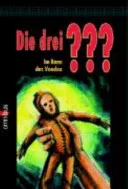
Die drei Fragezeichen im Banne des Voodoo
 77
77

Die drei Fragezeichen im Banne des Voodoo
André Minninger’s "Die drei Fragezeichen im Banne des Voodoo" offers a familiar comfort to long-time fans of the series, transplanting the iconic trio into a setting tinged with the mystique of Voodoo. The strength lies in its adherence to the established "Die drei ???" formula: intricate puzzles, distinct character roles, and a satisfying resolution. The book successfully builds suspense around the Voodoo elements, making them feel genuinely uncanny from the perspective of the young detectives. However, the portrayal of Voodoo itself risks oversimplification, leaning heavily on common, often sensationalized, tropes rather than offering a nuanced exploration of the spiritual tradition. A particular passage where the boys decipher a seemingly cursed artifact feels characteristic of the series' appeal, but also highlights the narrative's tendency to treat complex beliefs as mere plot devices. While entertaining, it falls short of providing genuine cultural insight. It’s a competent mystery, but its engagement with Voodoo remains superficial.
📝 Description
77
André Minninger's 2005 novel, Die drei Fragezeichen im Banne des Voodoo, places its young investigators in a Voodoo setting.
This installment of the German mystery series "Die drei ???" follows Justus, Peter, and Bob as they investigate strange occurrences attributed to Voodoo practices. The story unfolds as the trio encounters rituals, alleged curses, and hidden meanings, drawing them into a world that blends suspense with elements of this spiritual tradition. The narrative aims to present a mystery that appeals to young readers while introducing them to aspects of Voodoo culture.
The book targets pre-teen and teenage fans of the "Die drei ???" series who enjoy mysteries with a slightly unusual or darker tone. It will also interest those curious about different cultural beliefs, presented here in an approachable fictional context. Readers who like solving puzzles, deciphering clues, and facing the unknown alongside familiar characters will find this story engaging. It serves as an introduction for younger audiences to themes beyond typical detective work.
Published in 2005, the novel appeared during a popular period for the "Die drei ???" franchise in Germany. The series, originally adapted from "The Three Investigators," has a history of tailoring its plots for a German audience. The inclusion of Voodoo elements reflects a wider media interest in non-Western spiritual traditions, often simplified for younger viewers. The series' success in 2005, as in prior years, was built on its formula of child protagonists solving mysteries.
While presented through the lens of a young adult mystery series, the book touches upon Voodoo, a complex religious and spiritual tradition with roots in West Africa and the Caribbean. It engages with concepts like spirit possession, ritual practices, and the belief in supernatural forces influencing events. The narrative simplifies these elements for a fictional context, focusing on the perceived mystery and atmosphere rather than a deep theological or anthropological study. It functions as an accessible fictional entry point for younger readers to encounter themes often associated with the occult or spiritualism, filtered through a detective story format.
💡 Why Read This Book?
• Understand how the "Die drei ???" series integrates complex spiritual themes into a mystery framework, as seen in the specific plot involving Voodoo rituals and perceived curses. • Experience the thrill of deciphering clues related to unfamiliar cultural practices, exemplified by the protagonists' investigation into the mysterious events of 2005. • Appreciate the enduring appeal of André Minninger's storytelling, which consistently delivers suspense and problem-solving for young audiences, as demonstrated by the series' long-standing success.
⭐ Reader Reviews
Honest opinions from readers who have explored this book.
❓ Frequently Asked Questions
What is the main plot of "Die drei Fragezeichen im Banne des Voodoo"?
The story follows Justus, Peter, and Bob as they investigate strange occurrences seemingly connected to Voodoo practices. They must uncover whether these events are supernatural or the result of human deception, all while navigating the mysteries of rituals and symbols.
Who are the main characters in this "Die drei ???" book?
The main characters are the three young detectives: Justus Jonas, the intelligent leader; Peter Shaw, the athletic and cautious one; and Bob Andrews, the research-oriented member. They are the core investigative team known as 'Die drei ???'.
When was "Die drei Fragezeichen im Banne des Voodoo" first published?
This particular installment was first published in 2005, continuing the long-running series of mystery novels and audio dramas.
Does the book accurately represent Voodoo culture?
While the book uses Voodoo as a thematic element for its mystery plot, it primarily draws on popular perceptions and tropes for dramatic effect, rather than offering a deep or academically accurate depiction of the spiritual tradition.
What age group is "Die drei Fragezeichen im Banne des Voodoo" suitable for?
The book is generally suitable for readers aged 10 and up, aligning with the target audience of the "Die drei ???" series, which focuses on mystery and adventure for pre-teens and young teenagers.
What makes this "Die drei ???" book different from others?
Its distinctiveness comes from its focus on Voodoo as a central mystery element, introducing themes of rituals and spiritual beliefs that are less common in the series' typical crime-solving narratives.
🔮 Key Themes & Symbolism
The Mystique of Voodoo
The narrative leverages the popular, often sensationalized, imagery associated with Voodoo to create an atmosphere of suspense and intrigue. It introduces elements like ritualistic practices, symbolic objects, and the concept of curses, framing them as central to the mystery. The protagonists grapple with understanding these elements, questioning their authenticity and origin. This theme explores how cultural beliefs, when filtered through a mystery narrative, can generate fear and fascination, prompting the young detectives to seek rational explanations behind seemingly supernatural events.
Rationality vs. Superstition
A core tension in the book lies in the conflict between the rational, investigative approach of the three detectives and the superstitious fear that Voodoo elements can evoke. Justus, Peter, and Bob must use logic and evidence to unravel the mystery, contrasting with the villagers' or other characters' potential belief in curses or spiritual powers. The book encourages readers to critically assess claims of the supernatural, highlighting the importance of evidence-based reasoning in solving complex problems, even when faced with the unknown.
The Nature of Investigation
This book exemplifies the investigative methods employed by 'Die drei ???'. It showcases how the trio gathers clues, interviews witnesses, researches obscure topics (in this case, Voodoo), and pieces together a complex puzzle. The narrative demonstrates their distinct roles: Justus's strategic thinking, Peter's practical skills, and Bob's diligent research. The Voodoo context adds a layer of cultural research, pushing the characters to learn about and clarify practices unfamiliar to them, reinforcing the series' educational underpinnings.
Cultural Representation in Fiction
While serving a mystery genre, the book touches upon aspects of Voodoo, a complex spiritual tradition. It presents these elements through the simplified lens suitable for a young adult audience. The narrative's approach highlights how non-Western cultural practices are often adapted in mainstream media, balancing the need for exoticism and intrigue with a basic level of informational content. The story prompts reflection on how different cultures are perceived and portrayed in popular fiction.
💬 Memorable Quotes
Direct passages from the work, attributed to the author.
“Was it a genuine curse, or just a clever trick designed to scare people away?”
— This reflects the central question the protagonists must answer. It highlights the book's focus on discerning between the supernatural and human manipulation, a recurring theme in the 'Die drei ???' series.
“Every symbol on that altar seemed to hold a secret, a warning, or a plea.”
— This interpretation of a potential book passage emphasizes the visual and symbolic elements central to the Voodoo theme and the mystery. It suggests that understanding these symbols is key to unlocking the case.
“They had to rely on logic and evidence, even when confronted with the seemingly impossible.”
— This captures the investigative ethos of the main characters. It underscores their commitment to rational deduction as their primary tool, regardless of how strange or frightening the circumstances become.
💡 Key Ideas
Editorial paraphrase of the work's core concepts — not direct quotes.
The air crackled with an unfamiliar energy, as if the whispers of ancient spirits were carried on the wind.
This paraphrased sentiment captures the atmosphere the book attempts to build, where the setting itself seems infused with the mysterious power attributed to Voodoo, setting the stage for the detectives' investigation.
The jungle held secrets older than memory, and some secrets were best left undisturbed.
This paraphrased idea suggests the book's use of a remote or exotic setting to heighten the sense of mystery and danger, implying that examining certain traditions carries inherent risks.
🌙 Esoteric Significance
Tradition
This work does not align with a specific established esoteric lineage like Hermeticism or Kabbalah. Instead, it draws upon popularly perceived elements of Vodou (often conflated with broader African diasporic religions and misrepresented in Western media) for its narrative. The approach is more akin to a 'mystery-as-esoteric' trope found in youth fiction, where exotic or spiritual themes are used to create intrigue rather than to expound upon a specific tradition's doctrines or practices. It functions as a gateway to discussing spiritual concepts, albeit in a highly fictionalized and simplified manner.
Symbolism
The book likely employs symbols associated with Vodou, such as *veves* (ritual drawings), *gris-gris* (amulets), or representations of spirits (*lwa*), though these would be adapted for a young audience. These symbols, in the context of the narrative, would serve to mark locations, signify perceived magical influence, or act as clues. Their meaning within the story is less about authentic Vodou cosmology and more about their function in creating an atmosphere of the uncanny and driving the plot forward, representing the 'otherness' the detectives are investigating.
Modern Relevance
While "Die drei Fragezeichen im Banne des Voodoo" itself is not a primary text for modern esoteric practitioners, its approach to integrating cultural and spiritual themes into accessible narratives remains relevant. Contemporary authors and content creators for young audiences continue to explore diverse belief systems. The book’s success demonstrates an enduring audience interest in mysteries that touch upon the spiritual or the seemingly supernatural, prompting further exploration of these topics through more nuanced sources as readers mature.
👥 Who Should Read This Book
• Young readers aged 10+ who are fans of the "Die drei ???" series and enjoy mystery adventures with slightly unusual themes. • Individuals curious about how different cultural and spiritual practices are portrayed in popular fiction for younger demographics. • Parents or educators looking for engaging mystery novels that can spark conversations about cultural representation and critical thinking.
📜 Historical Context
Published in 2005, "Die drei Fragezeichen im Banne des Voodoo" arrived at a time when the "Die drei ???" franchise, based on Robert Arthur Jr.'s "The Three Investigators", was a cultural phenomenon in Germany, with a robust market for its audio dramas and books. André Minninger, a prolific author for the series, contributed to its sustained popularity. The inclusion of Voodoo themes reflects a broader media tendency in the early 2000s to explore non-Western spiritual practices, often simplified for younger audiences. While not directly engaging with academic discourse, the book's release occurred during a period of increased global interconnectedness, where exposure to diverse cultures, albeit mediated through popular fiction, was growing. Unlike more academic works on comparative religion, this book prioritized mystery and adventure, using Voodoo as a backdrop for suspense. There were no noted major controversies or specific academic citations regarding this particular installment upon its release, typical for the series' genre.
📔 Journal Prompts
The mysterious symbols found in the Voodoo rituals: what might they represent beyond the narrative's immediate plot?
The detectives' reliance on logic: how does this contrast with the fear and superstition surrounding the Voodoo elements?
Reflect on a time you encountered a belief or practice completely unfamiliar to you; how did you approach understanding it?
Consider the impact of setting on mystery; how does the Voodoo-themed environment in the book enhance suspense?
Analyze the balance between entertainment and cultural portrayal in "Die drei Fragezeichen im Banne des Voodoo".
🗂️ Glossary
Voodoo
A complex religious tradition with African roots, practiced primarily in Haiti and other parts of the Caribbean and Americas. It involves the veneration of spirits (lwa), ancestor worship, and ritual practices, often misrepresented in popular culture.
Curse
In a fictional context, a curse is often depicted as a supernatural power or influence intended to cause misfortune or harm to a person or place, a common trope in mystery and fantasy narratives.
Ritual
A sequence of actions or activities performed in a prescribed order, often with symbolic meaning, used in religious ceremonies, cultural practices, or even as part of a mystery plot to signify intention or power.
Altar
A raised structure or place, typically in a sacred place or home, used for worship, sacrifice, or as a focal point for rituals and offerings, often adorned with symbolic objects.
Superstition
An excessive belief in and reverence for the supernatural, especially in the efficacy of magic, omens, or other phenomena attributed to occult forces rather than natural causes.
Detective Trio
Refers to the core investigative team of 'Die drei ???'—Justus, Peter, and Bob—known for their distinct skills and collaborative approach to solving mysteries.
Veve
A ritual symbol drawn on the ground or floor in Vodou ceremonies, representing a specific lwa (spirit) and serving as a point of invocation and connection during rituals.