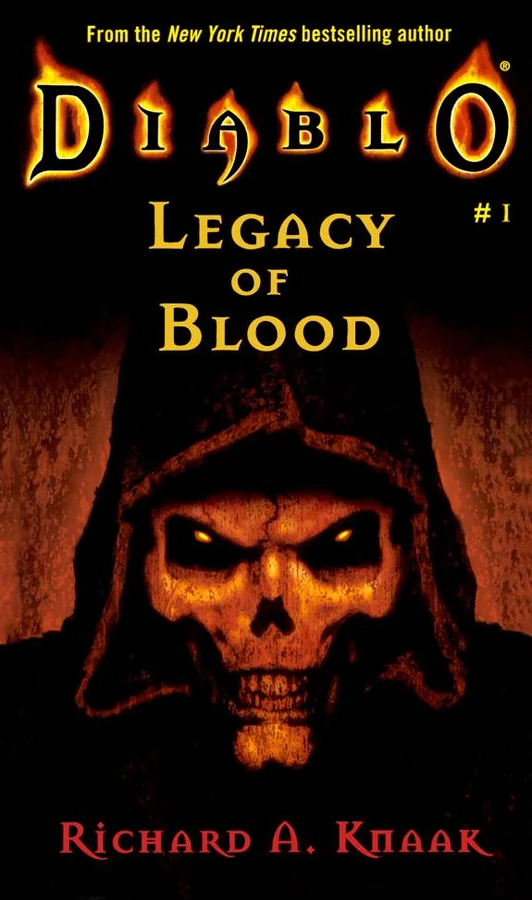
Diablo: Legacy of Blood
 73
73

Diablo: Legacy of Blood
Richard A. Knaak's Diablo: Legacy of Blood grapples with the classic Faustian bargain, set against a backdrop of arcane discovery. The initial premise, wherein protagonist Norrec Vizharan stumbles upon an artifact of unimaginable power, promises a descent into a corrupted quest. Knaak excels at depicting the visceral consequences of unchecked ambition, particularly through Vizharan's transformation. However, the narrative occasionally strains under its own lore, with certain plot developments feeling more convenient than earned. The depiction of the 'artifact beyond his wildest dreams' is a strong anchor, but the surrounding character motivations sometimes lack the same depth. Ultimately, the book delivers a potent, if occasionally uneven, exploration of desire and its terrible cost.
📝 Description
73
Richard A. Knaak's 2001 novel, Diablo: Legacy of Blood, centers on the dark consequences of wielding ancient, cursed artifacts.
Published in May 2001, Diablo: Legacy of Blood transports readers to a world where potent relics carry dangerous repercussions. The story follows characters as they pursue these powerful objects, often unaware of the true cost. Ambition drives many of these pursuits, leading to morally grey decisions and a struggle against overwhelming temptation. The narrative questions the nature of heroism and villainy when faced with such power.
Knaak's work emerged during a dynamic period for fantasy literature, drawing on established genre conventions while weaving in original story elements. The novel engages with themes of inherited burdens and the choices individuals make to shape their own destinies. Readers will encounter characters grappling with the corrupting influence of forbidden knowledge and the blurred lines of morality. The book examines the weight of legacy, both the one passed down and the one forged through action.
Diablo: Legacy of Blood fits within a tradition of dark fantasy that examines the occult through the lens of personal struggle and corrupting artifacts. It touches on themes common in occult fiction, such as forbidden knowledge leading to ruin and the inherent danger in seeking power beyond mortal ken. The narrative explores how ancient forces and their relics can ensnare individuals, mirroring occult concepts of ritualistic danger and the unintended consequences of dabbling in the unknown. The story emphasizes the blurred lines between good and evil when confronted by supernatural temptation.
💡 Why Read This Book?
• Gain insight into the corrupting nature of power through Norrec Vizharan's descent, a narrative arc that illustrates the perils of unchecked ambition. • Understand the thematic exploration of how ancient artifacts can both grant immense power and exact a devastating toll, as seen with the central relic. • Experience a dark fantasy narrative that questions the boundaries between good and evil, particularly relevant for those interested in morally complex characters within epic settings.
⭐ Reader Reviews
Honest opinions from readers who have explored this book.
❓ Frequently Asked Questions
What is the central conflict in Diablo: Legacy of Blood?
The central conflict arises when Norrec Vizharan discovers a powerful artifact. This discovery triggers a nightmarish chain of events, forcing him to confront the immense power and dangerous consequences associated with the relic.
Who is Norrec Vizharan?
Norrec Vizharan is the protagonist of Diablo: Legacy of Blood. He is depicted as someone on a quest for magical treasure who finds an artifact that dramatically alters his destiny and moral path.
What are the main themes explored in the book?
The novel explores themes of ambition, the corrupting influence of power, the price of forbidden knowledge, and the concept of legacy. It delves into how individuals grapple with extraordinary power and its ramifications.
When was Diablo: Legacy of Blood first published?
Diablo: Legacy of Blood was first published in May 2001.
Is this book part of a series?
Diablo: Legacy of Blood is part of the Diablo series, which is based on the popular video game franchise. It expands upon the lore and narrative of the Diablo universe.
What kind of fantasy is Diablo: Legacy of Blood?
It is a dark fantasy novel, characterized by its exploration of morally ambiguous characters, the corrupting influence of power, and often grim narrative outcomes. It fits within the epic fantasy subgenre.
🔮 Key Themes & Symbolism
The Corrupting Artifact
The narrative hinges on the discovery of a singular artifact, an object of immense magical potential that serves as a catalyst for Norrec Vizharan's transformation. This relic embodies the allure and danger of forbidden power, illustrating how even the pursuit of treasure can lead to moral compromise. Its presence drives the plot, forcing characters to confront their deepest desires and the devastating consequences of wielding forces beyond mortal comprehension.
Ambition and Its Price
Ambition is a driving force for the characters, particularly Norrec. His quest for magical treasure leads him to an artifact that promises ultimate power, but at a steep cost. The book meticulously details the psychological and physical toll this pursuit takes, serving as a cautionary tale about the dangers of unchecked desire and the sacrifices one is willing to make for power or gain.
Legacy of Blood
The title itself suggests a central theme: the enduring impact of past actions and inherent destinies. Whether it refers to ancestral curses, the blood spilled in conflict, or the indelible marks left by powerful magic, this theme underscores the cyclical nature of violence and fate. Characters are often bound by or reacting against the legacies they inherit or create through their choices.
Moral Ambiguity
Diablo: Legacy of Blood often blurs the lines between hero and villain. Characters are not presented in simple black and white. Norrec's journey, in particular, explores the descent from a questing individual to someone entangled in dark forces, forcing readers to question the nature of heroism when faced with overwhelming temptation and corrupting influences.
💬 Memorable Quotes
Direct passages from the work, attributed to the author.
“An artifact beyond his wildest dreams.”
— This phrase expresses the central inciting incident. It highlights the extraordinary nature of the discovery, hinting at both immense potential and unforeseen dangers that will propel the narrative forward.
“Living a nightmare.”
— This captures the protagonist's reaction to his discovery. It signifies that the artifact, rather than bringing fortune, plunges him into a perilous and terrifying situation, underscoring the dark fantasy elements.
“Quest for magical treasure.”
— This establishes the initial motivation of the protagonist, Norrec Vizharan. It sets up the narrative's entry point into a world of adventure and the supernatural, before the true peril is revealed.
“The blood of his ancestors.”
— This concept, implied by the title, suggests a connection to lineage and inherited destiny or curses, hinting at deeper, perhaps inescapable, influences on the characters' lives and actions.
“Power beyond comprehension.”
— This phrase speaks to the nature of the artifact Norrec finds. It implies a force so potent that its full scope is unknowable, suggesting a narrative focused on the overwhelming and potentially destructive nature of such power.
🌙 Esoteric Significance
Tradition
While not strictly an esoteric text in the vein of classical Hermeticism or Gnosticism, Diablo: Legacy of Blood engages with themes resonant in occult literature, particularly the concept of forbidden knowledge and the corrupting influence of power. It reflects the Faustian bargain, a motif present in various mystical traditions where human ambition leads to pacts with darker forces, often resulting in spiritual or existential peril.
Symbolism
The central 'artifact' functions as a potent symbol of temptation and the allure of ultimate power, a common motif in esoteric narratives representing the Shadow self or the threshold guardian. The 'blood' in the title can symbolize lineage, inherited curses, or the vital life force itself, suggesting that the conflict has deep, perhaps ancestral, roots or requires immense sacrifice.
Modern Relevance
Contemporary dark fantasy authors and game developers continue to explore the corrupting nature of power and the consequences of forbidden knowledge, themes central to Diablo: Legacy of Blood. Its narrative structure, focusing on a quest for potent relics and the moral compromises involved, remains relevant in discussions of power dynamics and the human psyche's susceptibility to temptation in speculative fiction.
👥 Who Should Read This Book
• Fans of the Diablo video game franchise seeking to deepen their understanding of the game's lore and narrative universe. • Readers of dark fantasy interested in tales of corrupted heroes, ancient artifacts, and the perilous pursuit of power. • Enthusiasts of epic fantasy narratives that feature intricate world-building and morally complex characters facing dire circumstances.
📜 Historical Context
Published in May 2001, Diablo: Legacy of Blood arrived during a flourishing period for dark fantasy, building upon the foundations laid by authors like Robert E. Howard and modern interpretations of grim narratives. The early 2000s saw a surge in interest in lore-rich worlds, often fueled by the success of tabletop role-playing games and early online gaming communities. While Knaak's work draws from established fantasy tropes, it operates within the Diablo universe, a franchise that already had a significant following by 2001 due to its 1996 game release. This context provided a ready audience but also meant the narrative had to contend with existing lore. Unlike more literary fantasy of the era, such as that explored by authors like Neil Gaiman, Knaak's focus is on a more action-oriented, lore-heavy narrative within a pre-established, dark-themed gaming world.
📔 Journal Prompts
Norrec Vizharan's discovery of the artifact.
The concept of a 'legacy of blood' in your own life.
The balance between ambition and self-preservation.
The nature of the 'nightmare' experienced by the protagonist.
Confronting power beyond comprehension.
🗂️ Glossary
Artifact
A powerful object, often ancient and imbued with magical properties, that plays a central role in the plot. In this context, it represents both immense potential and significant danger.
Quest
A journey undertaken by the protagonist, typically with a specific goal, such as finding a magical treasure. It serves as the narrative's driving force and the catalyst for encountering peril.
Nightmare
A state of extreme distress, fear, or suffering, often resulting from the protagonist's encounter with the artifact. It signifies the dark and perilous turn the story takes.
Magical Treasure
Valuable items possessing supernatural powers or significance. The pursuit of such treasures often leads characters into dangerous situations and moral quandaries.
Legacy
Something inherited from an ancestor or predecessor. In the context of the title, it implies inherited traits, curses, or the lasting impact of past actions.
Dark Fantasy
A subgenre of fantasy characterized by its grim atmosphere, morally ambiguous characters, and exploration of darker themes such as corruption, horror, and the corrupting nature of power.
Forbidden Knowledge
Information or power that is dangerous or taboo to possess or use. Accessing such knowledge often comes with severe consequences.
This book appears in 1 collection
🔮 Readers Also Liked
Browse all →









From the “Angels” Collection
View all →

More Free Occult Philosophy Books
View all →