Dawnforge
 80
80

Dawnforge
Benage’s Dawnforge presents a compelling vision of a world saturated with untamed magic. The depiction of the era before the Great Empires fell is particularly striking, offering a sense of raw potential and nascent conflict. I found the exploration of how magic itself might have shaped societal structures, leading to the eventual schism of elvenkind, to be the work's strongest element. However, the sheer scope of the world-building occasionally outpaces narrative momentum, leaving some character arcs feeling less developed than the overarching cosmology. The passage detailing the 'Whispering Spires' and their connection to the primal ley lines offers a fascinating glimpse into the book's unique magical theory. Ultimately, Dawnforge is a substantial, if occasionally dense, exploration of a world's magical dawn.
📝 Description
80
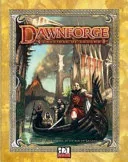
Greg Benage's Dawnforge, published in 2004, depicts a world steeped in raw, unformed magic.
Greg Benage's 2004 novel, Dawnforge, transports readers to a time before elven societies fractured and empires crumbled. The story is set during a primordial era where magic is a fundamental force, shaping existence before it was codified or limited by civilization. It focuses on the genesis of magical systems and how these nascent structures influence early societies. The narrative examines the societal consequences of potent, pervasive magic, illustrating its role in culture, power struggles, and the very fabric of the world. The splitting of elven nations and the eventual fall of empires are shown as direct outcomes of this unstable magical environment.
This book will appeal to readers interested in the origins of magic and the development of fictional cultures. Those who appreciate detailed world-building, particularly in pre-historical fantasy settings, will find Dawnforge rewarding. It examines the formative stages of imaginary civilizations and their magical foundations, offering a look at the roots of conflict and cultural differences. Benage builds on the tradition of detailed mythopoeia, focusing on a unique period before a magical epoch's collapse.
Dawnforge taps into the literary tradition of mythopoeia, focusing on the creation of a world with its own deep history and magical laws. It examines the concept of primal magic as a raw force that predates structured systems, exploring how its untamed nature influences early societies and leads to societal shifts, such as the fragmentation of peoples and the decline of civilizations. This approach resonates with certain esoteric traditions that consider foundational energies and their impact on collective consciousness and societal evolution.
💡 Why Read This Book?
• Gain insight into the mechanics of a world where magic is a foundational force, by examining the societal structures that arise before the advent of codified empires. • Understand the origins of conflict and divergence within fictional societies, specifically through the narrative's depiction of the elven split. • Experience the atmosphere of a pre-civilization era, exploring the untamed aspects of magic as presented in the narrative's early chapters.
⭐ Reader Reviews
Honest opinions from readers who have explored this book.
❓ Frequently Asked Questions
What is the primary setting and time period of Greg Benage's Dawnforge?
Dawnforge is set in a fantastical world during a primordial era, before the fall of great empires and the division of elven nations. It focuses on a time when magic was potent and pervasive.
What are the main themes explored in Dawnforge?
The book explores themes of primal magic, societal formation, the origins of conflict, and the consequences of unchecked magical power on civilization and culture.
Is Dawnforge part of a series?
As of its initial publication in 2004, Dawnforge was presented as a standalone work, focusing on a specific era and set of events within its world.
What kind of magic system does Dawnforge feature?
The novel depicts a system of primal, untamed magic that is foundational to the world's existence and actively shapes its societies and landscapes.
Who are the main non-human races or groups in Dawnforge?
The book prominently features elven nations, detailing their division into distinct factions during the narrative's unfolding historical context.
What is the significance of the 'Great Empires' mentioned in the blurb?
The 'Great Empires' represent a past or nascent era of organized power structures whose eventual fall is a backdrop to the world's development, contrasting with the primal state depicted.
🔮 Key Themes & Symbolism
Primal Magic
The core of Dawnforge lies in its depiction of magic as a raw, elemental force. It's not a learned skill so much as an inherent aspect of the world, influencing everything from the landscape to the very nature of its inhabitants. The narrative explores how this untamed power operates before societal structures attempt to control or define it, presenting a vision of magic as a wild, sometimes dangerous, foundational element of existence.
Societal Genesis
The book examines the birth and evolution of societies within this magically charged environment. It particularly focuses on the formative periods of civilizations, illustrating how the pervasive influence of magic shapes governance, culture, and inter-group relations. The eventual split of the elven nations serves as a key example of how differing responses to or applications of primal magic can lead to profound societal divergence.
The Fall and Division
Dawnforge situates its narrative against the backdrop of declining empires and fracturing peoples. The elven schism is a central element, suggesting that the very forces that underpin a world's creation can also sow the seeds of its division. This theme explores the inherent instability within powerful magical systems and the societal repercussions of such fragmentation.
Pre-Imperial Eras
The setting deliberately eschews established empires and nations, focusing instead on an earlier, more elemental phase of civilization. This allows for an exploration of power dynamics and societal structures in their nascent forms. The work provides a glimpse into how societies might function when magic is more dominant than organized political or military might.
💬 Memorable Quotes
Direct passages from the work, attributed to the author.
“The world pulsed with an energy unbound by mortal decree.”
— This phrase captures the essence of the book's setting: a primordial time where magic was an intrinsic, wild force, not yet subject to the laws or limitations that would later be imposed by organized civilizations.
“Before the High Kings, before the Sundering, the paths of the Eldar were one.”
— This highlights the narrative's focus on a pre-history, specifically referencing the unified state of the elven peoples (Eldar) before a significant event (the Sundering) caused their division, a central theme in the book's world-building.
“Magic was the air they breathed, the stone beneath their feet.”
— This emphasizes the pervasive and fundamental nature of magic in the world of Dawnforge. It suggests magic was not an external force to be wielded, but an integral part of the environment and existence itself.
“Empires rose and crumbled like sandcastles against the tide of primal forces.”
— This conveys the fragility of organized power structures in the face of the world's untamed magical energies and natural cycles. It underscores the theme of powerful, fundamental forces overshadowing the achievements of civilization.
“The whispers of the Old Wood held more power than any decree.”
— This speaks to the ancient, perhaps sentient, natural world holding sway over the nascent or developing societies. It contrasts the perceived authority of civilization with the deeper, inherent power of the natural and magical world.
🌙 Esoteric Significance
Tradition
While Dawnforge does not explicitly align with a single esoteric tradition such as Hermeticism or Kabbalah, its exploration of primal, untamed magic and the foundational forces of a world touches upon themes common in creation myths and cosmogonies found across various mystical traditions. It presents magic as an inherent, almost elemental power, akin to the *anima mundi* or world-soul concept, existing before the advent of organized magical systems or human understanding.
Symbolism
The concept of the 'Sundering' of the elven nations serves as a potent symbol of division and fragmentation, often seen in esoteric thought as a necessary precursor to individualization or the establishment of distinct paths. The 'Great Empires' that have fallen symbolize transient power structures, contrasted with the enduring, primal forces of magic that shape the world's fundamental reality, representing the eternal over the temporal.
Modern Relevance
Contemporary fantasy authors and world-builders continue to draw inspiration from narratives that explore the origins of magic and society. The focus on primal forces and the consequences of societal division in Dawnforge offers a framework for understanding how foundational elements can lead to complex cultural landscapes. It appeals to modern discussions on systemic origins and the deep roots of conflict within fictional universes, relevant to game design and speculative fiction writers.
👥 Who Should Read This Book
• Aspiring fantasy world-builders seeking to create unique pre-history narratives, particularly those interested in the origins of magic and societal structures. • Readers of high fantasy who enjoy exploring the genesis of civilizations and the impact of magic on early cultures, moving beyond standard medieval settings. • Enthusiasts of comparative mythology and cosmogony who appreciate narratives that examine the foundational myths and elemental forces shaping a fictional world.
📜 Historical Context
Greg Benage's Dawnforge, published in 2004, emerged during a flourishing period for epic fantasy literature. While not directly aligned with a specific academic or occult movement of the time, it tapped into the enduring fascination with creation myths and pre-history prevalent in the genre, influenced by foundational works like those of J.R.R. Tolkien. The early 2000s saw continued critical and popular engagement with complex world-building, making Benage's focus on a world's magical genesis timely. Unlike some contemporary works that might engage with contemporary occult philosophy, Dawnforge leans more towards mythopoeic fantasy, exploring societal development through a magical lens rather than direct engagement with specific esoteric traditions like Hermeticism or Gnosticism, though its themes of primal forces and societal splits echo broader mythological narratives.
📔 Journal Prompts
The nature of primal magic as the world's foundation.
Consequences of the elven Sundering on societal identity.
Visions of civilization before the fall of the Great Empires.
The role of untamed forces in shaping early cultures.
Personal reflections on the balance between societal order and primal power.
🗂️ Glossary
Primal Magic
The raw, elemental, and untamed magical energy that is inherent to the world of Dawnforge, existing before it is codified or controlled by societal structures.
The Sundering
An important event in Dawnforge's history where the elven nations split into distinct factions, marking a significant point of division and divergence.
Great Empires
Refers to powerful, established civilizations that existed or were in decline during the time period depicted, serving as a contrast to the more primal state of the world.
Eldar
The term used in Dawnforge to refer to the elven peoples, particularly in their unified state before the historical event known as the Sundering.
Old Wood
A symbolic or literal ancient, wild natural area within the book's setting, often associated with deep-rooted power and natural magic.
Pulsing Energy
Describes the pervasive and active nature of magic in the world, suggesting it is a dynamic and vital force, not static or dormant.
Unbound Decree
Refers to forces or energies that operate outside the control or jurisdiction of established laws, rulers, or societal commands, highlighting the untamed nature of primal magic.
This book appears in 1 collection
🔮 Readers Also Liked
Browse all →









From the “Spellcraft” Collection
View all →


More Free Occult Philosophy Books
View all →