Daughters of Alchemy
 80
80

Daughters of Alchemy
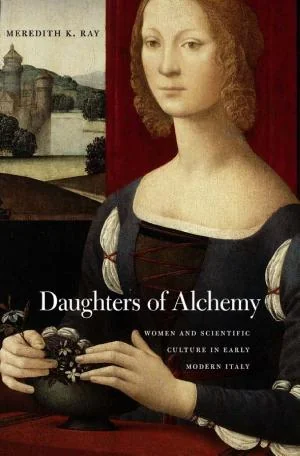
Meredith K. Ray’s "Daughters of Alchemy" compellingly reframes the Scientific Revolution, asserting women's central role in empirical culture. Ray’s meticulous research unveils how women, often operating within domestic spaces, were deeply involved in alchemical experimentation and the development of medicinal practices. The book’s strength lies in its detailed examination of women’s intellectual contributions, particularly their use of natural philosophy to argue for their equality. A limitation, however, is that the sheer density of information might occasionally make the narrative feel somewhat academic, potentially distancing readers less familiar with the period's intricate intellectual landscape. The exploration of how figures like Margaret Cavendish engaged with cosmological discoveries, even while facing societal constraints, is particularly illuminating. This is a vital corrective to historical narratives that have long marginalized female scientific agency.
📝 Description
80
Meredith K. Ray's Daughters of Alchemy revises the Scientific Revolution by highlighting women's active roles.
Meredith K. Ray’s "Daughters of Alchemy" reevaluates the Scientific Revolution, asserting that women were not just observers but active innovators in medicine and alchemy. The book details their experiments conducted in domestic and courtly settings, their involvement in cosmological discussions, and their use of natural philosophy to argue for intellectual equality. Ray focuses on how women applied alchemical principles to health and medicine, introducing concepts like "household alchemy" and "iatrochemistry." It examines their engagement in "salons and academies," where new ideas circulated and were debated.
The work challenges traditional historical narratives by centering female agency and contributions. It situates these women's practices within the intellectual currents of the 16th and 17th centuries, showing how they connected learned theory with practical application. This approach moves beyond accounts that focus solely on figures like Galileo and Newton, revealing a broader participation in scientific inquiry.
This book places women's alchemical practices within the broader Hermetic and alchemical traditions that flourished in early modern Europe. It connects their work to the philosophical and practical currents of the time, which often intertwined medicine, natural philosophy, and spiritual inquiry. By examining "household alchemy" and "iatrochemistry," Ray demonstrates how esoteric knowledge was integrated into daily life and applied to health and well-being, often outside formal academic or male-dominated spheres.
💡 Why Read This Book?
• Learn about "household alchemy" and its practical applications in medicine, as detailed in Ray's analysis of domestic practices during the Scientific Revolution. • Understand how women in the 17th century used "natural philosophy" to craft arguments for intellectual equality, challenging the era's patriarchal norms. • Discover the intellectual contributions of figures like Margaret Cavendish to cosmological debates, as explored within the context of early modern salons and academies.
⭐ Reader Reviews
Honest opinions from readers who have explored this book.
❓ Frequently Asked Questions
What specific alchemical practices are highlighted in Meredith K. Ray's "Daughters of Alchemy"?
The book emphasizes "household alchemy," focusing on women's practical experimentation with medicinal preparations, cosmetics, and household remedies, often bridging the gap between theoretical alchemy and daily life.
Which prominent women are discussed in "Daughters of Alchemy"?
Meredith K. Ray highlights figures such as Margaret Cavendish, a philosopher and writer who engaged in cosmological debates, and other women who participated in alchemical and medicinal experimentation in homes and courts.
How did women use "natural philosophy" in the context of the Scientific Revolution, according to the book?
Women employed "natural philosophy" to understand the workings of the natural world and, crucially, to argue for their own intellectual capabilities and equality to men in scholarly pursuits.
What were "salons and academies" in the period discussed?
These were intellectual gathering spaces, both formal and informal, where learned individuals, including women, could discuss new ideas in philosophy, science, and the arts during the 17th century.
What is "iatrochemistry" as presented in "Daughters of Alchemy"?
Iatrochemistry refers to the application of alchemical principles to medicine, focusing on the chemical properties of substances for therapeutic purposes, a field where women made significant contributions.
When was Meredith K. Ray's "Daughters of Alchemy" first published?
The book was first published on April 6, 2015, providing contemporary scholarship on the role of women in early modern science and alchemy.
🔮 Key Themes & Symbolism
Female Alchemical Practice
The work details how women engaged in alchemy not just as a theoretical pursuit but as a practical science, primarily focused on medicine and domestic applications. This "household alchemy" involved hands-on experimentation with herbs, minerals, and chemical processes to create remedies, cosmetics, and useful substances, directly contributing to empirical knowledge and challenging the notion that science was exclusively a male domain during the Scientific Revolution.
Natural Philosophy and Gender
Ray demonstrates how women utilized "natural philosophy," the prevailing intellectual framework of the era, to articulate sophisticated arguments for their own intellectual equality. By mastering and applying these principles, they could counter claims of female inferiority, using their understanding of the cosmos and material world to advocate for their place in academies and intellectual discourse.
The Role of Salons and Academies
The book sheds light on the importance of "salons and academies" as crucial spaces where women actively participated in intellectual exchange. These venues provided opportunities for women to discuss cosmological discoveries, share experimental results, and debate philosophical ideas, fostering a collaborative environment that advanced knowledge and challenged traditional gender roles in scholarly pursuits.
Medicine and Iatrochemistry
A significant focus is placed on women's contributions to "iatrochemistry," the branch of alchemy concerned with medicinal applications. Ray illustrates how women developed and refined alchemical techniques for healing, preparing potent medicines, and understanding the chemical basis of health, thereby playing a vital role in the evolution of early modern pharmacology and medical practice.
💬 Memorable Quotes
Direct passages from the work, attributed to the author.
“Women experimented with medicine and alchemy at home and in court.”
— This statement underscores the practical, hands-on nature of women's scientific endeavors, often conducted away from formal institutions and integrated into daily life and social hierarchies.
“They debated cosmological discoveries in salons and academies.”
— This highlights the intellectual engagement of women, showing they were not isolated but actively participating in the cutting-edge scientific discussions of the Scientific Revolution.
“Women used their knowledge of natural philosophy to argue for their intellectual equality.”
— This points to the strategic intellectual work undertaken by women, leveraging the era's dominant scientific and philosophical discourse to challenge patriarchal assumptions about their cognitive abilities.
“The book shows women were at the vanguard of empirical culture.”
— This is a bold assertion, positioning women not just as participants but as leaders in the development of the empirical methods that defined the Scientific Revolution.
“Meredith K. Ray re-evaluates the Scientific Revolution's narrative.”
— This indicates the book's scholarly purpose: to challenge and correct existing historical accounts by introducing new evidence and perspectives centered on women's contributions.
🌙 Esoteric Significance
Tradition
While not strictly adhering to a single lineage, "Daughters of Alchemy" engages with the practical and philosophical underpinnings of Hermeticism and Renaissance alchemy. It situates women's work within this tradition, emphasizing the transformative potential of manipulating matter for healing and understanding the divine order, departing from purely theoretical or alchemical gold-making narratives.
Symbolism
The book implicitly engages with alchemical symbolism through its focus on practical application. Symbols like the retort (transformation), the mortar and pestle (preparation and synthesis), and botanical imagery (natural forces and healing) are central to the women's work, representing the processes of distillation, refinement, and the harnessing of nature's medicinal powers.
Modern Relevance
Contemporary scholars of ecofeminism, historical epistemology, and feminist science studies draw upon Ray's work to reclaim marginalized histories. Practices discussed, like "household alchemy" and the integration of scientific inquiry into domestic life, resonate with modern interests in sustainable living, herbalism, and alternative health modalities.
👥 Who Should Read This Book
• Historians of science and gender studies scholars seeking a re-evaluation of the Scientific Revolution, with detailed evidence of women's active participation. • Students of early modern European history interested in the social and intellectual contexts of scientific development beyond the prominent male figures. • Practitioners of herbalism, traditional medicine, and esoteric studies looking for historical precedents and the practical application of alchemical principles in healing.
📜 Historical Context
The Scientific Revolution, primarily spanning the 16th and 17th centuries, was a period of profound intellectual transformation in Europe. While figures like Copernicus, Galileo, and Newton revolutionized our understanding of the cosmos and physics, Meredith K. Ray’s "Daughters of Alchemy" asserts that women were equally central, particularly in the domains of medicine and alchemy. These women operated within a context where formal scientific institutions were largely male-dominated, yet they engaged deeply with "natural philosophy" through "household alchemy" and domestic experimentation. They participated in intellectual discourse within "salons and academies," debating new ideas and sharing their findings. Ray’s work challenges the prevailing narrative often associated with contemporaries like Robert Boyle, who focused heavily on laboratory-based chemistry, by demonstrating the parallel and equally significant contributions made by women outside these traditional structures.
📔 Journal Prompts
The application of "household alchemy" in domestic settings during the 17th century.
Women's arguments for intellectual equality derived from "natural philosophy."
The role of "salons and academies" in disseminating scientific ideas.
The practice of "iatrochemistry" and its contribution to early modern medicine.
Reflecting on the concept of women being "at the vanguard of empirical culture."
🗂️ Glossary
Household Alchemy
The practice of alchemical experimentation and application within domestic settings, often focused on practical outcomes like medicine, cosmetics, and food preservation, as undertaken by women.
Natural Philosophy
The historical term for the study of nature and the physical universe, encompassing what we now consider physics, chemistry, biology, and astronomy, prevalent during the Scientific Revolution.
Iatrochemistry
A branch of alchemy focused on the medicinal applications of chemical substances and processes, aiming to understand and treat diseases through chemical means.
Salons and Academies
Intellectual gathering places, both formal and informal, where learned individuals, including women, discussed philosophy, science, and arts, fostering intellectual exchange during the early modern period.
Empirical Culture
A societal emphasis on knowledge gained through observation, experimentation, and sensory experience, characteristic of the shift during the Scientific Revolution.
Cosmological Discoveries
New understandings and theories about the structure, origin, and evolution of the universe, such as those emerging from advancements in astronomy during the 16th and 17th centuries.
Intellectual Equality
The concept that men and women possess comparable cognitive abilities and capacity for reasoning and learning, an argument frequently made by women engaging in scholarly pursuits.
This book appears in 1 collection
🔮 Readers Also Liked
Browse all →


![Protected landscapes and cultural amb [i.e. and] spiritual values](/img/thumb/protected-landscapes-and-cultural-amb-ie-and-spiritual-values-josep-maria-mallarach-i-carrera-064609.webp)





From the “Alchemy” Collection
View all →








More Free Occult Philosophy Books
View all →